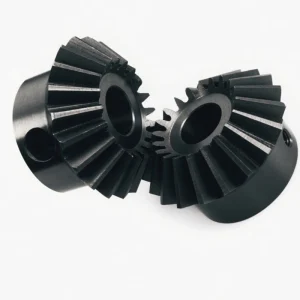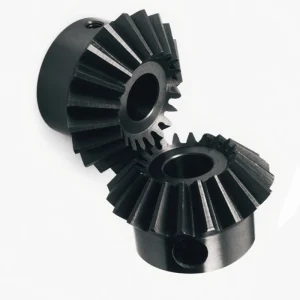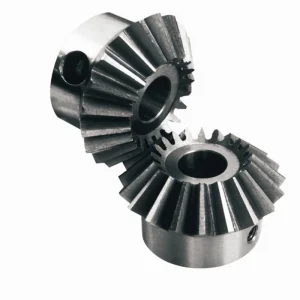
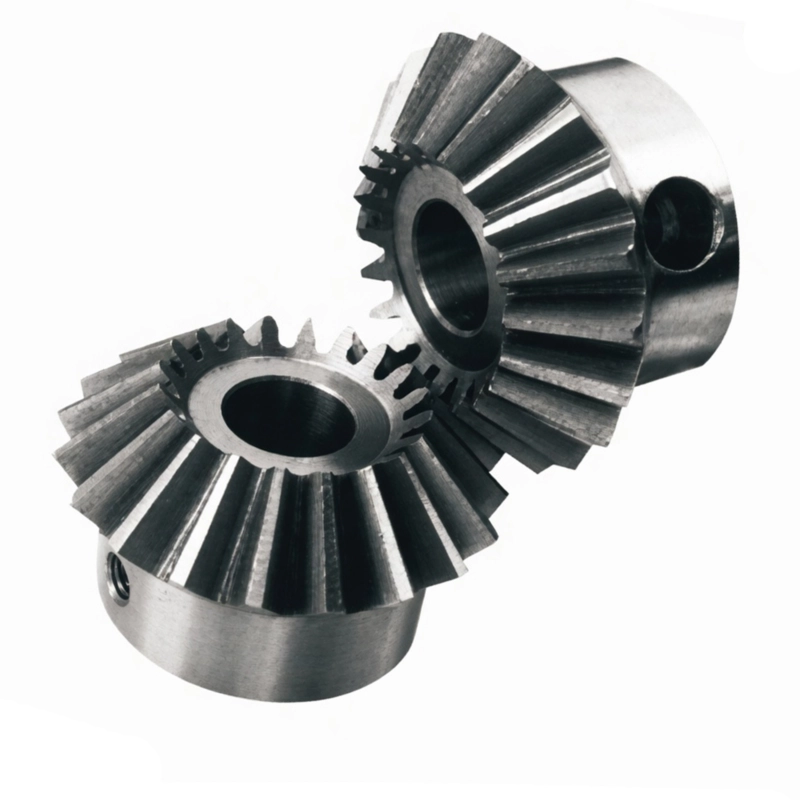
Bánh răng côn tiêu chuẩn châu Âu EP, tỷ số truyền 1:2, góc ép 20°.
European Standard Series — Precision Power Transmission
Bevel Gear — European Standard, Ratio 1:2, Pressure Angle 20°
Type A | Material: C45 Steel | Module Range: M1.5 to M5 | Designed for precise right-angle power transmission in industrial, agricultural, and mechanical drive systems.
C45 Steel
Ratio 1:2
20° Pressure Angle
1. Technical Specifications — Bevel Gear European Standard Series (Ratio 1:2, Pressure Angle 20°, Type A, Material: C45)
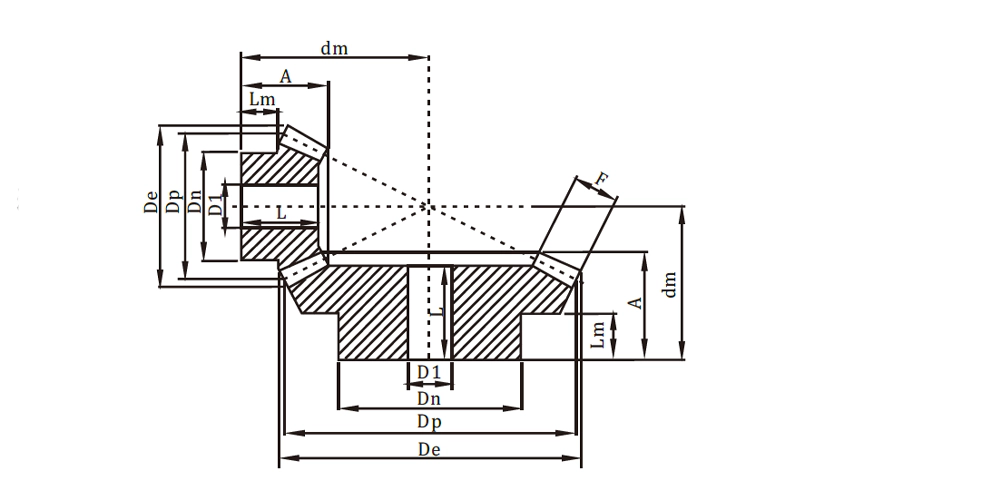
The table below lists all dimensional parameters for each module and tooth count combination. Dimensions are in millimeters. The column headers follow standard gear dimensional notation: M = Module, Z = Number of Teeth, De = Outside Diameter, Dp = Pitch Diameter, A = Cone Distance, F = Face Width, Dn = Neck Diameter, D1 = Bore Diameter, Dm = Mean Pitch Diameter, L = Hub Length, Lm = Mean Face Width.
| M | Z | De (mm) | Dp (mm) | A (mm) | F (mm) | Dn (mm) | D1 (mm) | Dm (mm) | L (mm) | Lm (mm) |
|---|---|---|---|---|---|---|---|---|---|---|
| 1.5 | 16 | 26.7 | 24 | 18.5 | 8 | 21 | 10 | 34.9 | 17 | 10.3 |
| 32 | 49.3 | 48 | 20 | 8 | 32 | 12 | 27.5 | 17.5 | 10 | |
| 2 | 16 | 35.6 | 32 | 23 | 10 | 27 | 10 | 45.4 | 21 | 12.2 |
| 32 | 65.8 | 64 | 25 | 10 | 40 | 12 | 35.2 | 22 | 10 | |
| 2.5 | 16 | 44.4 | 40 | 27.5 | 12 | 34 | 12 | 56.0 | 25 | 14.4 |
| 32 | 82.2 | 80 | 30 | 12 | 50 | 15 | 43.0 | 26.5 | 15 | |
| 3 | 16 | 53.4 | 48 | 28 | 15 | 40 | 15 | 61.6 | 25 | 11.6 |
| 32 | 98.7 | 96 | 35 | 15 | 60 | 15 | 50.4 | 30.5 | 15 | |
| 3.5 | 16 | 62.3 | 56 | 33.5 | 18 | 48 | 15 | 72.3 | 30.5 | 14.4 |
| 32 | 115.1 | 112 | 40 | 18 | 70 | 20 | 57.7 | 35 | 19 | |
| 4 | 16 | 71.1 | 64 | 36 | 20 | 50 | 20 | 80.8 | 32 | 13.4 |
| 32 | 131.6 | 128 | 45 | 20 | 80 | 20 | 65.5 | 39.5 | 23 | |
| 4.5 | 16 | 80.1 | 72 | 39.5 | 22 | 60 | 20 | 90.4 | 35 | 15.4 |
| 32 | 148.0 | 144 | 50 | 22 | 80 | 25 | 73.2 | 43.5 | 24 | |
| 5 | 16 | 88.9 | 80 | 50 | 25 | 60 | 20 | 106.1 | 45 | 21.1 |
| 32 | 164.5 | 160 | 55 | 25 | 85 | 25 | 80.6 | 48 | 27 |
Note: All dimensions in millimeters (mm). Module M defines the tooth size; Ratio 1:2 means Z16 (pinion) drives Z32 (gear). Bore diameter D1 is the nominal finished bore — custom bevel gears with non-standard bores are available on request.
2. Bánh răng côn là gì?
A bevel gear is a type of gear shaped like a truncated cone that transmits power between two shafts intersecting at an angle — most commonly 90°. Unlike spur or helical gears, which operate on parallel axes, a bevel gear set redirects rotational motion around a corner, making it indispensable in a wide range of mechanical systems. The tooth profile is cut on a conical surface, and the teeth taper toward the apex of the cone. This geometry enables smooth torque transmission even under substantial load conditions, which is why these metal gear components are found in everything from automotive differentials to industrial machinery and agricultural drivetrains.
The bevel gear set offered in this European Standard Series features a 1:2 ratio, meaning the driven gear rotates at half the speed of the driving pinion while delivering twice the torque. With a pressure angle of 20° — the international standard for general-purpose power gearing — these components achieve an optimal balance between tooth strength, load distribution, and minimal undercutting. The Type A profile, manufactured from C45 carbon steel, delivers solid mechanical properties suitable for moderate-to-heavy industrial applications where reliability and dimensional precision are non-negotiable requirements.
3. Five Key Advantages of This Metal Bevel Gear Series
1. Precise 20° Pressure Angle Geometry
The 20° pressure angle conforms to the ISO 6336 and DIN 868 international standards, providing superior contact ratio, reduced gear noise, and enhanced load-carrying capacity compared to legacy 14.5° systems. Every tooth is cut to exact dimensional tolerances, ensuring reliable meshing across the full range of module sizes from M1.5 to M5.
2. C45 Carbon Steel Construction
Manufactured from C45 medium-carbon steel (equivalent to AISI 1045), these components combine good machinability with solid tensile strength in the range of 600–750 MPa. The material is widely available globally, making replacement straightforward for maintenance teams in Colombia and across Latin America.
3. Fixed 1:2 Reduction Ratio for Consistent Speed Control
The 1:2 gear ratio is a standard speed reduction configuration that halves the output shaft speed while doubling torque. This makes the bevel gear set particularly useful in conveyor drives, milling machines, and agricultural equipment where precise torque multiplication without complex gearbox assemblies is required.
4. European Standard Dimensional Compliance
Designed in accordance with European standard specifications, these gears are dimensionally interchangeable with other European Standard Series components, enabling direct substitution without custom modification. This is a significant advantage for Colombian industrial buyers sourcing replacement parts for European-designed machinery operating in local factories and processing plants.
5. Wide Module Range for Versatile Application
Available in module sizes M1.5, M2, M2.5, M3, M3.5, M4, M4.5, and M5, with tooth counts of Z16 and Z32 for each module, this series covers a broad spectrum of load and size requirements. From small metal bevel gear applications in instrumentation to high power metal bevel gears in heavy industrial drives, the range addresses diverse engineering needs in a single product family.
4. Bánh răng côn kim loại hoạt động như thế nào?
This gear operates on the principle of conical pitch surfaces rolling against each other without slipping. When the two gears mesh, their imaginary pitch cones share a common apex point on the gear axis intersection. As the driving gear (pinion) rotates, its teeth engage progressively with the teeth of the driven gear, transferring torque through compressive contact forces along the tooth flanks. The 20° pressure angle defines the direction of this contact force relative to the pitch surface — higher pressure angles increase tooth thickness at the root, improving bending strength, while the 20° value strikes the accepted engineering balance between strength and smooth operation.
In a straight bevel gear — which this Type A series represents — the tooth element lines converge at the cone apex. This means that when two teeth come into full contact, the entire face width engages simultaneously, unlike helical gears where engagement is progressive. The result is a clean, direct power path that is mechanically straightforward to manufacture and inspect. For a 1:2 ratio configuration, the pinion (Z16 teeth) drives the larger gear (Z32 teeth): for every two complete revolutions of the driving shaft, the output shaft completes one revolution. The torque at the output is therefore approximately double the input torque (minus friction losses), making this gear configuration an effective torque multiplier for driving slower-speed machinery from faster prime movers.
5. Material: C45 Carbon Steel
The gear set in this series is produced from C45 carbon steel, an internationally recognized structural grade standardized under EN 10083-2 (European designation) and closely equivalent to AISI/SAE 1045 (American standard), GB 45 (Chinese standard), and JIS S45C (Japanese standard). C45 contains approximately 0.42–0.50% carbon, 0.50–0.80% manganese, and 0.17–0.37% silicon as its primary alloying elements, delivering a tensile strength of 600–800 MPa in the normalized condition and up to 850 MPa after quench-and-temper heat treatment.
For gear applications at the module sizes covered by this series, C45 steel provides sufficient tooth bending strength and contact fatigue resistance under moderate industrial duty cycles. The material machines cleanly on CNC hobbing and milling equipment, allowing the precise tooth profile geometry required to meet the 20° pressure angle specification consistently across production runs. Surface hardening through induction hardening or case hardening (carbonitriding/carburizing) can be applied to C45 at the customer's request to produce a hard surface layer of 56–62 HRC over a tough core — a configuration suitable for high power gear applications operating in continuous-duty drives where surface fatigue would otherwise limit service life. Stainless steel bevel gears for corrosive environments are also available as custom bevel gears on special order.
6. Ứng dụng của bánh răng côn kim loại
The wide module range and standardized 1:2 ratio of this bevel gear set cover a remarkable breadth of industrial, agricultural, and mechanical applications. Below are the most common deployment contexts encountered in Colombian and Latin American industrial markets.
Máy móc nông nghiệp
In Colombia's expansive agricultural regions — from the coffee zones of Antioquia and the Eje Cafetero to the cattle ranches of the Llanos Orientales — bevel gear sets are critical components in irrigation pumps, seed drills, post-hole diggers, and mechanical spreaders. The 1:2 ratio is particularly common in hand-held power tool attachments and light implement right-angle drives where the motor shaft and working head cannot be aligned on the same axis.
Industrial Conveyors and Mixer Drives
Food processing plants, cement facilities, and mining operations throughout Colombia and Latin America use bevel gear sets extensively in conveyor corner drives and agitator/mixer right-angle transmissions. Module M3–M5 options in this series deliver the torque capacity and dimensional footprint suited to medium-duty conveyor head shafts where space constraints prevent direct motor-shaft alignment.
Máy in và máy dệt
Light-module bevel gears (M1.5–M2.5) are widely used in printing press ink roll drives, textile loom timing drives, and packaging machinery angular transmissions. The small metal gear options in this range — M1.5 Z16, for example — are suitable for these precision-positioning applications where compactness and smooth engagement are more important than raw torque capacity.
RC Models and Hobby Applications
Mini metal gear components from the M1.5 range are frequently used in scale RC car differentials, RC boat stern drive units, and robotics projects where a metal gear for RC car applications is preferable to plastic for improved durability under repeated load reversals. The consistent tooth geometry of the European Standard Series ensures proper meshing even in scaled-down drive systems where tooth form tolerance has an outsized effect on performance.
Power Tools and Workshop Equipment
Angle grinders, drill attachments, and manual power head units rely on bevel gear sets to redirect motor output through 90°. The M2–M3 options with finished bores are ready to fit standard motor shaft diameters commonly found in workshop power tools manufactured to European tooling standards, making direct installation without additional machining possible in most cases.
Marine and Pumping Systems
Bevel gear sets are standard components in centrifugal pump right-angle drives for irrigation, water supply, and marine propulsion units in the Colombian Pacific coast and Magdalena River basin regions. The C45 material, when surface-treated or properly sealed with appropriate bearing housings, provides adequate corrosion resistance for these environments, particularly in freshwater irrigation installations at inland locations across Colombia's diverse agricultural geography.
7. Gear Standards, Regulations, and Compliance — Colombia and Global
Industrial gear components, including bevel gears used in power transmission systems, are subject to a range of national and international technical standards that govern design, material, manufacturing quality, and application safety. Colombian buyers and importers should be aware of the following frameworks:
Colombia — Tiêu chuẩn ICONTEC và NTC: Colombia's national standards body ICONTEC adopts and adapts ISO standards for local application. Gear products for industrial machinery used in Colombian workplaces fall under the broader occupational machinery safety framework established by SGSST (Sistema de Gestión de Seguridad y Salud en el Trabajo, Resolución 0312 de 2019), which requires that mechanical power transmission components — including bevel gear sets used in exposed machinery — be guarded and documented with technical datasheets in Spanish. Machinery incorporating bevel gears must also comply with NTC 2075 (safety of machinery, general principles) and relevant sector-specific ICONTEC standards for agricultural and industrial equipment.
European Union — ISO 6336 and DIN Standards: This product series is designed in accordance with ISO 6336 (Calculation of Load Capacity of Spur and Helical Gears) principles as applied to bevel gears, and conforms to DIN 868 (General Definitions and Terms for Gears) for dimensional standardization. The gear tooth profile follows ISO 1340 (cylindrical gears — tolerances for the deviations of single elements of gear teeth) applied to bevel geometry. EU Machinery Directive 2006/42/EC requires that bevel gear sets used as machine components in CE-marked machinery be tested and documented as part of the overall machine conformity process.
Hoa Kỳ — Tiêu chuẩn AGMA: The American Gear Manufacturers Association (AGMA) publishes AGMA 2003 (Rating the Pitting Resistance and Bending Strength of Generated Straight Bevel, Zerol Bevel, and Spiral Bevel Gear Teeth) and AGMA 929 (Calculation of Bevel Gear Tooth Geometry). Colombian companies exporting machinery incorporating these gears to the US market should ensure AGMA compliance documentation accompanies the final machine assembly.
Brazil — ABNT NBR Standards: Given Brazil's role as Colombia's major regional trade partner, Brazilian ABNT NBR 6461 (gears — general definitions and terminology) and NBR 14040 (safety of machinery — gears and gearboxes) are relevant for manufacturers supplying the Mercosur market. Product certification through INMETRO may be required for certain drive system components entering the Brazilian market.
Tiêu chuẩn quốc tế ISO: At the global level, ISO 23509 (Bevel and Hypoid Gear Geometry) and ISO 10300 (Load Capacity of Bevel Gears) are the primary international references for bevel gear design and rating. These standards are recognized across Latin America, Europe, and Asia as the authoritative technical framework for bevel gear procurement specifications.
Environmental and Import Compliance in Colombia
Metal gear components imported into Colombia are subject to DIAN (Dirección de Impuestos y Aduanas Nacionales) customs regulations and classified under Harmonized System (HS) code 8483.40 (gears and gearing, other than toothed wheels). Import duties, VAT, and any applicable technical inspection requirements under Resolution 1407/2018 should be verified with a licensed customs broker prior to purchase for commercial quantities. Environmental handling requirements for cutting fluids and metalworking lubricants used in gear manufacturing are governed by Decreto 1076 de 2015.
8. Về chúng tôi
We are a dedicated supplier of precision power transmission components serving industrial buyers, OEM machinery manufacturers, agricultural equipment suppliers, and maintenance operations across Latin America and globally. Our product range spans the complete spectrum of standard and custom bevel gears, spur gears, sprockets, drive chains, and related mechanical transmission hardware — all sourced from facilities with documented manufacturing quality management systems aligned to ISO 9001 principles.
Our technical team brings deep experience in gear application engineering, enabling us to support customers not just with standard catalog items but with application-specific guidance on module selection, material choice, heat treatment, and assembly recommendations. For Colombian industrial buyers seeking a dependable metal bevel gear manufacturer relationship that provides both competitive pricing and consistent quality documentation, we offer a straightforward quotation process, English and Spanish technical support, and reliable international logistics with proper customs documentation. Whether you need a single replacement bevel gear set or a recurring supply agreement for production use, our team is equipped to respond with precision and efficiency.
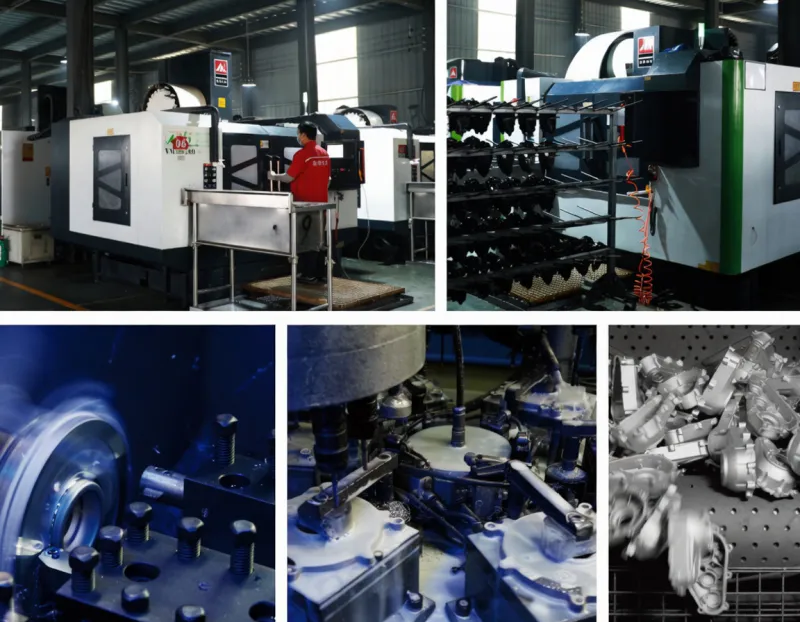
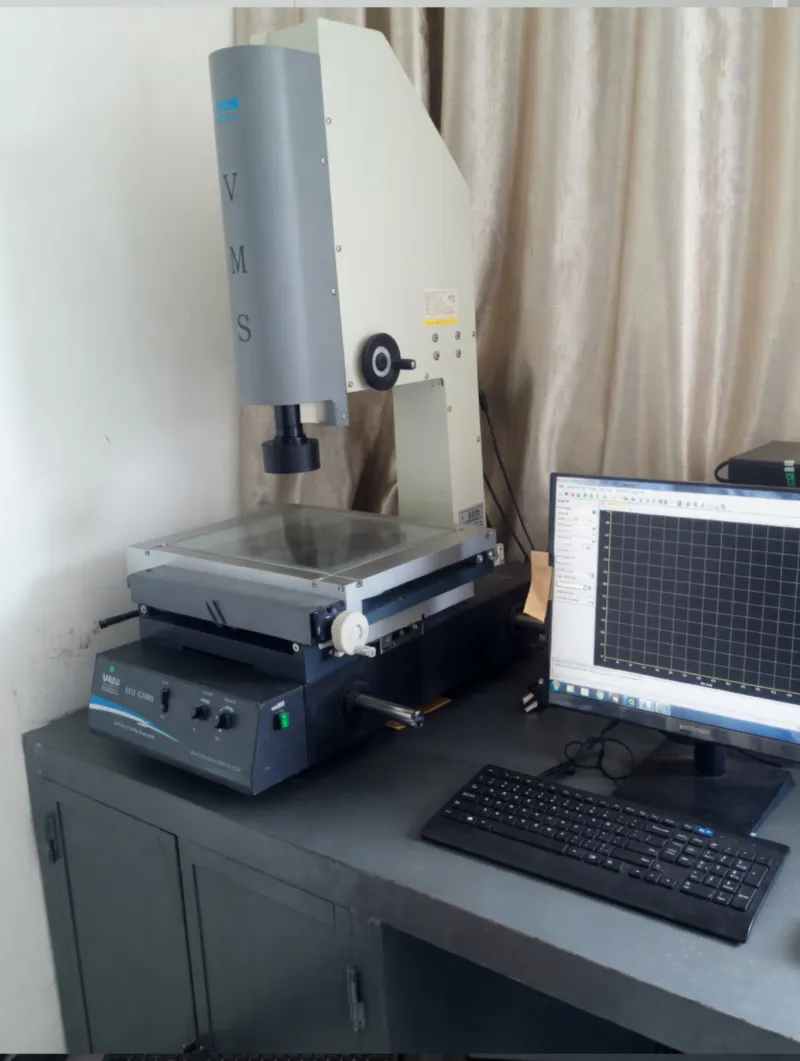
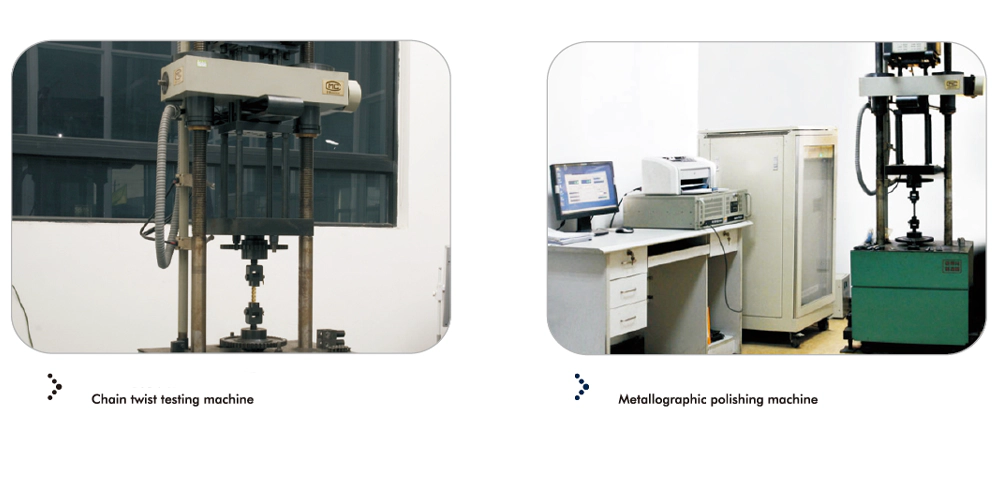
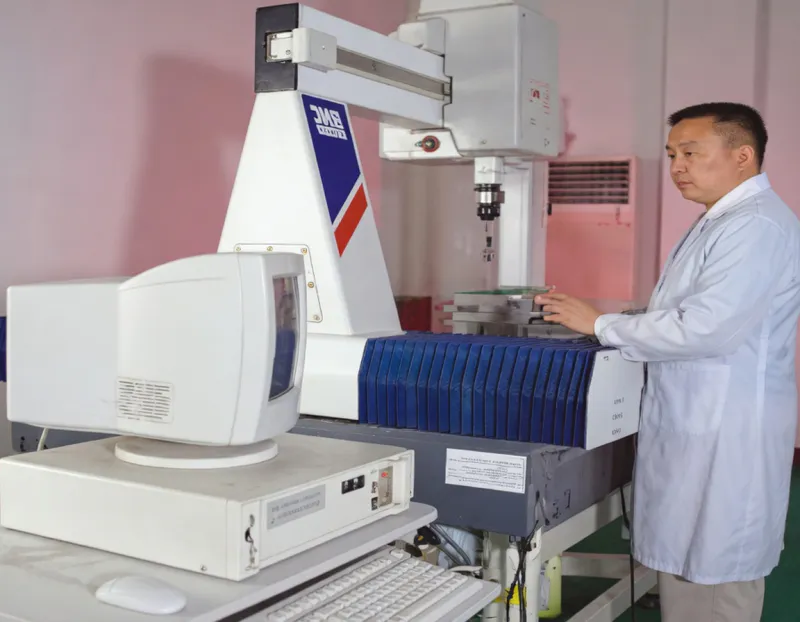
Xưởng
9. Sản phẩm liên quan — Giải pháp hệ thống truyền động hoàn chỉnh
A bevel gear set forms just one part of a complete power transmission system. To achieve reliable, long-life operation, the gear drive must be paired with compatible sprockets and drive chains that are dimensionally and mechanically matched. We supply the full range of transmission components, allowing you to source your entire drivetrain from a single, trusted supplier — reducing procurement complexity and ensuring dimensional compatibility across all components.
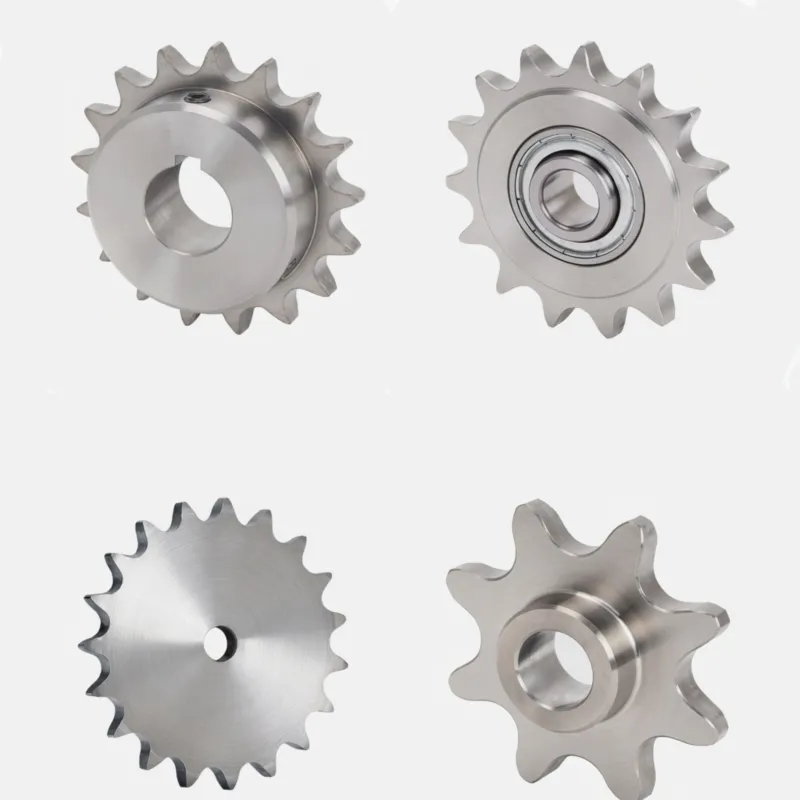
Sprockets — European Standard Series
Our full range of Bánh răng is designed to work in conjunction with standard roller chains and bevel-driven conveyor systems. Available in finished bore and taper-bore configurations across a broad tooth count range. System compatibility with this bevel gear series ensures smooth integration in combined right-angle conveyor drive designs.
Drive Chain — Full Series
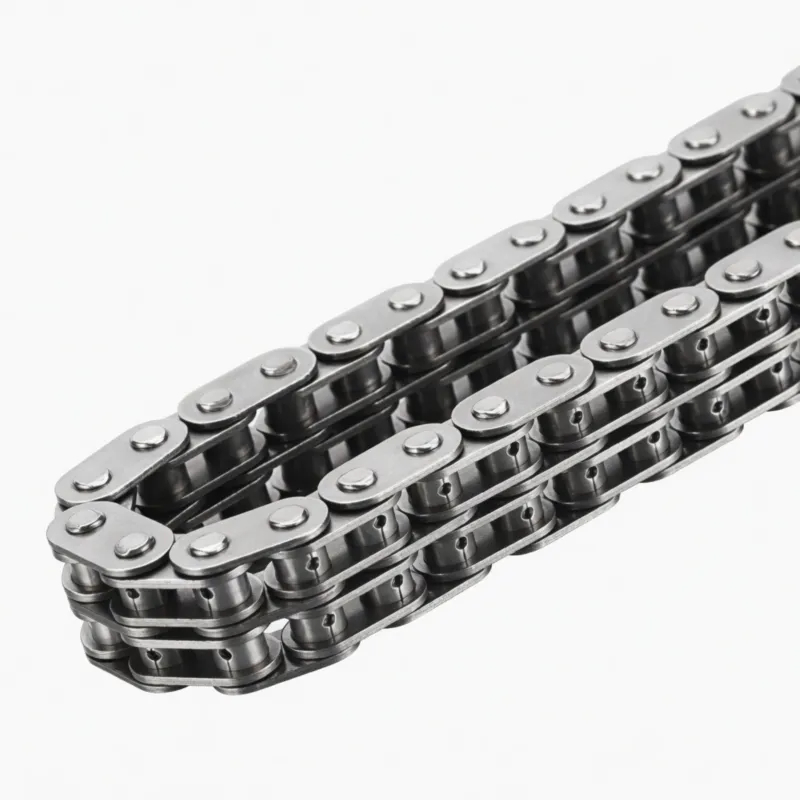
Pair your bevel gear drive with our complete selection of Xích truyền động, covering European (B series) and American (A series) standards in simplex, duplex, and triplex configurations. One-stop sourcing of bevel gear sets, sprockets, and chain from a single supplier eliminates interoperability guesswork and simplifies your maintenance stock management.
Câu hỏi thường gặp
Biên tập viên: PXY