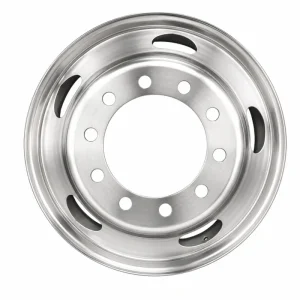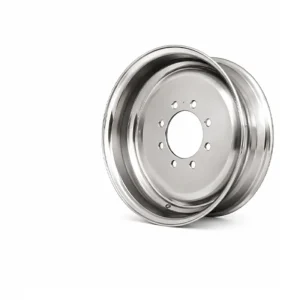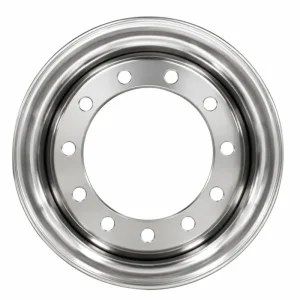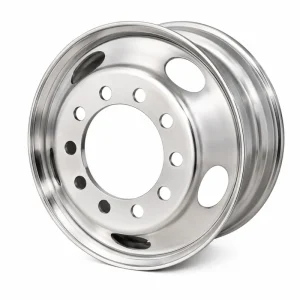
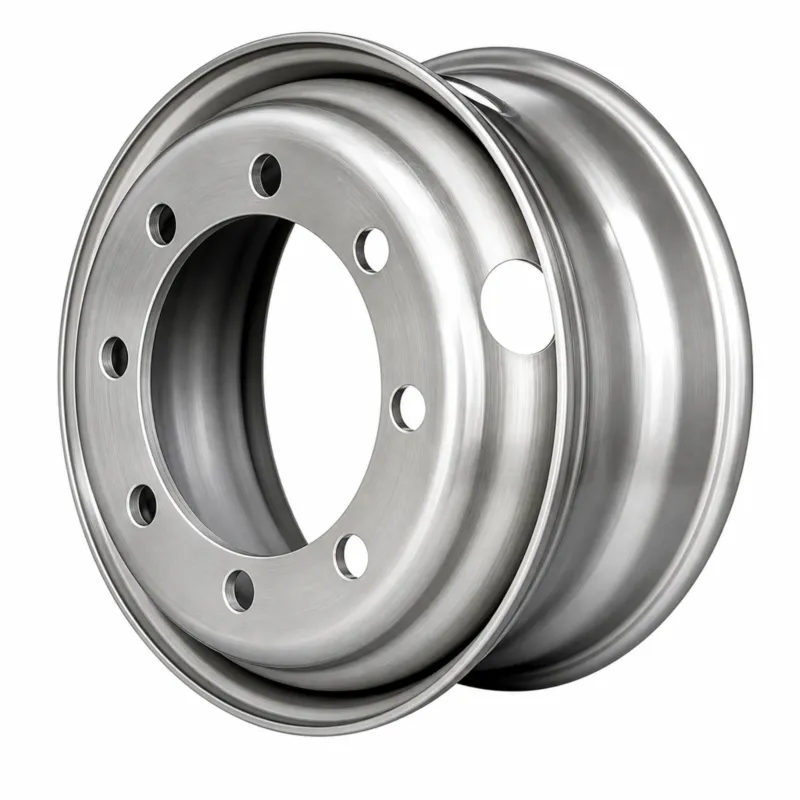
EP Heavy Duty vrachtwagen- en vrachtwagenaanhangerwiel voor Japan
Onze EP Heavy Duty Truck and Truck Trailer Wheel For Japan-serie voldoet aan al deze eisen door middel van een productieproces dat is gebaseerd op de meest veeleisende normen in de Japanse markt voor bedrijfsvoertuigen – een van de technisch meest rigoureuze wielspecificaties in de wereldwijde vrachtwagenindustrie.
Japanse fabrikanten van zware voertuigen zoals Hino, Isuzu, Mitsubishi Fuso en Nissan Diesel hanteren al lange tijd de norm voor de geometrie van wielverbindingen. Ze specificeren nauwe toleranties voor steekcirkeldiameter (PCD), middengatdiameter, offset en boutgatafmetingen om een nauwkeurige passing van de naaf en een gelijkmatige lastverdeling over alle bevestigingspunten te garanderen. De EP-wielen voor de Japanse markt voldoen aan exact deze maatspecificaties, waardoor deze wielen direct geschikt zijn voor voertuigen die onder de Japanse JIS-normen vallen, zonder dat adapteronderdelen of aangepaste naafconfiguraties nodig zijn.
Twee belangrijke maatcategorieën bestrijken de kern van de Japanse markt voor zware vrachtwagens: de velgbreedte van 22,5×7,5 inch voor stuuras- en lichtere achterastoepassingen, en de bredere 22,5×8,25 inch voor aandrijfassen en trailerassen waar bredere bandprofielen vereist zijn.
1. Technische specificaties — EP Japan-markt zwaar vrachtwagenaanhangerwiel
De onderstaande tabel toont het volledige assortiment EP Japan-specificatie zware vrachtwagenaanhangerwielen, inclusief de velgmaten 22,5×7,5 en 22,5×8,25 inch voor alle beschikbare boutcirkel-, positionerings- en naafgatconfiguraties. Alle maatgegevens worden in millimeters weergegeven, tenzij anders vermeld.
| Onderdeelnummer | Maat | Aantal bouten | PCD (mm) | Boutdiameter (mm) | Diameter middengat (mm) | Offset (mm) | Ventilatiegat | Gepiloteerd |
|---|---|---|---|---|---|---|---|---|
| JG52SW15 | 22,5 × 7,5 | 10 | 335 | 26 | 281 | 165 | 10 | MIDDELPUNT |
| JG52SW16 | 22,5 × 7,5 | 10 | 335 | 32.5 | 281 | 165 | 10 | STUD |
| JG52SW03 | 22,5 × 7,5 | 10 | 335 | 26 | 281 | 168 | 10 | MIDDELPUNT |
| JG52SW08 | 22,5 × 7,5 | 10 | 285.75 | 26 | 220 | 168 | 2 | MIDDELPUNT |
| JG52SW06 | 22,5 × 7,5 | 10 | 285.75 | 32.5 | 221 | 165 | 10 | STUD |
| JG28SW36 | 22,5×8,25 | 10 | 285.75 | 26 | 220 | 166 | 2 | MIDDELPUNT |
| JG28SW53 | 22,5×8,25 | 10 | 285.75 | 26 | 220 | 168 | 10 | MIDDELPUNT |
| JG28SW09 | 22,5×8,25 | 10 | 285.75 | 32.5 | 221 | 168 | 5 | STUD |
| JG28SW10 | 22,5×8,25 | 10 | 285.75 | 32.5 | 221 | 168 | 10 | STUD |
| JG28SW30 | 22,5×8,25 | 10 | 335 | 26 | 281 | 165 | 10 | MIDDELPUNT |
| JG28SW77 | 22,5×8,25 | 8 | 275 | 26 | 221 | 165 | 8 | MIDDELPUNT |
| JG28SW78 | 22,5×8,25 | 8 | 275 | 32.5 | 214 | 165 | 8 | STUD |
Let op: alle afmetingen zijn in millimeters. HUB = centreersysteem met naafgeleiding; STUD = centreersysteem met boutgeleiding. Controleer het onderdeelnummer en het centreersysteem aan de hand van de werkplaatshandleiding van het voertuig voordat u bestelt om een correcte montage op in Colombia geregistreerde Japanse bedrijfsvoertuigen te garanderen.
2. Vijf belangrijke voordelen van EP Japan-Spec vrachtwagenaanhangerwielen
JIS-conforme dimensionale precisie
Elk vrachtwagenwiel in de EP Japan-serie wordt vervaardigd volgens maatnormen die zijn afgeleid van de Japanse industriële normen (JIS D 4218), inclusief een steekcirkeldiameter (PCD) tolerantie van ±0,1 mm, een nauwkeurigheid van de diameter van het middengat van ±0,05 mm en specificaties voor slingering die een soepele, trillingsvrije rotatie vanaf de eerste installatie garanderen. Deze maatnauwkeurigheid elimineert de noodzaak tot het afstellen met vulplaatjes en het opnieuw aanhalen van de bouten die het gevolg zijn van slecht passende wielen – problemen die de veiligheid in gevaar brengen op steile afdalingen in de Colombiaanse Andes, waar de remtemperaturen hoog zijn en de integriteit van de wielbevestigingen cruciaal is.
Beschikbaarheid van het dubbele positioneringssysteem
Het EP-assortiment omvat zowel wielvarianten met naafgeleiding als met boutgeleiding binnen dezelfde maatfamilie. Hierdoor kunnen wagenparkbeheerders één leverancier behouden en tegelijkertijd rekening houden met de verschillende centreersystemen die in Japanse vrachtwagengeneraties worden gebruikt. Bij naafgeleiding centreert het wiel zich op het nauwkeurig gefreesde middengat, terwijl varianten met boutgeleiding afhankelijk zijn van de conische vorm van de wielmoer voor de centrering. De juiste afstemming van het positioneringssysteem is geen detail, maar heeft direct invloed op de lastverdeling over de boutcirkel en is een fundamentele veiligheidseis voor de montage van wielen op zware vrachtwagentrailers.
Velgconstructie met rolvorming voor gewichtsvermindering
The EP truck trailer wheel utilizes rim flow forming technology that thins the rim wall sections progressively while preserving full strength at the bead seat — the highest-stress zone of the wheel. This process reduces individual truck wheel weight by up to fifteen percent compared to conventional pressing methods, directly benefiting payload capacity within Colombian gross vehicle weight limits and reducing unsprung mass for improved ride and handling. For operators running truck and trailer wheel combinations over Colombia's mixed road surfaces, lighter wheels translate to measurably reduced fuel consumption over annual distance targets.
Hoogwaardig staal voor veeleisende belastingsprofielen
De wielschijf en velgcomponenten zijn vervaardigd van geavanceerde, zeer sterke staalsoorten die hun structurele integriteit behouden onder de aanhoudende cyclische belasting van een geladen traileras. Bij de materiaalkeuze is een balans gevonden tussen vloeigrens – die de weerstand tegen permanente vervorming bij overbelasting bepaalt – en ductiliteit, waardoor het wiel de impactenergie van obstakels op de weg kan absorberen zonder bros te breken. Wielen van zware vrachtwagens die op Colombiaanse wegen rijden, waaronder slecht onderhouden wegdekken en geïmproviseerde rivierovergangen in mijnbouw- en landbouwgebieden, profiteren in het bijzonder van deze marge aan materiaaltaaiheid.
Uitgebreide corrosiebescherming voor tropische toepassingen
Colombia's coastal port cities, humid Amazon basin transport routes, and high-rainfall Andean passes present a persistent corrosion challenge for steel truck wheels. The EP-Truck Trailer Wheel series applies a multi-stage surface treatment process — shot blasting for surface preparation, phosphating for adhesion promotion, and epoxy primer topped with polyester topcoat — that passes a minimum five hundred hour neutral salt spray test per ISO 9227. This treatment level substantially extends the cosmetic and structural life of the truck trailer wheel beyond what bare or single-coat products achieve in tropical operating conditions.
3. Werkingsprincipe en constructietechniek
The truck trailer wheel functions as the structural interface between the vehicle's hub assembly and the pneumatic tire, transmitting all traction, braking, cornering, and vertical load forces between road surface and vehicle chassis. Understanding how this load path operates helps explain why dimensional accuracy in the wheel mounting interface is non-negotiable. In service, the truck wheel hub transfers vertical loads from the axle spindle through the wheel disc into the rim section and ultimately into the tire bead area, where inflation pressure creates the structural column that supports the vehicle's weight. Any lack of concentricity in the center hole, or unevenness in the bolt hole pattern, creates an uneven load distribution around the bolt circle that manifests as vibration, accelerated stud wear, and eventual fatigue cracking at the disc-to-rim junction.
The manufacturing sequence begins with steel coil blanking into circular discs, followed by progressive die pressing to form the disc with its bolt hole circle, center hole, and ventilation holes. Rim fabrication proceeds from steel strip roll-forming into a cylindrical shape, with the bead seat and flanges formed to precise geometry that determines tire seating position and the offset measurement — the distance from the wheel's mounting face to the rim's centerline. Correct offset is critical for truck wheel alignment: too little positive offset moves the tire outward and increases hub bearing stress, while too much offset crowds the tire inward and creates clearance issues with the vehicle's brake and suspension components. The EP Japan series holds offset values at 165 mm or 168 mm depending on the specific part number, matching original equipment specifications precisely.
Final assembly joins the disc to the rim by projection welding and MIG welding processes, with weld penetration monitored by both visual and ultrasonic inspection methods. Completed heavy duty truck trailer wheels undergo inline dynamic balance inspection to identify any mass distribution imbalance before shipping — an important quality gate because out-of-balance truck wheels cause tire wear, steering wheel vibration, and accelerated driveline component wear that compound into significant operating costs over the wheel's multi-year service life. Wheels that fail balance specifications are re-processed rather than passed through, reflecting the quality commitment underpinning the EP product line.
4. Materialen en oppervlaktebehandelingstechnologie
The structural steel grades used in EP truck wheel production are selected with specific attention to the fatigue performance of pressed and roll-formed components. The disc section uses a high-strength low-alloy steel with yield strength in the range of four hundred to five hundred fifty MPa, providing sufficient rigidity to resist permanent deformation during overload events while retaining enough ductility to avoid brittle fracture behavior during impact loading. This balance is especially important for the heavy duty truck trailer wheel disc, where repeated flexion at the disc-to-rim joint under cornering and road irregularity loads creates cyclic stress that must remain below the material's endurance limit throughout the design service life of at least five hundred thousand load cycles.
Het velggedeelte is vervaardigd van geavanceerd, zeer sterk staal – in sommige varianten met tweefasig of SPFH-staal – waardoor velgvloeivorming mogelijk is om de wanddikte te verminderen, terwijl het hielvlak zijn volledige mechanische eigenschappen behoudt. Het hielvlak wordt machinaal of walsgevormd tot een precieze diameter en afwerking die een luchtdichte bandhiel garandeert zonder de binnenbandvoering die in oudere vrachtwagenvelgen werd gebruikt. De constructie van tubeless vrachtwagenvelgen, zoals toegepast in de EP Japan-serie, is volledig afhankelijk van de precieze mechanische interactie tussen de diameter van het hielvlak, de hielcontour en de geometrie van de velgflens om de bandenspanning te beheersen. Dimensionale nauwkeurigheid op deze gebieden is daarom een directe veiligheidsparameter in plaats van slechts een kwaliteitsindicator.
Surface protection begins with mechanical shot blasting that removes mill scale and creates a uniform surface profile optimized for coating adhesion. Chemical phosphating then creates a conversion coating that provides a second adhesion layer and baseline corrosion resistance. The primer coat — typically an epoxy-based formulation — provides the primary corrosion barrier, while the polyester topcoat in standard silver or white finish provides UV resistance and maintains appearance through the wheel's service life in tropical Colombian operating environments. Total dry film thickness typically reaches eighty to one hundred micrometers, achieving the salt spray resistance needed for coastal port operations in Barranquilla and Buenaventura, as well as humid Amazonian transport routes.
5. Toepassingsscenario's voor commercieel transport in Colombia
Langeafstandstransport van goederen
Hino and Isuzu semi-trailer tractors pulling refrigerated and dry-freight trailers on Colombia's primary road network between Bogotá, Medellín, Cali, and coastal ports rely on truck trailer wheel replacement parts that maintain hub compatibility throughout the vehicle's decade-plus service life. The EP Japan-spec range provides fleet operators with a reliable source for truck trailer wheel replacement parts that match original equipment dimensional specifications — critical for vehicles covering six hundred to nine hundred kilometers per day on routes that include the challenging Bogotá-to-Buenaventura corridor through the Western Andes.
Logistiek in de bouw en mijnbouw
Mining operations in Antioquia's gold regions and coal transport in Cesar department deploy heavy duty truck trailer wheels under consistently demanding conditions involving payload weights near or at legal limits, unpaved access roads, and dust exposure that challenges both tire and wheel serviceability. The EP truck wheel series serves these applications through its structural strength margin above rated loads and its corrosion protection system suited for high-dust, high-humidity environments. Truck wheel replacement cycling in mining logistics benefits from the dimensional consistency of EP wheels — accurate fitting reduces the installation time that accumulates across large equipment fleets.
Haven- en containerlogistiek
Container yard prime movers and port drayage trucks at Cartagena and Barranquilla operate under near-continuous duty cycles in salt-air environments that present extreme corrosion challenges for steel truck wheels. The EP series's enhanced surface treatment system provides the corrosion resistance required for port service environments, while the tubeless construction eliminates the tube-type valve maintenance associated with older truck wheel designs. Port operators standardizing on Japanese-brand heavy trucks benefit from the full EP Japan-spec range covering all axle positions within their fleet.
Transport van landbouwproducten
Coffee, banana, palm oil, and cut flower transport from Colombia's agricultural zones to packing stations and export ports involves a mix of paved national road driving and unpaved farm access routes that demand truck wheels with adequate impact toughness for both surface types. Japanese-brand medium and heavy trucks are widely used in Colombian agricultural logistics, and maintaining correct truck trailer wheel specification during replacement is essential for preserving the vehicle's brake and tire alignment geometry. The EP series provides agricultural fleet managers with a reliable supply of dimensionally accurate replacement truck wheels.
Toepassingen voor bussen en touringcars
Intercity coach operations using Japanese-brand bus chassis on routes connecting Bogotá with regional cities specify 22.5-inch truck wheels in configurations that fall within the EP Japan series range. Passenger transport operators require wheel products with consistent quality and documentation for compliance with Colombia's transport authority (MinTransporte) safety requirements. The EP series provides the quality certification documentation and dimensional traceability that supports fleet compliance reporting, alongside the structural performance needed for the high-mileage annual service profiles of Colombian intercity coach operations.
6. Regelgevingskader voor wielen van bedrijfsvrachtwagens
Colombia: The Ministry of Transport (MinTransporte) regulates commercial vehicle safety through Decreto 1079 de 2015 and related technical resolutions. Resolution 4100 de 2004 establishes maximum vehicle dimensions and weights, and Resolución 3500 de 2005 governs periodic technical inspection (revisión técnico-mecánica) for commercial vehicles, including inspection of wheel conditions. Wheels showing cracks, excessive corrosion, or dimensional deformation fail these inspections. Fleet operators must maintain evidence of wheel specifications compatible with the vehicle's homologation to pass inspections — making correct-specification truck trailer wheel procurement a compliance requirement, not merely a technical preference.
Japan (JIS-normen): De Japanse industriële normen JIS D 4218 en JIS D 4230 bepalen de dimensionale en prestatie-eisen voor vrachtwagenwielen in Japan en specificeren toleranties voor steekcirkeldiameter (PCD), middengat, slingering en draagvermogen. De EP Japan-spec-serie wordt geproduceerd conform deze JIS-normen, waardoor Colombiaanse gebruikers van Japanse vrachtwagens wielen krijgen die volgens hetzelfde ontwerp zijn vervaardigd als de originele onderdelen.
Europese Unie: ECE-verordening nr. 124 regelt vervangende wielen voor personenauto's, terwijl voor bedrijfsvoertuigen het ECE-kader van de VN wielen behandelt via homologatie-eisen voor voertuigen. Wielen voor bedrijfsvrachtwagens die op de EU-markt worden verkocht, moeten aan de eisen voldoen door middel van technische documentatie ter ondersteuning van de typegoedkeuring van het voertuig, met verwijzing naar normen zoals ISO 3006 (afmetingen van vrachtwagenwielen) en ISO 4209 (velgen voor bedrijfsvoertuigen).
Verenigde Staten: De Federal Motor Vehicle Safety Standards (FMVSS) en de inspectiecriteria van de Commercial Vehicle Safety Alliance (CVSA) zijn van toepassing op vrachtwagenwielen in de VS. FMVSS 110 en 120 behandelen de selectie van banden en velgen, terwijl de CVSA-inspectiecriteria voertuigen diskwalificeren met zichtbaar gebarsten, gebroken of onjuist gemonteerde wielen. Vrachtwagenbedrijven met in de VS geregistreerde wagenparken moeten documentatie bewaren waaruit blijkt dat de wielonderdeelnummers in het jaarboek van de Tire and Rim Association (TRA) zijn opgenomen als goedgekeurd voor de gebruikte band- en ascombinatie.
7. Over onze mogelijkheden voor de productie van wielen
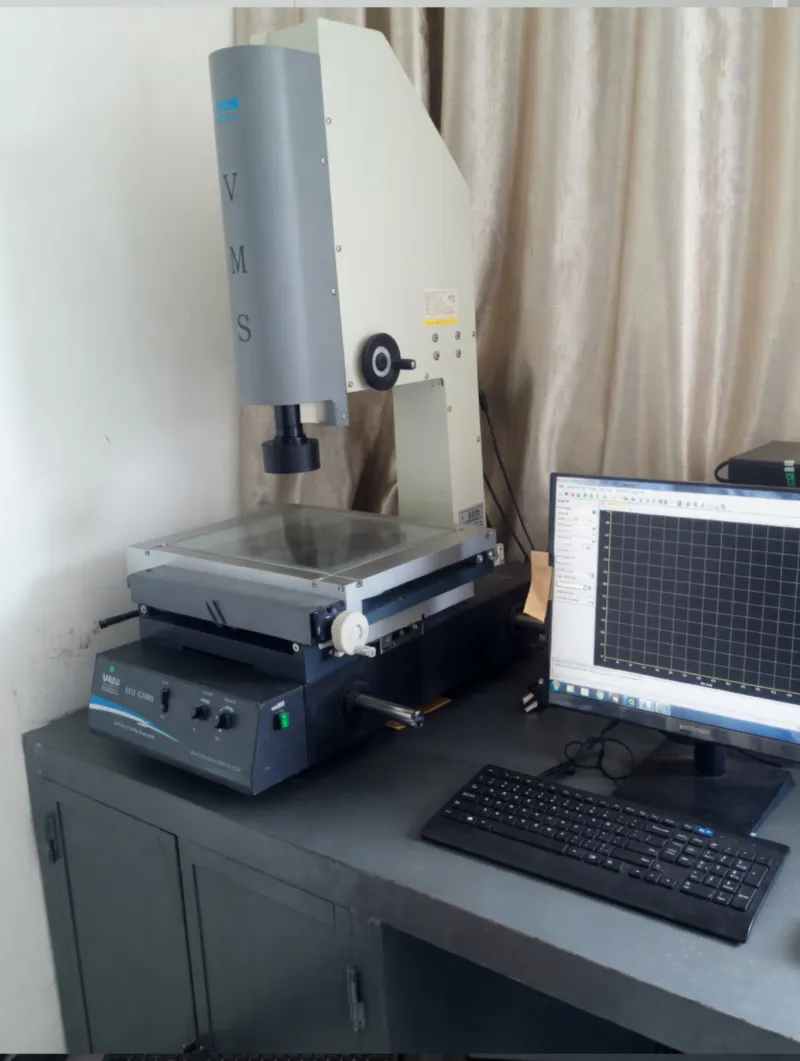
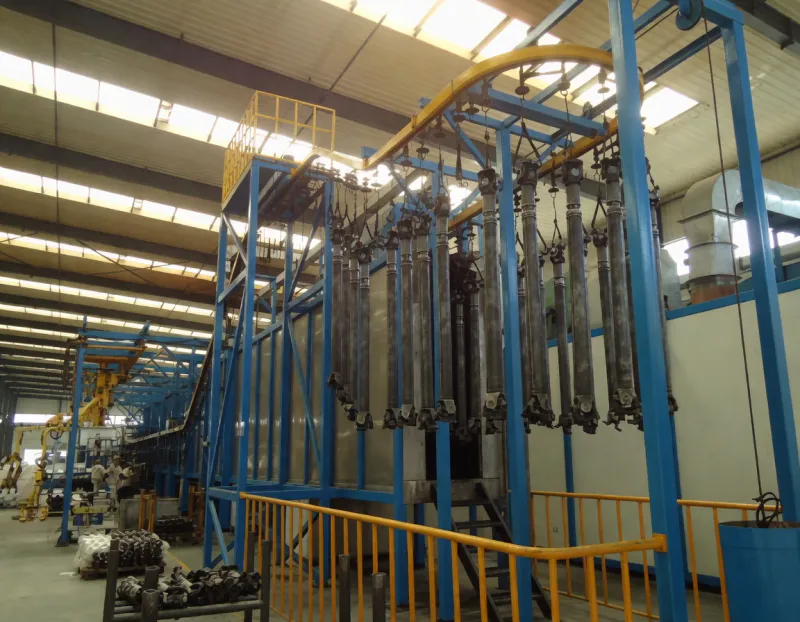
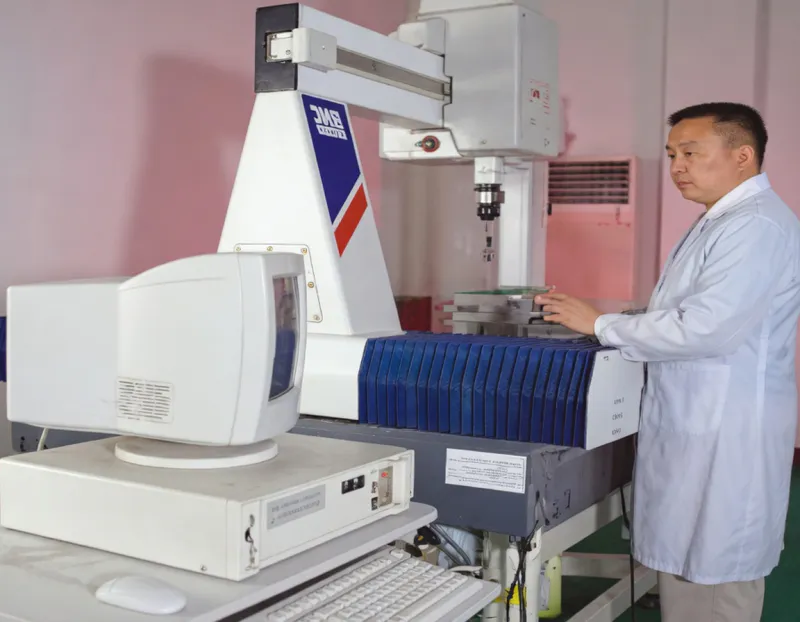
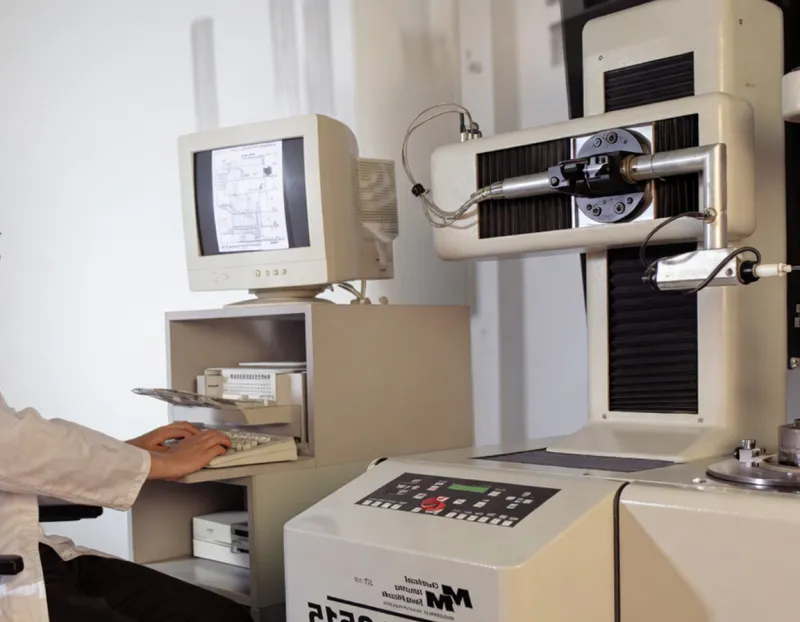
Onze wielproductiefaciliteit werkt met een platform dat rolvormtechnologie combineert met geautomatiseerde las-, balanscontrole- en coatingprocessen. Dit wordt ondersteund door een nationaal testcentrum dat is uitgerust met machines voor vermoeiingstests in bochten, radiale vermoeiingstestbanken, dynamische balanscontroleapparatuur, zoutnevelkamers en coördinatenmeetmachines (CMM). De productielijn heeft een jaarlijkse capaciteit van miljoenen wielen voor personen-, bedrijfs-, landbouw- en industriële toepassingen. De Japanse serie zware vrachtwagenopleggerwielen vormt een kernproduct binnen ons portfolio van bedrijfsvoertuigen. Elk vrachtwagenwiel dat de fabriek verlaat, krijgt een productietraceerrecord met informatie over het materiaalnummer, persparameters, lasinspectieresultaten, balansmeting en eindcoatinginspectie. Dit biedt de documentatieketen die wagenparkbeheerders en regelgevende instanties steeds vaker vereisen.
Workshop
8. Gerelateerde producten: Complete compatibiliteit van het assysteem
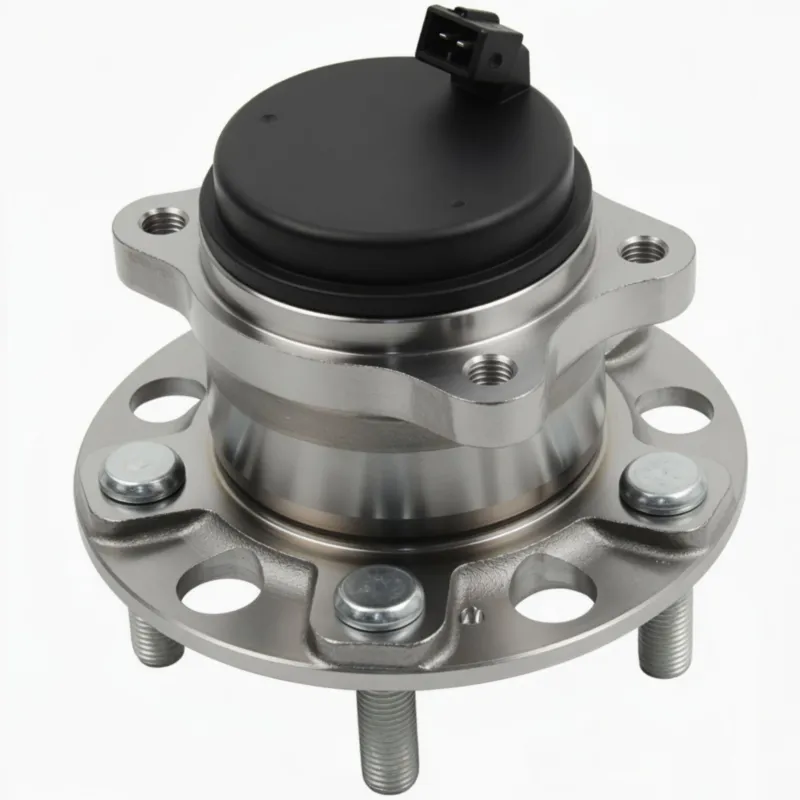
Een wiel van een vrachtwagentrailer maakt deel uit van een groter assysteem. De prestaties en levensduur ervan worden direct beïnvloed door de kwaliteit van de naaf, de as, de lagers en de bevestigingsonderdelen eromheen. Ons productassortiment omvat de belangrijkste componenten die met het wiel in contact staan bij de naaf. Dit maakt de aanschaf van complete assystemen vanuit één bron mogelijk en vereenvoudigt de compatibiliteitscontrole voor wagenparkbeheerders en werkplaatsmanagers.
Wielnaven
Aanhangwagenasbalk en aanhangwagenspindel
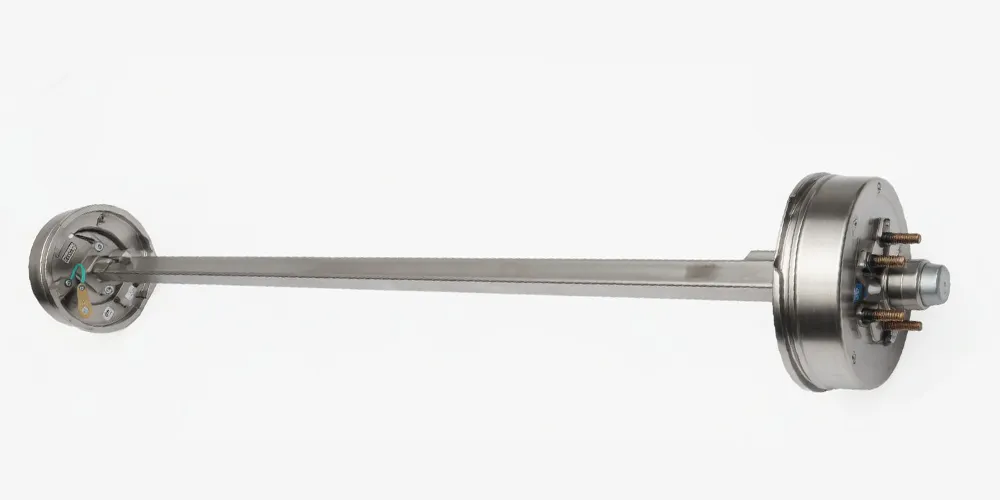
Bij de revisie en fabricage van nieuwe trailers in Colombia bepalen de asbalk en de fusee de naafgeometrie waar het wiel van de vrachtwagenoplegger op moet aansluiten. Onze fuseecomponenten zijn zo gedimensioneerd dat ze de EP Japan-specificatie wielnaafdiameters en steekcirkeldiameters accepteren, waardoor het mogelijk is om het complete assysteem bij één leverancier te betrekken. Deze geïntegreerde aanpak garandeert dimensionale compatibiliteit tussen alle componenten op de naafinterface en ondersteunt het one-stop-shop-model waar inkoopteams voor bedrijfsvoertuigen steeds vaker de voorkeur aan geven voor ascomponenten.
Veelgestelde vragen
Redacteur: PXY