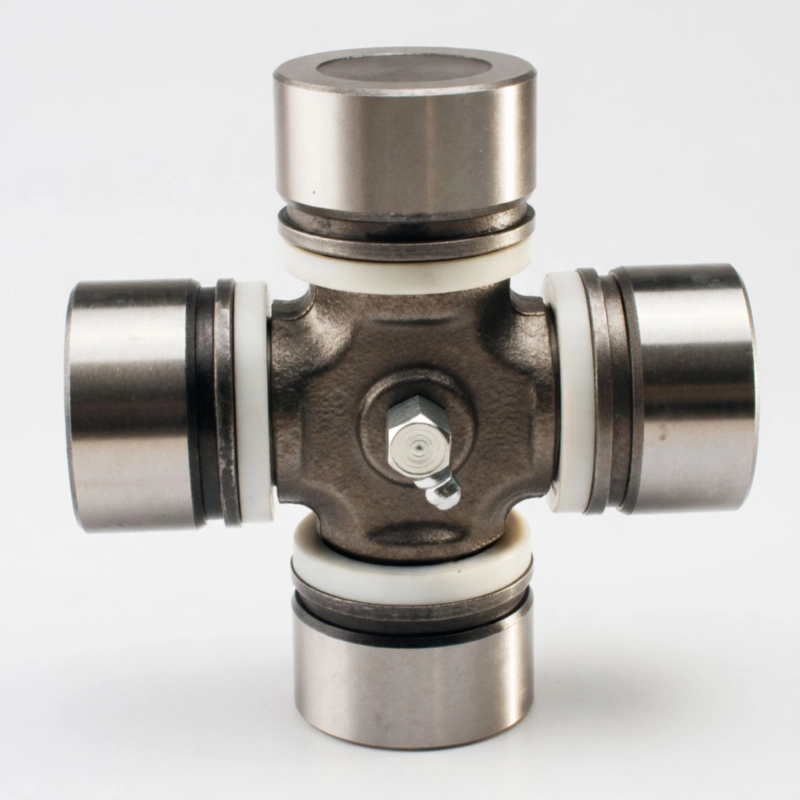
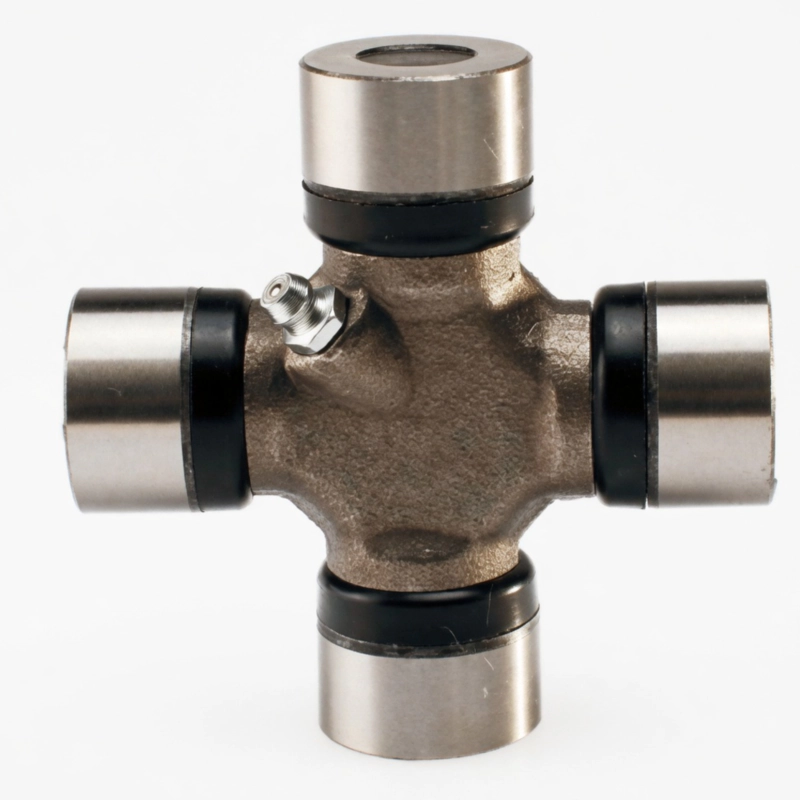
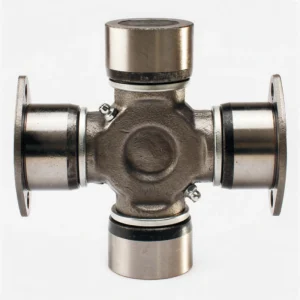
Giunto universale EP con 4 cuscinetti rotondi lisci e 4 cuscinetti rotondi scanalati
This universal joint series adopts 4 flat round bearings and 4 grooved round bearings, delivering stable transmission performance. It covers diversified dimensional parameters: D ranges from 15mm to 60mm, O from 34.36mm to 67.6mm, L from 38mm to 165mm. Compatible with SPICER, GMB, GKN, PRECISION and other mainstream brands, it has rich part models including 5-2532X, 5-260X, GU series, etc. The product has strong adaptability, reliable structure, and can meet the supporting needs of different transmission scenarios.
EP-U-JOINT WITH 4 PLAIN ROUND BEARINGS AND 4 GROOVED ROUND BEARINGS
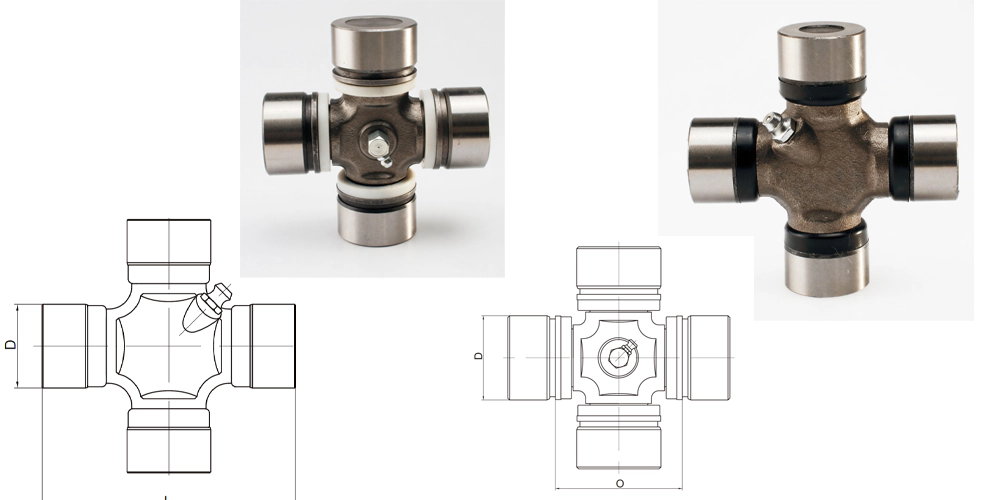
The universal joint — also commonly called a U-joint, Cardan joint, or Hardy-Spicer joint — is one of the most mechanically fundamental components in any drivetrain that must transmit rotation between two shafts whose centerlines meet at a variable or fixed angle. The EP-U-JOINT WITH 4 PLAIN ROUND BEARINGS AND 4 GROOVED ROUND BEARINGS covers two distinct bearing cup configurations in a single, well-indexed product series: FIG A (plain round bearing cup, smooth bore) and FIG B (grooved round bearing cup, circumferential oil groove bore). This dual-configuration approach means that buyers sourcing a universal joint replacement for passenger cars, light trucks, heavy commercial vehicles, or agricultural drivelines can locate the correct part within a single catalog reference, dramatically reducing procurement time and the risk of cross-type ordering errors. Each assembly is dimensionally cross-referenced against SPICER, GMB, GKN, and PRECISION standards, making OEM-grade universal joint replacement accessible through a single supplier.
The practical difference between plain and grooved bearing cups matters significantly in real-world operating conditions. Plain round bearing cups rely on pre-packed grease retained by a sealed end cap to lubricate the needle rollers over the service interval. Grooved round bearing cups carry one or more circumferential oil grooves machined into the bore, which distribute and hold grease more evenly around the needle roller path — an advantage under high continuous torque, large working angles, or extended re-greasing intervals.
1. Specifiche tecniche
The table below presents a representative selection of part numbers from the EP-U-JOINT WITH 4 PLAIN ROUND BEARINGS AND 4 GROOVED ROUND BEARINGS series. FIG A = plain round bearing cup (D and L dimensions apply); FIG B = grooved round bearing cup (D and O dimensions apply); FIG A/B = available in both configurations. All dimensions are in millimeters. The O column (outer cap diameter) applies to FIG B types; the L column (overall assembly length) applies to FIG A types. Scroll horizontally on mobile to view all columns without distortion.
| FICO | CODICE ARTICOLO | D | O | L | PICCANTE | GMB | GKN | PRECISIONE |
|---|---|---|---|---|---|---|---|---|
| B | 5-100X | 25.4 | 38.5 | 5-100X | G5-100X | 514 | ||
| UN | 5-101X | 23.82 | 61.3 | 5-101X | GU400 | HS150 | 340 | |
| B | 5-103X | 23.83 | 35 | 5-103X | G5-103X | HS410 | 338 | |
| UN | 5-10X | 30.188 | 106.35 | 5-10X | GU2050 | HS179 | 330 | |
| UN | 5-111X | 23.825 | 61.3 | 5-111X | HS194 | ANF | ||
| UN | 5-113X | 27 | 81.78 | 5-113X | G5-113X | HS166 | 369 | |
| B | 5-1200X | 27 | 57.4 | 5-1200X | G5-1200X | 429 | ||
| B | 5-1201X | 27/28.6 | 55.5 | 5-1201X | G5-1201X | 430 | ||
| B | 5-1203X | 27 | 67.6 | 5-1203X | G5-1203X | 433 | ||
| A/B | 5-1204X | 27/28.6 | 67.6 | 92 | 5-1204X | HS268 | 434 | |
| UN | 5-12062X | 48.05 | 161 | 5-12062X | ||||
| B | 5-1206X | 30.188 | 76.28 | 5-1206X | G5-1206X | 427 | ||
| UN | 5-12072X | 57.05 | 162.9 | 5-12072X | HS260 | |||
| UN | 5-12100X | 45 | 120.4 | 5-12100X | GU7530 | |||
| UN | 5-121X | 27 | 81.75 | 5-121X | G5-121X | |||
| B | 5-12213X | 38 | 57.2 | 5-12213X | GU7300 | |||
| UN | 5-12219X | 48.05 | 125.8 | 5-12219X | GU7620 | HS272 | ||
| UN | 5-12276X | 44.1 | 149 | 5-12276X | ||||
| UN | 5-12278X | 50 | 164 | 5-12278X | ||||
| UN | 5-12924X | 52 | 133 | 5-12924X | GU7560 | HS282 | ||
| UN | 5-12932X | 57.07 | 152 | 5-12932X | GU7630 | HS289 | ||
| B | 5-1301X | 31.3 | 71.5 | 5-1301X | G5-1301X | 304 | ||
| B | 5-1306X | 27.4 | 50.9 | 5-1306X | G5-1306X | HS442 | 315G | |
| B | 5-1306X-1 | 27.4 | 50.8 | 5-1306X-1 | G5-1306X-1 | HS442 | 317 | |
| B | 5-1309X | 28.6 | 63.96 | 5-1309X | G5-1309X | 316 | ||
| UN | 5-1312X | 28.6/28.58 | 91 | 60 | 5-1312X | 375 | ||
| B | 5-1312X | 28.6/28.58 | 91 | 60 | 5-1312X | 375 | ||
| UN | 5-13400X | 23.825 | 61.3 | 5-111X | 341 | |||
| UN | 5-134X | 27 | 92/81.7 | 5-134X | G5-134X | 353 | ||
| B | 5-1501X | 25.02 | 40 | 5-1501X | GUN27 | HS420 | 391 | |
| B | 5-1502X | 26 | 42 | 5-1502X | GUSTO13 | HS432 | 394 | |
| B | 5-1503X | 25.02 | 39.8 | 5-1503X | ||||
| B | 5-1505X | 28.02 | 52.9 | 5-1505X | GUN29 | HS448 | 393 | |
| B | 5-1506X | 38 | 57.2 | 5-1506X | GU7300 | HS480 | 463 | |
| B | 5-1508X | 26 | 53.6 | 5-1508X | GUT12 | HS436 | 390 | |
| UN | 5-1509X | 28.52 | 77.7 | 5-1509X | GUT14 | HS172 | 396 | |
| UN | 5-1510X | 29 | 49 | 5-1510X | GUT17 | HS454 | 387 | |
| B | 5-1511X | 32 | 61 | 5-1511X | GUT20 | HS470 | 389 | |
| B | 5-1514X | 22.52 | 34 | 5-1514X | 385 | |||
| UN | 5-1516X | 25.02 | 76.44 | 5-1516X | GUM88 | HS153 | 399 | |
| UN | 5-153X | 27 | 81.78 | 5-153X | GU1000 | HS166 | 369 | |
| UN | 5-155X | 34.93 | 126.22 | 5-155X | GU5-155X | HS275 | 358 | |
| UN | 5-160X | 30.188 | 106.35 | 5-160X | GU2050 | HS179 | 330 | |
| UN | 5-165X | 41.24 | 142 | 5-165X | G5-165X | HS252 | 359 | |
| B | 5-170X | 23.83 | 34.85 | 5-170X | G5-170X | HS410 | 338 | |
| UN | 5-178X | 30.188 | 92.075 | 5-178X | GU2200 | HS182 | 331 | |
| UN | 5-188X | 34.93 | 106.31 | 5-188X | GU2300 | HS263 | 351 | |
| UN | 5-200X | 27 | 81.78 | 5-200X | G5-200X | HS166 | 329 | |
| A/B | 5-212X | 27.02/28.6 | 60.2 | 92 | 5-212X | G5-212X | 355 | |
| UN | 5-213X | 27 | 92 | 5-213X | G5-213X | 354 | ||
| A/B | 5-248X | 25.39/27 | 38.6 | 62 | 5-248X | 361 | ||
| UN | 5-251X | 27 | 81.75 | 5-251X | G5-251X | HS166 | 369 |
| FICO | CODICE ARTICOLO | D | O | L | PICCANTE | GMB | GKN | PRECISIONE |
|---|---|---|---|---|---|---|---|---|
| B | 5-2532X | 28.6 | 49 | 5-2532X | 513 | |||
| B | 5-260X | 27 | 52.5 | 5-260X | G5-260X | HS162 | 365 | |
| UN | 5-263X | 34.93 | 106.31 | 5-263X | G5-263X | HS263 | 351 | |
| B | 5-273X | 27 | 67.6 | 5-273X | G5-273X | 433 | ||
| UN | 5-275X | 34.93 | 126.22 | 5-275X | G5-275X | HS275 | 358 | |
| B | 5-297X | 30.2 | 52.5 | 5-297X | G5-297X | HS457 | 371 | |
| B | 5-297X-1 | 30.2 | 52.5 | 5-297X-1 | G5-297X-1 | HS457 | 377 | |
| B | 5-3011X | 28.6 | 59.9 | 5-3011X | HS453 | 492 | ||
| A/B | 5-3022X | 27/28.6 | 60.2 | 81.78 | 5-3022X | 372 | ||
| B | 5-3147X | 28.6 | 60.2 | 5-3147X | GU6370 | HS451 | 534G | |
| B | 5-350X | 27 | 56.8 | 5-350X | 366 | |||
| A/B | 5-353X | 27/27.4 | 50.8/56.8 | 5-353X | G5-353X | 319 | ||
| UN | 5-431X | 33.3 | 67.48 | 5-431X | GGP-44R | 888 | ||
| UN | 5-443X | 27.01 | 61.95 | 5-443X | G5-443X | HS197 | 437G | |
| A/B | 5-450X | 27.01/27 | 52.5 | 81.78 | 5-450X | 455 | ||
| UN | 5-4X | 27.009 | 74.6 | 5-4X | GU1100 | HS195 | 344 | |
| A/B | 5-544X | 28.6/27 | 60 | 81.4 | 5-544X | 372 | ||
| B | 5-74X | 27 | 52.4 | 5-74X | G5-260X | HS441 | 356 | |
| B | 5-92X | 24.61 | 34.36 | 5-92X | GGPL-6R | HS416 | 861 | |
| UN | GU1000 | 27 | 81.8 | 5-153X | GU1000 | HS166 | 369 | |
| UN | GU1100 | 27.01 | 74.6 | GU1100 | HS195 | 344 | ||
| UN | GU2050 | 30.188 | 106.35 | 5-160X | GU2050 | HS179 | 330 | |
| UN | GU2200 | 30.188 | 92.075 | 5-178X | GU2200 | HS182 | 331 | |
| UN | GU2300 | 34.93 | 106.31 | 5-188X | GU2300 | HS263 | 351 | |
| B | GU2500 | 31.25 | 46 | 5-1300X | ||||
| UN | GU3000 | 39.69 | 115.95 | |||||
| UN | GU3500 | 34.93 | 126.22 | GU3500 | HS176 | 370 | ||
| UN | GU3810 | 50 | 152.6 | |||||
| UN | GU3850 | 39 | 127 | |||||
| UN | GU4000 | 47.65 | 135 | GU4000 | HS316 | |||
| UN | GU4470 | 42.12 | 104.5 | U447 | ||||
| UN | GU5000 | 49.2 | 154.9 | GU5000 | ||||
| UN | GU7280/4 | 24.09 | 74.55 | |||||
| B | GU7300 | 38 | 57.2 | 5-1506X | U730 | HS480 | ||
| UN | GU7420 | 30 | 81.8 | |||||
| UN | GU7430 | 35 | 96.8 | U743 | HS222 | |||
| UN | GU7440 | 38.03 | 105.6 | U744 | HS236 | |||
| B | GU7470 | 42 | 66 | |||||
| UN | GU7530 | 45 | 120.4 | HS260 | ||||
| UN | GU7560 | 52.1 | 133 | U756 | HS282 | |||
| UN | GU7610 | 53 | 135 | U761 | HS284 | |||
| UN | GU7620 | 48.05 | 125.8 | U762 | HS272 | |||
| UN | GU7630 | 57 | 152 | U763 | HS289 | |||
| UN | GU7650 | 48 | 126 | U765 | ||||
| UN | GU7670 | 48.03 | 115.5 | U767 | ||||
| UN | GU8130 | 57 | 144 | U813 | HS288 | |||
| UN | U990 | 57.07 | 152 | |||||
| UN | SPL140-1X | 49.22 | 139 | |||||
| UN | SPL170-1X | 55 | 165 | |||||
| UN | SPL250-1X | 60 | 163 | |||||
| UN | SPL70-1X | 34.9 | 126.1 | |||||
| UN | SPL90-1X | 41.28 | 126 | |||||
| UN | ST1538 | 15 | 38 | |||||
| UN | ST1539 | 15 | 39 |
2. Cinque vantaggi chiave del prodotto
1 — Single-Range Coverage for Both Bearing Types
This product series consolidates FIG A (plain) and FIG B (grooved) universal joint bearing configurations into one catalog sequence, allowing workshops in Bogotá, Medellín, Cali, and across Colombia to stock both types under a unified part numbering system. Rather than maintaining separate supplier relationships for each bearing style, buyers access the full dual-bearing universal joint catalog from a single sourcing point. The A/B dual-configuration entries — such as part 5-1204X and 5-1312X — add further flexibility, accommodating both bearing styles within one dimensional specification for applications where either type may be acceptable.
2 — Comprehensive OEM Cross-Reference Data
Every universal joint in this series is cross-referenced against SPICER, GMB, GKN, and PRECISION OEM and aftermarket standards. For automotive parts distributors serving repair shops that maintain a mixed fleet — North American pickups, European sedans, Japanese SUVs, and Korean commercial vans — this comprehensive cross-reference coverage allows parts staff to confirm the correct replacement part number quickly without consulting multiple separate catalogs. The listed cross-references include both the original SPICER 5-series numbering and equivalent GMB, GKN, and PRECISION codes, ensuring compatibility confirmation regardless of which reference the vehicle's service documentation uses.
3 — Close-Tolerance Manufacture for Reduced NVH
Journal diameter dimensions (D) are held to tight manufacturing tolerances across the entire production batch, ensuring correct needle roller preload and uniform load distribution across all four trunnion arms. An automotive driveline universal joint transmits the full drivetrain torque through a small cross-shaped cross assembly at a continuously varying joint angle — the quality of journal diameter accuracy directly determines the noise, vibration, and harshness (NVH) behavior of the assembled driveshaft and how long it operates before fatigue failure. Dimensional precision is treated as the primary quality metric in production of this series, translating to longer replacement intervals and lower maintenance cost per vehicle in service.
4 — Broad Dimensional Range for Multi-Vehicle Coverage
Journal diameters (D) in this range span from approximately 22.52 mm (part 5-1514X) to 57.07 mm (part 5-12932X), with assembled lengths (L) reaching 164 mm in the largest FIG A configuration and outer cap diameters (O) extending to 91 mm in the larger FIG B universal joint types. This breadth covers the full spectrum from compact passenger car propeller shaft joints through to the heavy-duty truck and agricultural machinery applications that drive the largest share of demand in Colombia's transport, logistics, and farming sectors. Buyers rarely need to go outside this product series to cover their vehicle range — whether they service steering column universal joints, driveshaft U-joints, or PTO driveline crosses.
5 — Grooved Cup Design for Demanding Duty Cycles
The Type B grooved round bearing cup is engineered for applications where plain cups reach their lubrication limits — high continuous torque, large sustained working angles, or operating environments where vehicle re-greasing intervals are extended. The circumferential grooves in the bore ensure that the grease film distributes consistently around the needle roller track even under centrifugal loading from high shaft RPM. For heavy-duty truck universal joints operating along Colombia's long-distance Andean freight corridors, and for agricultural equipment universal joints running PTO-powered machinery across variable terrain, this design choice provides a measurable improvement in grease retention and bearing fatigue life compared to standard plain-bore alternatives.
3. Principio universale di funzionamento dei giunti
The fundamental operating principle of a universal joint is the mechanical accommodation of torque transmission between two shafts whose rotational axes intersect at an angle. At the mechanical core of every universal joint is the cross assembly (also called the spider or journal cross) — a precision-machined component with four cylindrical trunnions arranged in two perpendicular pairs. Each trunnion fits into a hardened bearing cup that contains a set of needle roller bearings. One pair of opposing trunnions connects to the driving yoke; the perpendicular pair connects to the driven yoke. As the driving shaft rotates, it forces the cross to rotate, which in turn drives the second yoke and the connected driven shaft. Because the two yoke planes are perpendicular, the joint accommodates a continuous change in shaft angle through each revolution without disconnecting the torque path. This is what makes the universal joint an enabling component in virtually every vehicle driveshaft system — from the propeller shaft in a rear-wheel-drive car to the steering universal joint in a truck's steering column.
An important characteristic of a single universal joint is that it introduces a cyclic angular velocity variation in the driven shaft whenever the joint angle is non-zero. At any given joint angle, the driven shaft oscillates above and below the driving shaft speed twice per revolution — the amplitude of this variation increases with the square of the joint angle. This is why automotive driveshafts are typically designed with two universal joints at matched angles: the velocity variation introduced by the first joint is cancelled by the second, producing a constant output velocity at the differential or gearbox input. The universal joint working principle therefore requires not just a properly dimensioned replacement part, but also correct installation geometry — particularly ensuring equal and opposing joint angles in a two-joint driveshaft assembly — to achieve smooth, vibration-free driveshaft operation. Grooved bearing cups (FIG B) assist in this context by maintaining more consistent lubrication under the cyclic loading pattern that arises from the velocity variation cycle, particularly in higher-angle applications like steering column universal joints and short-shaft agricultural PTO drivelines.
4. Materiali e costruzione
The journal cross — the central functional component of every universal joint in this series — is forged or precision-machined from a medium-to-high carbon alloy steel, then heat-treated through a controlled case-hardening or through-hardening process to achieve the hardness profile required for sustained needle roller contact. The journal surface (trunnion) must reach sufficient surface hardness to resist the Hertzian contact stress from needle roller loading under full drivetrain torque, while the core remains tough enough to absorb shock loads without brittle fracture — a balance achieved through carburizing, induction hardening, or carbonitriding depending on journal size and application torque class. After heat treatment, the trunnion outer diameter is ground to a close tolerance finish, typically held within ±0.005 mm to ±0.010 mm for the journal diameter (D), which is the dimension that determines needle roller preload and bearing clearance in the assembled universal joint cross assembly.
The bearing cups (caps) are formed from low-carbon or case-hardening steel, drawn or forged to shape, then case-hardened to provide a hard wear surface on the inner bore where the needle rollers run. For FIG B grooved cups, the circumferential oil groove is machined or formed into the bore prior to heat treatment and is then left with a consistent groove depth and finish after hardening to ensure reliable grease retention during service. The needle rollers themselves are precision ground to uniform diameter and length within tight tolerances (typically ISO grade 3 or better), ensuring equal load distribution across all rollers in each cup. Bearing retention may be achieved through C-clips, U-clips, pressed-in retaining rings, or injection-molded plastic retaining caps depending on the specific part number configuration — the choice of retention method is noted in the technical datasheet for each individual part and aligns with the OEM specification for the corresponding SPICER, GMB, GKN, or PRECISION cross-reference number. All external steel surfaces receive a rust-inhibiting coating prior to packaging to protect against corrosion during storage and transit to end markets including the automotive parts trade in Colombia.
5. Scenari applicativi
The EP-U-JOINT series covers a wide range of driveline applications. The following scenarios represent the primary use cases where plain and grooved bearing cup universal joints are most commonly deployed.
Automotive Propeller Shaft (Rear-Wheel Drive & 4WD)
The most common universal joint application is the automotive propeller shaft connecting the transmission output to the rear axle differential — or, in four-wheel drive vehicles, connecting transfer case outputs to front and rear axles. These joints must transmit full engine torque through a joint angle that changes dynamically as the suspension travels. For Colombian vehicles operating on the mixed road surfaces characteristic of urban roads in Bogotá and off-highway terrain in rural departments, the propeller shaft universal joint experiences a broad range of torque and angle combinations within a single drive cycle. Both plain (FIG A) and grooved (FIG B) configurations are used in this application depending on vehicle manufacturer preference.
Heavy Commercial Vehicle & Truck Driveshafts
For universal joint truck applications — multi-axle freight trucks, city buses, and heavy-duty logistics vehicles operating across Colombia's national road network — the journal cross experiences substantially higher torque loads and more demanding duty cycles than passenger car applications. Grooved round bearing cups (FIG B) are frequently specified in OEM truck driveshafts for their improved grease retention under sustained high-torque conditions. The larger-diameter part numbers in this series — including 5-1506X (D=38 mm), 5-1511X (D=32 mm), and 5-12100X (D=45 mm) — are dimensioned specifically for this segment, providing the bearing surface area needed to manage the contact stress levels generated by heavy vehicle GVW torque demands.
Giunto universale del piantone dello sterzo
The steering universal joint connects the steering wheel column to the steering rack or gear input shaft, accommodating the angular offset between the driver's steering column and the steering gear location in the engine bay or chassis. Steering column universal joints operate at much lower torque than driveshaft joints but at much higher joint angles and with much more frequent direction changes — every steering input produces a change in joint loading direction. The steering universal joint must provide minimal backlash and smooth, consistent torque transfer to maintain precise steering feel. This product series includes several part numbers dimensioned for steering column applications, where the plain bearing cup design is most common and where dimensional accuracy is paramount for steering response quality.
Agricultural Machinery PTO Drivelines
In Colombia's agricultural equipment sector — including tractors, harvesters, and soil preparation implements widely used in the coffee, sugarcane, and rice-producing regions of Antioquia, Valle del Cauca, and the Llanos — the universal joint in car and farm equipment applications must accommodate the high angles and shock load reversals typical of PTO driveline operation. Agricultural PTO drivelines commonly operate at joint angles between 15° and 25°, significantly higher than standard propeller shaft applications, which demands robust lubrication retention. Both plain and grooved bearing type universal joints appear in this sector, with the grooved type offering longer re-greasing intervals that reduce service requirements on equipment operating far from the nearest dealer in rural areas.
Industrial Machinery & Transfer Cases
Beyond on-road vehicles, the universal joint types catalog serves industrial machinery applications where torque must be transferred between non-collinear shafts in concrete mixers, mining conveyors, pump drives, and industrial fans. In Colombia's active mining sector (coal in Boyacá and Cesar; gold and silver in Antioquia) and in the industrial zones around Barranquilla, Cartagena, and Cali, industrial universal joints face demanding duty cycles including continuous operation, heavy unidirectional torque, and exposure to dust, water, and vibration. The heavy-duty part numbers in this series — with journal diameters up to 57.07 mm — cover industrial driveline applications alongside their commercial vehicle equivalents, providing a universal impact joint solution across multiple industry segments.
6. Conformità normativa e standard di settore
Universal joint and driveshaft components used in road vehicles are subject to safety and performance regulations across every major market. Buyers in Colombia sourcing universal joint replacement parts should be aware of the following applicable frameworks.
Colombia — Vehicle Safety & Automotive Parts Import Regulations: In Colombia, road vehicles are subject to roadworthiness requirements under Decreto 1079 de 2015 (Decreto Único Reglamentario del Sector Transporte) administered by the Ministerio de Transporte. Vehicles registered in the RUNT (Registro Único Nacional de Tránsito) must meet minimum safety and roadworthiness standards that encompass driveshaft and steering system integrity. For commercial freight vehicles, the Ministerio de Transporte's periodic technical inspection requirements (Revisión Técnico-Mecánica y de Gases, administered through CDA centers) include driveshaft and undercarriage inspections where universal joint condition is evaluated. Automotive parts imported into Colombia are subject to DIAN (Dirección de Impuestos y Aduanas Nacionales) customs classification under HS heading 8708 (parts and accessories of motor vehicles), and ICONTEC (Instituto Colombiano de Normas Técnicas y Certificación) NTC standards may apply to vehicle component safety at the national level. Importers should confirm the applicable tariff subheading and any applicable NTC requirements before placing commercial orders.
International Standards for Universal Joints: ISO 7646 (Road Vehicles — Universal Joints of the Cardan Type — Dimensions and Connection Parameters) provides the international dimensional framework for automotive driveshaft universal joint types, defining journal dimensions, bearing cup sizes, and yoke connection parameters. ISO 9679 covers universal joints for agricultural machinery PTO drivelines, establishing torque rating and safety guarding requirements relevant to the agricultural applications of this product. In Europe, the Machinery Directive 2006/42/EC applies to PTO-driven agricultural equipment, requiring CE conformity for machinery that includes power transmission components such as universal joint cross assemblies. For automotive applications in the EU, ECE Regulation No. 43 and related vehicle type approval requirements govern driveshaft component performance. SAE standard J1050 (Universal Joint and Driveshaft Design Manual, published by SAE International) and AGMA standards for power transmission components provide the technical benchmarks for North American market applications. In Brazil (Colombia's Mercosul trade partner), ABNT NBR 11900 and related standards govern automotive parts quality and interchangeability.
Occupational Safety & Equipment Guarding: Regardless of jurisdiction, universal joint driveshafts must be properly guarded when used in PTO applications. In Colombia, Decreto 1072 de 2015 (Sistema de Gestión de la Seguridad y Salud en el Trabajo, administered by the Ministerio del Trabajo) mandates that all rotating power transmission components in workplaces — including PTO shafts with exposed universal joints — have adequate guarding to prevent contact injuries. ASABE Standard S206 (Safeguarding of Agricultural Equipment) provides the technical guarding specification widely referenced internationally for PTO universal joint protection. Ensuring correct guard installation alongside the universal joint replacement itself is both a legal requirement and a critical safety practice in any workshop or field service context.
7. Chi siamo
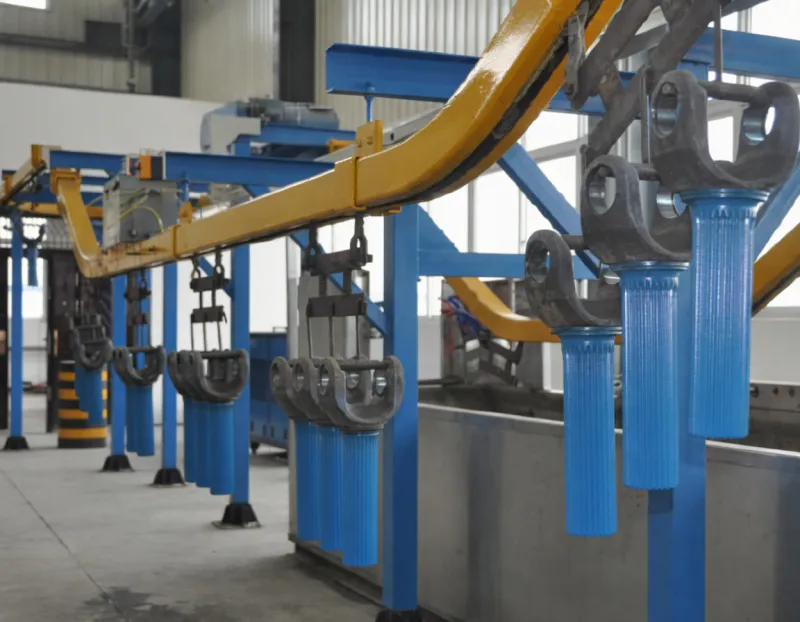
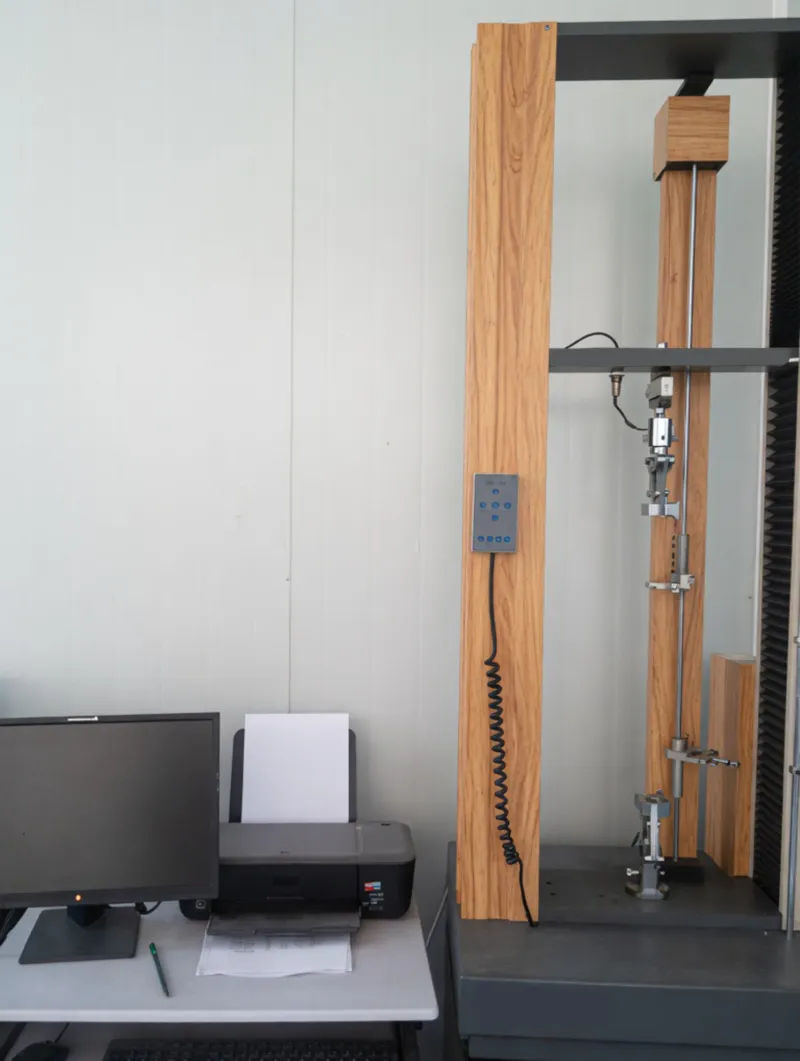
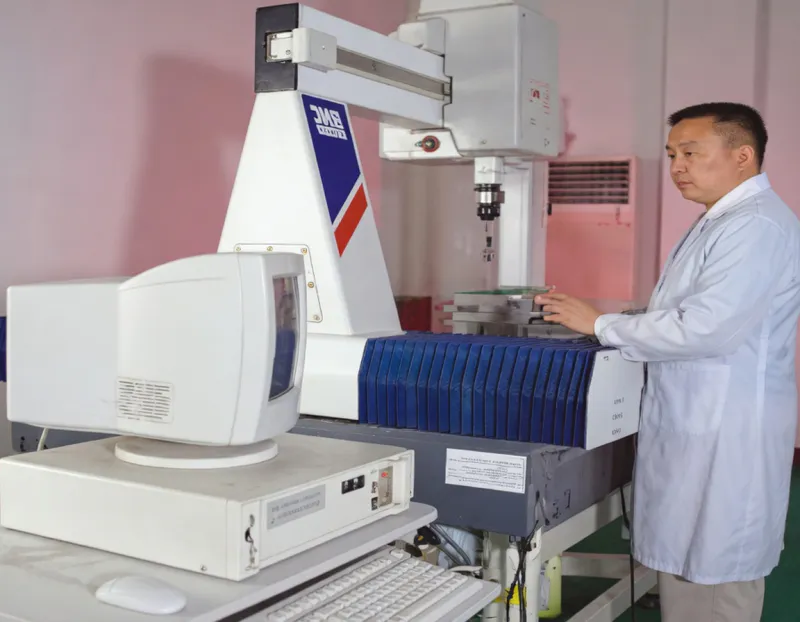
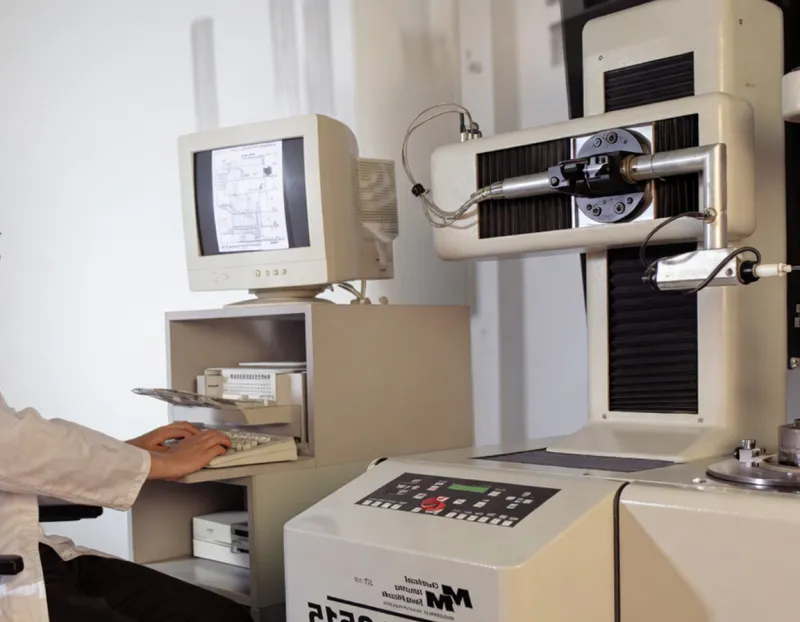
We are a specialized manufacturer and supplier of power transmission components, with a production focus on automotive and industrial universal joints, driveshaft assemblies, wheel hubs, and related drivetrain parts. Our manufacturing operations cover a production area exceeding 35,000 square meters and are equipped with CNC gear hobbing machines, precision grinding centers, plasma cutting systems, induction hardening lines, and three-axis coordinate measuring systems for finished product dimensional verification. We have held ISO 9001 quality management system certification for over two decades, providing the documented quality framework that underpins our dimensional consistency and OEM cross-reference accuracy across the full universal joint range. Our in-house inspection capability includes surface hardness testing, dimensional gauging, and metallurgical verification — allowing us to confirm that each production batch meets the journal diameter tolerances and surface finish requirements on which bearing fit and service life depend. For buyers in Colombia and across Latin America who need a reliable universal joint supplier capable of providing comprehensive cross-reference data, competitive per-unit pricing for commercial quantities, and consistent part availability across the full product range, we welcome direct inquiries and distributor partnership discussions.
Workshop
8. Prodotti correlati e compatibilità di sistema
A universal joint does not operate in isolation — it is part of a complete driveshaft or steering system that requires compatible components at every connection point. We produce the full range of drivetrain accessories that work alongside our universal joint series, offering a one-stop supply solution that simplifies procurement and ensures dimensional compatibility across the entire assembly. Our universal coupling design philosophy across the full product range eliminates the tolerance stack-up risks that arise when mixing components from different manufacturers in a single driveshaft build.
Unità mozzo ruota
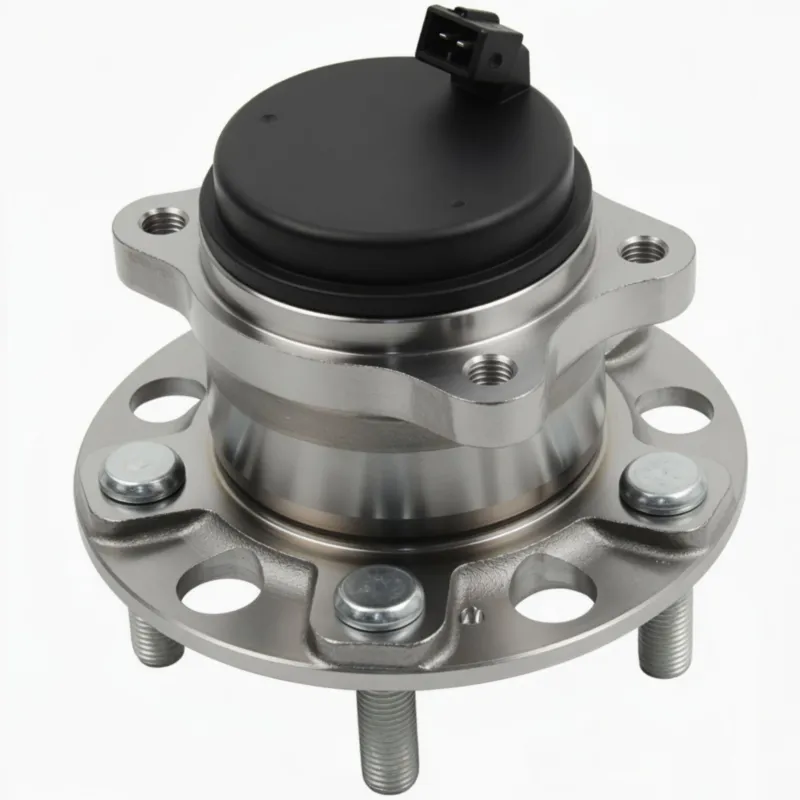
The wheel hub connects the driveshaft end — often via a CV joint or universal joint — to the wheel assembly. Correct hub bearing specification ensures that the axial and radial loads from the wheel are managed without inducing additional stress back through the driveshaft universal joint. Using matched wheel hub units from the same supplier as your universal joint parts reduces the risk of installation incompatibilities and simplifies warranty claims when whole-assembly replacement is needed. Our full series of automotive wheel bearing units covers the vehicle types serviced by this universal joint range.
Assi
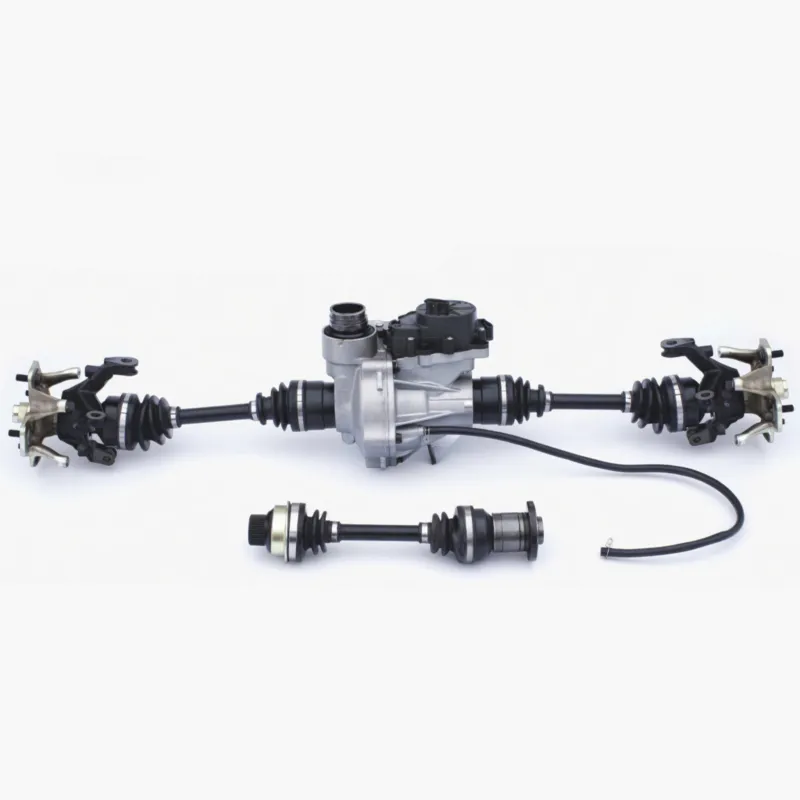
The axle shaft transmits torque from the differential to the wheel hub, often incorporating a universal joint at one or both ends to accommodate suspension travel and steering movement. Axle universal joint sizing must match the axle shaft spline dimensions and flange specifications — a mismatch here creates installation difficulties or improper torque capacity that leads to premature failure. Our axle range is dimensionally coordinated with the universal joint series, and cross-referencing the axle and universal joint part numbers together ensures the complete driveshaft assembly meets the OEM specification for the target vehicle. A one-stop supply approach eliminates the delays associated with sourcing matched components from separate suppliers.
Domande frequenti
Redattore: PXY
Prodotti correlati
-
Giunto universale EP con 2 cuscinetti a farfalla e 2 cuscinetti tondi scanalati o lisci
-
Giunto universale serie EP-TOYOTA | Giunto universale Toyota
-
Giunto universale EP con 2 piastre di saldatura e 2 cuscinetti rotondi lisci
-

Giunto universale EP con 2 piastre di saldatura e 2 cuscinetti ad ala alta