描述
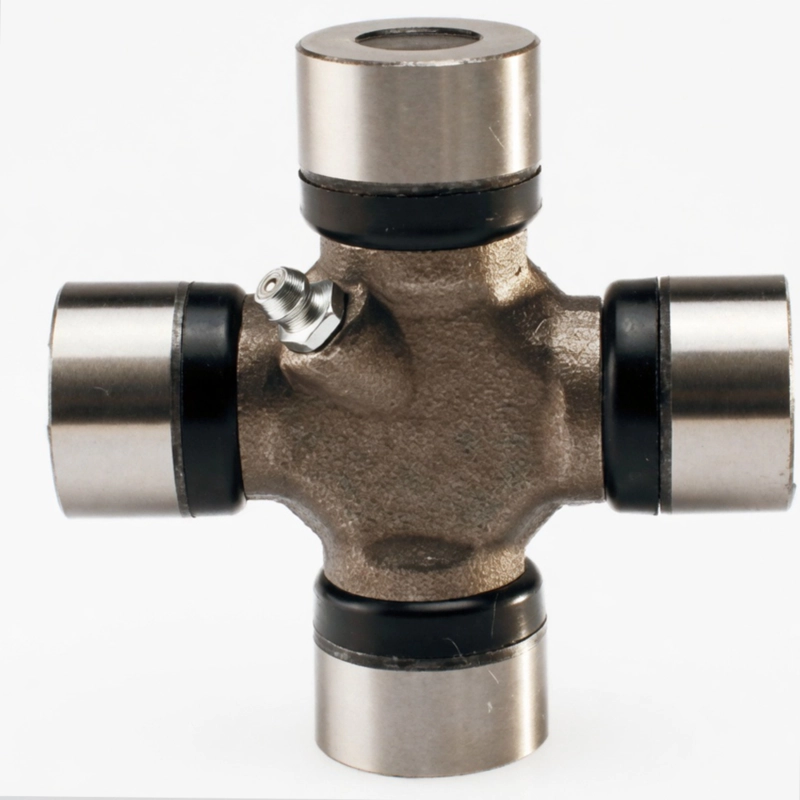
EP — DAIHATSU Universal Joint
GUD Series | Precision Engineered for DAIHATSU Vehicles | OEM Cross-Reference Available
1. Technical Specifications — EP GUD Series DAIHATSU Universal Joint
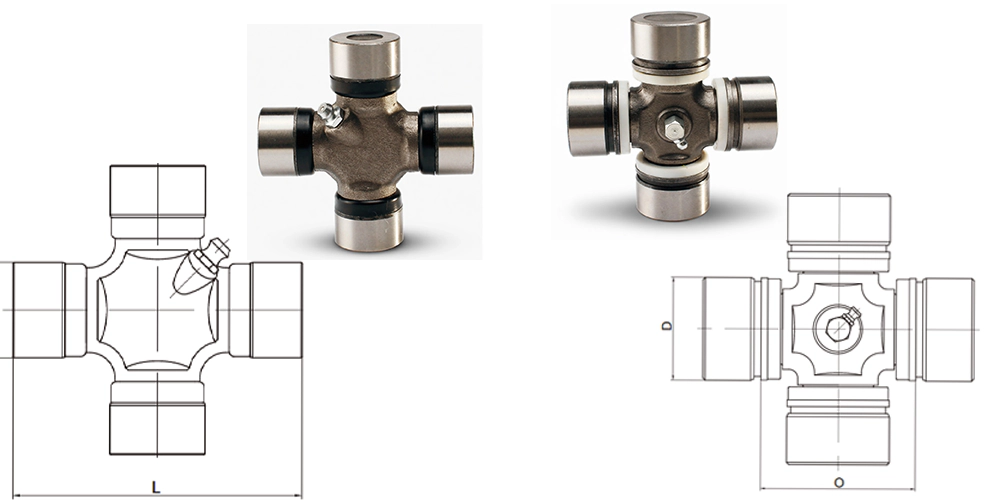
All dimensions in millimeters (mm). FIG A = standard cross-type; FIG B = flange-type cup. D = journal diameter; O = outer cup diameter (FIG B only); L = assembly length (FIG A). Cross-reference part numbers are provided for KOYO and MATSUBA equivalents.
| 如图 | 零件编号 | D(毫米) | O (mm) | L(毫米) | ORIGINAL NO | KOYO | MATSUBA |
|---|---|---|---|---|---|---|---|
| 一个 | GUD81 | 20 | — | 55 | 4141-4120 | — | UJ218 |
| 一个 | GUD82 | 28.02 | — | 80 | 4610-4120 | — | UJ220(225) |
| 一个 | GUD83 | 25 | — | 63.8 | 4123-4120 | — | UJ219 |
| 一个 | GUD84 | 28.01 | — | 80 | 04371-87301 | D2880A | — |
| B | GUD85 | 28.5 | 60.1 | — | 04371-87302 | D2992 | — |
| 一个 | GUD86 | 20 | — | 55.1 | 04371-87501 | — | — |
| 一个 | GUD87 | 28 | — | 80 | 04371-87303 | — | — |
| B | GUD88 | 22.5 | 34.9 | — | 04371-87503 | — | UJ226 |
| B | GUD89 | 30 | 55 | — | 04371-87304 | — | — |
FIG A = standard Cardan cross type. FIG B = flange-end cup type. “—” indicates dimension not applicable to that FIG type or no cross-reference listed. D = journal (trunnion) diameter; O = flange outer diameter (FIG B); L = overall assembly length (FIG A).
2. What Is a DAIHATSU Universal Joint?
A DAIHATSU Universal Joint is a precision mechanical coupling specifically engineered to match the drivetrain geometry, torque requirements, and dimensional tolerances of DAIHATSU passenger cars, light commercial vehicles, and compact trucks. The universal joint — commonly abbreviated as U-joint or referred to as a joint universal in technical literature — serves as the flexible link between two rotating shafts that are not perfectly aligned, allowing torque to be transmitted smoothly across an angle. In DAIHATSU vehicles, this component sits at one or both ends of the propeller shaft (driveshaft), connecting the gearbox output to the rear differential or the front axle depending on the drivetrain configuration.
The EP GUD series of DAIHATSU Universal Joint replacements is manufactured to match OEM specifications, including the original part numbers issued by DAIHATSU and the cross-reference designations used by bearing and drivetrain suppliers such as KOYO and MATSUBA. Each joint in the GUD series undergoes dimensional verification against the original equipment geometry — confirming journal diameter (D), outer cup diameter (O), and assembly length (L) — so that the replacement fits the existing yokes without requiring modification.
3. 五大产品优势
Every EP GUD series DAIHATSU Universal Joint is produced to match the original DAIHATSU part number dimensions, including journal diameter, cup outer diameter, and assembly length. This ensures direct fitment into existing driveshaft yokes without the need for reworking or shimming. Precise geometry also maintains the original operating angle range and load distribution across the needle roller bearings — critical for preventing premature wear in high-mileage applications common in Colombia’s commercial vehicle fleet.
The GUD series DAIHATSU Universal Joint is cross-referenced against DAIHATSU original part numbers (e.g. 4141-4120, 4610-4120, 04371-87301) as well as equivalent designations from KOYO (D2880A, D2992) and MATSUBA (UJ218, UJ219, UJ220, UJ226). This multi-catalogue referencing allows procurement teams and workshop technicians to source the correct DAIHATSU GUD Universal Joint quickly — even when only one reference system is available — minimising vehicle downtime in service.
The spider (cross) body and bearing cups are produced from case-hardened alloy steel, providing a hard wear surface over a tough, ductile core. This combination allows the joint to absorb the shock loads transmitted through the driveshaft during acceleration on Colombia’s varied road surfaces — including unpaved rural roads, urban cobblestones, and mountain pass gradients — without crack initiation at the journal roots, which is the most common failure mode in inferior replacement joints.
Each bearing cup assembly contains a set of precision needle rollers running in a hardened race, retained by a dust seal that prevents external contamination from entering the bearing cavity. For vehicles operating in Colombia’s high-altitude Andean regions or humid coastal lowlands — both environments that accelerate bearing corrosion — the sealed cup design significantly extends service life compared to unsealed variants. Grease nipple provisions on selected models allow periodic relubrication where the application demands it.
The EP GUD series covers nine distinct DAIHATSU application variants (GUD81 through GUD89), spanning journal diameters from 20 mm to 30 mm and assembly lengths from 55 mm to 80 mm. This range covers the majority of DAIHATSU propeller shaft and 转向万向节 applications across the Charade, Terios, Feroza, Delta truck, and Hijet platforms — giving importers and parts distributors in Colombia and the broader Andean market the ability to stock a compact range that serves a wide vehicle population.
4. Universal Joint Working Principle
这 universal joint working principle is based on a four-point articulation mechanism. The central component — the spider or cross — is a cruciform forging with four precision-ground journals arranged at 90° to each other. Two opposing journals engage the driving yoke (connected to the gearbox or propeller shaft section), while the other two journals engage the driven yoke (connected to the differential or the next shaft section). Each journal seats inside a cup-shaped bearing housing packed with needle rollers, allowing rotation about that journal’s axis.
When the driving yoke rotates, it carries the spider with it. Because the spider can pivot simultaneously about both pairs of journals, it transmits this rotation to the driven yoke even when the two yokes are at an angle to each other. This is the fundamental answer to the question: What is the main function of a universal joint? — it is to transmit rotary motion and torque between two shafts that intersect at an angle, without binding or generating excessive vibration. In automotive applications, the joint accommodates the geometric changes that occur as the suspension moves through its travel range, or as the steering column rotates to steer the vehicle.
It is worth noting that a single Cardan-type universal joint produces a cyclic velocity variation in the driven shaft when operating at an angle — the driven shaft speeds up and slows down twice per revolution relative to the constant input speed. In DAIHATSU propeller shaft assemblies, this is corrected by using two joints in a double-Cardan arrangement with equal and opposite operating angles, so that the velocity variation of the first joint is cancelled by the second. The 转向柱万向节 in DAIHATSU vehicles performs a similar function — allowing the steering column to change angle between the steering wheel and the steering rack without introducing steering feel irregularities to the driver.
5. Material & Construction
The spider (cross trunnion) in each EP GUD series DAIHATSU Universal Joint is forged from chromium-molybdenum alloy steel — a grade that offers a strong combination of hardenability, fatigue resistance, and toughness under cyclic torsional loading. After forging, the spider undergoes case carburising or carbonitriding heat treatment, building a hardened surface layer (typically 58–64 HRC at the surface) over a core that remains tough enough to absorb impact loads. The journals are then precision-ground to the specified diameter tolerance — critical for achieving the correct needle roller preload in the bearing cup.
Bearing cups are stamped and drawn from low-carbon case-hardening steel strip, then carburised and hardened to provide the needle roller race with sufficient surface hardness to prevent brinelling under shock loading. The needle rollers themselves are manufactured to DIN 5402 dimensional standards — full-complement or caged depending on the model variant — from high-carbon chromium bearing steel (100Cr6 / AISI 52100). The dust seals are moulded from nitrile rubber (NBR) or polyacrylate elastomer, chosen for compatibility with chassis grease and resistance to the temperature range encountered in the driveshaft tunnel and steering column environments.
The snap rings (circlips) used to retain the bearing cups in the yoke bores are manufactured from spring steel and dimensioned to the specific cup outer diameter of each GUD variant. Correct snap ring engagement is critical during changing universal joint procedures — an incorrectly seated snap ring will allow axial migration of the cup under torque, leading to rapid failure. All EP GUD DAIHATSU Universal Joint are supplied as complete assemblies including spider, four pre-packed bearing cups, seals, and retaining rings, ready for direct installation.
6. Universal Joint Application Scenarios
Understanding the range of Universal joint application contexts helps in selecting the correct GUD series variant and ensuring correct installation orientation. The following scenarios represent the primary use cases for EP DAIHATSU Universal Joints in the Colombian and Latin American vehicle fleet.
Propeller Shaft — Rear-Wheel Drive
On DAIHATSU rear-wheel drive models including the Delta light truck and certain Hijet van variants, the propeller shaft runs from the gearbox rear flange to the rear differential. Two DAIHATSU Universal Joints are fitted — one at each end of the shaft — to accommodate the angle between the fixed gearbox and the suspension-sprung differential. The GUD82, GUD84, GUD85, GUD87, and GUD89 variants with larger journal diameters (28–30 mm) are typically found in these higher-torque truck and van driveline applications, where the joint must handle sustained traction loads on Colombia’s goods transport routes including the Bogotá–Medellín and Bogotá–Cali corridors.
Four-Wheel Drive Transfer Case Output
DAIHATSU 4WD models such as the Terios and Feroza use universal joints at the transfer case output shafts, connecting the two-speed transfer case to both the front and rear propeller shafts. In these applications, the joint must function reliably under the low-speed, high-torque conditions of off-road driving — a relevant consideration for vehicles used in Colombia’s Llanos Orientales cattle ranching regions and the coffee and sugarcane growing areas of Antioquia and Nariño where unpaved access tracks are common. Correct 万向关节置换 intervals are especially important in 4WD applications due to the higher torsional stresses involved.
Steering Column — Universal Steering Joint
这 转向万向节 — also referred to as the universal steering joint — connects the upper and lower sections of the DAIHATSU steering column, allowing the column to change angle around the bulkhead firewall and down to the steering rack or box. The smaller-diameter GUD81 (D=20 mm, L=55 mm) and GUD83 (D=25 mm, L=63.8 mm) variants are found in this application. Unlike driveshaft joints, the 转向柱万向节 operates through relatively small angles but is subjected to continuous articulation as the driver steers, making bearing wear and seal integrity particularly important for maintaining precise steering feel over the vehicle’s service life.
Front Axle Half-Shaft — AWD / 4WD
On full-time 4WD and part-time 4WD DAIHATSU models with solid front axles, a universal joint connects the differential output to the half-shaft and then to the steering knuckle. In these installations the joint must accommodate both the driveshaft rotation angle and the steering lock angle simultaneously — a more demanding condition than a simple propeller shaft application. The universal joint in car front axle context requires correct phasing during assembly to minimise the secondary couple that causes drivetrain vibration during tight cornering manoeuvres.
Light Commercial Vehicle — Urban Delivery Fleet
The DAIHATSU Hijet and Gran Max light commercial vehicles are widely used across Colombia’s urban delivery sector — from courier and food distribution fleets in Bogotá and Medellín to small logistics operators throughout secondary cities. In these high-cycle stop-start duty applications, universal joint wear accumulates faster than in long-haul applications because each acceleration and deceleration cycle loads the joint. Fleet operators sourcing 万向关节置换 parts benefit directly from the EP GUD series DAIHATSU Universal Joint’ OEM dimensional accuracy, which eliminates the need for yoke reworking between replacement cycles and keeps vehicle off-road time to a minimum.
7. Regulatory & Standards Context
Automotive drivetrain replacement components, including the DAIHATSU Universal Joint and related driveshaft assemblies, operate within a regulatory environment that varies by country. Understanding the applicable standards is relevant for importers, distributors, and workshops operating in Colombia and export markets.
哥伦比亚
In Colombia, automotive parts and vehicles must comply with the national technical regulations issued by the 交通运输部 and enforced through the RUNT (Registro Único Nacional de Tránsito) system. Resolution 3027 de 2010 and its updates establish the technical conditions for vehicle roadworthiness, and workshops performing drivetrain repairs — including driveshaft universal joint replacement — are expected to use parts that maintain the vehicle’s original safety performance. The Superintendencia de Industria y Comercio (SIC) oversees consumer protection regulations that apply to auto parts suppliers, including requirements for accurate part number marking and origin labelling. ICONTEC adopts ISO vehicle component standards as NTC equivalents applicable to Colombian market supply chains.
欧洲联盟
Within the EU, replacement drivetrain parts for passenger cars and light commercial vehicles are governed by Regulation (EC) No 661/2009 on general vehicle safety and type approval. Replacement universal joints supplied as spare parts do not individually require type approval, but must not impair the vehicle’s compliance with the applicable vehicle-level approvals. The EU Spare Parts Directive framework — relevant for parts covered by design rights — permits independent aftermarket supply of repair parts without design right restrictions when supplied for the purpose of restoring the vehicle to its original appearance or function.
美国
In the US, FMVSS (Federal Motor Vehicle Safety Standards) govern vehicle-level safety performance. Replacement universal joints are subject to FMVSS No. 211 (Wheel Nuts, Wheel Discs, and Hubcaps) indirectly as part of drivetrain integrity, and workshops are expected under the Magnuson-Moss Warranty Act to use parts that do not void manufacturer warranties unless the OEM can demonstrate that the aftermarket part caused the failure. SEMA (Specialty Equipment Market Association) maintains technical guidelines for aftermarket drivetrain parts that reference ASTM material standards applicable to universal joint spider and cup manufacturing.
ISO & SAE Standards
ISO 7646:1997 specifies the dimensions of universal joints for road vehicles, covering the cross-and-bearing assembly geometry applicable to Cardan-type joints including those in the EP GUD series. SAE J901 provides supplementary engineering guidance on universal joint selection and installation for automotive driveline applications. ISO 9001 quality management system certification — applicable to manufacturing processes for the GUD series — ensures that dimensional traceability, material verification, and process control records are maintained throughout production.
8. 关于我们
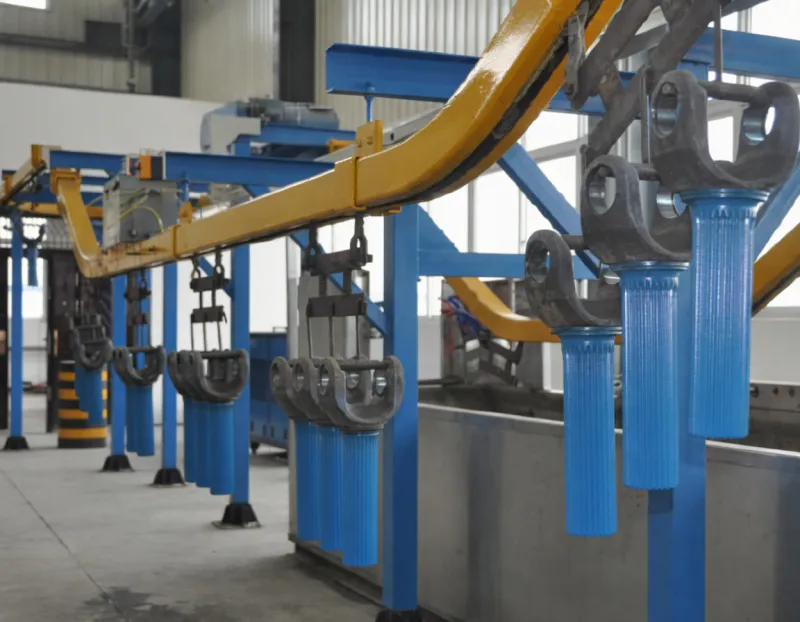
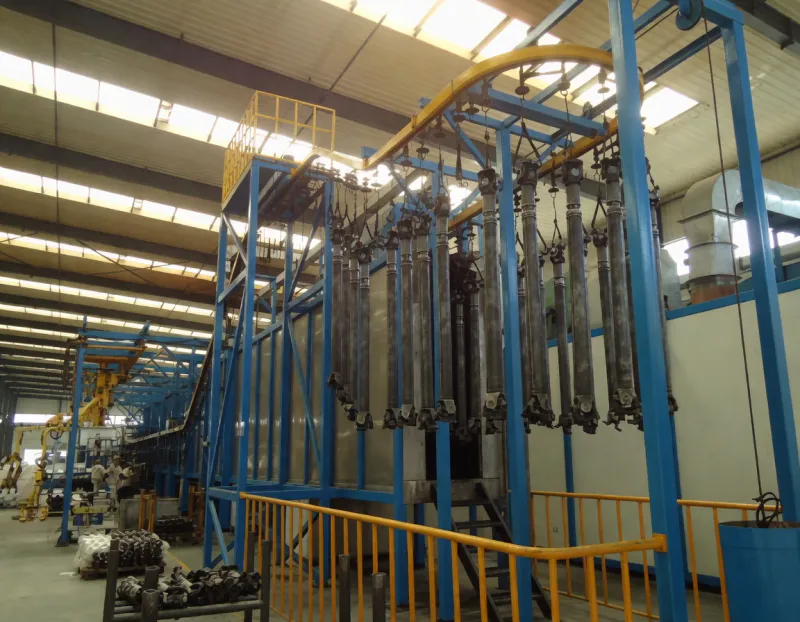
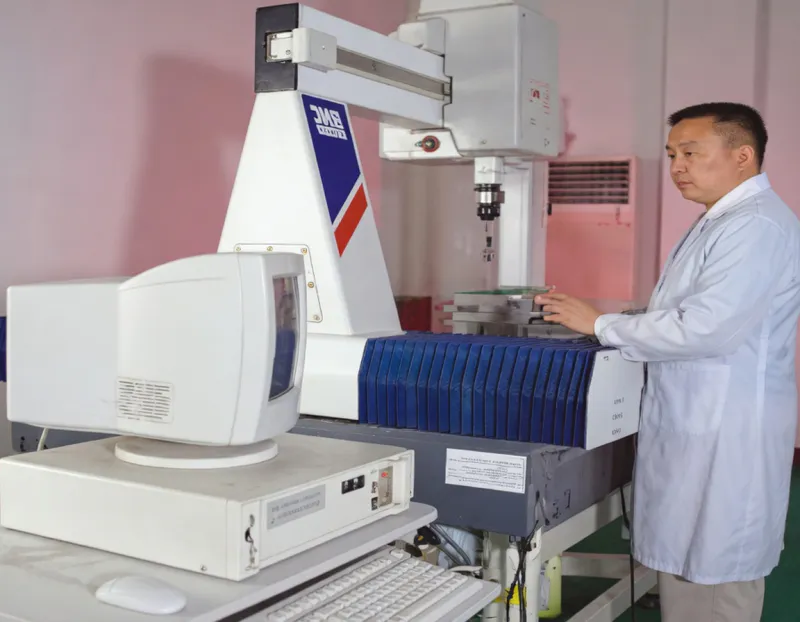
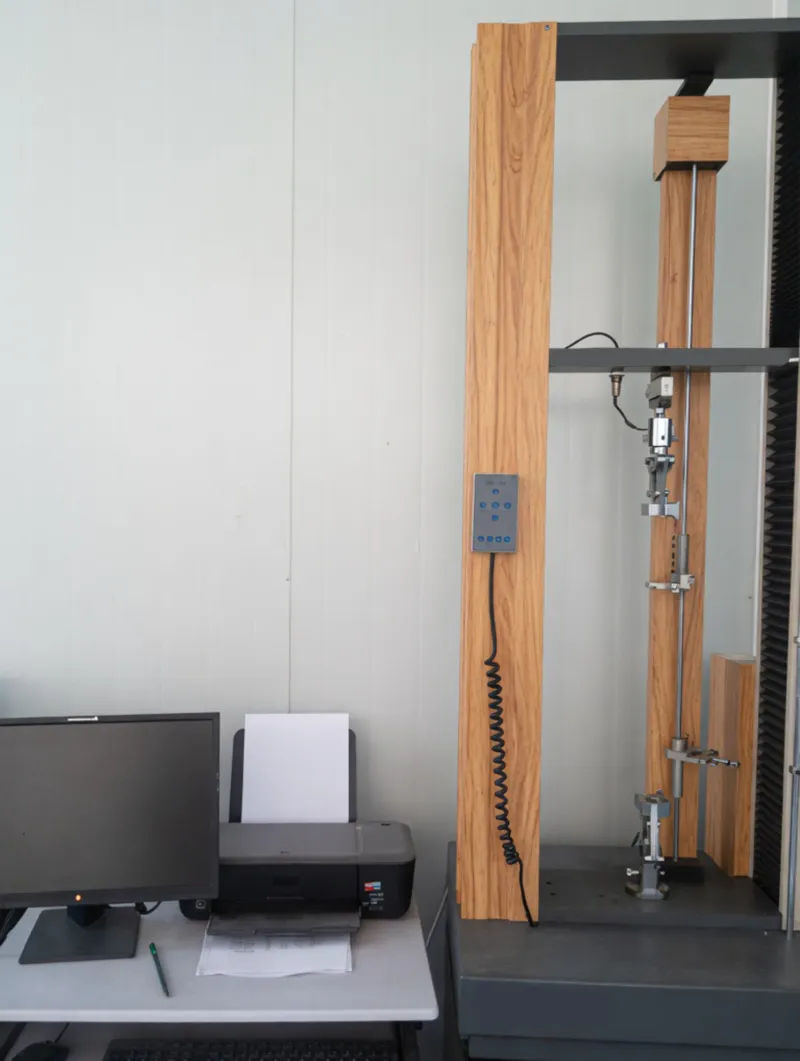
We are a specialist manufacturer and global supplier of automotive drivetrain and transmission components, with established expertise in universal joints, wheel bearing hubs, axle assemblies, and related powertrain parts. Our engineering capabilities span the full OEM application catalogue for Japanese, Korean, and European vehicle brands — allowing us to produce cross-referenced replacement parts including the EP GUD series DAIHATSU Universal Joint range with confidence in dimensional accuracy and material compliance. Our quality management process includes incoming material certification, in-process dimensional verification, and final assembly audit before dispatch.
车间
9. 相关产品 — 完整的传动系统解决方案
A universal joint operates as part of a larger drivetrain assembly. To support complete system supply and reduce the number of suppliers our customers need to manage, we manufacture and stock complementary drivetrain components that pair directly with the EP GUD series DAIHATSU Universal Joint.
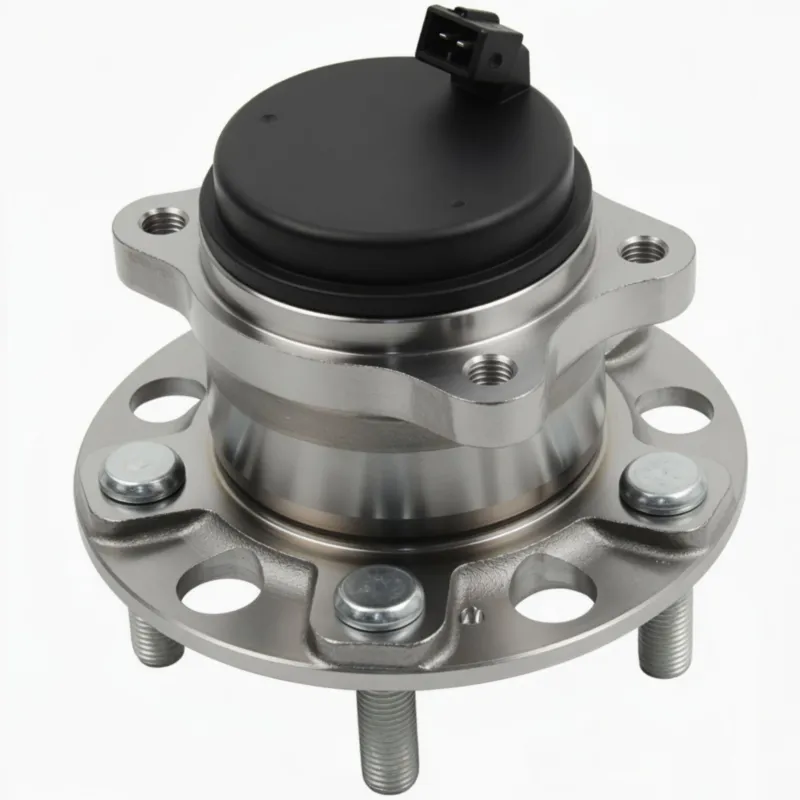
轮毂单元
Where the driveshaft half-shaft connects to the wheel hub bearing assembly, the interface between the DAIHATSU Universal Joint and the wheel hub unit must be dimensionally compatible. Our wheel hub bearing range covers DAIHATSU front and rear hub applications, ensuring that universal joint replacement and wheel bearing service can be completed from the same supplier with matched part specifications. One-stop supply of both components reduces the risk of dimensional mismatch at the stub axle-to-hub interface.
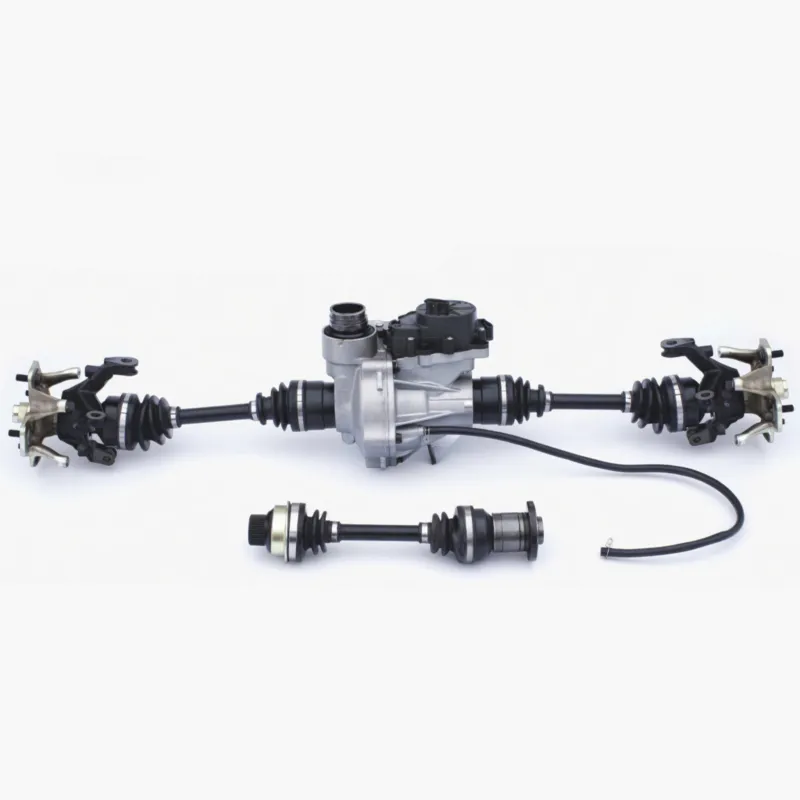
Axle Assemblies
Our rear axle and ATV axle range provides the shaft bodies that carry the GUD series universal joints at their ends. In fleet maintenance scenarios — particularly for DAIHATSU light truck and 4WD operators in Colombia’s agricultural and logistics sectors — sourcing the complete axle assembly with universal joints pre-fitted from a single supplier simplifies the repair process, eliminates field fitment errors, and ensures that the joint-to-yoke interface meets specification at the point of supply rather than requiring workshop press fitting. Explore our axle product range using the link below.
常见问题解答
Q1. What is a universal joint and what does it actually do inside a DAIHATSU vehicle drivetrain?
一个 万向节 is a four-bearing mechanical coupling that connects two rotating shafts operating at an angle to each other, allowing torque to pass from one shaft to the other without binding. In a DAIHATSU vehicle, the propeller shaft universal joints connect the gearbox output to the differential, accommodating the angle created when the suspension compresses and extends during driving. The function of universal joint in the steering column is slightly different — there it allows the column to change direction through the firewall while transmitting steering input to the rack.
Q2. How do I know which GUD series part number is the correct DAIHATSU Universal Joint replacement for my vehicle model in Colombia?
The easiest route is to cross-reference the original DAIHATSU part number stamped on your existing joint or listed in the vehicle’s parts manual against the EP GUD series cross-reference table. DAIHATSU original numbers such as 4141-4120 (GUD81), 4610-4120 (GUD82), 04371-87301 (GUD84), and others appear in our catalogue alongside the KOYO and MATSUBA equivalents. Alternatively, measure the journal diameter (D) and assembly length (L) of your existing joint and match to the specifications in the GUD series table. Our technical support team can assist Colombian customers in identifying the correct part if you provide the vehicle VIN or model year.
Q3. What are the most common symptoms that indicate a DAIHATSU Universal Joint needs replacement on a vehicle used on Colombian rural roads?
The most reliable symptom is a metallic clunk felt through the driveline when transitioning from acceleration to deceleration — or a vibration that increases with vehicle speed. As a worn joint deteriorates further, you may notice a squeaking or grinding noise at low speeds, or visible rust and dry grease at the bearing cups when inspecting under the vehicle. On Colombian rural roads where vehicles frequently traverse unpaved tracks and river crossings, UV exposure, mud ingress, and sustained low-speed traction loads accelerate wear, so inspection intervals should be shortened compared to purely urban fleet use.
Q4. How difficult is changing a universal joint on a DAIHATSU Hijet or Delta truck, and what tools are needed for the job in a workshop in Cali?
Changing universal joint on the DAIHATSU Hijet or Delta propeller shaft is a straightforward workshop procedure that does not require specialist equipment beyond a press or a set of sockets for driving out the bearing cups. The propeller shaft is removed from the vehicle by unbolting the flange yoke at the differential end and the slip-yoke at the gearbox end. The old joint is removed by knocking out the retaining snap rings and pressing out the bearing cups. The new EP GUD series joint is pressed in, snap rings are seated, and the shaft is refitted. A workshop in Cali with a standard press and snap ring plier set can complete the job in under two hours per shaft.
Q5. Which types of universal joint are used in DAIHATSU vehicles, and what is the difference between FIG A and FIG B in the GUD series?
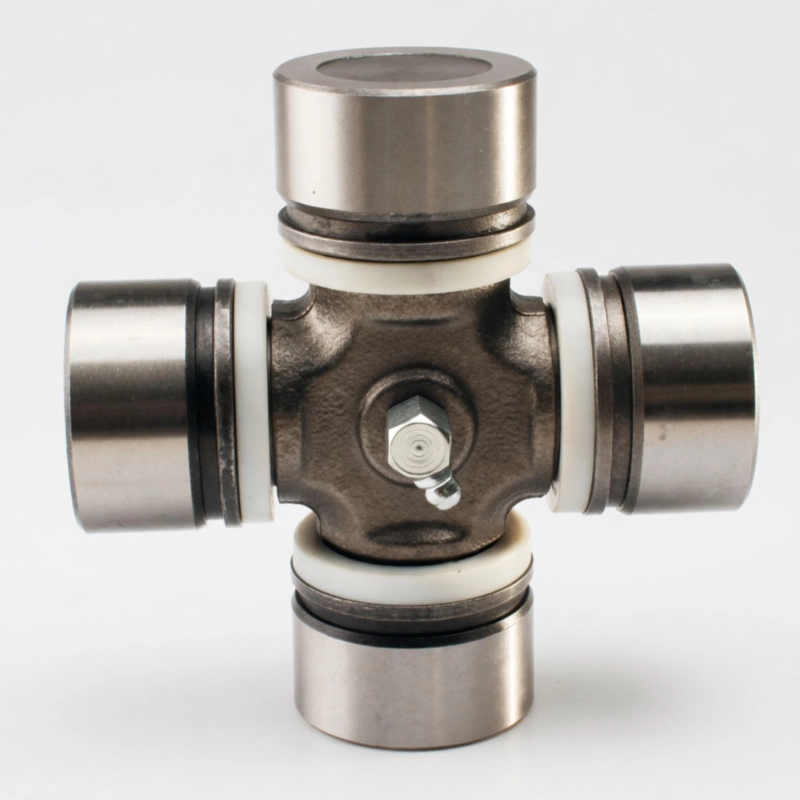
DAIHATSU vehicles use the Cardan or Hooke’s joint type — the most common form of universal joint types in automotive applications. Within the EP GUD series, FIG A refers to a standard cross-and-bearing assembly where the overall length (L) is the relevant external dimension — this type is retained in the yoke by snap rings engaging grooves in the yoke bore. FIG B refers to a variant where the bearing cup has a flange end (outer cup diameter O is the key dimension) and a different retention method. The correct FIG type must be confirmed against the original part number before ordering to ensure the retention system matches the yoke design.
Q6. What is the difference between a steering column universal joint and a propeller shaft universal joint in a DAIHATSU car?
这 转向柱万向节 and the propeller shaft joint are both Cardan-type cross-and-bearing assemblies, but they differ in size, operating angle, and load profile. The 转向万向节 operates at smaller angles (typically 15–30°) under very low torque — just enough to turn the steering rack — but goes through continuous full-lock-to-full-lock steering cycles over the vehicle’s life. The propeller shaft joints operate at lower angles (typically 2–8°) but under the full drivetrain torque of the engine and gearbox. GUD81 and GUD86 (D=20 mm) are typically found in steering column applications, while the larger GUD82–GUD89 variants cover propeller shaft and transfer case outputs.
Q7. When should universal joint replacement be scheduled as part of a preventive maintenance programme for a DAIHATSU fleet operating in Colombia’s mining sector?
For DAIHATSU vehicles operating in Colombia’s mining sector — particularly in Antioquia, Cesar, and Boyacá departments where access roads are unpaved and loads are high — a preventive 万向关节置换 interval of 60,000–80,000 km is commonly recommended, versus the 100,000+ km intervals suitable for purely urban fleets. Additionally, joints should be inspected at every service for early signs of wear: any perceptible play when the shaft is twisted back and forth by hand, or grease leakage from the cup seals, warrants immediate replacement to prevent the more costly propeller shaft or differential yoke damage that follows if the joint fails in service.
Q8. How does the GUD84 DAIHATSU Universal Joint compare to the KOYO D2880A and is one preferable for a high-mileage commercial vehicle in Latin America?
这 GUD84 universal joint is dimensionally equivalent to the KOYO D2880A, sharing the same journal diameter (D=28.01 mm) and assembly length (L=80 mm) as specified by DAIHATSU original part number 04371-87301. The choice between them in a high-mileage commercial vehicle application in Latin America comes down to material and seal quality — our EP GUD84 uses chromium-molybdenum steel for the spider and case-hardened cup steel with NBR lip seals, appropriate for tropical and high-altitude environments. We recommend confirming the KOYO D2880A specification against the EP GUD84 datasheet before assuming full interchangeability in fleet applications where documentation requirements apply.
编辑:PXY