EP-GUS1 / GUS6 / GUS7 Серия универсальных шарниров SUZUKI
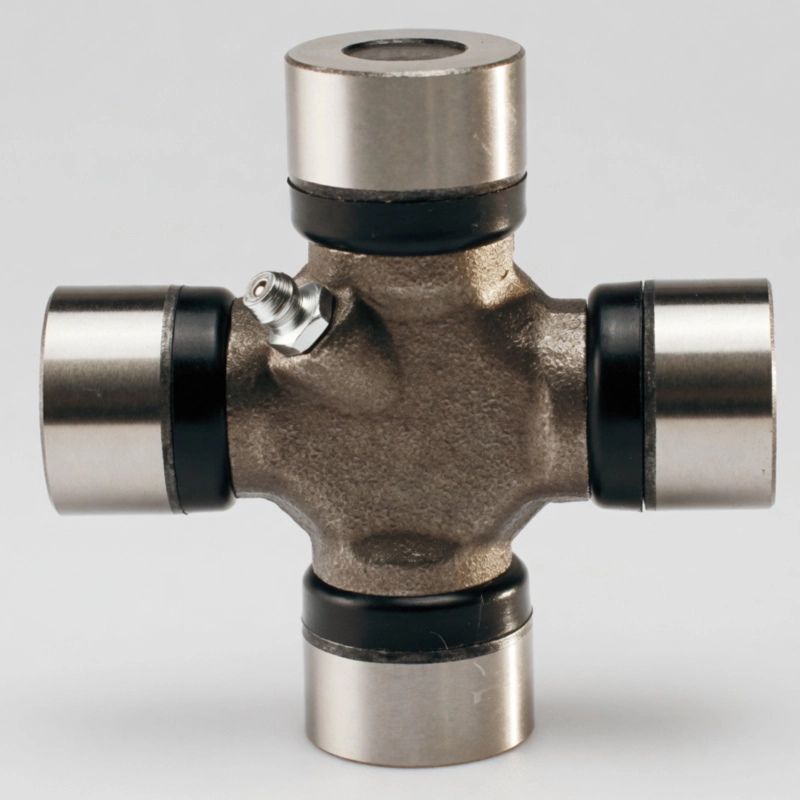
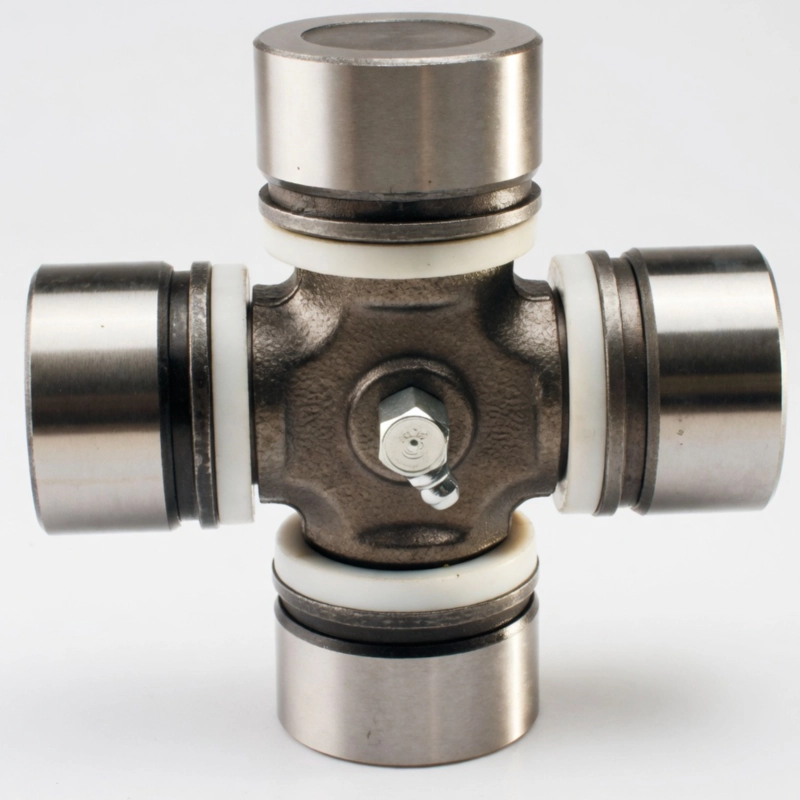
EP-GUS Series Suzuki universal joints are precision-engineered OEM replacements for Suzuki driveline applications. The range includes GUS1 (D=25mm, O=40.4mm, L=63.4mm), GUS6 (D=20.1mm, L=59.8mm), and GUS7 (D=25mm, L=63.9mm), with direct cross-reference to Suzuki original part numbers, KOYO equivalents, and MATSUBA UJ700/UJ413.
Built for reliable torque transfer, these high-quality joints deliver smooth operation and simplified maintenance. Designed to match exact specifications, they ensure long service life and consistent performance across various Suzuki vehicle models.
EP-GUS1-7 Series — SUZUKI Universal Joint | GUS1 / GUS6 / GUS7
U-JOINT Series · Type A & Type B · C45 / Alloy Steel · OEM Cross-Reference Available | SUZUKI drivetrain parts Colombia
The EP-GUS1-7 series covers three precision-engineered SUZUKI Universal joint variants — GUS1, GUS6, and GUS7 — designed as direct-fit replacements for SUZUKI driveline applications. A well-functioning SUZUKI universal joint is one of the less-visible yet most performance-critical components in the drivetrain. When it wears or fails, the consequences range from vibration and noise to complete loss of torque transmission between the driveshaft and the axle. This series addresses the replacement needs of SUZUKI Samurai, Jimny, Sierra, SJ410, Vitara, and related platforms, matching OEM part numbers 27200-58833, 27200-60511, and 27200-83810 for verified fitment. Cross-reference designations for KOYO (SZ2564TR) and MATSUBA (UJ700, UJ413) are also available, making sourcing straightforward for mechanics, auto parts distributors, and fleet maintenance operations serving the Colombian and Latin American automotive aftermarket.
1. Technical Specifications — EP-GUS1-7 SUZUKI Universal Joint Series
All dimensions in millimeters (mm). The EP-GUS series SUZUKI Universal joint covers three part numbers with different dimensional configurations as detailed below.
| ИНЖИР | Номер детали. | Д (мм) | 0 (мм) | Л (мм) | OEM / Original No. | KOYO Ref. | MATSUBA Ref. | Приложение |
|---|---|---|---|---|---|---|---|---|
| Б | GUS1 | 25 | 40.4 | 63.4 | 27200-58833 | SZ2564TR | UJ700 | SUZUKI Samurai / SJ410 Propshaft |
| А | GUS6 | 20.1 | — | 59.8 | 27200-60511 | — | — | SUZUKI Jimny / Sierra Driveshaft |
| А | GUS7 | 25 | — | 63.9 | 27200-83810 | — | UJ413 | SUZUKI Vitara / SX4 Propshaft |
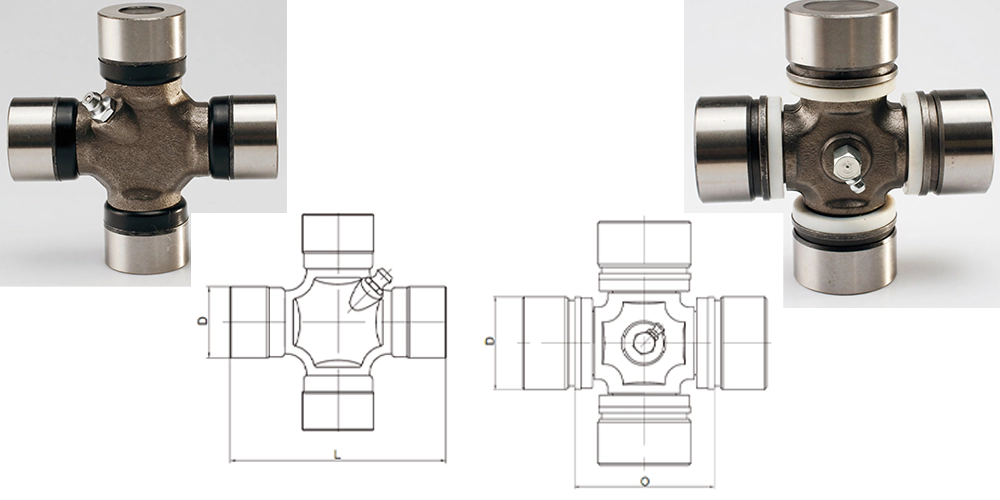
D = Trunnion journal diameter (bearing cup bore) | O = Outer diameter of bearing cup | L = Overall cross width (tip-to-tip) | FIG A = Standard 4-bearing Cardan cross; FIG B = Cardan cross with grease nipple port
Additional Technical Data-SUZUKI Universal joint
| SUZUKI Universal joint-Parameter | GUS1 | GUS6 | GUS7 |
|---|---|---|---|
| Spider Material | Alloy Steel (case-hardened) | Alloy Steel (case-hardened) | Alloy Steel (case-hardened) |
| Тип подшипника | Needle roller, 4 cups | Needle roller, 4 cups | Needle roller, 4 cups |
| Смазка | Grease nipple (re-greaseable) | Pre-greased / sealed | Pre-greased / sealed |
| Surface Hardness (journals) | HRC 58–62 | HRC 58–62 | HRC 58–62 |
| Max Operating Angle | Up to 20° | Up to 20° | Up to 20° |
| Тип уплотнения | Rubber lip seal | Rubber lip seal | Rubber lip seal |
| Circlip Retention | Internal circlip | Internal circlip | Internal circlip |
| FIG Configuration | Type B (with grease nipple) | Type A (standard) | Type A (standard) |
2. Что такое карданный шарнир?
A universal joint — commonly abbreviated U-joint — is a mechanical coupling that connects two shafts whose rotational axes are not co-linear, allowing torque and rotation to be transmitted across an angular offset. The term itself answers a question many vehicle owners ask when diagnosing drivetrain noise: What is a universal joint? It is, in the simplest terms, a pivot mechanism consisting of a cross-shaped spider (the trunnion), four bearing cups, and needle roller bearings. The cross sits between two yokes — one connected to the input shaft and one to the output — allowing relative angle changes during wheel travel and suspension articulation while continuous rotation is maintained.
The main function of a universal joint is power transmission across a variable angle. In a SUZUKI four-wheel-drive vehicle, U-joints appear at both ends of the propshaft (the driveshaft connecting the transfer case to the front or rear axle), and in some cases in the front axle itself as part of the constant-velocity or Cardan joint assembly. Each time the suspension compresses or extends, or the steering turns, the driveshaft angle changes slightly — and it is the universal joint that accommodates this movement without interrupting the flow of torque. For the suzuki sj410 universal joint и suzuki sierra universal joint in particular, robust U-joint construction is essential given the off-road duty these vehicles are frequently put to.
3. Five Key Advantages of the EP-GUS1-7 SUZUKI Universal Joint
1. Verified OEM Cross-Reference Fitment
Each part in the GUS1-7 series is dimensionally verified against the original SUZUKI OEM part numbers — 27200-58833 (GUS1), 27200-60511 (GUS6), and 27200-83810 (GUS7). Cross-references to KOYO and MATSUBA aftermarket designations are confirmed, eliminating guesswork during sourcing. For automotive workshops and parts distributors in Colombia and across Latin America, this level of fitment confidence reduces return rates and keeps repair jobs on schedule. No bracket modification or yoke adapter is required — the EP series SUZUKI Universal joint installs exactly as the original component would.
2. Heat-Treated Alloy Steel Construction
The trunnion cross (spider) is produced from alloy steel and subjected to a controlled heat treatment process — typically carbonitriding or induction hardening — to achieve the surface hardness required for needle roller bearing contact. The core remains tough enough to absorb shock loads, while the case hardness prevents premature wear on the trunnion journals. This dual-property construction extends the service interval significantly compared to standard carbon steel alternatives, particularly relevant for suzuki vitara universal joint и universal joint suzuki swift applications that see mixed urban and rural road conditions.
3. Precision Needle Roller Bearing Assemblies
The bearing cups supplied with each EP-GUS SUZUKI Universal joint unit are assembled with precision needle rollers selected for consistent diameter and roundness tolerances. Uniform needle geometry ensures even load distribution across the trunnion journal, reducing stress concentration and fatigue crack initiation. The bearing cup retaining clips (circlips) and seals are included in the kit, so the replacement job is complete without additional parts procurement. Proper sealing at the bearing cups also protects the needle rollers from mud, water, and abrasive particles — a significant practical advantage for off-road SUZUKI models used in Colombian rural terrain.
4. Grease Nipple Port for Extended Lubrication
The GUS1 (Type B configuration) SUZUKI Universal joint incorporates a grease nipple port in the spider body, allowing periodic re-greasing with a standard grease gun. This feature is essential for maintaining a lubricant film between the trunnion journals and needle rollers over the full service life of the joint. Re-greaseable designs are particularly valued in heavy-use applications — универсальный шарнир грузовика and commercial vehicle platforms, as well as modified or lifted SUZUKI Samurai and Sierra builds used for overlanding and off-road work in Colombia's Andes and Amazon regions — where joint loading exceeds the capacity of sealed-for-life designs.
5. Full Product Range with One-Stop Supply
Beyond the SUZUKI GUS series, the complete U-JOINT product range covers universal joints for MAZDA, MITSUBISHI, DAIHATSU, HINO, ISUZU, KOMATSU, and many other brands. This breadth of coverage means that auto parts businesses and fleet operators in Colombia can consolidate their U-joint sourcing to a single supplier, simplifying logistics, reducing minimum order constraints, and ensuring consistent quality documentation across all part numbers. Complementary driveline components — including wheel hub assemblies and axle shafts — are also available, supporting a genuinely integrated drivetrain parts supply solution.
4. Принцип работы универсального шарнира
Понимание универсальный принцип работы шарнира is useful both for selecting the right replacement part and for diagnosing failures. The core mechanism is built around a cruciform steel spider — four journals arranged symmetrically at 90° to each other. Two opposing journals engage the yoke connected to the input shaft (the driveshaft), while the other two journals engage the yoke connected to the output shaft (the axle flange or next driveshaft section). Each journal sits inside a bearing cup containing a row of needle rollers, held in place by a circlip in the yoke bore.
As the input shaft rotates, torque is transmitted through the spider to the output shaft. The ability of the spider to rotate within the bearing cups — on the axis of each pair of journals — is what allows the joint to accommodate an angular offset between the two shafts. When the vehicle's suspension moves, the effective angle of the driveshaft changes, and the U-joint flexes to maintain transmission. The карданный шарнир рулевого управления и карданный шарнир рулевой колонки found in the SUZUKI steering system operate on the same fundamental principle, though the working angles involved are typically larger and the torque levels lower than in the driveshaft application.
One important characteristic of a standard Cardan U-joint is velocity variation: at any non-zero working angle, the output shaft does not rotate at exactly constant velocity — it speeds up and slows down twice per revolution. This is why most driveshaft applications use two U-joints in a specific phase relationship (the phased driveshaft) to cancel out the velocity fluctuation. The suzuki sx4 universal joint and similar front-wheel-drive-derived platforms may use constant velocity joints (CVJ) instead for smooth torque delivery at larger working angles, but the rear propshaft on SUZUKI four-wheel-drive models still relies on the proven Cardan design covered by the GUS series.
5. Material and Construction of SUZUKI Universal joint
The spider assembly at the heart of every EP-GUS SUZUKI Universal joint is forged from medium-to-high carbon alloy steel — a grade selected for its combination of forgeability, heat-treatability, and fatigue resistance. After rough forging, each spider undergoes CNC turning on the four journal diameters to achieve the tight dimensional tolerances required for proper needle roller contact. The surface roughness of the finished journal is controlled to Ra 0.4–0.8 μm, consistent with the bearing manufacturer's specification for the needle roller diameter used in each cup size.
Heat treatment follows the machining stage. Carbonitriding or selective induction hardening raises the journal surface hardness to HRC 58–62 while preserving a tough core with adequate impact resistance. This hardness level balances wear life against brittleness — an important consideration in driveshaft applications that experience torque spikes during engagement, gear shifts, and off-road maneuvers. The bearing cups are cold-drawn from low-carbon steel strip and ground on the inner bore to the nominal diameter with a tolerance of H7 or better, ensuring consistent bearing preload and smooth rotation. All steel components are protected with a zinc phosphate or black oxide surface conversion coating to resist surface corrosion during storage and before installation. For applications in Colombia's coastal regions (Pacific and Caribbean), where salt air accelerates corrosion, this initial surface treatment provides meaningful protection during the parts supply chain.
6. SUZUKI Universal joint Application Scenarios
The GUS1-7 series is specifically engineered for SUZUKI universal joint replacement across a range of vehicle platforms and use environments. Below are the primary application scenarios where these parts are most commonly used across Colombia and internationally.
SUZUKI Samurai / SJ410 — Off-Road 4WD
The Suzuki Samurai (known as the SJ410 in some markets) is one of the most popular compact 4WD vehicles ever produced, and it remains in widespread use throughout Colombia's mountain regions, Pacific coast towns, and rural departments. Its two-piece propshaft system uses the GUS1 universal joint at the driveshaft-to-transfer-case and driveshaft-to-axle interfaces. Off-road operation — articulation, steep angles, and heavy mud — accelerates U-joint wear, making reliable replacement parts critical for vehicle operators in regions like Nariño, Chocó, and the Colombian Llanos.
SUZUKI Jimny / Sierra — Urban and Rural Utility
The Jimny and its Sierra variant share drivetrain architecture with the SJ-series and use the GUS6 universal joint in their front and rear propshafts. As a vehicle that transitions frequently between paved urban roads and unpaved rural tracks — a common usage profile in Colombian intermediate cities and surrounding municipalities — the Jimny's U-joints experience both high-speed highway operation and the low-speed, high-angle articulation of rough terrain. The GUS6's Type A configuration with pre-packed sealed bearings suits this mixed-duty profile well.
SUZUKI Vitara — Recreational and Light-Commercial 4WD
The Vitara is popular as a recreational and light-commercial four-wheel-drive vehicle across South America. The GUS7 replacement U-joint (OEM 27200-83810, MATSUBA UJ413) fits its rear propshaft assembly. Vitara owners in Colombia's tourism and adventure travel sector — including guided eco-tours in natural parks — depend on reliable drivetrain components to minimize breakdown risk in remote locations. The GUS7's matched dimensions and heat-treated construction make it a trustworthy replacement for both stock vehicles and those with mild lift or suspension modifications.
Steering Column Universal Joint — Urban Passenger Vehicles
Beyond the driveline, the карданный шарнир рулевой колонки и универсальный рулевой шарнир in the SUZUKI steering column connect the steering wheel shaft to the steering rack or box through an angular change required by the firewall and dashboard packaging geometry. Worn steering U-joints manifest as play, clunking noise, or vague steering feel — symptoms that worsen city driving quality significantly. The карданный шарнир в автомобиле steering column is a smaller-diameter component, and while the GUS series covers the driveline sizes, the broader U-JOINT range includes corresponding steering shaft sizes as well.
Agricultural and Industrial Equipment
Universal joints are not exclusive to passenger vehicles. Agricultural implements — rotary cutters, tillers, and spreaders — use PTO (power take-off) driveshafts with Cardan U-joints of similar geometry to the automotive types. Light industrial equipment such as conveyor drives, pump drives, and mixing machines also employ universal joints where shaft misalignment is unavoidable. While the GUS series is specifically dimensioned for SUZUKI automotive applications, the same needle-roller Cardan design principle applies broadly to these industrial contexts, and the range of универсальные типы шарниров covers many of these requirements within the wider product catalog.
Commercial Fleet and Light Truck Applications
Fleet operators running SUZUKI-based commercial vehicles — including light cargo vans, utility pickup trucks, and small bus conversions used in Colombian inter-municipal transport — require reliable Замена универсального сустава parts in consistent supply. Fleet maintenance programs benefit from having confirmed fitment data (OEM cross-reference), predictable replacement intervals, and the ability to order in volume for stock. The EP-GUS series SUZUKI Universal joint supports fleet procurement workflows with full technical documentation and multi-unit packaging options, reducing per-unit cost while maintaining traceability.
7. Regulatory and Standards Compliance
Automotive replacement parts, including universal joints, are subject to a range of safety and quality regulations in different markets. Understanding this framework is important for importers, distributors, and repair workshops operating in Colombia and elsewhere.
Colombia — ICONTEC and Vehicle Safety Regulations: In Colombia, the regulatory authority for motor vehicle safety is the Ministerio de Transporte, with technical norms published by ICONTEC (Instituto Colombiano de Normas Técnicas y Certificación). Resolution 4100 of 2004 and subsequent updates define vehicle technical requirements, including drivetrain and chassis components. Auto parts importers operating under the DIAN's customs framework must ensure correct tariff classification (HS Chapter 84 for mechanical drive components) and may be required to present technical data sheets demonstrating compliance with dimensional and material standards for safety-critical components. Independent workshops performing suspension and drivetrain repairs must follow the guidelines of RUNT (Registro Único Nacional de Tránsito) regarding vehicle roadworthiness certification after major mechanical interventions.
European Union — Machinery Directive and REACH: For products distributed in EU markets, universal joint components incorporated into vehicles or machinery must comply with applicable EU directives. The Machinery Directive (2006/42/EC, transitioning to EU Machinery Regulation 2023/1230) applies to machinery assemblies incorporating U-joints. The REACH Regulation (EC 1907/2006) requires that steel components with surface coatings (e.g., zinc phosphate, chrome-containing conversion coatings) be evaluated for restricted substance content. The EP-GUS series SUZUKI Universal joint uses non-chromate, RoHS-compliant surface treatments.
United States — FMVSS and AAMVA Standards: U-joints used in on-road motor vehicles in the US must be compatible with the Federal Motor Vehicle Safety Standards (FMVSS) relevant to drivetrain components. The AAMVA (American Association of Motor Vehicle Administrators) and the Society of Automotive Engineers (SAE) publish standards (including SAE J901 for universal joints and driveshafts) that define performance requirements for torque capacity, angular misalignment, and fatigue life. While the GUS series is designed to SUZUKI OEM dimensional standards rather than SAE standards, the material and manufacturing quality is consistent with SAE J901 performance expectations.
Стандарты ISO: ISO 8388 provides internationally recognized classification and dimensional standards for universal joints and driveshafts. Compliance with ISO 8388 ensures interoperability with globally sourced yoke components. Additionally, ISO 9001 quality management certification at the manufacturing level provides assurance of consistent process control, dimensional inspection, and traceability — documentation that is increasingly requested by institutional buyers and fleet operators in Colombia's public sector transport and infrastructure departments.
8. Сопутствующие товары — Комплексные решения для трансмиссии
А SUZUKI GUS Universal joint performs at its best as part of a properly maintained and correctly assembled driveline. The drivetrain does not end at the U-joint — it continues through the axle shafts and wheel hub assemblies. Sourcing these connected components from a single supplier with verified dimensional compatibility offers real benefits for workshops and fleet managers: fewer sourcing touchpoints, consistent quality documentation, and a single technical point of contact for fitment queries.
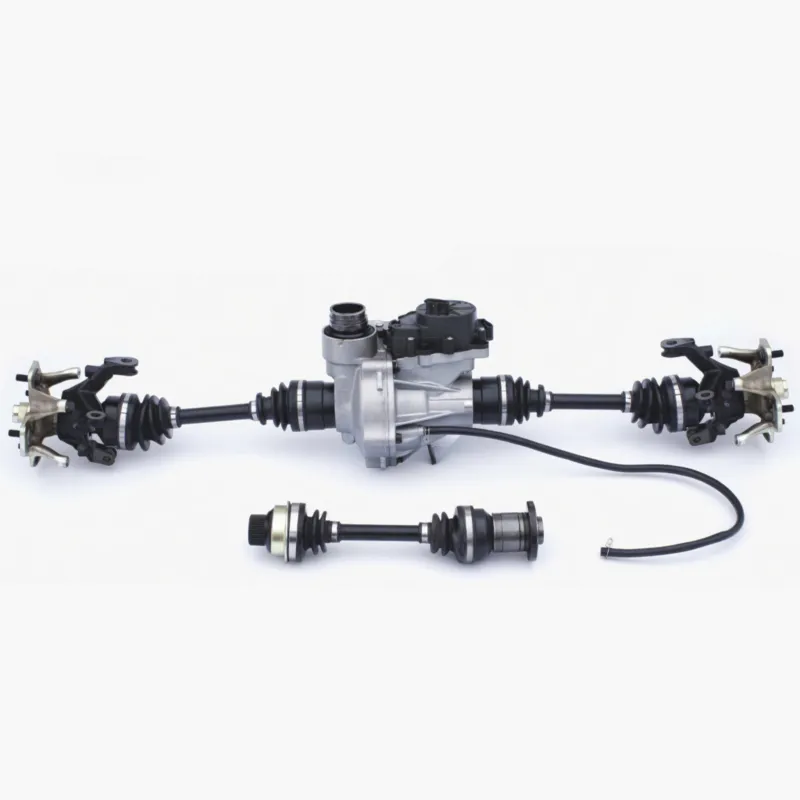
Axle Shafts — Direct Torque Transfer After the U-Joint
The axle shaft is the component that receives torque from the propshaft through the differential and delivers it to the wheel hub. When a U-joint replacement is carried out, it is prudent to inspect the axle shafts for wear at the spline ends and for straightness along the shaft body. Misalignment or worn splines at the axle-end can accelerate wear on a newly fitted U-joint. The full axle shaft range covers SUZUKI and other Japanese 4WD platforms, with both solid rear axle and independent front axle types available.
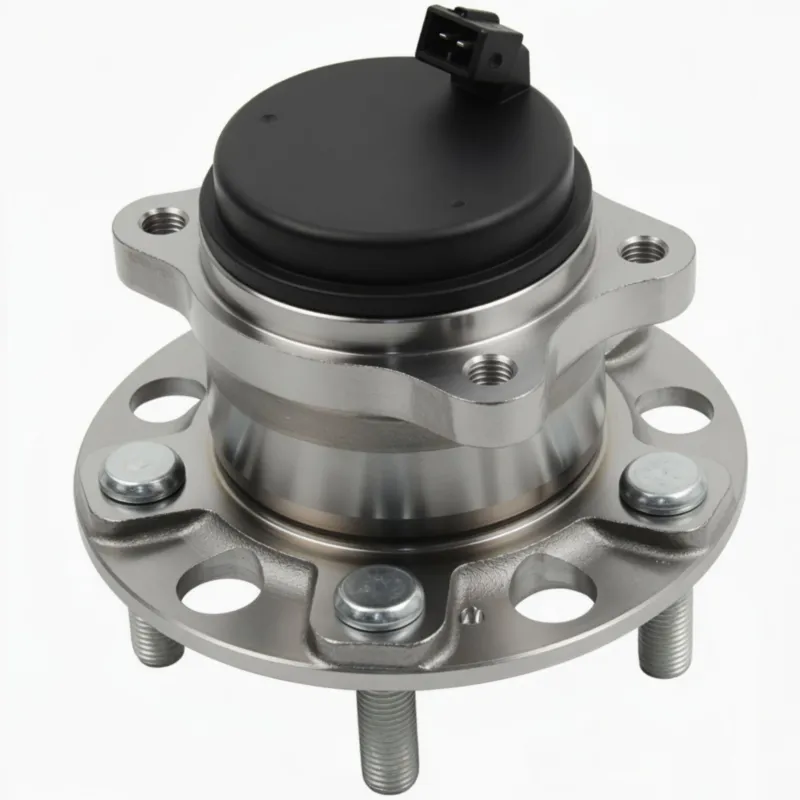
Wheel Hub Units — Where the Drive Meets the Road
The wheel hub unit houses the wheel bearing and connects the axle shaft or stub axle to the wheel itself. A worn wheel bearing creates noise and vibration that can mask U-joint symptoms, making hub inspection a natural complement to any U-joint replacement job. The automotive wheel bearing range covers hub units for SUZUKI Samurai, Jimny, Vitara, and compatible models, with both front and rear positions covered. Sourcing the hub unit alongside the universal joint during a scheduled driveline service reduces vehicle downtime and eliminates the need for a second disassembly.
9. About Us-Automotive U-joint Supplier Colombia
We are a specialized manufacturer and global distributor of automotive drivetrain components, with a product catalog spanning universal joints, wheel hub assemblies, axle shafts, sprockets, transmission chains, and related power transmission hardware. Our manufacturing facility operates under ISO 9001 quality management certification, applying systematic process control, dimensional inspection, and batch traceability throughout production. Every U-joint assembly undergoes measurement of trunnion journal diameter, cup bore, and overall cross length before shipping, with inspection records retained against the production batch for post-delivery reference.
Our export capability serves customers in Colombia, across Latin America, and in markets throughout Europe, North America, the Middle East, and Southeast Asia. For automotive aftermarket distributors, fleet maintenance operators, and independent repair workshops in Bogotá, Medellín, Cali, Barranquilla, and other Colombian centers, we provide consistent product quality with supporting technical documentation that facilitates customs clearance and workshop fitment confidence. Volume pricing, OEM-format part number labeling, and mixed-part shipping are all supported to accommodate the diverse procurement requirements of our regional distribution partners.
Мастер-класс
Часто задаваемые вопросы
Q1. What is the main function of a universal joint in a SUZUKI four-wheel-drive vehicle?
The main function of a universal joint in a SUZUKI 4WD is to transmit engine torque from the gearbox or transfer case through the propshaft to the front or rear axle while accommodating the angle changes caused by suspension travel and steering movement. Without a functioning U-joint, the driveshaft cannot rotate when it is not perfectly aligned with the next shaft in the drive train — which is virtually never the case in a real vehicle. Common symptoms of a worn SUZUKI universal joint include a clunking or clicking noise during acceleration, a vibration felt through the floor at speed, and visible play or rust at the cross bearing cups when inspected from underneath.
Q2. Where can I find a reliable SUZUKI universal joint supplier for auto workshops in Bogotá or Medellín?
Finding a reliable SUZUKI GUS Universal joint supplier for Colombian auto workshops involves looking for a manufacturer or distributor who can provide OEM cross-reference data (27200-58833, 27200-60511, 27200-83810), dimensional specifications, and material certifications. Our export network covers Bogotá, Medellín, Cali, and other Colombian distribution hubs. Standard transit via sea freight through Barranquilla or Cartagena takes 25–40 days, while air freight is available for urgent requirements. Contact us with your part number requirement and the quantity needed to receive a quote and lead time confirmation.
Q3. How does a universal joint work and why does it cause vibration when it is worn or incorrectly phased?
A universal joint transmits rotation across an angular offset by allowing the cross (spider) to pivot within the yoke bearings on two perpendicular axes simultaneously. At any operating angle greater than zero, the output shaft speed varies sinusoidally — twice per input revolution — even though input speed is constant. This is the inherent velocity non-uniformity of the Cardan joint. A two-joint phased driveshaft cancels this non-uniformity by arranging the two joints at equal angles and in the same phase. If one joint is worn (causing radial play in the trunnion journals) or if the two joints are installed out of phase, the velocity variation is not canceled, and the result is a second-order driveshaft vibration that is felt as shaking through the vehicle at specific speeds — typically between 80 and 120 km/h on highway.
Q4. Which SUZUKI models are compatible with the GUS1, GUS6, and GUS7 universal joint parts, and how do I verify the correct fitment?
GUS1 (OEM 27200-58833) fits SUZUKI Samurai and SJ410 propshaft applications. GUS6 (OEM 27200-60511) is used in SUZUKI Jimny and Sierra driveshaft assemblies. GUS7 (OEM 27200-83810) fits SUZUKI Vitara and related SX4-era models. The most reliable fitment verification method is to compare the original part number stamped on the vehicle's existing U-joint or listed in the workshop service manual against our OEM cross-reference table. Dimensional confirmation using a vernier caliper (measure the trunnion journal diameter D and overall cross width L) provides a secondary check. If in doubt, send us your vehicle VIN and the original part number and our technical team will confirm the correct GUS part number before your order is placed.
Q5. How often should I replace a SUZUKI Jimny universal joint, and what are the signs that replacement is needed now?
Для suzuki jimny universal joint used in normal driving conditions, a typical replacement interval is 80,000–120,000 km, though off-road use, infrequent lubrication (on re-greaseable types), and operating at large suspension angles will shorten this significantly. Signs that immediate Замена универсального сустава is needed include: an audible clunk when accelerating from rest or shifting between drive and reverse; a squeaking sound during slow turns or parking maneuvers; visible rust staining or grease loss around the bearing cup edges; and perceptible radial play when you grip the propshaft and try to rotate it against the yokes. If any of these symptoms are present, do not delay replacement — a failed U-joint can cause complete driveshaft separation, which is a serious road safety incident.
Q6. What is the difference between FIG A and FIG B universal joint configurations in the SUZUKI GUS series?
In the GUS series catalog, FIG A refers to a standard sealed Cardan cross without a grease nipple, where the bearing cups are packed with grease during assembly and sealed with rubber lip seals for the service life of the joint. FIG B — used in the GUS1 part — incorporates a grease nipple port in the center of the cross body, which allows re-greasing via a grease gun. The re-greaseable FIG B design is preferred for heavy-duty applications and for owners who prefer preventive maintenance access to the joint lubrication. FIG A sealed joints are more common on lighter-duty propshafts where the joint is largely inaccessible and re-greasing is not a standard workshop practice. Both types offer equivalent structural strength; the choice between them is determined by the original vehicle design and maintenance philosophy.
Q7. How does the SUZUKI universal joint in the steering column differ from the one in the driveshaft, and do you supply both types?
Он карданный шарнир рулевого управления in the SUZUKI steering column is functionally similar to the driveshaft type — it uses a cross spider with four needle-roller bearing cups to transmit steering input torque across an angular change between the steering shaft sections. However, steering column U-joints typically have smaller trunnion diameters and longer overall lengths compared to driveshaft joints, and they often incorporate a sliding yoke or splined shaft section to allow for steering column length adjustment or collapse in a crash. The torque levels are also much lower than driveshaft joints. The broader product range includes steering column universal joints for multiple SUZUKI and other Japanese models, and combinations of GUS driveshaft joints plus steering column joints can be supplied in a single order to simplify parts procurement for full driveline restoration projects.
Редактор: PXY