説明
European Standard Series
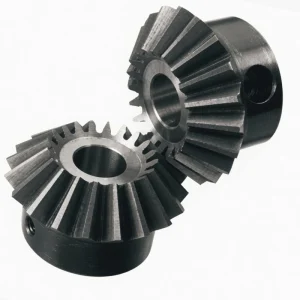
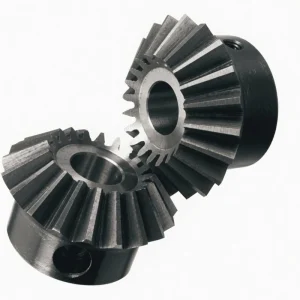
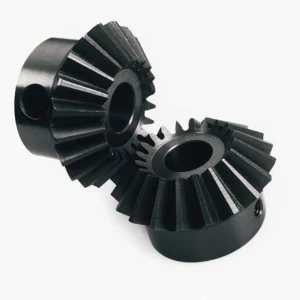
EP-Type B Bevel Gear
Pressure Angle 20° | Ratio 1:2 | Material: C45 Steel
1. Technical Specifications & Dimensional Parameters
The table below lists the complete dimensional data for the EP-Type B Bevel Gear European Standard Series — Ratio 1:2, Pressure Angle 20°, Material C45. All dimensions are given in millimetres (mm). Reference the engineering drawing for the meaning of each dimension symbol: De = outer diameter; Dp = pitch diameter; A = cone distance; F = face width; Dn = neck diameter; D1 = bore diameter; dm = mean pitch diameter; Da = back cone diameter; L = hub length; Dm = mean pitch circle diameter. The “-” mark indicates that the dimension is not applicable for that particular tooth-count variant.
| M | Z | De | Dp | A | F | Dn | D1 | dm | Da | L | Dm |
|---|---|---|---|---|---|---|---|---|---|---|---|
| 1 | 15 | 17.4 | 15.0 | 11.9 | 5 | 13.3 | 4 | 22 | 8 | – | 6.6 |
| 30 | 30.6 | 30.0 | 15.1 | 5 | 20.3 | 5 | 20 | – | 14 | 9 | |
| 1.5 | 15 | 26.1 | 22.5 | 21.1 | 9 | 20.3 | 8 | 35 | 11.5 | – | 12 |
| 30 | 45.9 | 45.0 | 25.2 | 9 | 32.3 | 8 | 32 | – | 23 | 16 | |
| 2 | 15 | 34.8 | 30.0 | 26.0 | 11.5 | 25.3 | 8 | 45 | 16 | – | 13.8 |
| 30 | 61.2 | 60.0 | 29.8 | 11.5 | 40.3 | 12 | 39 | – | 27 | 18 | |
| 2.5 | 15 | 43.5 | 37.5 | 31.8 | 15 | 32.3 | 12 | 55 | 20 | – | 16.2 |
| 30 | 76.5 | 75.0 | 33.7 | 15 | 45.3 | 15 | 45 | – | 30 | 20 | |
| 3 | 15 | 52.2 | 45.0 | 37.3 | 17 | 40.3 | 12 | 66 | 25 | – | 19.8 |
| 30 | 91.8 | 90.0 | 42.1 | 17 | 55.3 | 15 | 56 | – | 38 | 25 | |
| 3.5 | 15 | 60.9 | 52.5 | 46.1 | 20.5 | 45.3 | 15 | 79 | 28.5 | – | 24.7 |
| 30 | 107.1 | 105.0 | 45.0 | 20.5 | 55.3 | 20 | 61 | – | 40 | 25 | |
| 4 | 15 | 69.6 | 60.0 | 48.6 | 22.5 | 50.3 | 20 | 87 | 34 | – | 24.6 |
| 30 | 122.3 | 120.0 | 57.3 | 22.5 | 80.3 | 20 | 76 | – | 52 | 35 | |
| 4.5 | 15 | 78.3 | 67.5 | 51.4 | 26 | 60.3 | 20 | 94 | 37.5 | – | 24.7 |
| 30 | 137.6 | 135.0 | 60.3 | 26 | 80.3 | 25 | 81 | – | 53 | 35 | |
| 5 | 15 | 87.0 | 75.0 | 57.6 | 30 | 60.3 | 20 | 104 | 40 | – | 25.3 |
| 30 | 152.9 | 150.0 | 62.5 | 30 | 80.3 | 25 | 85 | – | 56 | 35 |
All dimensions in mm. M = Module; Z = Number of Teeth; “-” = not applicable for this variant.
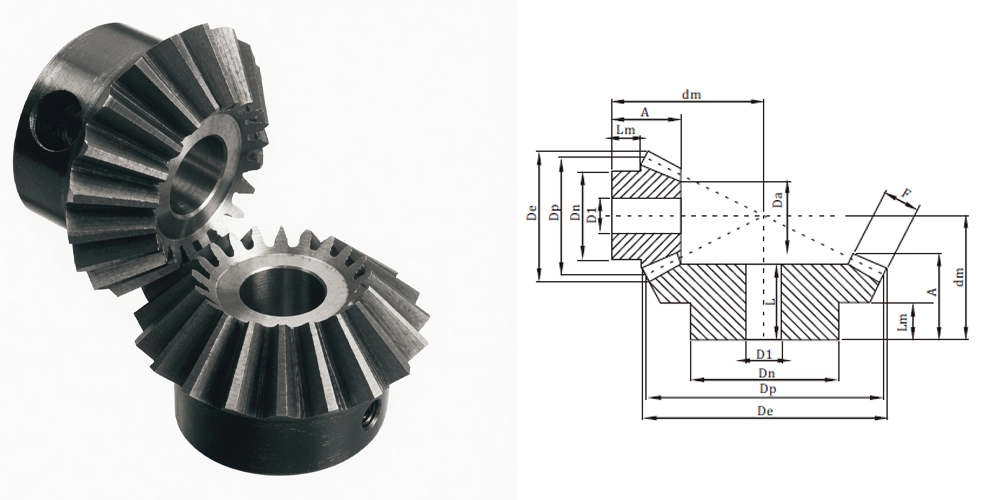
2. What Is a Bevel Gear? — Product Overview
The EP-Type B Bevel Gear is a precision-engineered power transmission component built to the European Standard Series, featuring a pressure angle of 20° and a gear ratio of 1:2. Manufactured from C45 medium-carbon steel, this metal bevel gear is designed for applications where intersecting shafts must transmit torque efficiently across angular changes — typically at 90°. The tooth profile conforms to established DIN/ISO European norms, ensuring dimensional interchangeability across internationally sourced assemblies.
A bevel gear changes both the axis of rotation and, depending on the ratio, the rotational speed and torque of a driven shaft. In the Type B configuration with a 1:2 ratio, the driven gear rotates at half the speed of the driving gear while delivering double the torque — a highly practical arrangement in gearboxes, industrial machinery, marine drives, and agricultural equipment. The 20° pressure angle strikes an ideal balance between tooth strength and smooth, low-noise engagement, making these small metal bevel gears suitable for demanding, continuous-duty environments throughout Colombia and across Latin America’s growing industrial sector.
Available across a full range of modules — from M1 through M5 — and with tooth counts of Z15 and Z30 per module class, this bevel gear set offers versatile selection to match precise shaft geometries and load requirements. Whether you are sourcing a single replacement gear or specifying components for a new machine build, the EP series provides consistent, measurable quality backed by traceable material standards.
3.製品の5つの主要な利点
European Standard Dimensional Compliance
Every EP-Type B bevel gear is produced in strict conformance with European Standard Series tolerances. Consistent dimensional accuracy means parts are drop-in compatible with DIN-compliant assemblies, reducing design time and sourcing risk on international projects.
C45 Medium-Carbon Steel Construction
The heavy metal bevel gear material selection — C45 carbon steel — provides excellent tensile strength, machinability, and wear resistance. After proper heat treatment, surface hardness is substantially elevated, extending service life under high-load, high-cycle industrial operating conditions.
Optimized 20° Pressure Angle
The 20° pressure angle is the globally accepted standard for general-purpose power transmission gears. It maximizes the contact ratio without excessive radial loading on bearings, translating to quieter operation, reduced vibration, and longer bearing life compared to older 14.5° designs still found in legacy equipment.
Full Module Range — M1 to M5
With sizes spanning from the compact mini metal bevel gear (M1, Z15) right through to the robust M5 configurations, this series covers an unusually wide application bandwidth within a single standardized product family. Engineers can specify the exact module required without compromising on interchangeability.
Consistent Torque-Doubling Ratio Performance
The 1:2 ratio configuration reliably delivers a 2× torque multiplication with corresponding speed reduction. This predictable mechanical advantage is engineered into every dimension — from pitch diameter to face width — guaranteeing that load calculations made at the design stage translate accurately into field performance.
4. How Does a Metal Bevel Gear Work?
Understanding how a metal bevel gear works begins with its geometry. Unlike parallel-shaft spur or helical gears, bevel gears are machined with conical pitch surfaces whose apices meet at a common point. When two such gears mesh, the axes of their respective shafts intersect at that apex — most commonly at 90°, though other angles are achievable. As the driving gear (pinion) rotates, its teeth engage successively with the mating gear teeth, transmitting force and motion around the angular change.
In the EP-Type B design, the straight tooth profile runs along a generator line of the pitch cone. This straight bevel tooth form is the foundational configuration in the metal bevel gear types spectrum — it is robust, cost-effective to manufacture, and straightforward to align correctly during installation. The 20° pressure angle means that at the moment of tooth contact, the resultant force vector acts at 20° from a line perpendicular to the tooth surface. This geometry controls the ratio between tangential (useful) force and separating (bearing) force — a well-balanced ratio that is the reason the 20° standard has become universal in industrial gear practice.
The 1:2 ratio arises directly from the tooth count relationship: the driven gear (Z30) has twice the number of teeth as the driving pinion (Z15) within each module group. Every revolution of the pinion produces exactly half a revolution of the driven gear. This mechanical advantage doubles output torque relative to input torque (minus minor efficiency losses to friction and lubrication), which is why this bevel gear set is widely specified in speed-reduction stages for conveyors, elevator mechanisms, and power tools across Colombian and broader Latin American industrial markets.
5. Material: C45 Medium-Carbon Steel
C45 is a widely adopted medium-carbon structural steel, specified under EN 10083-2 in Europe and closely aligned with ASTM 1045 and JIS S45C standards. Its carbon content — nominally 0.42–0.50% — gives it a practical balance between machinability and strength. In the normalized or annealed state, C45 offers tensile strengths in the range of 600–800 MPa and a Brinell hardness of approximately 170–210 HB. When subjected to quenching and tempering heat treatment, surface hardness can reach 55–62 HRC depending on process parameters, which substantially extends tooth flank wear life under cyclic loading.
For a metal bevel gear operating at the tooth contact stress levels typical of M3–M5 industrial applications, C45 delivers reliable fatigue resistance without requiring exotic or cost-prohibitive alloy additions. The material machines cleanly on modern CNC hobbing and milling equipment, which is why it remains the standard choice for high-power metal bevel gears where a predictable, well-characterized mechanical behavior is more important than maximum hardness at all costs.
When stainless steel bevel gears are specifically required — for corrosive environments such as food processing, marine installations, or chemical handling — alternative grades such as 304 or 316 stainless can be specified for custom bevel gears orders. However, for the broad majority of industrial uses encountered across Colombia’s manufacturing, mining, and agricultural sectors, C45 remains the most cost-effective and mechanically appropriate material choice.
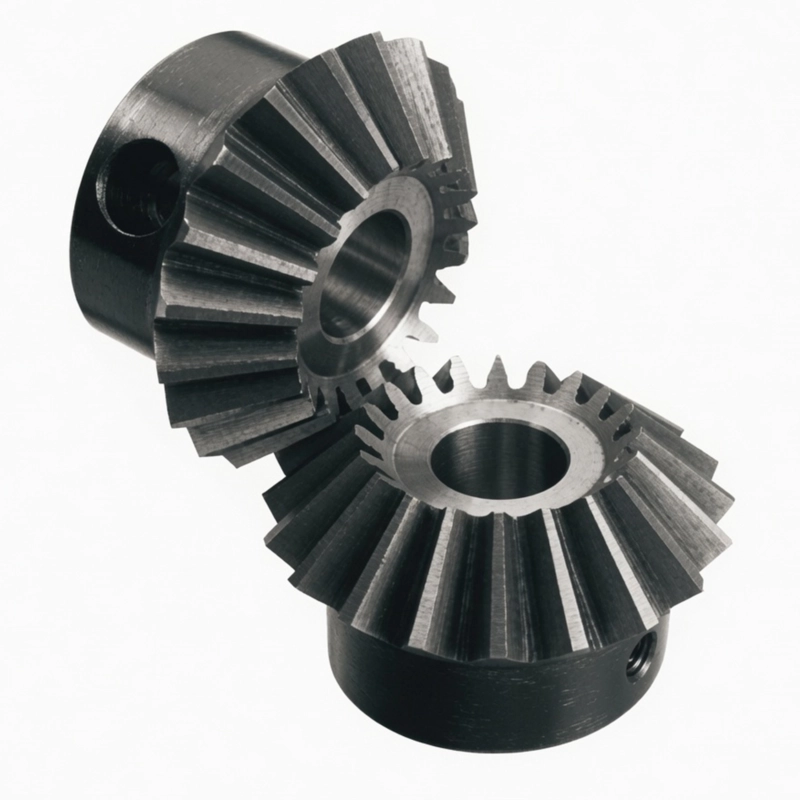
6. Metal Bevel Gear Application Scenarios
The EP-Type B Bevel Gear finds service in a wide spectrum of industrial, agricultural, and mechanical sectors. Below are representative metal bevel gear applications — each placing different demands on the gear set in terms of load, speed, lubrication, and operating environment.
▶ Agricultural Machinery
In combines, tractors, and irrigation pumps widely used across Colombia’s Llanos Orientales and Eje Cafetero agricultural zones, bevel gears redirect power from engine output shafts to transverse-running harvesting or pumping mechanisms. The 1:2 ratio suits low-speed, high-torque final drives in seed drills and cultivators.—–Bevel Gear Agricultural Machinery Colombia
▶ Mining & Extraction Equipment
Colombia’s coal and gold mining industries rely on heavy conveyor systems and ore-handling equipment where reliable angular power transmission is essential. High-power metal bevel gears in M4 and M5 modules handle the torque multiplication needed for incline conveyors, crushers, and winch drives operating under continuous duty cycles.
▶ Industrial Gearboxes
Standard right-angle gearbox assemblies in packaging lines, textile machinery, and food-processing plants frequently incorporate this bevel gear set to achieve directional changes within compact housing envelopes. The 20° pressure angle’s smooth engagement reduces noise and vibration — critical in food-grade and pharmaceutical environments.
▶ Power Tools & Hand-Held Equipment
Smaller modules — M1 and M1.5 — in the mini metal bevel gear range are integral to angle grinders, drills, and gear-head motors. The miniaturized versions provide reliable torque transmission in constrained spaces where straight bevel geometry is preferable to spiral forms for ease of assembly and replacement.
▶ Marine & Port Machinery
Port cranes, anchor windlasses, and ship auxiliary systems along Colombia’s Pacific and Caribbean coasts use angular drives where salt-air resistance combined with structural reliability is paramount. Properly sealed and lubricated, C45 steel bevel gears perform dependably even in high-humidity marine environments with routine maintenance schedules.
▶ Automation & Robotics
In automated assembly lines and robotic joint drives, small metal bevel gears — particularly M1 through M2.5 — achieve precise angular positioning with minimal backlash when manufactured to tight tolerance grades. Their standardized geometry simplifies replacement and reduces downtime during scheduled preventative maintenance interventions.
7. Regulatory Compliance — Colombia & International Standards
Mechanical transmission components such as bevel gears are subject to a range of national and international standards governing design safety, material quality, and machine integration. When sourcing or integrating these components in Colombia, the following regulatory framework is relevant:
Colombia — ICONTEC & Ministerio de Trabajo: Colombian Norma Técnica Colombiana (NTC) standards reference ISO and DIN frameworks for mechanical components. The Ministerio de Trabajo’s safety regulations (Resolución 2400 of 1979 and subsequent updates) impose obligations on machinery manufacturers and users regarding the guarding, labeling, and maintenance of mechanical transmission elements including gear drives. Machines incorporating these gears must comply with Decreto 1072 de 2015 — Colombia’s unified occupational safety and health framework — when deployed in workplaces.
European Union — Machinery Directive 2006/42/EC (now superseded by EU Machinery Regulation 2023/1230): For equipment exported to or from EU member states, the Machinery Regulation mandates risk assessment, CE marking, and technical documentation. Gear components conforming to EN/ISO gear standards (DIN 3975, ISO 1328) support compliance with essential health and safety requirements under Annex I.
United States — AGMA Standards: The American Gear Manufacturers Association (AGMA) publishes AGMA 2003 for bevel and hypoid gear rating and AGMA 2001 for fundamental rating factors. Equipment intended for the U.S. market or for companies following AGMA design practice should verify tooth geometry and accuracy grade compatibility with these standards.
ISO国際規格: ISO 1328 (gear accuracy), ISO 6336 (load capacity), and ISO 10300 (bevel gear strength calculation) form the technical backbone of the European Standard Series to which this product conforms. These ISO standards are increasingly referenced by standards bodies across Latin America, Asia-Pacific, and the Middle East, ensuring that EP-Type B bevel gears meet internationally recognized design and quality benchmarks.
8. Complete Your Drive System — Related Products
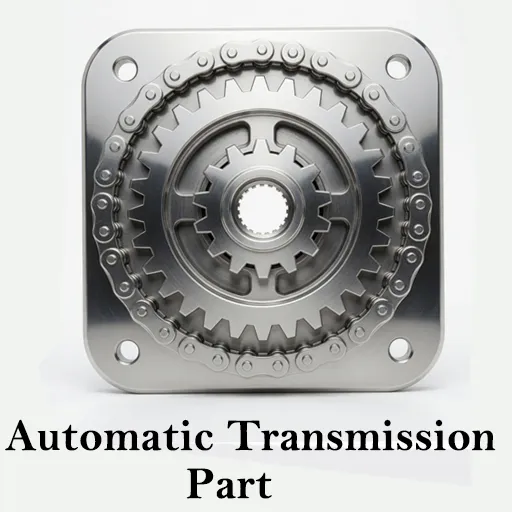
Bevel gears rarely work in isolation. For complete drive system solutions, we offer a full range of complementary transmission components. Pairing your bevel gear set with the correct chain and sprocket components ensures maximum system efficiency, compatibility, and longevity — and reduces the lead time complexity of sourcing from multiple suppliers.
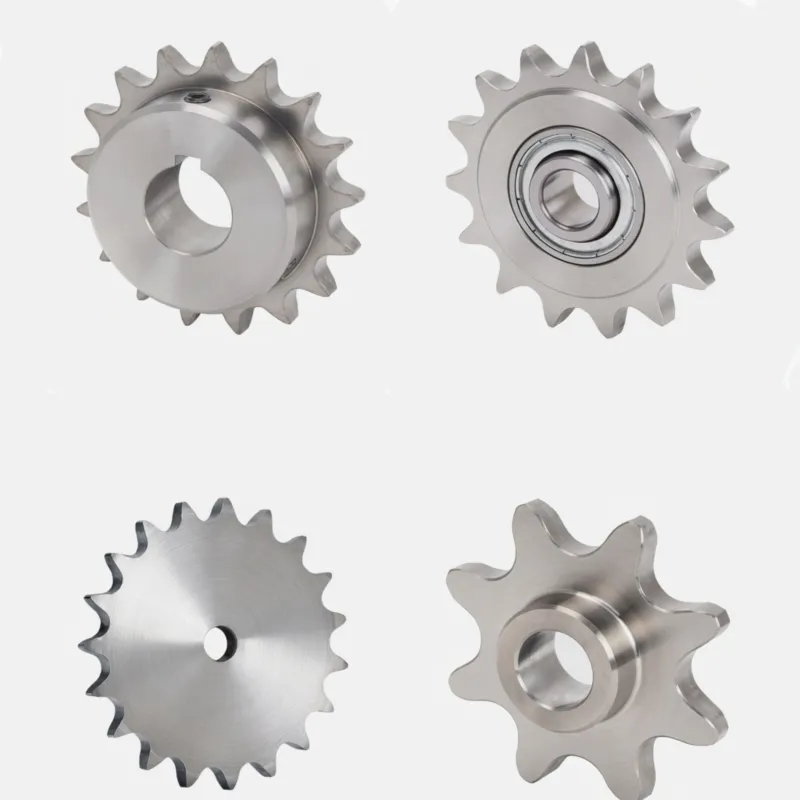
Sprockets
Our sprocket series is engineered for seamless compatibility with standard roller chains and provides a reliable interface between chain drives and the shaft outputs of bevel gear assemblies. Available across a wide pitch range, these components work alongside our gear products as part of an integrated, one-source drive solution.
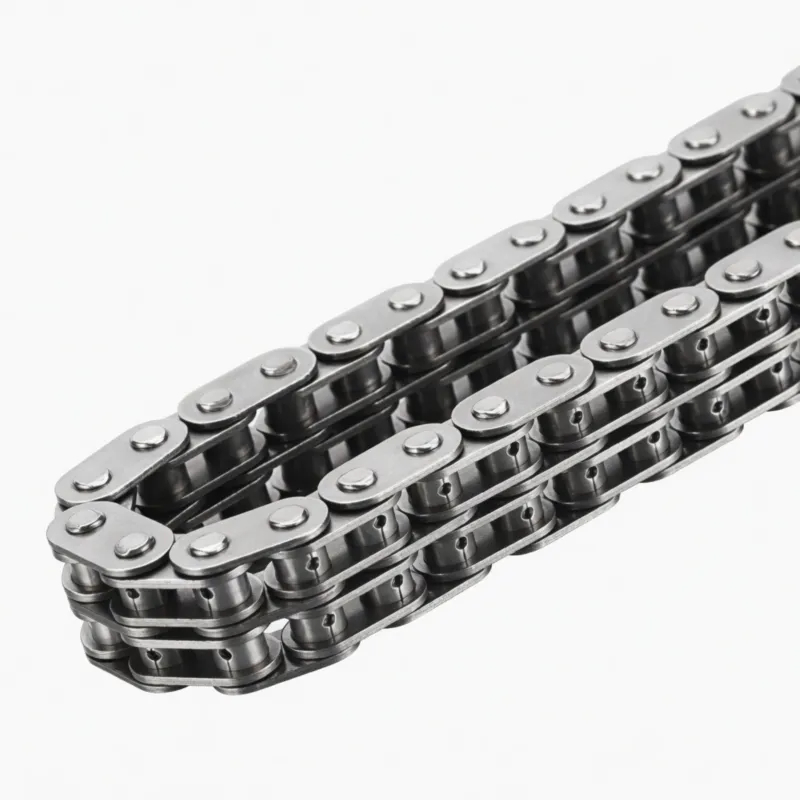
Roller Chains
Roller chains complete the power transmission loop in systems where bevel gears redirect and reduce rotational output before it is distributed along a chain drive. Our chain range covers standard, heavy-duty, and double-pitch variants. Sourcing gear and chain components together guarantees matched tolerances and avoids the mismatches that lead to premature wear.
9. About Us-Metal Bevel Gear Manufacturer
We are a specialist manufacturer and global supplier of precision mechanical transmission components, with decades of combined engineering experience across gear design, metallurgy, and industrial application. Our product range spans the full spectrum of drive train components — from small metal bevel gear units for instrumentation and power tools through to heavy metal bevel gear sets for industrial gearboxes and mining equipment.
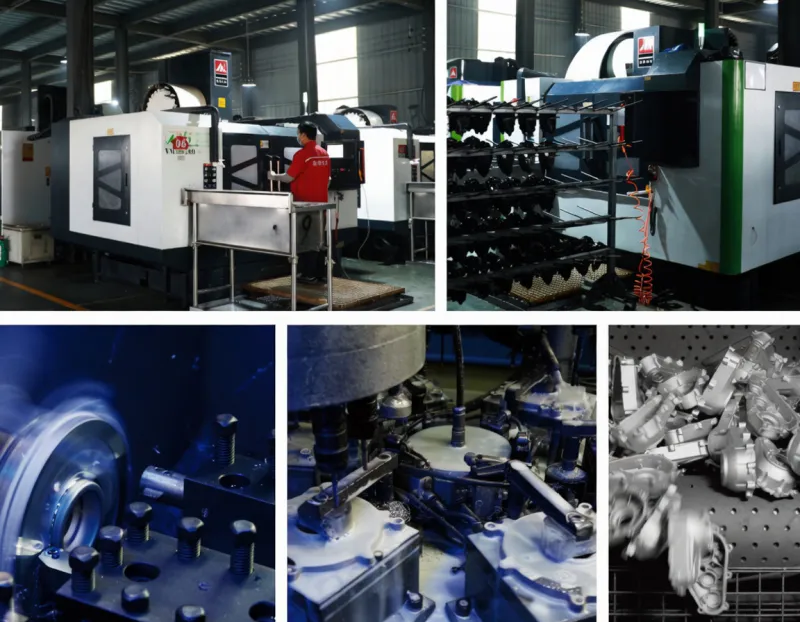
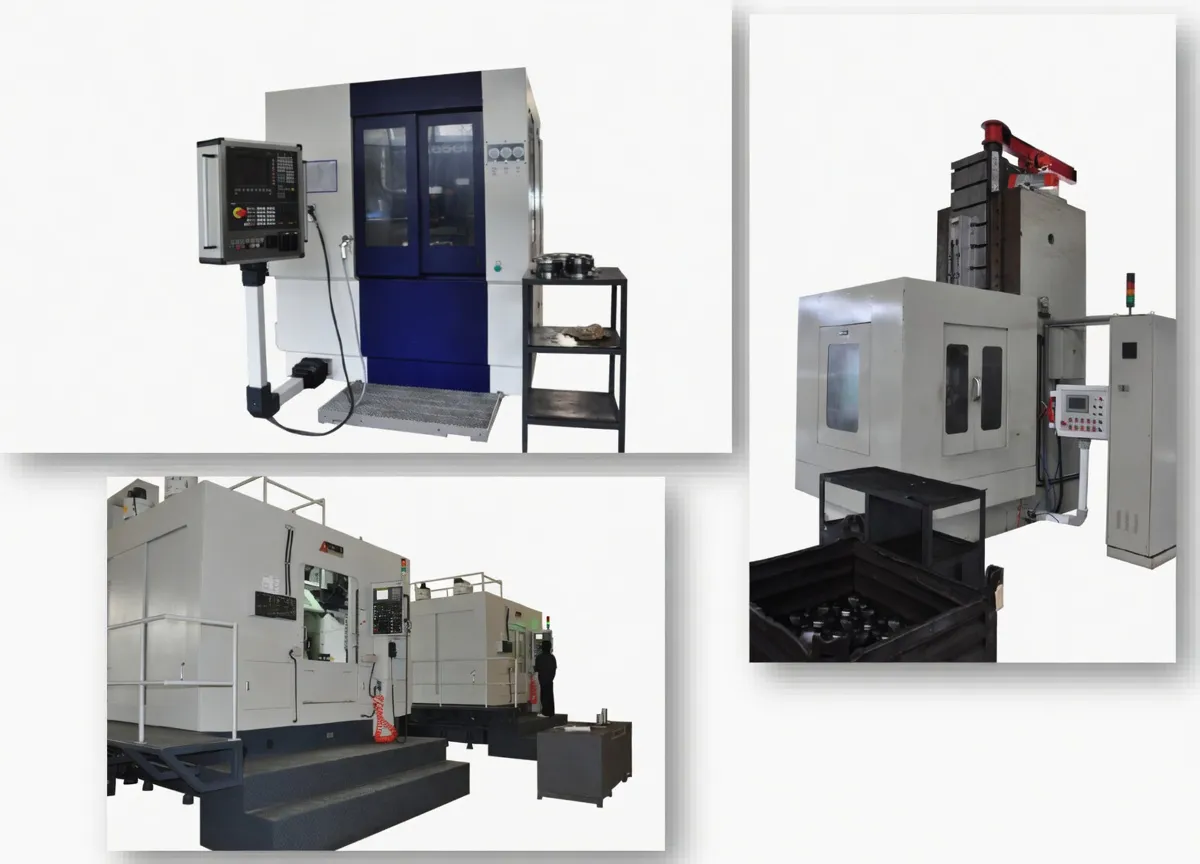
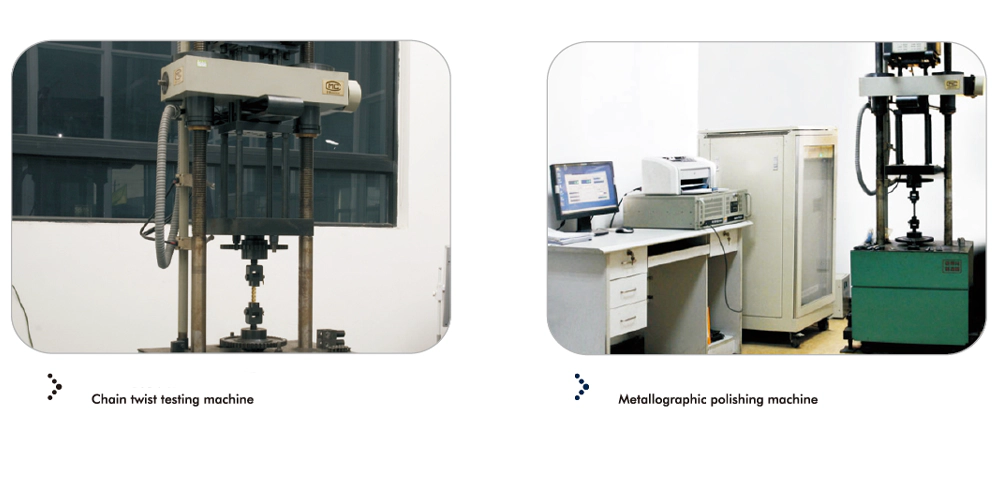
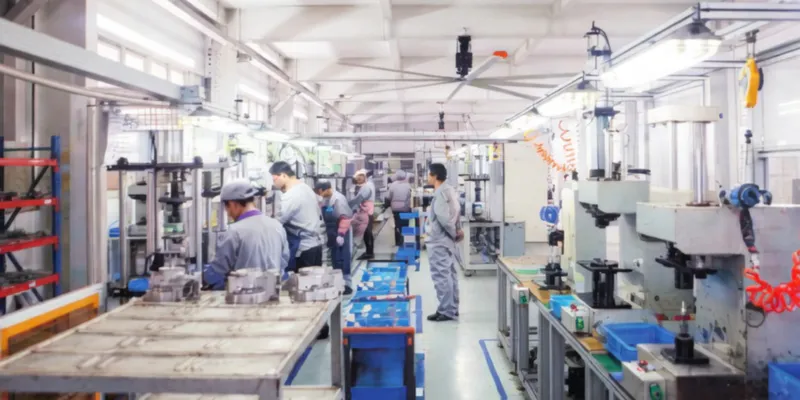
Our production facility operates CNC gear hobbing, shaping, and grinding machines alongside a fully equipped quality control laboratory with CMM inspection capability and surface roughness measurement. Every gear lot is produced against documented process instructions and verified against dimensional drawings before shipment. Certified to ISO 9001, our quality management system covers the entire product lifecycle from raw material receipt through to finished goods dispatch.
ワークショップ
よくある質問
編集者: PXY