説明
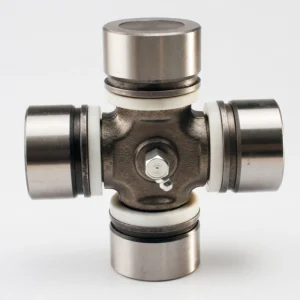
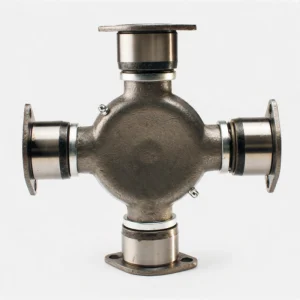
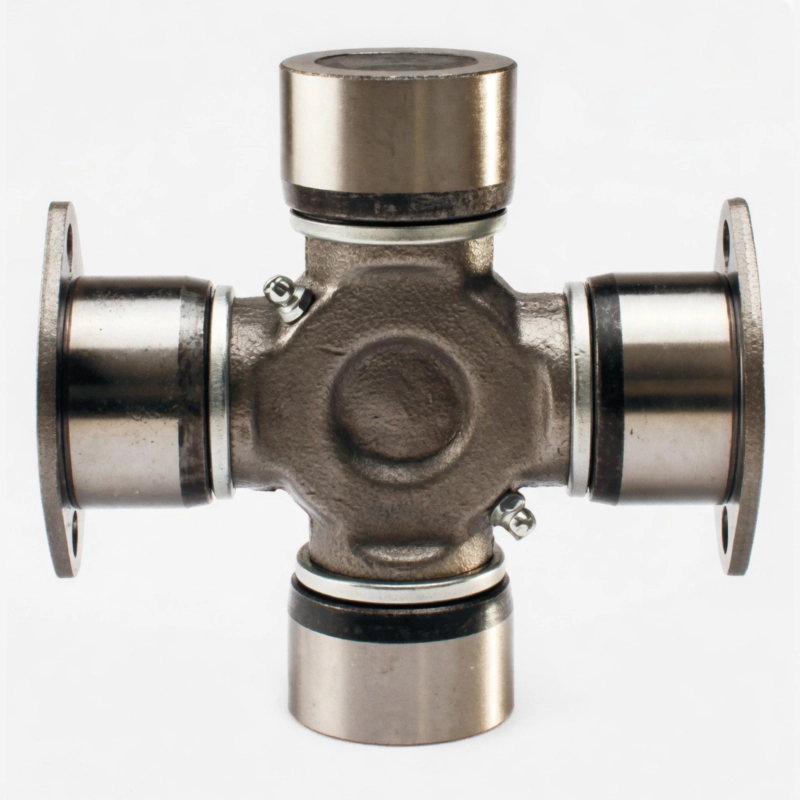
EPユニバーサルジョイント(溶接プレートタイプ2個、プレーンラウンドベアリング2個付き)
の universal joint is an essential mechanical coupling found at the heart of virtually every rotating driveline system in the automotive, agricultural, construction, and industrial sectors. Our EP-series Universal Joint with 2 Welder Plate Type and 2 Plain Round Bearings represents a thoughtfully engineered solution for applications that demand permanent shaft attachment combined with the proven reliability of plain round journal bearings. Designed to transmit torque continuously between two shafts operating at a variable angular offset, this product excels in environments where a robust, low-maintenance coupling is required — from the universal joint in car driveshaft assembly to the demanding underbody environment of a heavy universal joint truck operating across Colombia’s diverse road networks.
This product is catalogued as FIG type D across eight distinct part numbers, each with full cross-reference data mapped to the Spicer, Precision, NEAPCO, and Rockwell identification systems. The welder-plate yoke ends provide a permanent welded connection to driveshaft tubes, eliminating the potential loosening and fretting that can occur with bolted or splined yoke interfaces under sustained cyclic torque.
1. Technical Specifications — U-Joint With 2 Welder Plate Type And 2 Plain Round Bearings (FIG D)
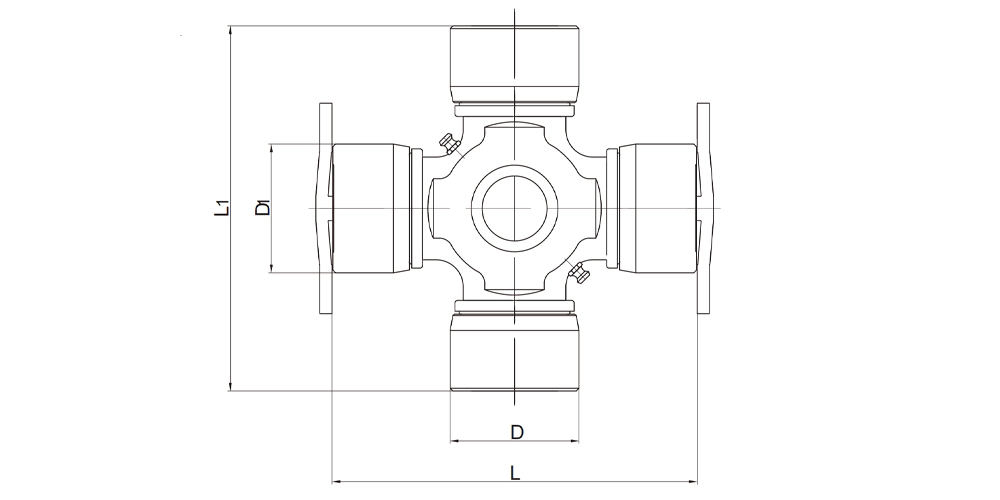
The table below presents the complete dimensional and cross-reference data for all eight part numbers in this universal joint series. Dimensions D, L1, and L2 are expressed in millimeters. The Spicer, Precision, NEAPCO, and Rockwell columns provide direct cross-reference part numbers, enabling procurement teams and workshop technicians to verify fitment against the catalogue system most familiar to them. All configurations correspond to FIG type D geometry.
| FIG | 部品番号 | D (mm) | L1 (mm) | L2 (mm) | SPICER | PRECISION | NEAPCO | ROCKWELL |
|---|---|---|---|---|---|---|---|---|
| D | 5-438X | 47.618 | 135.005 | 135.005 | 5-438X | 475 | 4-2791 | CP16SI |
| D | 5-515X | 49.195 | 154.855 | 156.855 | 5-515X | 476 | 5-2801 | CP17SI |
| D | 5-469X | 49.195 | 177.98 | 179.98 | 5-469X | 477 | 6-4071 | CP176SI |
| D | 5-510X | 49.195 | 191.9 | 193.9 | 5-510X | 478 | 6-2811 | CP18SI |
| D | 5-674X | 47.618 | 135.6 | 135.6 | 5-674X | 475 | 4-2791 | CP16SI |
| D | 5-675X | 49.195 | 155.33 | 157.63 | 5-675X | 476 | 5-2801 | CP17SI |
| D | 5-676X | 49.195 | 192.38 | 194.68 | 5-676X | 478 | 6-2811 | CP18SI |
| D | 5-677X | 49.195 | 178.38 | 180.68 | 5-677X | 477 | 6-4071 | CP176SI |
Note: D = cross journal outer diameter; L1 and L2 = overall length dimensions across the respective yoke spans. All values in millimeters (mm).
2. Five Key Advantages of This Universal Joint
Choosing the right universal joint requires evaluating far more than dimensional fit. Structural design, bearing type, attachment method, cross-reference coverage, and long-term durability all play a role in determining whether a component will perform reliably throughout its intended service life. The five advantages below reflect what sets this EP-series product apart — for distributors, workshop technicians, and fleet managers throughout Colombia and across the Latin American automotive aftermarket.
① Permanent Welded Attachment for Maximum Structural Integrity
The defining feature of this universal joint is its two welder-plate yoke ends, which allow the joint to be permanently integrated into a driveshaft assembly through welding. Unlike bolted-flange or slip-spline interfaces, a correctly executed weld connection transfers the full torsional and bending capacity of the shaft without relying on fastener clamping force or spline engagement. This is particularly important in heavy-duty universal joint applications — large commercial trucks, off-highway equipment, and industrial drive systems — where torque impulses and shock loading are frequent and severe. The weld-plate geometry is designed to support full-penetration fillet welds, ensuring that structural failure in the joint-to-shaft connection is not the limiting factor in the overall driveshaft assembly. For fleet operators in Colombia’s logistics, mining, and agro-industrial sectors, this translates to fewer unplanned drivetrain failures and reduced total cost of driveshaft maintenance over vehicle life.
② Plain Round Bearings for Robust, Low-Maintenance Operation
Two of the four cross-journal positions in this universal joint use plain round bearings — also known as sleeve or journal bearings — rather than needle roller assemblies. Plain bearings offer a broad, conformable contact surface that distributes load across the journal, making them particularly resistant to contamination, moisture ingress, and the impact loads common in off-road and construction environments. For universal joint applications in Colombia’s agricultural machinery operating through the rainy season in departments like Antioquia, Tolima, and the Eje Cafetero, plain bearings hold their performance even when access to regular greasing maintenance is limited. Their simplicity also means that when replacement is required, the procedure is straightforward and well understood by workshop technicians across the regional aftermarket.
③ Comprehensive Four-System Cross-Reference Compatibility
Every part number in this series is cross-referenced to four major catalogue systems: Spicer, Precision, NEAPCO, and Rockwell. These are among the most widely used identification frameworks in the North and South American markets. This four-way cross-reference coverage means procurement teams, parts managers, and workshop technicians can verify fitment regardless of which reference system their existing records or parts catalogs use. For importers and distributors supplying the Colombian automotive aftermarket — where vehicle fleets include North American trucks, European machinery, and locally assembled equipment — this multi-system compatibility significantly streamlines the sourcing and verification process for universal joint replacement parts.
④ Case-Hardened Alloy Steel Cross for Superior Fatigue Resistance
The cross — the spider-shaped central element that is the structural core of every universal joint — is forged from medium-carbon alloy steel and subjected to a carburizing heat treatment process that develops a hard, wear-resistant case over a tough, ductile core. This dual-zone microstructure is the result of precision-controlled heat treatment and is what distinguishes a long-service-life universal joint from inferior alternatives. The hard case resists abrasive wear and surface fatigue at the journal bearing interface, while the tough core resists propagation of fatigue cracks from the journal roots — the most common mode of failure in cross bodies subjected to repeated high-torque cycling. For universal joint truck applications accumulating high annual mileages under load, this translates to measurably extended service intervals.
⑤ Eight Part Numbers Covering a Wide Dimensional Range
これ universal joint series spans eight distinct part numbers with cross diameters of 47.618 mm and 49.195 mm and overall length configurations ranging from approximately 135 mm to 195 mm across the L1 and L2 dimensions. This range covers a wide variety of truck, bus, and industrial driveshaft configurations, reducing the number of SKUs a distributor needs to stock to service a diverse customer base. Multiple universal joint types within this dimensional window — including those used in steering column assemblies, intermediate driveshafts, and rear propeller shafts — can be served from a single, manageable inventory of EP-series joints, improving fill rates and simplifying warehouse management for aftermarket suppliers throughout Colombia and the broader Andean region.
3. Universal Joint Working Principle
To fully appreciate why the universal joint is so widely used across so many mechanical systems, it helps to understand the universal joint working principle that underpins its design. At its core, a universal joint — also referred to as a Cardan joint or cross joint — is a mechanical coupling that allows continuous rotational motion to be transmitted between two shafts whose axes intersect at an angle. Unlike a rigid coupling, which requires the two connected shafts to be nearly perfectly coaxial, a universal joint accommodates angular misalignment while still transmitting torque — which is why it is indispensable in drivetrain applications such as the universal joint in car rear driveshafts, where the differential must move vertically relative to the gearbox as the suspension operates.
The structural heart of this type of coupling is the cross, a four-armed trunnion machined to tight dimensional tolerances. Two of the four arms engage with one yoke, and the other two arms engage with the second yoke, with the two yokes oriented at 90° to each other. As the driving yoke rotates — powered by the engine through the gearbox — it pivots around its two cross-arm journals, which in turn transmit rotational force to the second yoke via the perpendicular pair of journals. The plain round bearings in this EP product support the pivoting motion at two of the four journal positions, providing a low-friction, wear-resistant interface that accommodates the continual oscillation inherent in driveshaft operation. This cross-and-yoke geometry is what gives the coupling its ability to transmit torque at an angle — a capability exploited in everything from the steering column universal joint to full-length truck propeller shafts.
One characteristic of the single universal joint that engineers must account for is velocity non-uniformity: when the input and output shafts operate at an angle, the instantaneous angular velocity of the output shaft oscillates at twice the rotational frequency, creating a cyclic speed variation even at constant input speed. In practical driveshaft designs, this is addressed by correctly phasing two universal joint assemblies at opposite ends of the intermediate shaft — the velocity variation introduced by one joint is cancelled by the equal and opposite variation of the second. For steering universal joint そして universal steering joint applications, where velocity non-uniformity manifests as perceptible shimmy or vibration felt at the steering wheel, careful joint phasing is a critical installation requirement. The welder-plate ends of this EP product make it straightforward to build correctly phased dual-joint driveshaft assemblies in both OEM fabrication and repair workshop contexts.
4. Material and Construction
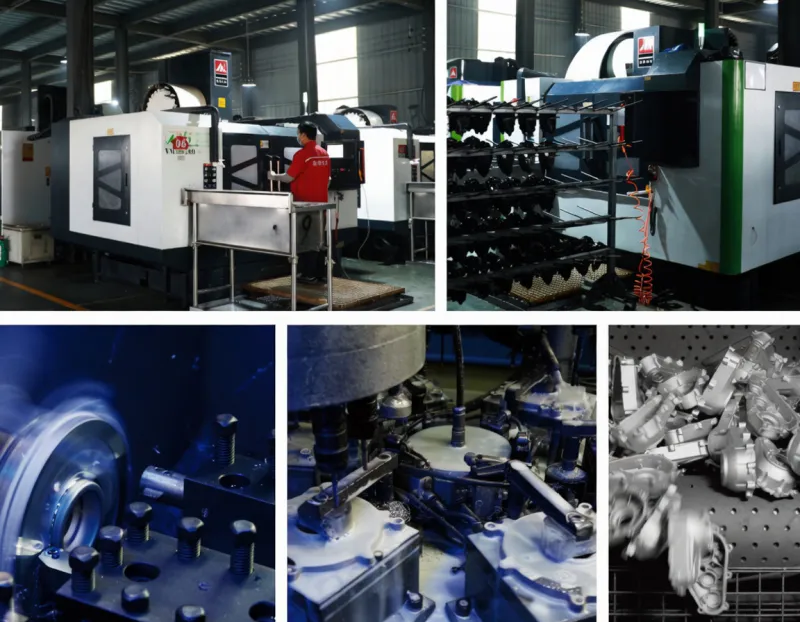
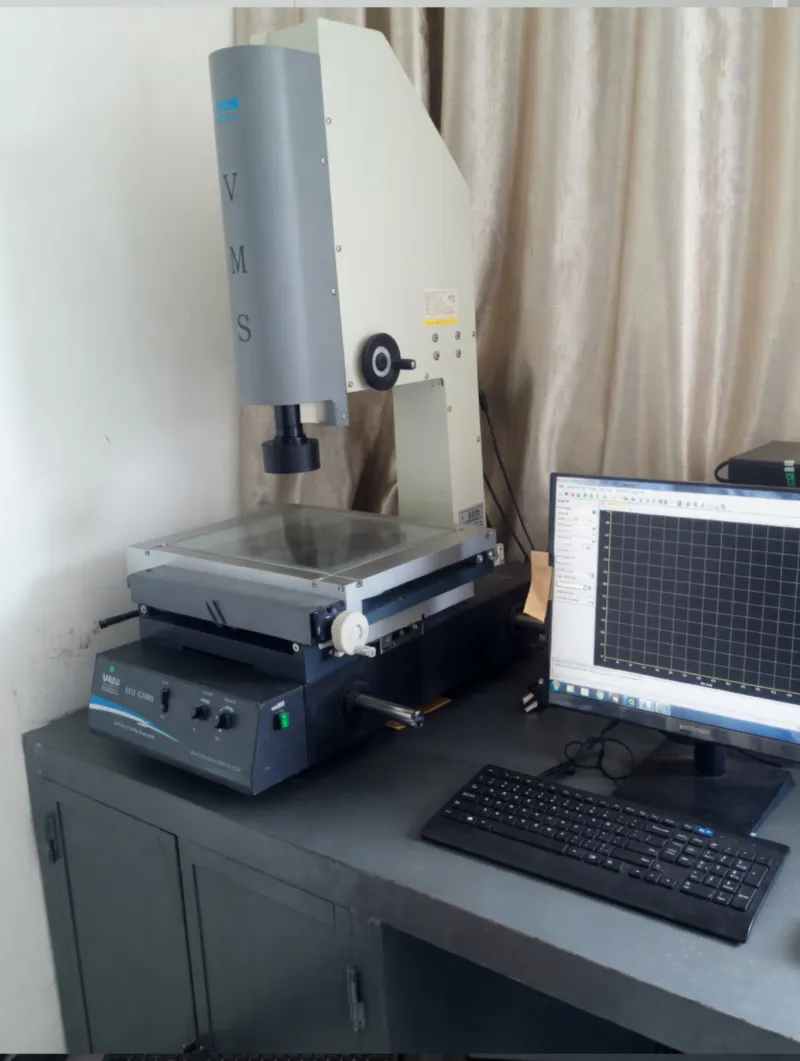
The performance capability of any universal joint is ultimately determined by the quality of the materials and the discipline of the manufacturing processes used to produce it. The EP-series joints are manufactured through a multi-stage production process that encompasses raw material selection, precision forging, CNC machining, heat treatment, and dimensional verification against calibrated inspection equipment — a workflow designed to deliver consistent, specification-compliant parts at every stage.
The cross body — the structural spine of every drivetrain coupling of this type — is produced from medium-carbon alloy steel selected for its favorable combination of hardenability, toughness, and machinability. After forging to near-net shape, each cross is CNC-machined on the journal bearing surfaces to achieve the tight dimensional tolerances required for correct bearing fit. A carburizing heat treatment cycle is then applied, which introduces carbon into the surface layer of the steel, building a hard, wear-resistant case while preserving the tough, impact-resistant core. The journal surfaces are subsequently ground to final size, achieving the surface finish and dimensional accuracy needed for consistent bearing clearance and low running friction throughout the service life of the universal joint. This process mirrors the precision operations — CNC gear hobbing, induction quenching, three-axis coordinate measurement, and finished-product testing — used in high-specification automotive drivetrain component manufacturing.
The welder-plate yoke components are produced from structural steel plate, cut and formed to dimensional tolerances compatible with the weld preparation geometry required for full-penetration joints. The plate material is selected for its weldability characteristics — low carbon equivalent for good fusion welding behaviour with common wire-feed and TIG processes — as well as its structural strength, which must be sufficient to transfer driveshaft torque without deformation or fatigue cracking at the weld root. Weld plate thickness and geometry are consistent with established driveshaft fabrication practices for commercial vehicle applications, and the finished surface condition is suitable for direct field welding without pre-machining.
The two plain round bearings incorporated into this universal joint are produced from sintered bronze or hardened steel, depending on the specific design variant, and are dimensioned to provide a controlled running clearance on the cross journal surfaces. Plain bearings of this type are used extensively in heavy-duty automotive universal joint and driveshaft applications precisely because of their tolerance to contamination, their broad load distribution characteristics, and their proven long-term reliability under cyclic loading conditions. They require no cage or rolling element assembly, which simplifies installation and reduces the number of precision components that must be maintained in correct orientation during field service operations.
5. Universal Joint Application Scenarios
の universal joint application range of this EP-series product extends across a wide spectrum of industries and vehicle types. In Colombia and across Latin America, each of the following sectors represents a significant and growing demand channel for high-quality driveshaft universal joint components. Understanding the specific requirements of each application helps ensure the correct selection and installation of the right universal joint for every task.
Commercial Trucks & Long-Haul Transport
In commercial universal joint truck applications — particularly the heavy-duty road freight vehicles that are the backbone of Colombia’s national cargo network connecting Bogotá, Medellín, Cali, Barranquilla, and Buenaventura port — the driveshaft universal joint undergoes intense cyclic loading at high rotational speed. The welded plate attachment of this product eliminates play at the shaft interface, which is a common source of vibration and secondary fatigue damage in high-mileage drivetrains. Fleet maintenance managers specifying a universal joint replacement for medium and heavy trucks will find that the Spicer and NEAPCO cross-references make fitment verification fast and reliable, reducing parts-sourcing lead time and keeping vehicles productive.
Agricultural Machinery — PTO and Driveline
Across Colombia’s agricultural heartlands — the coffee-growing Eje Cafetero, the sugarcane plantations of the Valle del Cauca, and the cattle ranches of the Llanos Orientales — tractors and implement-drive systems rely heavily on universal joint assemblies in both PTO (power take-off) shafts and articulating main drivelines. The plain round bearings in this EP product are well-suited to field conditions where access to regular maintenance is irregular and where abrasive soil dust and moisture are constant challenges. A high-quality cardan joint in this environment means fewer unexpected breakdowns at critical harvest periods, directly supporting farm productivity and machinery uptime.
Steering Column Systems
の steering universal joint そして steering column universal joint are safety-critical components in every steered vehicle. A universal steering joint routes the steering column around the firewall and engine bay geometry while maintaining precise, low-backlash torque transfer from the steering wheel to the rack or steering gearbox. In this role, dimensional accuracy and minimal angular play are paramount — qualities that precision-ground journals and tight bearing clearances directly provide. This EP universal joint covers dimensions consistent with steering column intermediate shaft specifications used in a range of commercial vehicle platforms common across the Colombian market.
Mining & Heavy Off-Highway Equipment
Colombia’s coal and gold mining sectors — centred in the Cesar, La Guajira, and Antioquia departments — operate extensive fleets of haul trucks, wheel loaders, and auxiliary mining machinery that depend on robust universal joint components in their drivetrain assemblies. In these environments, the heavy-duty universal joint must withstand elevated sustained torque, frequent torsional shock from loaded uphill starts and emergency braking events, and exposure to abrasive mineral dust and water. The alloy steel, case-hardened cross construction of this EP product directly addresses these demands, and the cross-reference compatibility with North American heavy equipment catalogues supports the sourcing workflows used by mining fleet maintenance operations throughout the country.
Urban & Intercity Bus Fleets
Bus operators running urban routes in Bogotá’s TransMilenio system and intercity services between Colombia’s major cities require universal joint components that deliver smooth, vibration-free driveline operation across high daily mileages. A worn universal joint in a passenger bus generates perceptible vibration and noise that reduces passenger comfort and can mask the onset of more serious driveline failure. Proactive universal joint replacement using correctly cross-referenced EP-series parts — matched to the Spicer or Rockwell reference systems used in the bus fleet’s maintenance records — keeps vehicles smooth and reliable while minimising unscheduled workshop time.
Industrial Drive Shafts & Process Equipment
Beyond mobile vehicles, the universal joint application in industrial settings is broad and growing. Pump drives, conveyor systems, mixing vessels, rolling mills, and paper manufacturing equipment all use Cardan-style driveshaft assemblies to transmit power between motors and driven shafts that cannot be perfectly coaxially aligned. The welder-plate design of this EP universal joint is particularly well-suited for custom fabricated industrial driveshafts, where the joint must be integrated into a bespoke shaft assembly rather than a standardised OEM yoke. The available dimensional range covers many common intermediate shaft configurations encountered in the process, food, beverage, and manufacturing industries throughout Colombia and the Andean region.
6.規制遵守と業界標準
The procurement and use of universal joint components for automotive and industrial machinery operate within a framework of national and international standards. Compliance with these regulations is not only a legal requirement in many jurisdictions but also serves as an objective quality benchmark that procurement professionals and technical managers use to evaluate suppliers. The following overview covers the key regulatory frameworks relevant to this product’s primary markets.
コロンビア
In Colombia, vehicles operating on public roads must comply with the Revisión Técnico-Mecánica y de Gases program mandated under Decree 019 of 2012 and subsequent resolutions issued by the 運輸省. This periodic technical inspection evaluates driveline integrity, including the condition of propeller shafts and their associated universal joint components. Vehicles with worn or defective driveline parts — including a failing driveshaft universal joint — can be rejected until the defect is corrected, making timely universal joint replacement both a safety obligation and a regulatory compliance matter. Additionally, importation of automotive components into Colombia is subject to DIAN customs classification, and quality certification documentation may be required by certain institutional and government procurement programs. Conformity with applicable NTC (Norma Técnica Colombiana) standards issued by ICONTEC provides additional assurance of product quality for Colombian buyers.
United States
In the United States, heavy truck driveline components are subject to relevant Federal Motor Vehicle Safety Standards (FMVSS) administered by NHTSA, as well as SAE technical standards including SAE J1368 (driveshaft and universal joint specifications for truck and bus applications). Spicer and NEAPCO cross-reference compatibility for this EP product ensures alignment with these engineering specifications and supports fitment into vehicles originally designed to SAE standards — a significant advantage when exporting to or sourcing replacement parts for North American truck platforms.
欧州連合
Within the EU, automotive components used in road vehicles fall under the type-approval framework established by Regulation (EU) 2018/858 (successor to EC Directive 2007/46/EC). Manufacturers and importers supplying the EU market are expected to operate under quality management systems conforming to IATF 16949 (formerly ISO/TS 16949), the automotive-specific quality management standard. ISO 9001 certification provides a baseline assurance of quality system governance applicable to universal joint component manufacturers supplying European distributors.
Brazil & MERCOSUR Region
Brazil’s SENATRAN and INMETRO regulate automotive component safety and market access within Brazil. MERCOSUR Resolution GMC 56/96 and its subsequent revisions govern technical approval of automotive parts traded within the MERCOSUR bloc — Argentina, Brazil, Paraguay, and Uruguay — which collectively represent Colombia’s most significant regional trade partners for automotive aftermarket goods. Understanding and aligning with MERCOSUR technical standards supports cross-border trade of universal joint and related driveline components throughout the broader South American market.
International ISO Standards
ISO 7646 addresses driveshaft joints for agricultural tractors and machinery, specifying performance requirements directly relevant to the agricultural machinery applications described above. ISO 8790 covers performance requirements for propeller shaft couplings used in road vehicles. Together, these standards define the torque capacity, angular range, fatigue life, and dimensional tolerance requirements that a well-manufactured universal joint should satisfy, providing a consistent international benchmark against which product quality can be evaluated.
7. 当社について
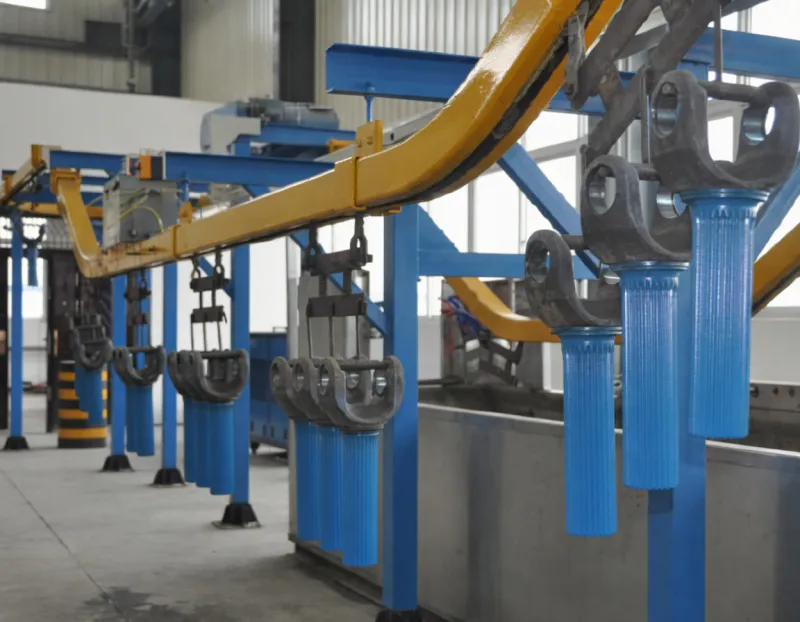
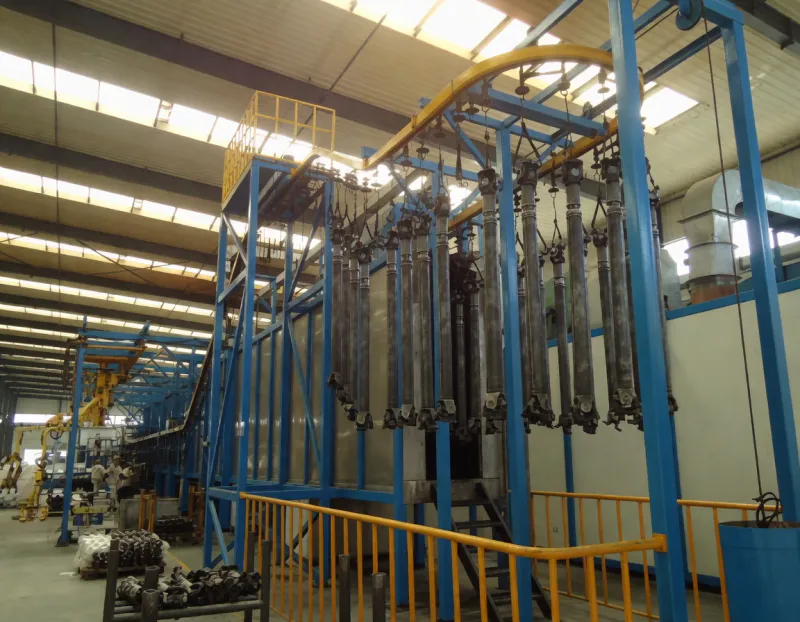
We are a specialized manufacturer and global supplier of high-precision drivetrain components, with a product portfolio that spans universal joint assemblies across all major bearing and yoke configurations, wheel hub units, axle shafts, and a broad range of complementary automotive transmission components. Our production infrastructure incorporates CNC gear hobbing machines, precision CNC machining centres, gantry machining platforms, vertical broaching machines, drilling machining centres, and induction tooth-quenching equipment — a manufacturing capability that supports the dimensional accuracy, surface quality, and metallurgical performance that professional-grade universal joint production demands.
Our universal joint product line covers the full spectrum of universal joint types encountered in automotive and industrial driveshaft applications: plain bearing and needle bearing configurations, welder plate and flange yoke variants, wing bearing and high-wing bearing types, and combination bearing designs for specialised heavy-duty applications. Within this range, the EP-series welder plate products such as this one represent a core offering for the permanent-attachment driveshaft market, delivering reliable performance in the commercial vehicle, agricultural, and industrial sectors that are central to Colombia’s economic infrastructure.
ワークショップ
8. Related Products — Complete Drivetrain Solutions
A well-performing drivetrain is a system where every component — from the universal joint to the wheel hub to the axle shaft — is correctly matched and sourced to consistent quality standards. We supply a comprehensive range of drivetrain components designed to work together with our universal joint product line, giving you the system-level compatibility and one-stop supply convenience that reduces procurement complexity, simplifies warranty management, and ensures consistency of fit and performance across the entire driveline assembly. This integrated approach is especially valuable for distributors and fleet operators in Colombia who want to consolidate their supplier base without compromising on component quality.
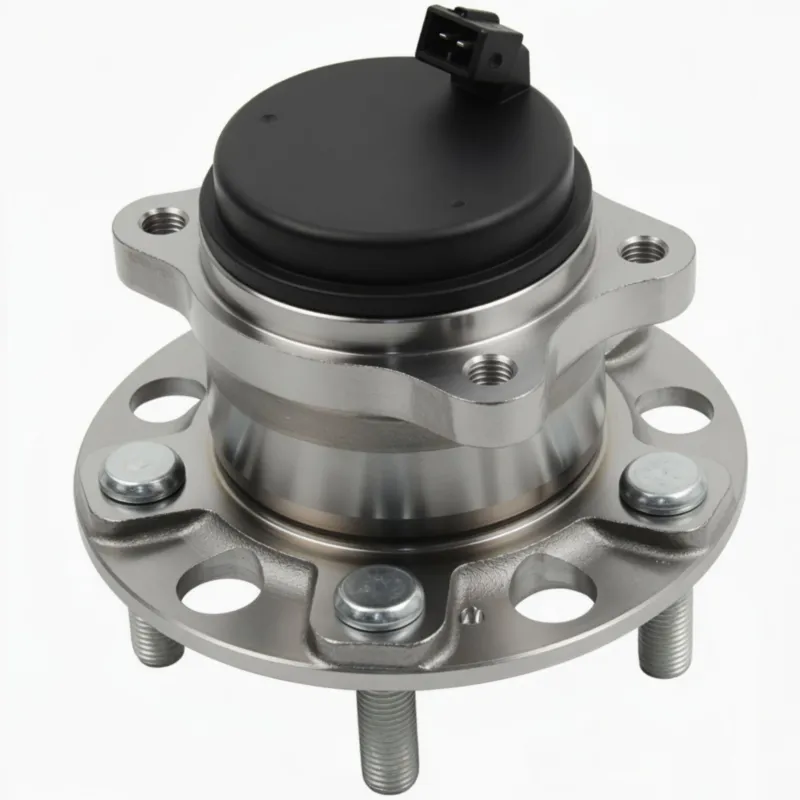
ホイールハブユニット
Our full series of automotive Wheel Hub units are engineered for direct dimensional compatibility with vehicles using our universal joint driveshaft assemblies. Correct wheel hub specification — particularly hub flange geometry, bearing preload, and axle stub diameter — is essential for maintaining the correct driveline geometry and ensuring that loads are transferred efficiently and without premature wear. By sourcing both the universal joint and the wheel hub from a single supplier with matched engineering specifications, procurement teams can be confident that the complete driveline interface is dimensionally consistent. Our full-series automotive wheel bearing catalog supports one-stop supply for aftermarket service providers and fleet workshops throughout the Colombian market.
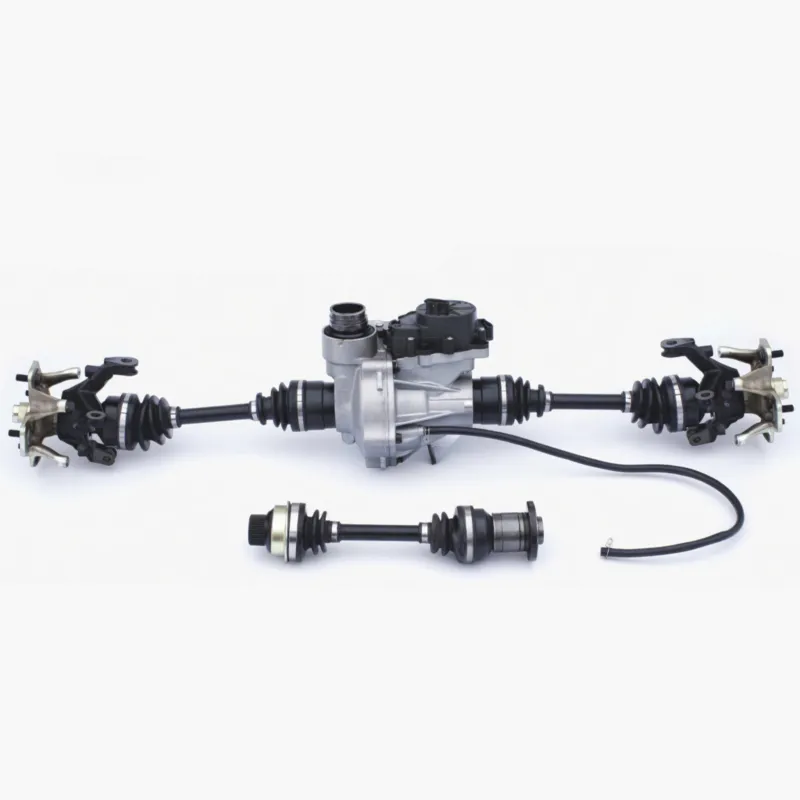
Axle Shafts
Our range of front and rear axles — encompassing drive axle shafts for automotive and off-highway applications — are dimensionally engineered to interface correctly with our universal joint assemblies at the yoke connection and with the wheel hub at the flange end. System-level compatibility between the axle shaft, the yoke dimensions of the universal joint, and the hub mounting geometry is fundamental to achieving correct driveline angularity, proper torque transfer, and acceptable NVH (noise, vibration, harshness) characteristics. Specifying the axle shaft, the universal joint, and the wheel hub as a matched set from a single supplier is the most straightforward way to guarantee this compatibility — a key advantage of our integrated drivetrain supply capability for workshops and distributors serving the Colombian automotive aftermarket.
よくある質問
編集者: PXY