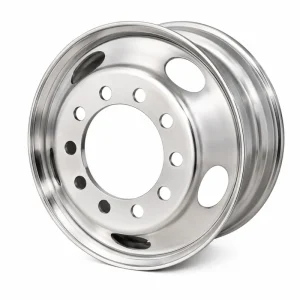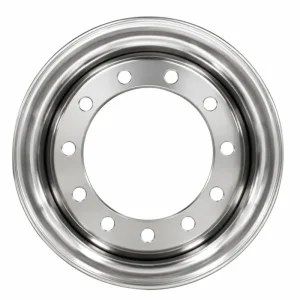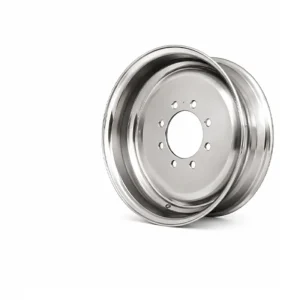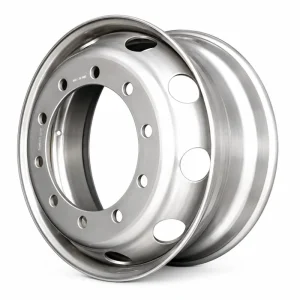
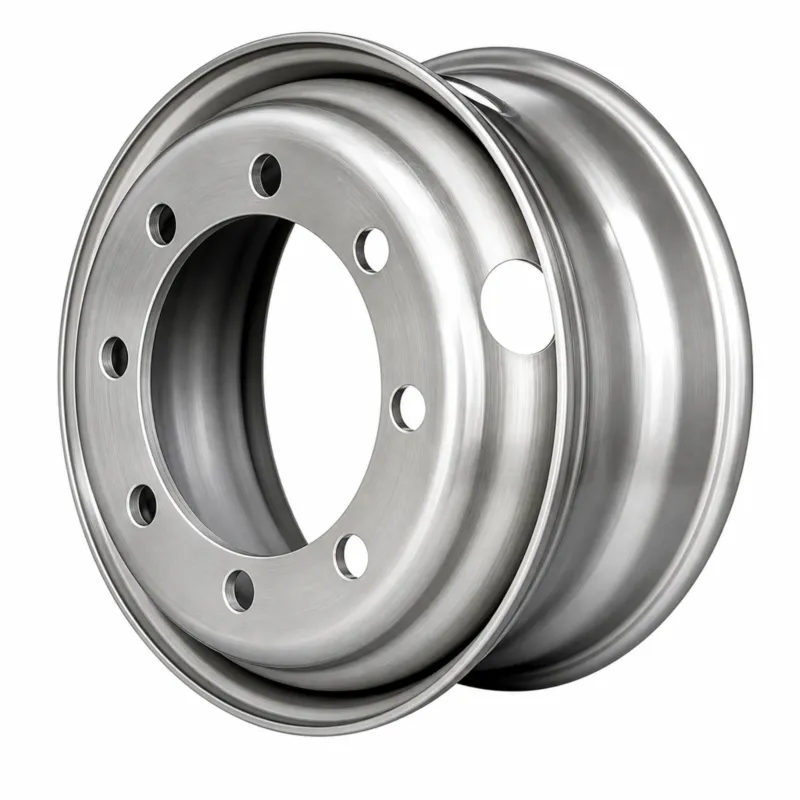
日本产EP重型卡车和卡车拖车车轮
我们的 EP 重型卡车和卡车拖车轮系列专为日本市场设计,其制造工艺遵循日本商用车市场最严格的标准,满足了所有这些需求——这是全球卡车行业技术要求最高的车轮规格之一。
日野、五十铃、三菱扶桑和日产柴油等日本重型车辆制造商长期以来一直制定着车轮接口几何形状的基准标准,对节圆直径 (PCD)、中心孔直径、偏距和螺栓孔尺寸都有严格的公差要求,以确保轮毂的精确安装以及所有安装点的均匀载荷分布。EP 日本市场卡车拖车轮系列完全符合这些尺寸规格,因此无需适配器或改装轮毂即可直接安装到符合日本 JIS 标准的车辆上。
日本重型卡车市场的核心主要分为两大尺寸类别:转向轴和较轻的后轴应用采用 22.5×7.5 轮辋宽度,而驱动轴和拖车轴位置则采用更宽的 22.5×8.25 轮辋宽度,这些位置指定使用更宽的轮胎断面宽度。
1. 技术规格 — EP 日本市场重型卡车拖车车轮
下表涵盖了符合日本EP标准的重型卡车挂车车轮的全部规格,包括22.5×7.5和22.5×8.25两种轮辋尺寸,以及所有可用的螺栓孔距、定位和中心孔配置。除非另有说明,所有尺寸数据均以毫米为单位。
| 零件编号 | 尺寸 | 螺栓数量 | PCD(毫米) | 螺栓直径(毫米) | 中心孔直径(毫米) | 偏移量(毫米) | 通风孔 | 试运行 |
|---|---|---|---|---|---|---|---|---|
| JG52SW15 | 22.5×7.5 | 10 | 335 | 26 | 281 | 165 | 10 | 中心 |
| JG52SW16 | 22.5×7.5 | 10 | 335 | 32.5 | 281 | 165 | 10 | 螺 |
| JG52SW03 | 22.5×7.5 | 10 | 335 | 26 | 281 | 168 | 10 | 中心 |
| JG52SW08 | 22.5×7.5 | 10 | 285.75 | 26 | 220 | 168 | 2 | 中心 |
| JG52SW06 | 22.5×7.5 | 10 | 285.75 | 32.5 | 221 | 165 | 10 | 螺 |
| JG28SW36 | 22.5×8.25 | 10 | 285.75 | 26 | 220 | 166 | 2 | 中心 |
| JG28SW53 | 22.5×8.25 | 10 | 285.75 | 26 | 220 | 168 | 10 | 中心 |
| JG28SW09 | 22.5×8.25 | 10 | 285.75 | 32.5 | 221 | 168 | 5 | 螺 |
| JG28SW10 | 22.5×8.25 | 10 | 285.75 | 32.5 | 221 | 168 | 10 | 螺 |
| JG28SW30 | 22.5×8.25 | 10 | 335 | 26 | 281 | 165 | 10 | 中心 |
| JG28SW77 | 22.5×8.25 | 8 | 275 | 26 | 221 | 165 | 8 | 中心 |
| JG28SW78 | 22.5×8.25 | 8 | 275 | 32.5 | 214 | 165 | 8 | 螺 |
注:所有尺寸单位均为毫米。HUB = 轮毂定位;STUD = 螺柱定位。订购前,请对照车辆维修手册确认零件编号和定位系统,以确保其适用于在哥伦比亚注册的日本商用车。
2. EP日本规格卡车挂车车轮的五大主要优势
符合JIS标准的尺寸精度
EP Japan系列卡车拖车车轮的每一款产品均按照源自日本工业标准(JIS D 4218)的尺寸标准制造,包括±0.1毫米以内的PCD公差、±0.05毫米以内的中心孔直径精度以及确保首次安装后即可平稳无振动旋转的跳动规格。这种尺寸精度避免了因车轮安装不当而导致的垫片调整和重新拧紧等问题——这些问题在哥伦比亚安第斯山脉陡峭的下坡路段尤为重要,因为那里刹车温度高,车轮紧固件的完整性至关重要。
双定位系统可用性
EP系列产品在同一尺寸范围内同时提供轮毂定位和螺柱定位两种类型的卡车车轮,使车队管理人员能够与单一供应商保持合作关系,同时满足不同日本卡车世代所使用的轮毂中心定位系统。轮毂定位设计通过精密加工的中心孔来定位车轮,而螺柱定位则依靠轮毂螺母的锥度进行定位。正确的定位系统匹配至关重要——它直接影响螺栓圆周上的载荷分配,是重型卡车拖车车轮安装的基本安全要求。
采用辊压成型工艺,减轻重量
The EP truck trailer wheel utilizes rim flow forming technology that thins the rim wall sections progressively while preserving full strength at the bead seat — the highest-stress zone of the wheel. This process reduces individual truck wheel weight by up to fifteen percent compared to conventional pressing methods, directly benefiting payload capacity within Colombian gross vehicle weight limits and reducing unsprung mass for improved ride and handling. For operators running truck and trailer wheel combinations over Colombia's mixed road surfaces, lighter wheels translate to measurably reduced fuel consumption over annual distance targets.
高强度钢材,适用于严苛的载荷工况
轮盘和轮辋部件采用先进的高强度钢材,即使在拖车车轴持续循环载荷作用下,也能保持结构完整性。材料选择旨在平衡屈服强度(决定过载时抵抗永久变形的能力)和延展性(使车轮能够吸收来自路面障碍物的冲击能量而不发生脆性断裂)。在哥伦比亚道路上行驶的重型卡车拖车车轮,由于路面状况可能较差,且矿区和农业区内可能存在简易的河流渡口,因此这种材料韧性优势尤为重要。
热带作业的全面防腐蚀保护
Colombia's coastal port cities, humid Amazon basin transport routes, and high-rainfall Andean passes present a persistent corrosion challenge for steel truck wheels. The EP-Truck Trailer Wheel series applies a multi-stage surface treatment process — shot blasting for surface preparation, phosphating for adhesion promotion, and epoxy primer topped with polyester topcoat — that passes a minimum five hundred hour neutral salt spray test per ISO 9227. This treatment level substantially extends the cosmetic and structural life of the truck trailer wheel beyond what bare or single-coat products achieve in tropical operating conditions.
3. 工作原理和结构工程
The truck trailer wheel functions as the structural interface between the vehicle's hub assembly and the pneumatic tire, transmitting all traction, braking, cornering, and vertical load forces between road surface and vehicle chassis. Understanding how this load path operates helps explain why dimensional accuracy in the wheel mounting interface is non-negotiable. In service, the truck wheel hub transfers vertical loads from the axle spindle through the wheel disc into the rim section and ultimately into the tire bead area, where inflation pressure creates the structural column that supports the vehicle's weight. Any lack of concentricity in the center hole, or unevenness in the bolt hole pattern, creates an uneven load distribution around the bolt circle that manifests as vibration, accelerated stud wear, and eventual fatigue cracking at the disc-to-rim junction.
The manufacturing sequence begins with steel coil blanking into circular discs, followed by progressive die pressing to form the disc with its bolt hole circle, center hole, and ventilation holes. Rim fabrication proceeds from steel strip roll-forming into a cylindrical shape, with the bead seat and flanges formed to precise geometry that determines tire seating position and the offset measurement — the distance from the wheel's mounting face to the rim's centerline. Correct offset is critical for truck wheel alignment: too little positive offset moves the tire outward and increases hub bearing stress, while too much offset crowds the tire inward and creates clearance issues with the vehicle's brake and suspension components. The EP Japan series holds offset values at 165 mm or 168 mm depending on the specific part number, matching original equipment specifications precisely.
Final assembly joins the disc to the rim by projection welding and MIG welding processes, with weld penetration monitored by both visual and ultrasonic inspection methods. Completed heavy duty truck trailer wheels undergo inline dynamic balance inspection to identify any mass distribution imbalance before shipping — an important quality gate because out-of-balance truck wheels cause tire wear, steering wheel vibration, and accelerated driveline component wear that compound into significant operating costs over the wheel's multi-year service life. Wheels that fail balance specifications are re-processed rather than passed through, reflecting the quality commitment underpinning the EP product line.
4. 材料和表面处理技术
The structural steel grades used in EP truck wheel production are selected with specific attention to the fatigue performance of pressed and roll-formed components. The disc section uses a high-strength low-alloy steel with yield strength in the range of four hundred to five hundred fifty MPa, providing sufficient rigidity to resist permanent deformation during overload events while retaining enough ductility to avoid brittle fracture behavior during impact loading. This balance is especially important for the heavy duty truck trailer wheel disc, where repeated flexion at the disc-to-rim joint under cornering and road irregularity loads creates cyclic stress that must remain below the material's endurance limit throughout the design service life of at least five hundred thousand load cycles.
轮辋部分采用先进的高强度钢材——部分型号采用双相钢或SPFH钢——使轮辋能够通过旋压成型工艺减小壁厚,同时保持胎圈座区域的完整机械性能。胎圈座表面经过机械加工或辊压成型,达到精确的直径和表面光洁度,确保轮胎胎圈与轮辋座之间实现气密性,无需像老式卡车轮毂设计那样使用内胎式内衬。EP Japan系列所采用的无内胎卡车轮毂结构,完全依靠胎圈座直径、胎圈轮廓和轮辋凸缘几何形状之间的精确机械配合来控制充气压力——因此,这些区域的尺寸精度是直接的安全参数,而不仅仅是质量指标。
Surface protection begins with mechanical shot blasting that removes mill scale and creates a uniform surface profile optimized for coating adhesion. Chemical phosphating then creates a conversion coating that provides a second adhesion layer and baseline corrosion resistance. The primer coat — typically an epoxy-based formulation — provides the primary corrosion barrier, while the polyester topcoat in standard silver or white finish provides UV resistance and maintains appearance through the wheel's service life in tropical Colombian operating environments. Total dry film thickness typically reaches eighty to one hundred micrometers, achieving the salt spray resistance needed for coastal port operations in Barranquilla and Buenaventura, as well as humid Amazonian transport routes.
5. 哥伦比亚商业运输的应用场景
长途货运
Hino and Isuzu semi-trailer tractors pulling refrigerated and dry-freight trailers on Colombia's primary road network between Bogotá, Medellín, Cali, and coastal ports rely on truck trailer wheel replacement parts that maintain hub compatibility throughout the vehicle's decade-plus service life. The EP Japan-spec range provides fleet operators with a reliable source for truck trailer wheel replacement parts that match original equipment dimensional specifications — critical for vehicles covering six hundred to nine hundred kilometers per day on routes that include the challenging Bogotá-to-Buenaventura corridor through the Western Andes.
建筑和矿业物流
Mining operations in Antioquia's gold regions and coal transport in Cesar department deploy heavy duty truck trailer wheels under consistently demanding conditions involving payload weights near or at legal limits, unpaved access roads, and dust exposure that challenges both tire and wheel serviceability. The EP truck wheel series serves these applications through its structural strength margin above rated loads and its corrosion protection system suited for high-dust, high-humidity environments. Truck wheel replacement cycling in mining logistics benefits from the dimensional consistency of EP wheels — accurate fitting reduces the installation time that accumulates across large equipment fleets.
港口和集装箱物流
Container yard prime movers and port drayage trucks at Cartagena and Barranquilla operate under near-continuous duty cycles in salt-air environments that present extreme corrosion challenges for steel truck wheels. The EP series's enhanced surface treatment system provides the corrosion resistance required for port service environments, while the tubeless construction eliminates the tube-type valve maintenance associated with older truck wheel designs. Port operators standardizing on Japanese-brand heavy trucks benefit from the full EP Japan-spec range covering all axle positions within their fleet.
农产品运输
Coffee, banana, palm oil, and cut flower transport from Colombia's agricultural zones to packing stations and export ports involves a mix of paved national road driving and unpaved farm access routes that demand truck wheels with adequate impact toughness for both surface types. Japanese-brand medium and heavy trucks are widely used in Colombian agricultural logistics, and maintaining correct truck trailer wheel specification during replacement is essential for preserving the vehicle's brake and tire alignment geometry. The EP series provides agricultural fleet managers with a reliable supply of dimensionally accurate replacement truck wheels.
公共汽车和客车应用
Intercity coach operations using Japanese-brand bus chassis on routes connecting Bogotá with regional cities specify 22.5-inch truck wheels in configurations that fall within the EP Japan series range. Passenger transport operators require wheel products with consistent quality and documentation for compliance with Colombia's transport authority (MinTransporte) safety requirements. The EP series provides the quality certification documentation and dimensional traceability that supports fleet compliance reporting, alongside the structural performance needed for the high-mileage annual service profiles of Colombian intercity coach operations.
6. 商用卡车车轮监管框架
哥伦比亚: The Ministry of Transport (MinTransporte) regulates commercial vehicle safety through Decreto 1079 de 2015 and related technical resolutions. Resolution 4100 de 2004 establishes maximum vehicle dimensions and weights, and Resolución 3500 de 2005 governs periodic technical inspection (revisión técnico-mecánica) for commercial vehicles, including inspection of wheel conditions. Wheels showing cracks, excessive corrosion, or dimensional deformation fail these inspections. Fleet operators must maintain evidence of wheel specifications compatible with the vehicle's homologation to pass inspections — making correct-specification truck trailer wheel procurement a compliance requirement, not merely a technical preference.
日本(JIS标准): 日本工业标准 JIS D 4218 和 JIS D 4230 规定了日本卡车车轮的尺寸和性能要求,并对节圆直径 (PCD)、中心孔、跳动和承载能力等参数的公差进行了规定。EP Japan-spec 系列车轮的制造符合这些 JIS 标准,为哥伦比亚的日本品牌卡车运营商提供与原厂配件设计理念相同的车轮。
欧洲联盟: 欧洲经济委员会第124号法规对乘用车的替换车轮进行规范,而对于商用车,联合国欧洲经济委员会框架则通过车辆认证要求来规范车轮。在欧盟市场销售的商用卡车车轮必须通过支持车辆类型认证的技术文件来证明其符合相关标准,这些文件需参考ISO 3006(卡车车轮尺寸)和ISO 4209(商用车轮辋)等标准。
美国: 美国联邦机动车辆安全标准 (FMVSS) 和商用车辆安全联盟 (CVSA) 的检验标准对美国运营中的卡车车轮进行监管。FMVSS 110 和 120 规范了轮胎和轮辋的选择,而 CVSA 的路边检查标准则规定,车轮存在明显裂纹、破损或安装不当的车辆不合格。运营美国注册车队的卡车运输公司必须保存相关文件,证明其使用的车轮零件编号已列入轮胎和轮辋协会 (TRA) 年鉴,并经批准适用于所使用的轮胎和车轴组合。
7. 关于我们的车轮制造能力
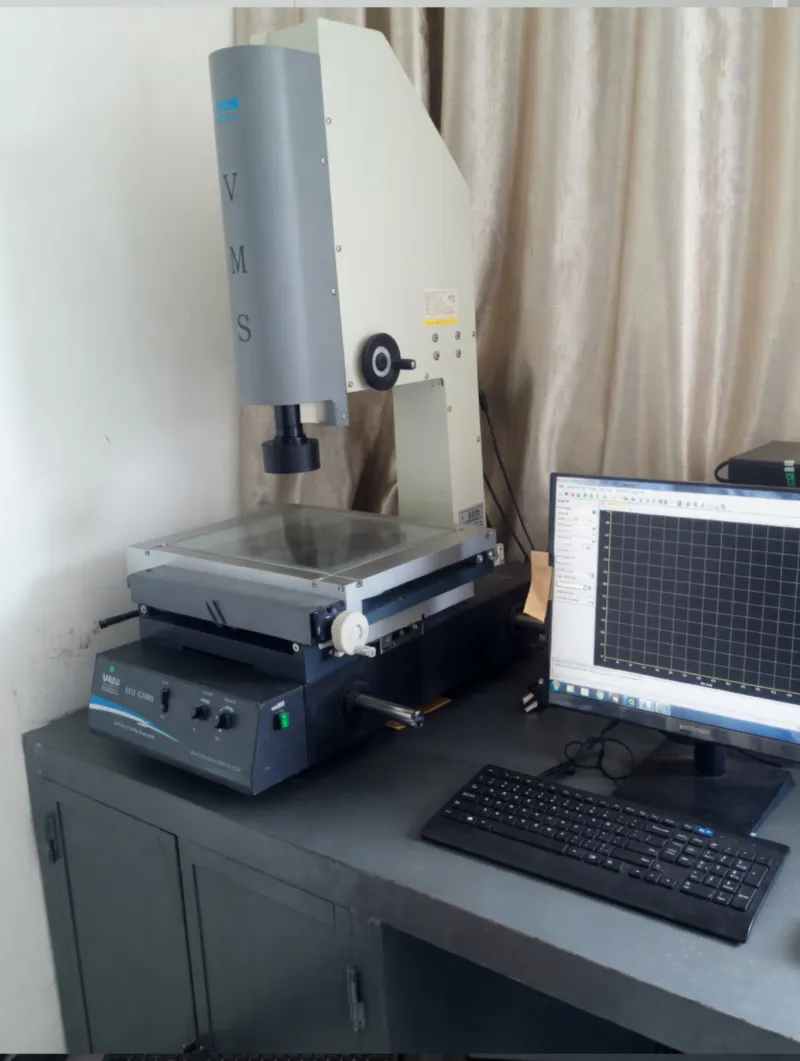
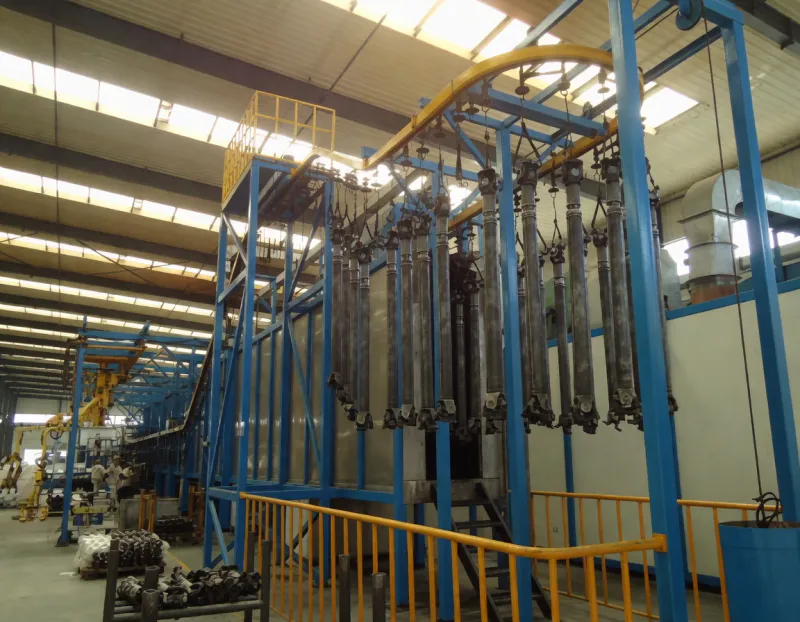
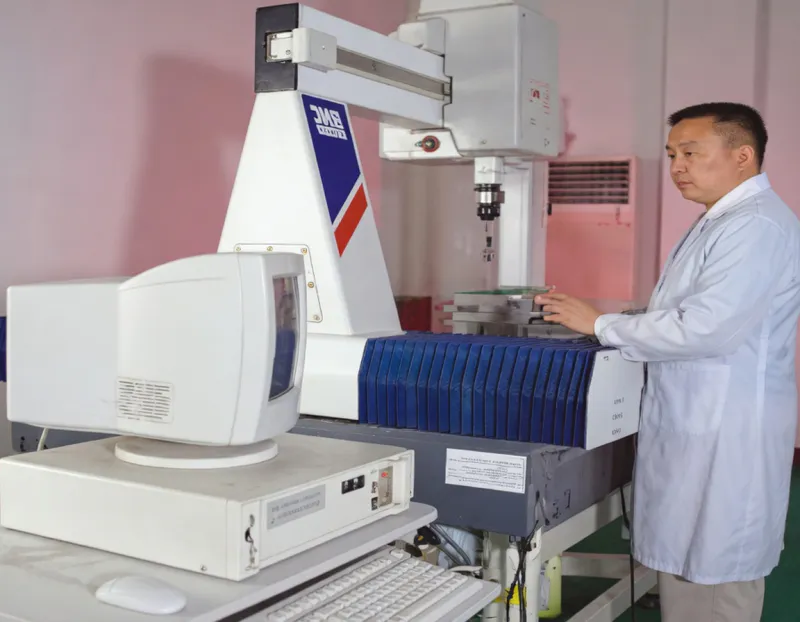
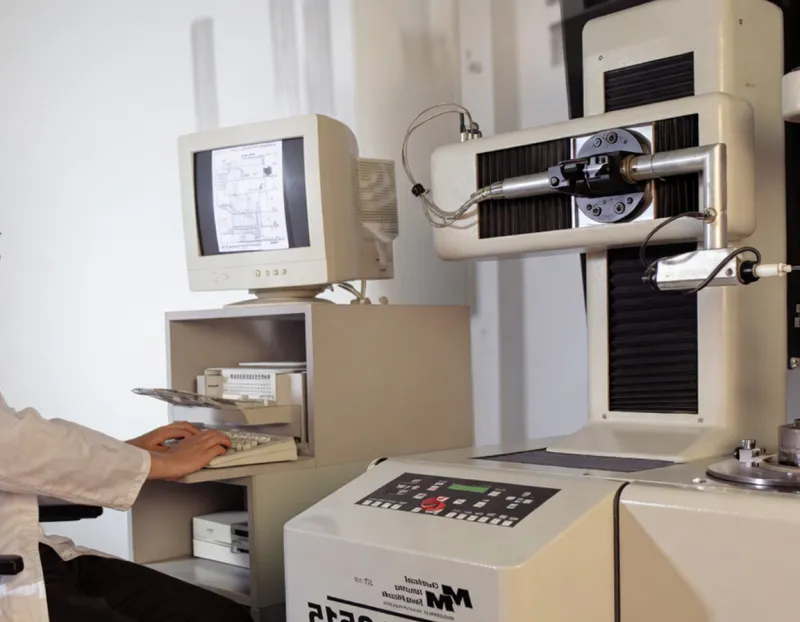
我们的轮毂生产工厂采用集辊压成型技术、自动化焊接、平衡检测和涂层工艺于一体的平台,并由配备有弯道疲劳试验机、径向疲劳试验机、动态平衡检测设备、盐雾试验箱和坐标测量机 (CMM) 的国家级测试中心提供支持。该生产线年产能达数百万个轮毂,涵盖乘用车、商用车、农用车和工业用车等领域,其中符合日本规格的重型卡车挂车轮毂系列是我们商用车产品组合中的核心产品。每个出厂的卡车轮毂都拥有完整的生产追溯记录,包括材料炉号、压制参数、焊接检验结果、平衡测量和最终涂层检验——从而提供车队运营商和监管机构日益要求的完整文档链。
车间
8. 相关产品:完整的车轴系统兼容性
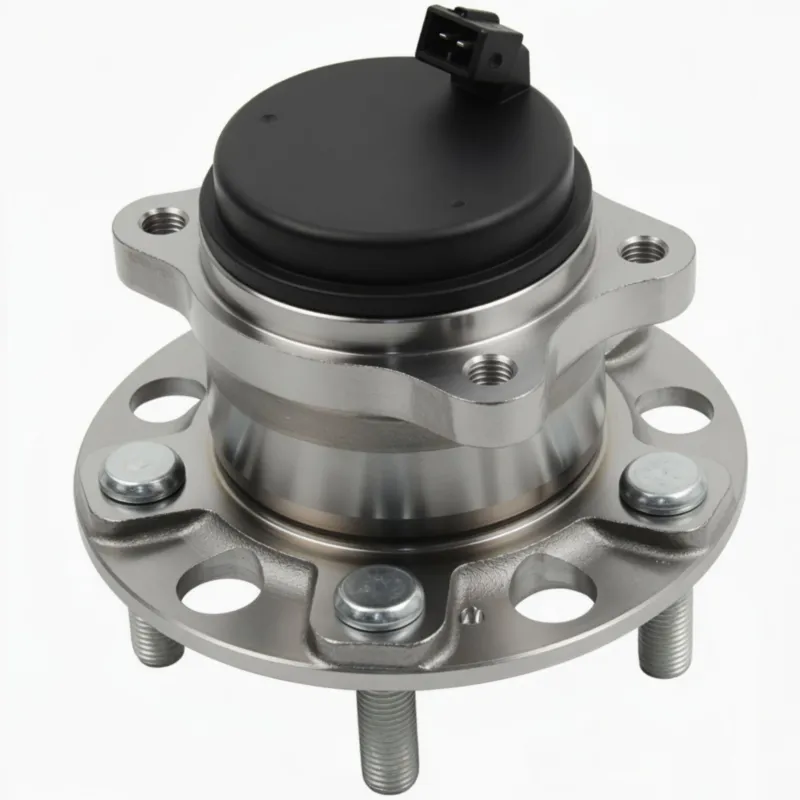
卡车挂车车轮是整个车轴系统的重要组成部分——其性能和使用寿命直接受到周围轮毂、主轴、轴承和紧固件等部件质量的影响。我们的产品系列涵盖了与车轮在轮毂接口处相互作用的关键部件,从而实现了整套车轴系统组件的一站式采购,并简化了车队工程师和维修车间经理的兼容性验证工作。
轮毂
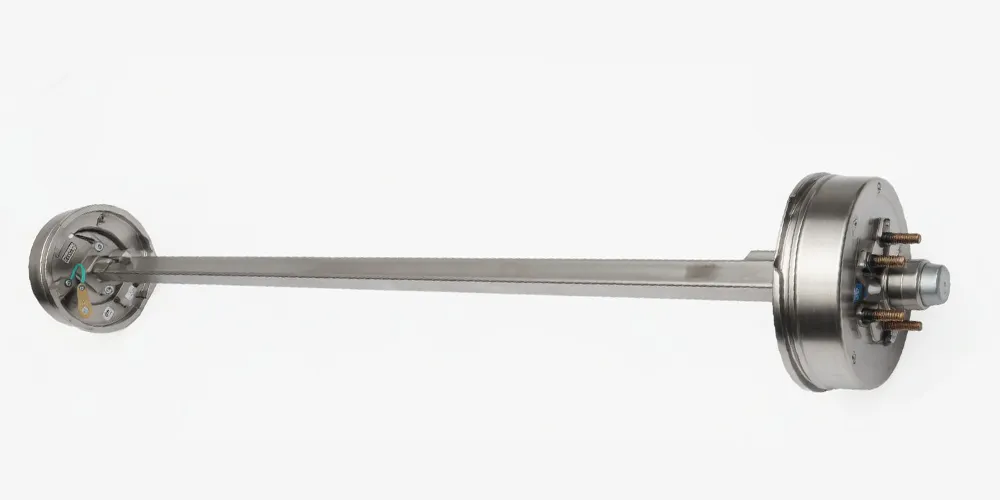
拖车车轴梁和拖车主轴
在哥伦比亚,对于拖车翻新和新拖车制造项目而言,拖车车轴梁和拖车主轴组件决定了卡车拖车车轮必须匹配的轮毂几何形状。我们的拖车主轴组件尺寸符合日本EP规格的车轮中心孔直径和PCD配置,从而能够从单一供应商处采购完整的车轴系统。这种集成式方法确保了轮毂接口处所有组件的尺寸兼容性,并支持车队采购团队日益青睐的商用车车轴系统组件一站式供应模式。
常见问题解答
编辑:PXY