描述
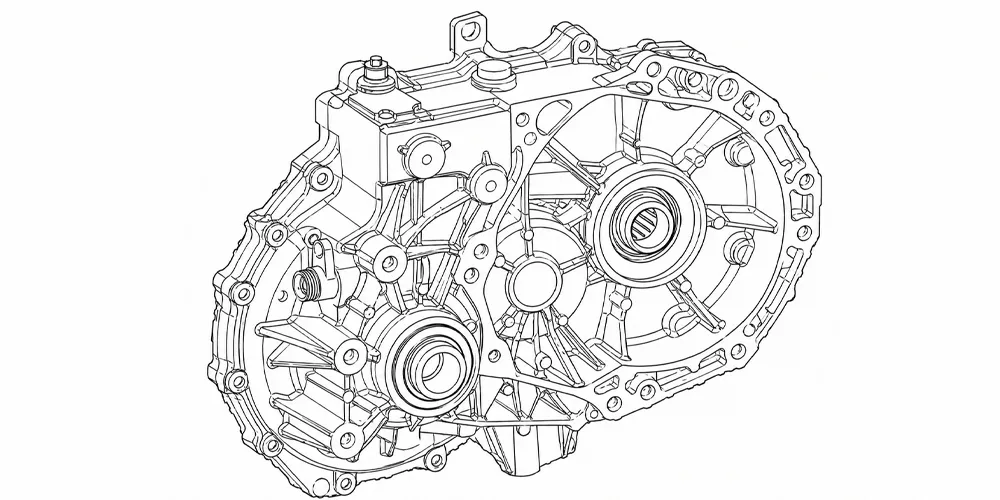
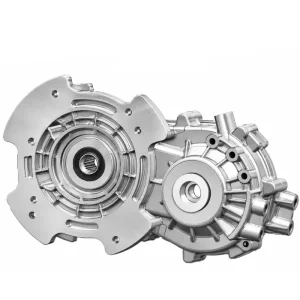
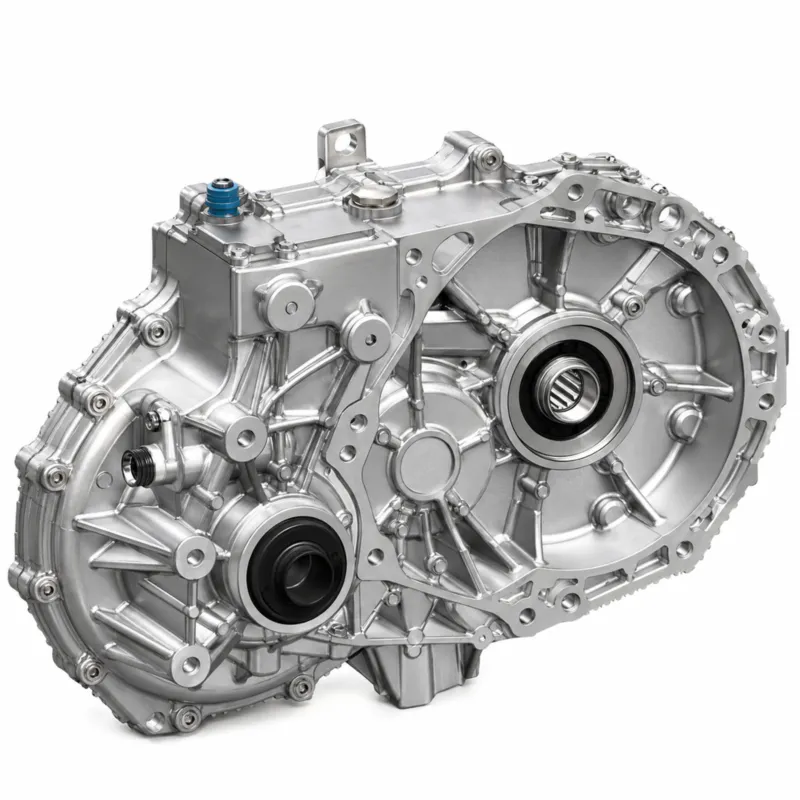
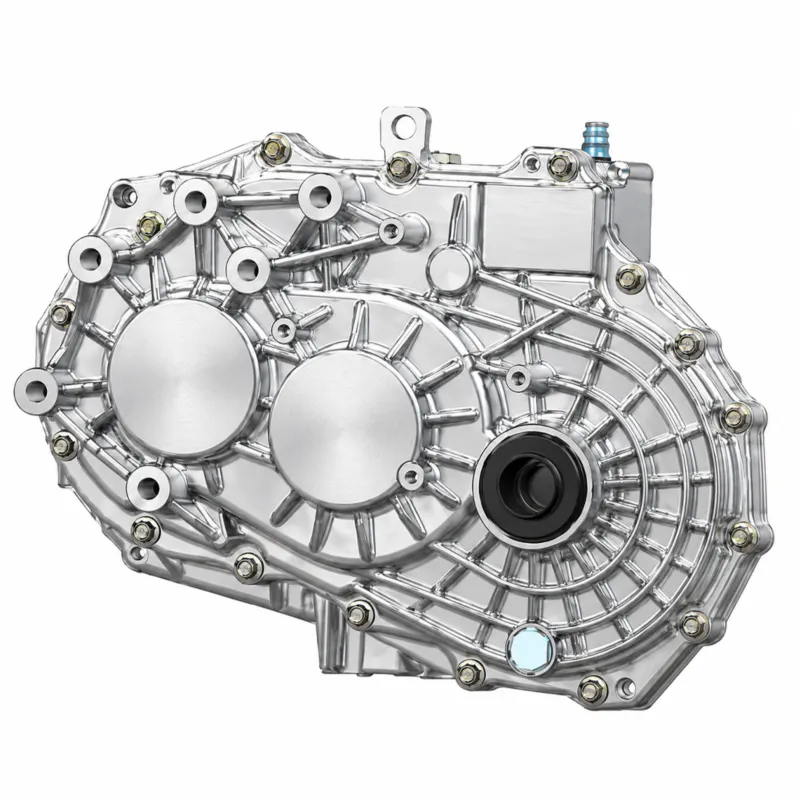
EP-E128L01 减速器组件
Front Axle Drive Reducer Assembly for Class A Passenger Vehicles | Max Input Torque 280 N·m | 12,000 r/min
Engineered for the Colombian automotive aftermarket and Latin American commercial fleet operators
1. Technical Specifications — EP-E128L01 Series
The following table lists 20 key technical parameters for the EP-E128L01 减速器组件. Parameters for custom or non-standard configurations are confirmed following technical review and drawing submission.
| 范围 | Specification / Value |
|---|---|
| Model Number | EP-E128L01 减速器组件 |
| Application | Class A passenger car — front-wheel-drive reducer assembly |
| Max Input Torque (T max) | 280 N·m |
| Max Input Speed (n max) | 12,000 r/min |
| Centre-to-centre Distance (A) | 214 mm |
| Gear Ratio (U) | 52:27 / 69:17 |
| Input Spline Type | Internal spline |
| Input Spline Module (m) | 1 |
| Input Spline Tooth Count (z) | 26 |
| Input Pressure Angle (α) | 45° |
| Input Addendum Coefficient (x) | 0 |
| Output Spline Type | Internal spline |
| Output Spline Module (m) | 1.6 |
| Output Spline Tooth Count (z) | 16 |
| Output Pressure Angle (α) | 30° |
| Output Addendum Coefficient (x) | 0 |
| Overall Dimensions (L × W × H) | 458 mm × 339 mm × 218 mm |
| Weight | 22 kg |
| 传输效率 | ≥ 96 % |
| 工作温度范围 | −30 °C to +120 °C |

2. What Is a Reducer Assembly and Why Is It Called a Reducer?
一个 减速器组件 is a mechanical power transmission device whose primary function is to reduce the rotational speed from a driving source — in automotive applications, the engine and transmission — to a lower output speed at the driven wheels. It is called a reducer precisely because of this speed-reducing function: the gear set inside the assembly converts the high-speed, relatively low-torque rotation at the input shaft into a lower-speed, higher-torque rotation at the output side. This torque amplification is governed by the gear ratio, which for the EP-E128L01 is either 52:27 or 69:17 depending on the application variant — both ratios fall in the range of approximately 4.06:1, matching the torque multiplication requirement for Class A front-wheel-drive passenger cars.
Is a reducer the same as a gearbox? In loose industrial usage, the terms are sometimes used interchangeably, but there is a meaningful distinction. A gearbox typically implies a multi-ratio transmission capable of selecting between different speed and torque conditions on demand — as in a vehicle manual gearbox or automatic transmission. A 减速器组件, by contrast, operates at a fixed or limited number of gear ratios, focused exclusively on the final drive step between the transmission output and the wheels. In the automotive drivetrain context, the front-axle reducer drive assembly is the final mechanical stage, downstream of both the gearbox and the clutch or torque converter, and it incorporates the differential as an integrated subsystem to allow the two output shafts to rotate at different speeds during cornering.
The purpose of the reduction gear assembly extends beyond simple speed reduction. By stepping down the speed, the assembly also scales up the torque by the inverse of the gear ratio, enabling a comparatively small and lightweight engine to move a fully loaded passenger vehicle from rest on a steep incline. The EP-E128L01 achieves this efficiently, with a design-basis transmission efficiency of ≥ 96%, ensuring that the energy losses within the 减速器组件 itself are kept to a minimum and that the thermal load on the housing and lubrication oil remains within the safe operating band even during prolonged climbing on the mountainous terrain characteristic of Colombia’s Eje Cafetero and Cundinamarca regions.
3. Five Key Product Advantages
1 — High Torque Density in a Compact Package
The EP-E128L01 delivers a maximum input torque rating of 280 N·m within an overall envelope of just 458 × 339 × 218 mm and a mass of 22 kg. This torque-to-weight ratio is achieved through optimized gear geometry and precision housing casting, keeping the front axle weight low for improved fuel economy and steering response. For Colombian fleet operators where payload efficiency directly affects operating margins, this compact, high-output 减速器组件 provides a meaningful advantage over heavier, lower-density alternatives.
2 — Dual Gear Ratio Flexibility
Two available gear ratio configurations — 52:27 and 69:17 — allow the EP-E128L01 to serve a range of Class A vehicle platforms without requiring a separate housing design for each variant. This reduces the number of part numbers a workshop needs to stock, simplifying parts inventory management for automotive repair shops and dealership service centres across Colombia’s major cities, including Bogotá, Medellín, Cali, and Barranquilla. The flexibility also makes the assembly an attractive choice for vehicle manufacturers building multi-market product lines from a shared platform.
3 — Precision Internal Spline Interfaces
Both the input and output connections of this 减速器组件 use internal spline profiles — Module 1 at 26 teeth on the input side, Module 1.6 at 16 teeth on the output side — with pressure angles of 45° and 30° respectively. These spline geometries are engineered for maximum load distribution under cyclic torque reversals, reducing fretting wear at the interface and extending service intervals in high-cycle urban drive cycles. Precision-ground spline profiles ensure consistent engagement and minimal backlash, supporting the smooth power delivery that drivers and fleet managers expect from a modern front-drive vehicle.
4 — High-Speed Operating Capability
Rated for a maximum input speed of 12,000 r/min, the EP-E128L01 speed reducer assembly is designed to operate across the full rev range of modern turbocharged and naturally aspirated petrol engines. This high-speed capability is achieved through precision-ground gear tooth profiles, high-grade ball and roller bearings, and an oil circulation system designed to maintain adequate film thickness on all loaded surfaces at elevated speeds. The rated speed is well above the continuous operating range of typical Class A vehicle engines, providing a comfortable design margin against fatigue damage in long-haul intercity driving.
5 — Documented Quality and Traceability
Every EP-E128L01 减速器组件 is produced under a quality management system aligned with ISO/TS 16949 (now IATF 16949) — the automotive-specific quality standard that governs supplier management across the global automotive supply chain. Each unit carries production batch traceability records covering material certificates for all load-bearing components, dimensional inspection data, and assembly torque records. For Colombian automotive importers, dealerships, and fleet operators required to maintain vehicle maintenance records, this documentation supports warranty claims management and compliance with INVIMA and SIC product safety regulations applicable to imported automotive components.
4. How Does a Gear Reducer Work — Operating Principle of the EP-E128L01
The operating principle of the EP-E128L01 follows the fundamental mechanics of a spur or helical gear pair arranged as a final drive. The input shaft, splined to the transmission output, carries the primary drive gear — 27 teeth in the 52:27 ratio configuration — which meshes continuously with the ring gear (52 teeth) mounted on the differential case. The ratio of driven-to-driving tooth counts determines the speed reduction and the corresponding torque multiplication: at 52:27, the output speed is 52/27 = approximately 1.93 times slower than the input, while the torque is multiplied by the same factor (minus friction losses). For the 69:17 ratio variant, the reduction is approximately 4.06:1, serving vehicles with lower final drive ratio requirements or different tyre size combinations where a higher multiplication factor is needed to maintain acceptable launch performance.
Within the reducer drive assembly, the differential sits concentric with the ring gear, driven by its rotation. The differential gear set — consisting of a spider shaft, side bevel gears, and planet bevel gears — distributes torque equally between the two output shafts during straight-line driving. When the vehicle corners, the differential allows the inner and outer drive shafts to rotate at different speeds, preventing tyre scuff and driveline wind-up that would otherwise generate understeer and tyre wear in a rigid axle configuration. This integrated differential function is what distinguishes a front-axle 减速器组件 from a simple single-output speed reducer used in industrial machinery.
Lubrication within the EP-E128L01 is achieved by splash lubrication supplemented by deliberate oil-catch passages cast into the housing upper walls. As the ring gear rotates, its teeth carry oil from the sump at the base of the housing upward through the mesh zone and into the bearing pockets, ensuring consistent film formation at all loaded contact surfaces throughout the operating speed range. The sealed housing retains a factory-filled gear oil charge for the designed service interval, eliminating the need for periodic top-up in normal service. The oil specification — typically GL-4 or GL-5 grade 75W-90 synthetic — is matched to the operating temperature range of −30°C to +120°C to maintain adequate viscosity both at cold-start conditions in Bogotá’s high-altitude winter mornings and under sustained heavy load in the tropical lowland heat of Colombia’s coastal and Orinoquía regions.
Two types of reducers relevant to this application are the parallel-axis spur/helical gear type (which the EP-E128L01 represents) and the hypoid or bevel gear type found in traditional rear-axle final drives. The parallel-axis configuration of the EP-E128L01 offers higher efficiency and lower noise in the front transaxle application compared with hypoid alternatives, because the gear mesh involves pure rolling contact with no sliding component along the tooth face width — a characteristic of the hypoid offset geometry that inherently generates more heat and requires a special hypoid-rated gear oil. This efficiency advantage directly contributes to the ≥ 96% transmission efficiency specified for the EP-E128L01 under rated load conditions.

5. Material Composition of the EP-E128L01 Reducer Assembly
The structural integrity and service life of any 减速器组件 depend fundamentally on the materials selected for each load-bearing component. The EP-E128L01 is assembled from a combination of automotive-grade cast and forged materials, each chosen to balance strength, fatigue resistance, machinability, and weight within the packaging constraints of the front axle application.
Housing Casting: The main housing and bearing caps are produced from aluminium alloy die castings — typically A380 or equivalent — selected for their high strength-to-weight ratio, good thermal conductivity, and excellent machinability. The aluminium housing dissipates heat from the gear mesh and bearing zones more effectively than grey cast iron alternatives, keeping peak operating temperature within safe limits during sustained heavy-load operation on Colombia’s mountain gradients. Targeted wall reinforcement around bearing bores and bolt flanges compensates for aluminium’s lower modulus compared with ferrous materials, ensuring housing stiffness meets the deflection limits needed to maintain gear mesh geometry under full torque loading.
Gear Set: The primary drive gear and ring gear are forged from 20CrMnTi or equivalent case-hardening alloy steel. After forging and rough machining, the gear blanks undergo carburising and case hardening to achieve a case hardness of HRC 58–62 at a case depth of 0.6–1.2 mm, with a tough, lower-hardness core retaining adequate impact toughness to resist the impulse loads associated with aggressive gear changes and road-surface shock inputs. The hardened flanks are finish-ground to the final tooth profile tolerance to achieve a noise-relevant quality grade aligned with NVH (noise, vibration, and harshness) targets.
Differential Components: The differential case is grey cast iron or spheroidal graphite (SG) iron, providing the stiffness and damping properties needed in a rotating housing subject to continuous centrifugal and bending loads. The spider shaft and bevel gears — side gears and pinion gears — are forged from 20CrMnTi or 8620 equivalents and case-hardened to achieve adequate surface fatigue resistance under the combined bending and contact stresses generated during differential action on low-grip surfaces. Thrust washers are manganese-phosphate-coated sintered iron or bronze, selected to maintain a stable friction coefficient against the differential case faces across the full operating temperature range.
Bearings and Seals: All rotating components run in deep-groove ball bearings or tapered roller bearings from major-brand suppliers, with bearing selection based on calculated L10 life targets exceeding the vehicle design life under the 90th-percentile Colombia fleet duty cycle. Radial lip seals at the output shaft exits are HNBR (hydrogenated nitrile butadiene rubber) construction, rated for continuous operation at 120°C and resistant to the synthetic gear oils and ATF fluids used in modern transaxle applications. HNBR provides significantly better chemical resistance than standard NBR seals, which is relevant for aftermarket replacement scenarios where the correct oil specification may not always be maintained.
6. Application Scenarios
The EP-E128L01 减速器组件 is designed for the front-axle drive system of Class A passenger vehicles. Below are the principal application environments where this assembly is specified and deployed.
Class A Passenger Sedan — OEM Assembly Line
The EP-E128L01 is directly applicable to Class A compact and sub-compact sedans on front-wheel-drive platforms. In the Colombian new-vehicle market — dominated by high-volume compact sedans from Korean, Japanese, and European OEMs imported through Cartagena and Buenaventura — this main reducer assembly matches the torque input and mounting interface requirements of widely sold platforms. OEM vehicle assemblers sourcing final drive components for local assembly operations at facilities in Bogotá and the Zona Franca del Caribe can specify the EP-E128L01 against the drawing package with confidence that the spline and centre-distance specifications match standard transaxle architectures used across the compact car segment.
Automotive Aftermarket Replacement — Colombia and Latin America
The primary market for the EP-E128L01 outside of OEM supply is the automotive aftermarket, where worn or damaged reducer assemblies require replacement as part of front-axle overhaul. In Colombia, the national vehicle fleet age distribution — with a significant proportion of vehicles over eight years old operating in Bogotá, the coffee-growing regions, and the Pacific coast — generates consistent demand for front drive reducer replacements. The dual gear ratio availability of the EP-E128L01 allows a single reference to cover multiple vehicle model years from the same platform family, reducing the stocking complexity for Colombian automotive parts distributors and reducing the risk of sourcing an incorrect ratio variant.
Urban Taxi and Ride-Hailing Fleet Operations
Colombia’s urban taxi and ride-hailing sector — predominantly comprising compact front-wheel-drive vehicles in Bogotá, Medellín, Cali, and Barranquilla — subjects the front-axle 减速器组件 to demanding duty cycles characterized by extremely high mileage accumulation, frequent stop-start cycles, and exposure to the low-speed high-torque conditions generated by the steep grades found in barrio hill climbs in Medellín and the Transversal de la Montaña road network. The EP-E128L01’s 280 N·m torque rating and ≥ 96% efficiency ensure that it handles this duty profile without overheating or premature gear fatigue, delivering the extended replacement intervals that fleet cost controllers require to manage total vehicle ownership costs.
Light Commercial Delivery Vehicles
Many light commercial delivery vehicles operating in the last-mile logistics sector across Colombia’s urban centres are built on compact car platforms and share front axle drive architecture with Class A passenger vehicles. E-commerce growth in Colombia — particularly through MercadoLibre and Rappi platforms and the associated last-mile delivery vehicle fleet — has accelerated the demand for front-axle gear reducer assembly components capable of sustained heavy-load operation in tight urban environments. The EP-E128L01’s robust housing and high-quality spline interfaces provide the durability needed to handle the continuous high-load, low-speed urban drive cycles that characterize delivery operations in Bogotá’s historic centre and Medellín’s El Centro district.
Electric Vehicle Conversion and EV Platform Front Axle
The growing Colombian electric vehicle sector — supported by Law 1964 of 2019 (Movilidad Eléctrica) which provides tax incentives for electric vehicle purchase and operation — requires high-quality front-axle reducer assemblies capable of handling the instantaneous high torque characteristic of electric motor drives. Electric motors produce maximum torque from zero speed, imposing higher transient peak torques on the final drive assembly than equivalent ICE applications. The EP-E128L01’s 280 N·m rating and internal spline geometry designed for oscillating torsional loads position it as a viable option for small electric vehicle platforms where the motor output characteristic matches this torque rating.
7. Regulatory Standards and Legal Compliance
Procuring and installing an automotive 减速器组件 in vehicles operating across Colombia and other regulated markets requires understanding the applicable technical and legal frameworks. The following covers the primary standards and regulations relevant to this product.
哥伦比亚: The Superintendencia de Industria y Comercio (SIC) oversees product safety and conformity in Colombia under the authority of Decree 1595 of 2015 and related consumer protection legislation. Automotive mechanical components imported into Colombia are classified under HS tariff heading 8708 and may be subject to inspection by the Dirección de Impuestos y Aduanas Nacionales (DIAN). The Resolución 4100 of 2004 (Ministerio de Transporte) establishes technical roadworthiness requirements for vehicles operating on Colombian public roads, including minimum standards for the integrity of drive axle systems. The Reglamento Técnico de Emisiones (NTC 4983) does not directly regulate mechanical drive components but influences powertrain design decisions that affect the drivetrain configuration into which this assembly is installed.
Electric Vehicle Legislation — Colombia: Law 1964 of 2019 and its regulatory decrees establish a framework for zero and low-emission vehicle adoption in Colombia, including tax incentives, customs duty reductions, and infrastructure investment mandates. Automotive parts suppliers serving the EV sector in Colombia should ensure their products are compatible with the technical specifications of the motor and battery systems approved for sale under this law, and should be prepared to provide product conformity documentation to vehicle importers engaged in EV homologation processes.
欧洲联盟: EU Regulation 2018/858 on the approval and market surveillance of motor vehicles and their components replaces the former Directive 2007/46/EC framework. Automotive powertrain components — including reducer assemblies — supplied to EU-market vehicles must be validated against the type-approval data package submitted to the technical service and approval authority. REACH Regulation (EC) No. 1907/2006 restricts the use of certain hazardous substances in automotive components, affecting the surface treatment and material selection choices for all parts entering the EU supply chain. RoHS Directive 2011/65/EU further restricts hazardous substances in components associated with electrical and electronic systems fitted to the vehicle.
美国: FMVSS (Federal Motor Vehicle Safety Standards) regulated by NHTSA cover vehicle-level safety but do not directly certify individual drivetrain components. However, components supplied for NHTSA-regulated vehicles must be compatible with the validated vehicle system and must not compromise compliance with FMVSS 105 (hydraulic and electric service brake systems) or other standards where drivetrain integrity affects braking performance. SAE International standards J1364 (gear reducer rating), J744 (hydraulic power units), and AGMA 9000 (flexible couplings) provide reference frameworks for component-level qualification.
Automotive Quality Standards — Global: IATF 16949:2016, the international standard for quality management systems in automotive production and service parts organizations, is the baseline quality framework required by most OEM automotive supply chains globally. Suppliers sourcing EP-E128L01 assemblies for OEM fitment or authorised aftermarket supply programmes should confirm their supplier’s IATF 16949 certification status. ISO 9001:2015 quality certification is the minimum acceptable for general aftermarket supply; IATF 16949 is required for OEM and tier-1 supply programmes.
8. About Our Manufacturing Capabilities
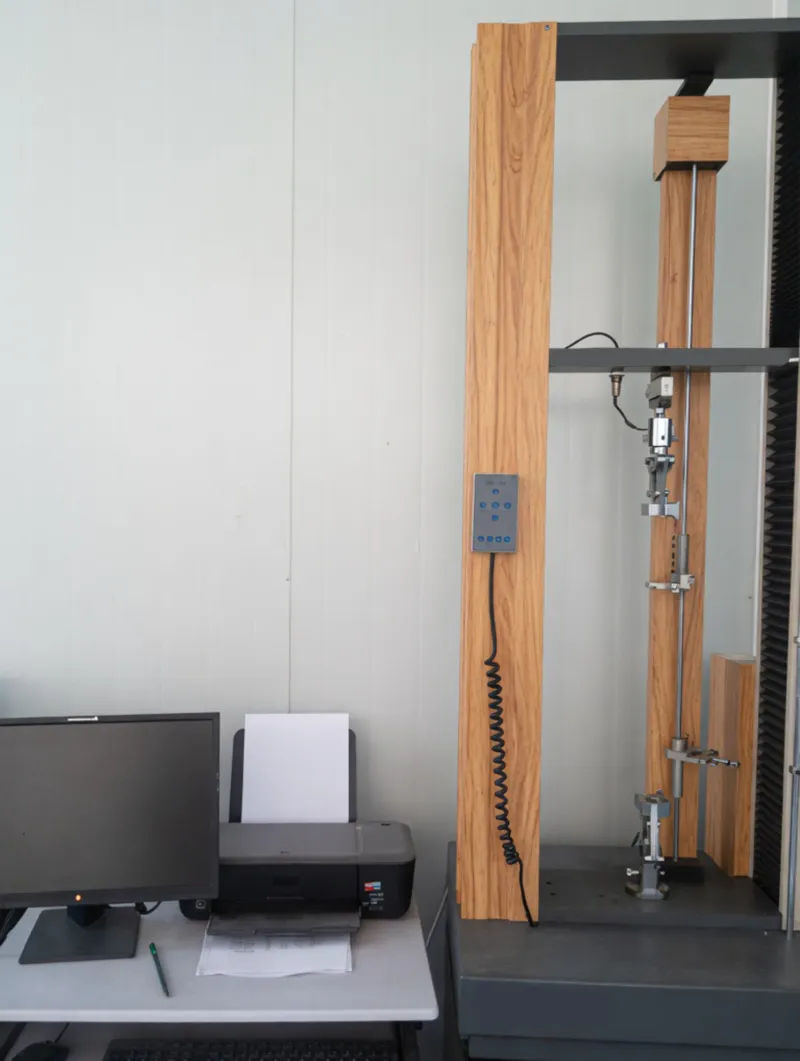
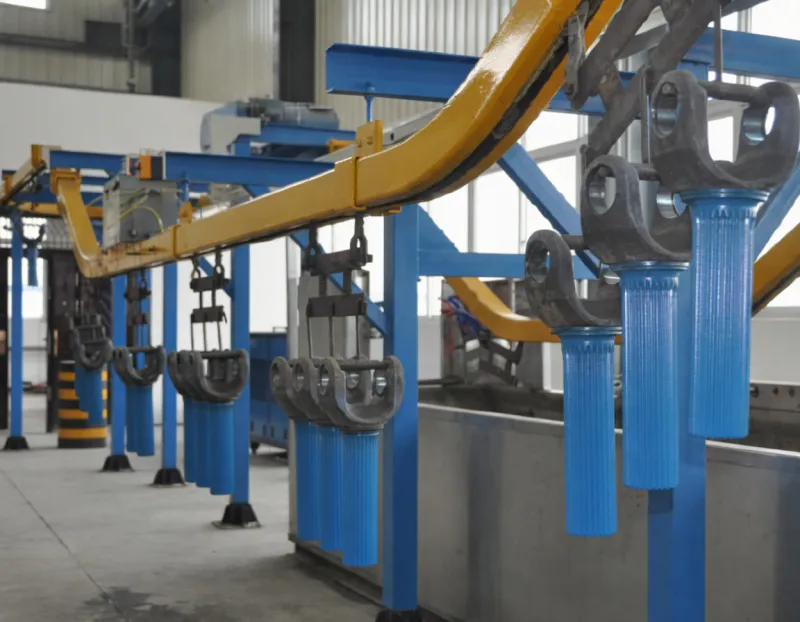
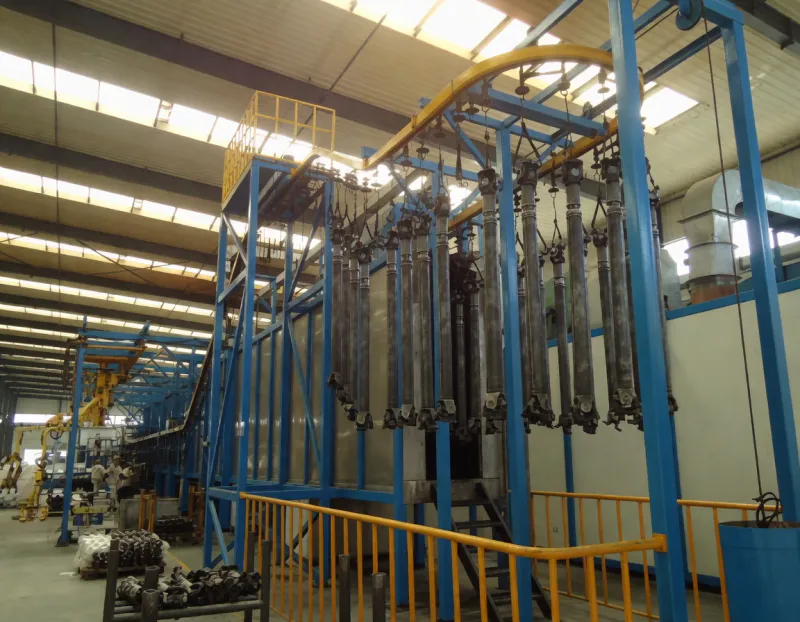
Our front axle assembly manufacturing facility operates with a fully integrated production chain covering raw material incoming inspection, precision gear hobbing and grinding, heat treatment (carburising, case hardening, tempering), housing die-casting and CNC machining, component assembly under controlled torque, and end-of-line functional testing of every completed reducer assembly unit. Our quality management system operates under ISO/TS 16949 (IATF 16949) requirements, and all production processes are controlled by documented work instructions, statistical process control records, and periodic third-party audits.
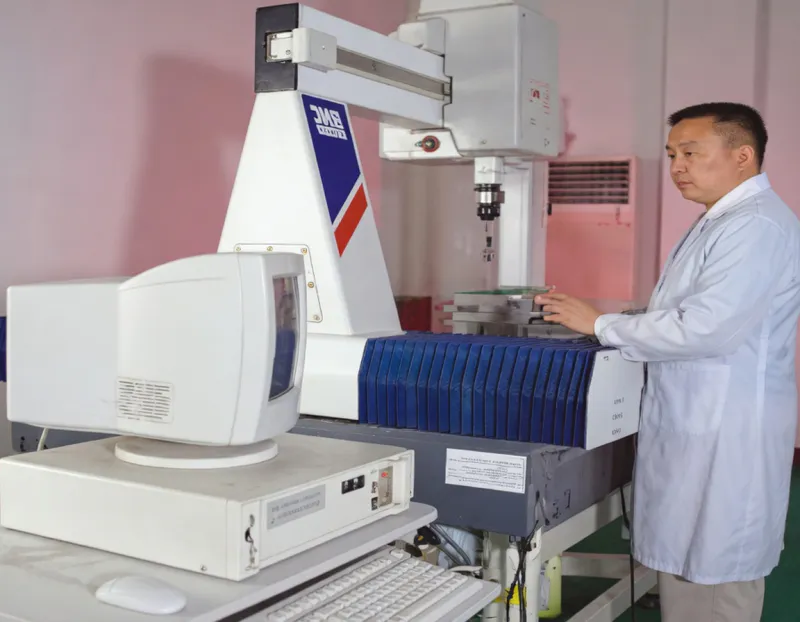
Our production facility’s gear manufacturing capabilities include CNC hobbing machines for module range M1 to M12, gear profile grinding for DIN 5 through DIN 8 accuracy grades, and fully automated assembly lines with poka-yoke controls eliminating build errors at the sub-assembly stage. CMM-based dimensional inspection with full statistical process control reporting supports both internal quality gates and customer audit programmes.
车间


9. Related Products — One-Stop Drivetrain Supply
A high-quality front-axle 减速器组件 performs best as part of a fully compatible drivetrain system. We manufacture and supply a complete range of complementary axle and drivetrain components designed for dimensional and material compatibility with the EP-E128L01, eliminating the fitment risk that arises when components are sourced from multiple uncoordinated suppliers.
Wheel Bolts
Correctly specified and installed Wheel Bolts are the critical fasteners connecting the wheel hub — driven by the output of the 减速器组件 — to the road wheel. Using correct-grade wheel bolts from the same supplier as the axle assembly eliminates thread-pitch and shank-length mismatches that can cause improper torque retention and wheel separation events. Our wheel bolt range covers the metric thread specifications used across the Class A vehicle platforms compatible with the EP-E128L01, with material grade, surface finish, and torque specifications validated against the OEM assembly torque sequences. For Colombian fleet operators and aftermarket workshops handling high-volume tyre and wheel service, sourcing wheel bolts through the same supply channel as the 减速器组件 simplifies parts procurement and ensures system-level compatibility.

Trailer Axle Beam / Trailer Spindle
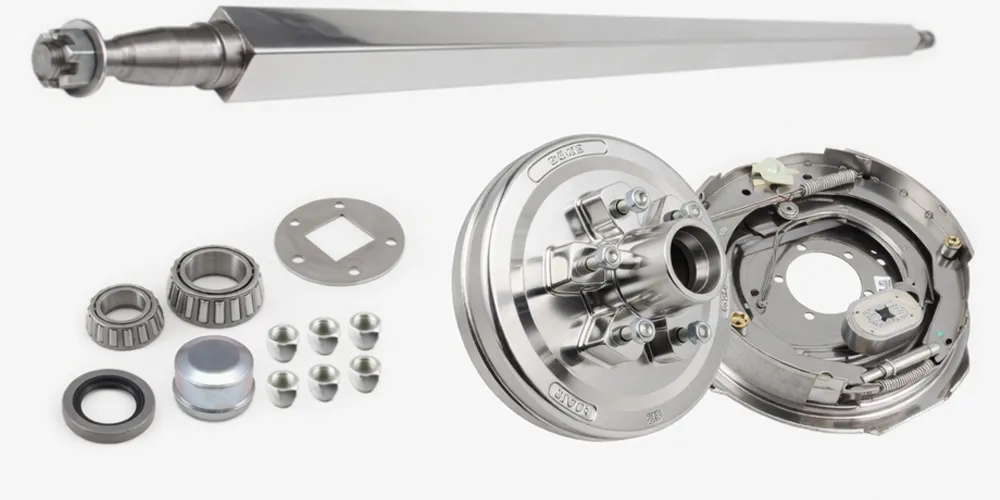
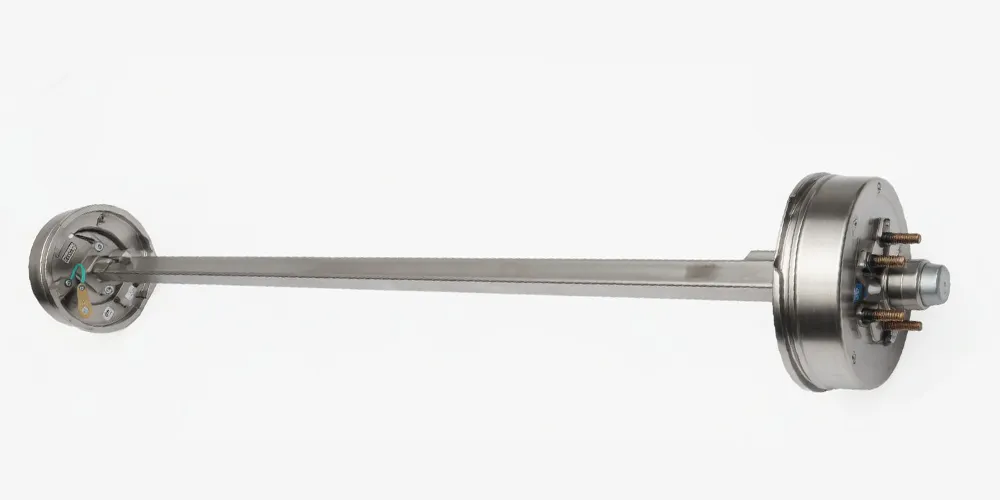
For operators running light trailer combinations behind front-drive Class A vehicles — common in Colombia’s rural and agricultural distribution sector — our Trailer Axle Beam and Trailer Spindle products provide the structurally compatible rear-axle beam elements needed to complete a full vehicle axle supply. Trailer spindle dimensions, bearing seat geometry, and hub bolt circle specifications are coordinated with the front-axle 减速器组件 hub dimensions where shared wheel and hub components are used across front and rear positions. This coordination eliminates the dimension conflicts that can arise when trailer axle components are sourced independently and reduces total trailer setup time for fleet operators adding trailer capability to their Class A platform vehicles.

常见问题解答
Q1. What is the function of a reducer in a front-wheel-drive passenger car used on Colombian mountain roads?
Q2. Is a reducer the same as a gearbox when I am looking for a front-axle replacement part for my compact car?
Q3. What are the two types of reducers most commonly used in automotive front-axle drivetrain systems?
Q4. Why do we use a reducer assembly instead of connecting the transmission output directly to the drive wheels?
Q5. How does a planetary reducer assembly differ from the main reducer assembly used in a front-axle transaxle?
Q6. When should I replace the wheel reducer assembly in a high-mileage Colombian taxi or fleet vehicle?
Q7. Which gear oil specification should I use in the EP-E128L01 reducer assembly for tropical and highland climate conditions in Colombia?
编辑:PXY