Описание
EP-Bevel Gears — European Standard Series | Ratio 1:1 | Pressure Angle 20°
Type A · Material: C45 Steel · Modules M1.5 ~ M5 · Teeth Z16 ~ Z30
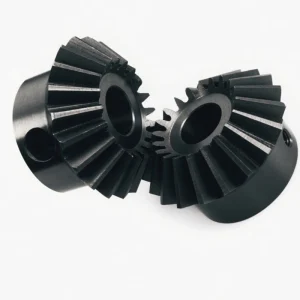
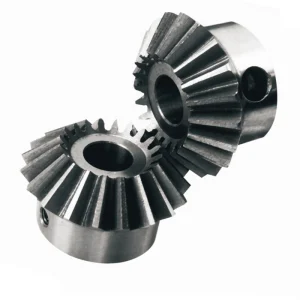
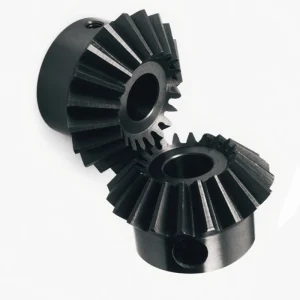
When precision matters at the point where two shafts converge at a right angle, nothing performs quite like a well-engineered bevel gear. This product page covers our EP series Metal Bevel Gear — European Standard, Type A, Ratio 1:1, with a 20° pressure angle. Manufactured from C45 medium-carbon steel and machined to exacting tolerances, these gears are a dependable choice for industrial transmission systems, agricultural equipment, light machinery, and countless other applications where quiet, smooth, 90° power transfer is required. Whether you are sourcing a small metal bevel gear for a compact mechanism or a larger module gear for a heavy-duty drive, this series offers coverage across a wide range of tooth counts and module sizes.
1. Technical Parameters — Bevel Gear European Standard Series | Ratio 1:1 | Type A
All dimensions in millimeters (mm). Material: C45. Pressure Angle: 20°. Ratio: 1:1.
| M | Z | De | Dp | А | F | Dn | D1 | Dm | Л | Lm |
|---|---|---|---|---|---|---|---|---|---|---|
| 1.5 | 16 | 26.1 | 24.0 | 18 | 8 | 18 | 8 | 23.8 | 17 | 8.9 |
| 1.5 | 20 | 32.1 | 30.0 | 20 | 8 | 22 | 10 | 28.7 | 18 | 9.8 |
| 1.5 | 22 | 35.1 | 33.0 | 20 | 8 | 25 | 10 | 30.2 | 18 | 9.7 |
| 1.5 | 25 | 39.6 | 37.5 | 23 | 8 | 28 | 10 | 35.4 | 21 | 12 |
| 1.5 | 30 | 47.1 | 45.0 | 25 | 10 | 30 | 12 | 39.7 | 22.5 | 12 |
| 2 | 16 | 34.8 | 32.0 | 20 | 9 | 25 | 10 | 28.8 | 17 | 9.3 |
| 2 | 20 | 42.8 | 40.0 | 25 | 12 | 32 | 10 | 35.7 | 22 | 12 |
| 2 | 22 | 46.8 | 44.0 | 25 | 12 | 36 | 10 | 37.7 | 22 | 17.7 |
| 2 | 25 | 52.8 | 50.0 | 28 | 14 | 40 | 12 | 42.3 | 25 | 12.3 |
| 2 | 30 | 62.8 | 60.0 | 30 | 16 | 50 | 12 | 47.8 | 27 | 12.8 |
| 2.5 | 16 | 43.5 | 40.0 | 25.5 | 10 | 32 | 12 | 37.3 | 22 | 13.3 |
| 2.5 | 20 | 53.5 | 50.0 | 30.5 | 12 | 40 | 12 | 45.9 | 27 | 16 |
| 2.5 | 22 | 58.5 | 55.0 | 30.5 | 12 | 45 | 12 | 48.3 | 27 | 15.9 |
| 2.5 | 25 | 66.0 | 62.5 | 33.5 | 15 | 50 | 15 | 53.0 | 30 | 16 |
| 2.5 | 30 | 78.5 | 75.0 | 35.5 | 18 | 55 | 15 | 59.1 | 32 | 16 |
| 3 | 16 | 52.2 | 48.0 | 30 | 12 | 40 | 15 | 44.2 | 26 | 16.2 |
| 3 | 20 | 64.2 | 60.0 | 35 | 18 | 45 | 15 | 51.1 | 31 | 13.6 |
| 3 | 22 | 70.2 | 66.0 | 35 | 18 | 50 | 15 | 54.0 | 31 | 13 |
| 3 | 25 | 79.2 | 75.0 | 38 | 20 | 55 | 15 | 60.1 | 34 | 16 |
| 3 | 30 | 94.4 | 90.0 | 40 | 22 | 60 | 20 | 68.1 | 36 | 19 |
| 3.5 | 16 | 60.9 | 56.0 | 35.5 | 16 | 45 | 15 | 50.8 | 31 | 17.2 |
| 3.5 | 20 | 74.9 | 70.0 | 40.5 | 22 | 55 | 15 | 58.6 | 36 | 19 |
| 3.5 | 22 | 81.9 | 77.0 | 40.5 | 22 | 60 | 15 | 62.0 | 36 | 18 |
| 3.5 | 25 | 92.4 | 87.5 | 43.5 | 26 | 65 | 20 | 67.5 | 39 | 18 |
| 3.5 | 30 | 109.9 | 105.0 | 45.5 | 30 | 70 | 20 | 75.4 | 41 | 17 |
| 4 | 16 | 69.6 | 64.0 | 38 | 18 | 50 | 15 | 55.6 | 33 | 16.6 |
| 4 | 20 | 85.6 | 80.0 | 43 | 25 | 60 | 18 | 63.8 | 38 | 18 |
| 4 | 22 | 93.6 | 88.0 | 43 | 25 | 65 | 18 | 67.7 | 38 | 18 |
| 4 | 25 | 105.6 | 100.0 | 45 | 28 | 70 | 20 | 73.5 | 40 | 18 |
| 4 | 30 | 125.6 | 120.0 | 48 | 32 | 80 | 25 | 83.7 | 43 | 16 |
| 4.5 | 16 | 78.3 | 72.0 | 43 | 20 | 55 | 18 | 63.0 | 37 | 18.5 |
| 4.5 | 20 | 96.3 | 90.0 | 48 | 28 | 65 | 20 | 71.5 | 42 | 18 |
| 4.5 | 22 | 105.3 | 99.0 | 48 | 28 | 70 | 20 | 75.8 | 42 | 18 |
| 4.5 | 25 | 118.8 | 112.5 | 50 | 32 | 75 | 20 | 81.8 | 44 | 18 |
| 4.5 | 30 | 141.3 | 135.0 | 53 | 35 | 90 | 20 | 93.8 | 47 | 17 |
| 5 | 16 | 87.0 | 80.0 | 45.5 | 22 | 60 | 20 | 67.8 | 39 | 17.8 |
| 5 | 20 | 107.1 | 100.0 | 50.5 | 30 | 70 | 20 | 77.3 | 44 | 18.5 |
| 5 | 22 | 117.1 | 110.0 | 50.5 | 30 | 80 | 20 | 82.2 | 44 | 18.5 |
| 5 | 25 | 132.1 | 125.0 | 54.5 | 35 | 90 | 20 | 90.2 | 48 | 18.5 |
| 5 | 30 | 157.1 | 150.0 | 56.5 | 38 | 110 | 30 | 102.4 | 50 | 18 |
M = Module | Z = Number of Teeth | De = Outside Diameter | Dp = Pitch Circle Diameter | A = Cone Distance | F = Face Width | Dn = Inner Hole Diameter | D1 = Boss Diameter | Dm = Mean Pitch Diameter | L = Hub Length | Lm = Boss Length (all units in mm)
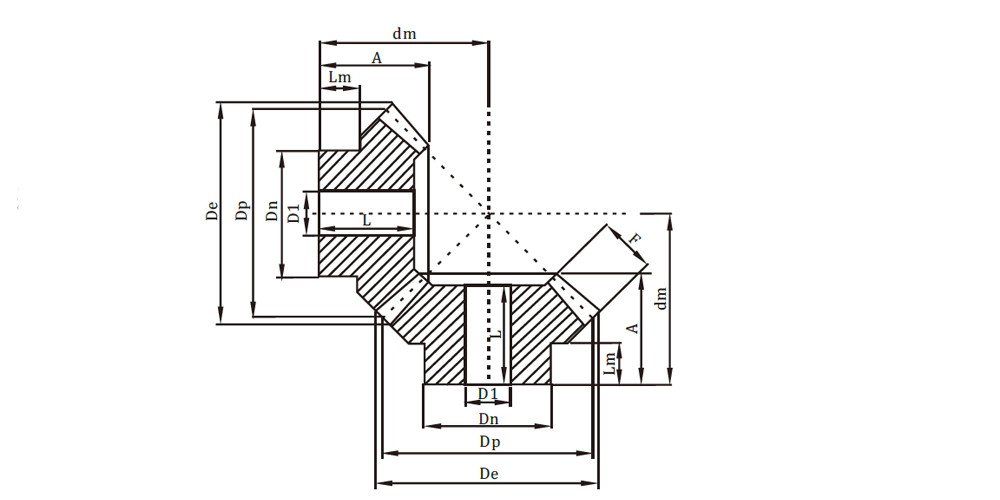
2. What Is a Bevel Gear?
А bevel gear is a type of toothed wheel specifically designed to transmit rotational motion and torque between two intersecting shafts, most commonly at a 90° angle. The tooth profile is cut on a conical surface, which allows the gear to mesh seamlessly with a matching mating gear at that intersection angle. The 20° pressure angle used in this European Standard series is widely considered an engineering benchmark because it provides a favorable balance between tooth strength and smooth engagement — reducing vibration, limiting noise generation, and extending the service life of the gear pair under load.
In a Ratio 1:1 configuration, both mating gears are identical in tooth count, which means input and output shaft speeds remain equal. This makes 1:1 bevel gear sets particularly valuable in applications that require directional change without speed reduction, such as differential assemblies, corner drives, and power distribution units. The European Standard (conforming to DIN specifications) ensures dimensional compatibility with internationally sourced components, simplifying maintenance and replacement across global supply chains. For engineers and procurement teams in Colombia and across South America, using standardized metal bevel gear components reduces sourcing complexity and keeps equipment downtime to a minimum.
3. Five Key Advantages of This Metal Bevel Gear
1. Precision 20° Pressure Angle for Low Noise
The 20° pressure angle is the European engineering standard for reason — it produces stronger tooth roots compared to older 14.5° designs, reduces sliding friction during mesh engagement, and results in noticeably quieter operation. For installations inside enclosed machinery or industrial workspaces where noise is a concern, this matters considerably. The tooth geometry is calculated to distribute contact stress evenly, further contributing to long-term reliability even under varying load conditions.
2. C45 Medium-Carbon Steel Construction
Every gear in this series is produced from C45 steel — a medium-carbon material valued for its combination of machinability and mechanical performance. After machining, C45 offers adequate tensile strength for the majority of industrial and semi-heavy-duty applications. The surface can also be case-hardened or heat-treated if greater surface hardness is required for high-cycle or abrasive environments. This makes the EP series suitable not only for standard drives but also for equipment operating in the agricultural, food-processing, and light-manufacturing sectors common in Colombian industrial regions.
3. DIN-Aligned European Standard Dimensions
Conforming to the European Standard series based on DIN specifications ensures that these bevel gear components fit without modification into systems originally designed around these standards. For maintenance engineers, OEM builders, and machine importers in Colombia and other Latin American countries, sourcing DIN-compatible gears dramatically simplifies the replacement process, reduces lead times, and prevents costly downtime caused by dimensional mismatches. Custom-bore work is possible on request to match specific shaft diameters.
4. Wide Module Range — M1.5 to M5
This series spans module sizes from M1.5 through M5, covering a broad range of load capacities and physical dimensions. Smaller modules are appropriate for light-duty, precision mechanisms requiring compact envelopes, while larger modules provide the tooth area needed to transmit higher torques. With tooth counts ranging from Z16 to Z30 within each module, design engineers have meaningful flexibility to tune pitch line velocity, noise levels, and gear diameter to suit the application — all from a single standardized product family.
5. One-Stop Supply with Matching Chains and Sprockets
Beyond metal bevel gear parts, the full product portfolio includes matching transmission chains and sprockets, enabling a truly integrated drive solution. Sourcing compatible components from the same manufacturer ensures dimensional consistency, matched material grades, and simplified procurement. For Colombian and Latin American buyers, this reduces the number of suppliers involved in a single project, streamlines logistics, and ensures technical compatibility throughout the power transmission assembly — from the motor output all the way to the final driven shaft.
4. How Does a Metal Bevel Gear Work?
Understanding how a metal bevel gear works helps engineers select and install the right component for each application. The operating principle centers on the engagement of two conically shaped toothed wheels whose pitch cone apexes intersect at the same point on the rotational axis. As the driver gear rotates, its teeth enter and exit mesh with the teeth of the driven gear in a rolling-and-sliding contact pattern. The 20° pressure angle defines the direction of the resultant force vector between mating teeth — a shallower angle (like 14.5°) generates more sliding, while the 20° standard optimizes the balance between sliding and rolling.
In the Ratio 1:1 configuration, both gears carry identical tooth counts, which means the angular velocity of the output shaft matches that of the input shaft exactly. The power path is effectively redirected by 90° without any speed change. This behavior is central to applications such as right-angle drives, shaft couplers in machine tools, and direction-change assemblies in material-handling equipment. The Type A profile used here features a straight tooth form machined on the conical face, which is appropriate for moderate-speed, moderate-torque drives. The tooth geometry defined by the European Standard ensures uniform load distribution across the tooth face width, reducing localized stress and prolonging the service interval between inspections or replacements.
5. Material: C45 Steel
The material designation C45 refers to a medium-carbon structural steel specified under European standard EN 10083. With a nominal carbon content of approximately 0.45%, this grade occupies a practical middle ground between lower-carbon steels (which offer ease of fabrication but limited strength) and high-carbon or alloy steels (which provide excellent hardness but require more complex processing). For high power metal bevel gears in the small-to-medium module range, C45 delivers the mechanical properties needed — including a tensile strength typically in the range of 620–850 MPa in the normalized or quenched-and-tempered condition — while remaining readily machinable on standard CNC gear-cutting equipment.
Surface hardness can be improved through induction hardening or case hardening processes if the application demands greater wear resistance at the tooth flanks. This is particularly relevant in applications involving sustained high cycle counts, abrasive particles in the lubricant, or shock loading. When a harder surface is required without compromising the toughness of the core, heat treatment options can be discussed with the technical team. For most standard industrial drives operating within the rated load parameters of this series, the as-machined C45 material provides excellent service life without additional surface treatment. Note that stainless steel bevel gears are available separately for corrosive or food-safe environments.
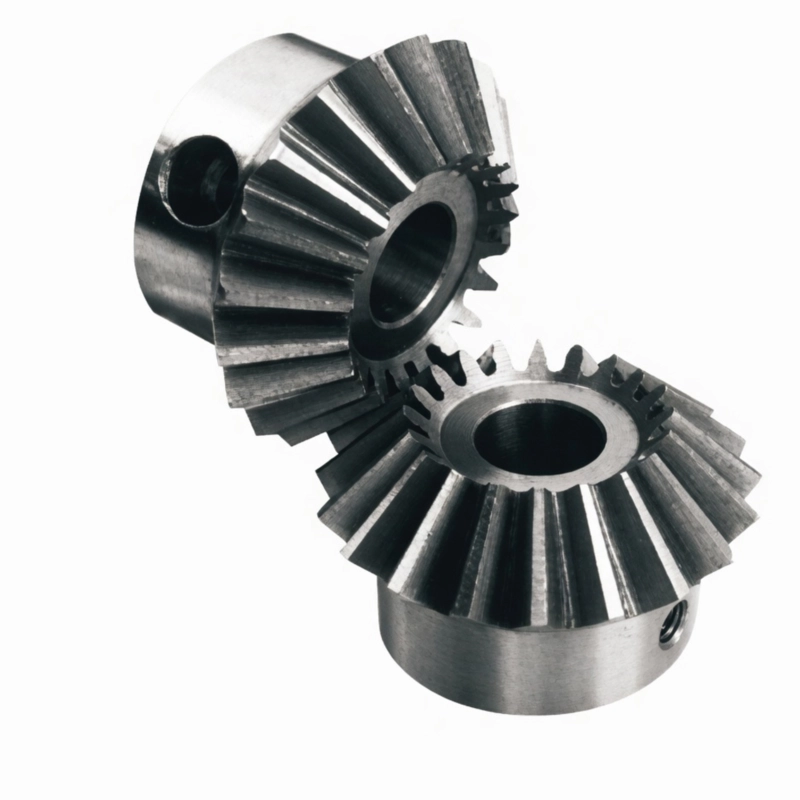
6. Metal Bevel Gear Application Scenarios
The Ratio 1:1 configuration of this metal bevel gear series finds use across a diverse range of industries. Because the gear pair transmits power at a 90° angle while maintaining equal shaft speeds, it appears wherever direction change — rather than speed reduction — is the primary design goal. Below are the main sectors where these metal bevel gear types are deployed in Colombia and internationally.
Agricultural Machinery
Colombian agriculture — from the coffee-growing regions of Caldas and Antioquia to the sugarcane belts of Valle del Cauca — relies on a variety of mechanized equipment. Bevel gear sets are found in gear-driven conveyors, seed-drill transmissions, and harvesting machinery wherever a right-angle drive is needed between the main drive shaft and a secondary working component. The durability of C45 steel and the clean-mesh geometry of the 20° tooth profile make this gear well-suited to the variable load cycles typical of field machinery.
Industrial Conveyors and Material Handling
Manufacturing plants, distribution centers, and logistics facilities frequently use bevel gear right-angle drives to redirect roller or belt conveyors around corners, to connect floor-level drives to elevated conveyor lines, or to power lateral transfer sections. The 1:1 ratio is ideal when conveyor belt speed must be maintained constant throughout a turn, making these bevel gear sets the preferred choice in packaging, food processing, and warehousing operations.
Machine Tools and Metalworking Equipment
Drilling machines, milling heads, and rotary tables in metalworking shops depend on bevel gear transmissions to route spindle rotation from horizontal to vertical (or vice versa). The tight dimensional tolerances of the European Standard Series make these gears drop-in replacements for OEM components, reducing repair time in production environments. The mini metal bevel gear sizes (M1.5–M2) are especially relevant for tooling heads and positioning mechanisms in CNC machining centers.
Printing and Textile Machinery
High-speed printing presses and textile looms use bevel gear drives in their web-guide and roll-drive assemblies. The smooth, low-noise engagement of the 20° tooth profile is particularly valued in these environments where vibration can translate directly into product defects — registration errors in printing or fabric tension irregularities in weaving. Colombian textile manufacturing, centered in Medellín, is a significant end-market for this type of metal bevel gear application.
Pumps and Fluid Handling Systems
In water treatment facilities, oil field equipment, and chemical processing plants across Colombia and Latin America, bevel gear right-angle drives connect horizontally mounted motors to vertically oriented pump shafts. The sealed gearbox arrangements common in these applications benefit from the efficient mesh geometry of the 20° profile, which reduces heat generation and lubricant contamination risk during long continuous-duty operation cycles.
Marine and Power Generation Equipment
Auxiliary systems on marine vessels and in diesel generator sets frequently require right-angle drives to connect engine-mounted accessories. Bevel gears in these applications must handle start-stop cycles and vibration. The C45 material with optional heat treatment provides the fatigue resistance needed for such duty cycles. Coastal and river-port industries along Colombia’s Pacific and Caribbean coasts as well as the Magdalena river system represent a relevant end-use market for this gear type.
7. Compliance, Standards, and Regulatory Considerations
When sourcing or integrating bevel gear components into industrial equipment, compliance with applicable technical standards and safety regulations is an important consideration. The following overview covers key frameworks relevant to buyers in Colombia and other major markets.
Colombia — ICONTEC and Machinery Safety: The Instituto Colombiano de Normas Técnicas y Certificación (ICONTEC) adopts and publishes Colombian Technical Standards (NTC), many of which mirror ISO and DIN standards. For machinery incorporating bevel gears, the applicable framework includes NTC-ISO standards for safety of machinery (NTC-ISO 12100) and specific equipment-type regulations. Imported machinery components may be subject to INVIMA inspection or SASO-style conformity assessment depending on the intended use sector. Buyers in the mining sector in Colombia (governed by Law 685 of 2001 and complementary decrees) must ensure that all mechanical components used underground meet applicable explosion-protection and material standards.
European Union — Machinery Directive 2006/42/EC: Equipment destined for the EU market must conform to the Machinery Directive (now transitioning to Machinery Regulation EU 2023/1230). Gear components themselves are not independently CE-marked, but the machinery into which they are incorporated must be. The DIN-aligned European Standard Series gear dimensions facilitate design compliance for European OEMs integrating these components into CE-marked machine assemblies.
United States — AGMA Standards: The American Gear Manufacturers Association (AGMA) publishes standards for gear quality grades (ANSI/AGMA 2009 for bevel gear ratings) and lubrication requirements. While the EP series is designed to European DIN standards, the tooth geometry and material are consistent with AGMA quality requirements applicable to many industrial drive applications. US importers should verify dimensional compatibility with AGMA-specified mating components.
ISO Standards: ISO 23509 (Bevel and hypoid gear geometry) and ISO 10300 (Load capacity rating of bevel gears) are the primary international standards governing bevel gear design and rating. These standards are referenced by engineers globally when calculating gear life, contact stress, and bending strength under service loads. The European Standard dimensions used in this series are consistent with the geometric relationships defined in ISO 23509.
RoHS and Material Declarations: C45 steel does not contain restricted substances under the EU RoHS Directive (2011/65/EU) or REACH regulations. For projects requiring material declarations (e.g., for REACH SVHCs or conflict minerals reporting), material data sheets can be provided upon request.
8. Related Products — Complete Power Transmission Solutions
А bevel gear performs best as part of an integrated drive system. Beyond the gear itself, the complete power transmission chain typically includes roller chain, drive sprockets, and mounting hardware. Sourcing all these components from a single supplier — with matched specifications and consistent quality — simplifies procurement, reduces compatibility risks, and shortens lead times for both new builds and maintenance replacements. The product range covers the full chain, from gear to sprocket to chain.
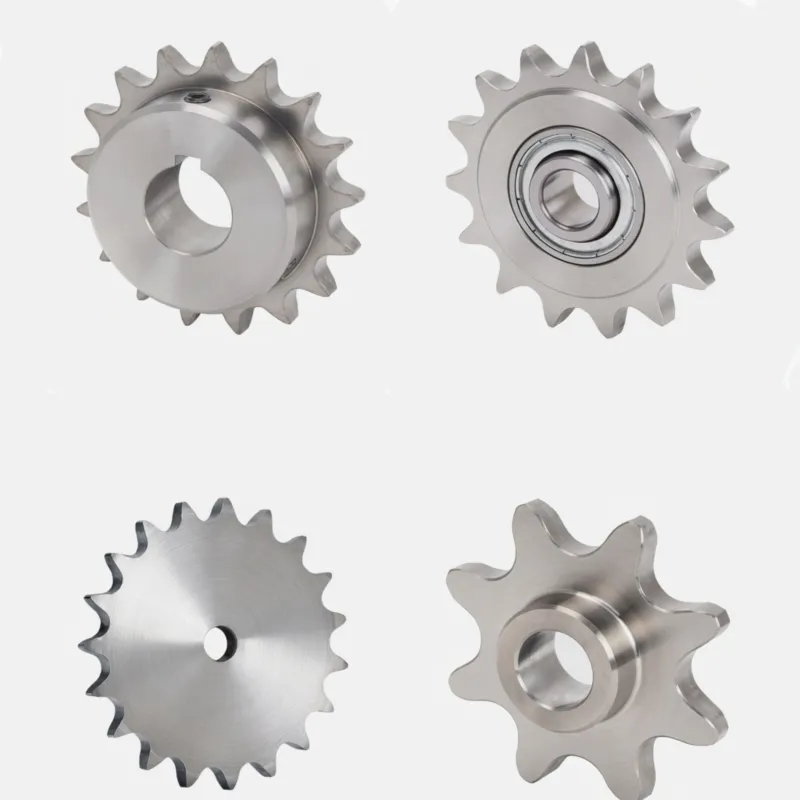
Sprockets — System-Compatible Drive Components
When a bevel gear right-angle drive feeds into a chain-and-sprocket transmission stage, using dimensionally matched sprockets from the same product family ensures optimal pitch alignment and load sharing. The sprocket range covers both European Standard (DIN 8187/8188) and American Standard (ANSI) pitch specifications across a wide tooth count range. For buyers in Colombia who need a supplier capable of providing both the bevel gear and the downstream sprocket in a single order, this full-range availability is a practical advantage.
Роликовая цепь — The Connecting Link
Roller chain is the mechanical link between the sprocket driven by the bevel gear output shaft and the final driven sprocket or shaft. Having the chain, sprocket, and bevel gear sourced from the same catalog ensures pitch compatibility, matched tensile strength ratings, and consistent fatigue life expectations across the entire drive assembly. The chain range includes simplex, duplex, and triplex configurations in both European and American standard pitches, with options for corrosion-resistant coatings for outdoor and food-industry environments common in Colombian agri-processing operations. 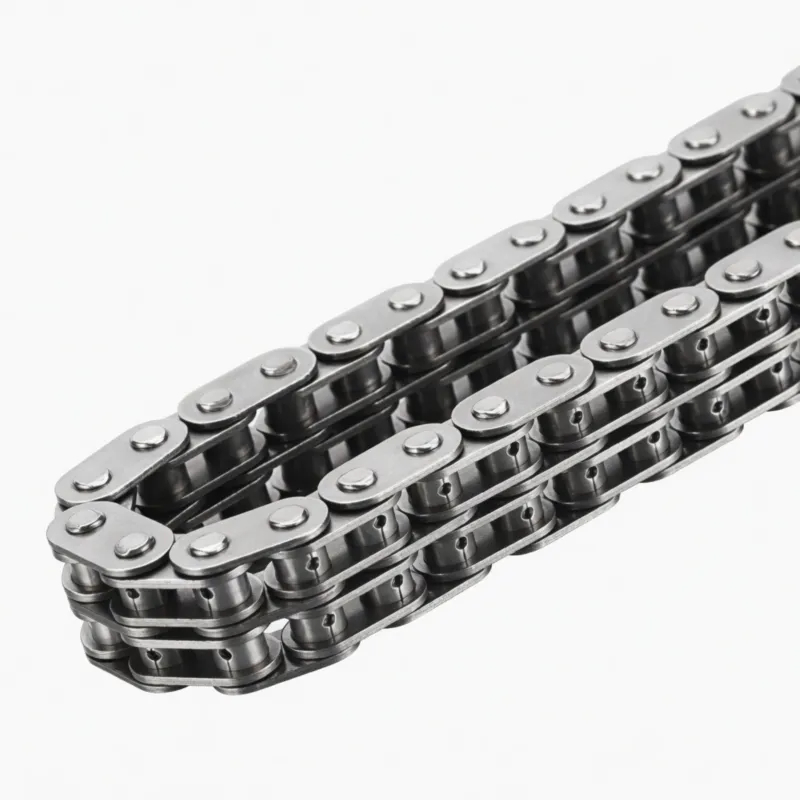
9. About Us
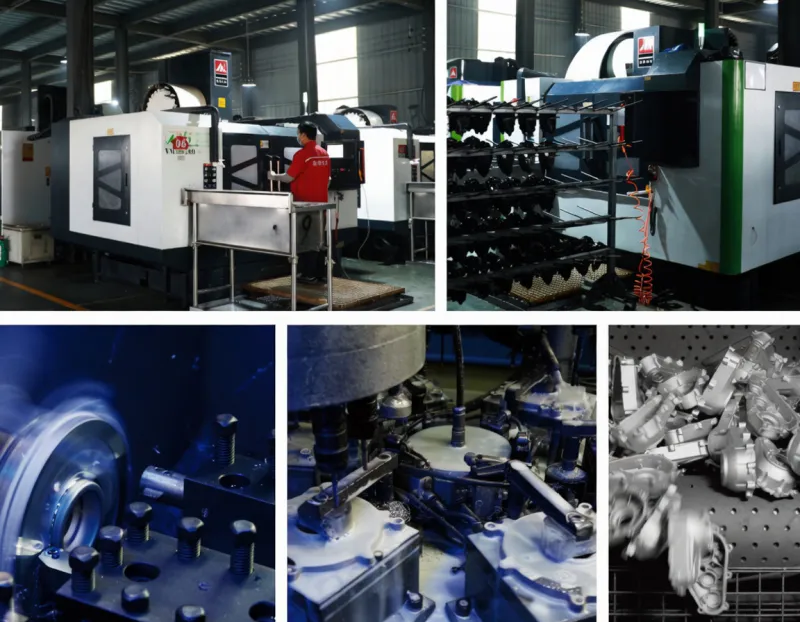
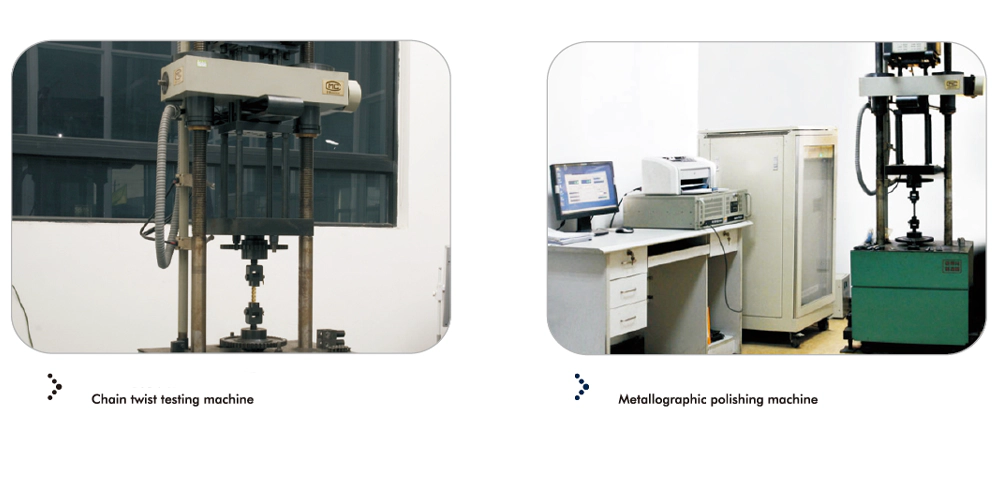
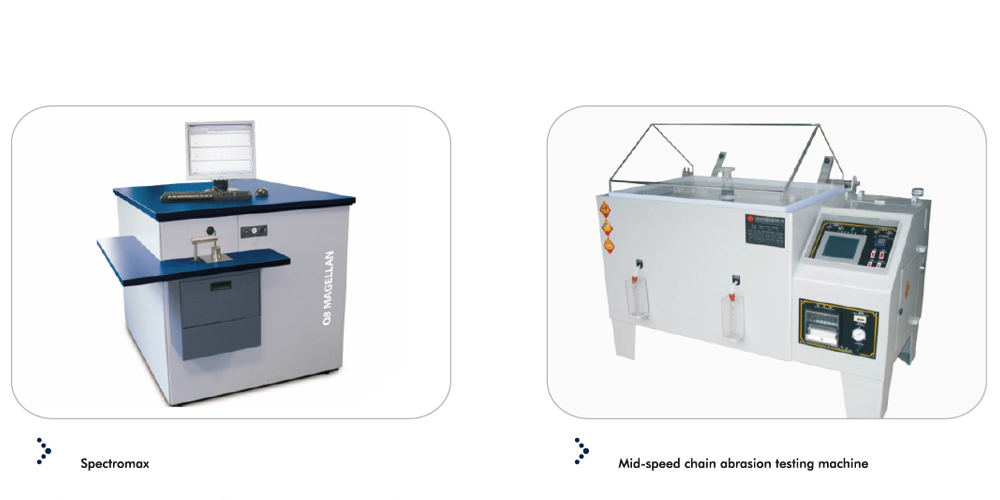
We are a specialized manufacturer and global supplier of mechanical power transmission components, with a product range that spans bevel gears, sprockets, roller chains, spur racks, and associated drive system hardware. Our manufacturing operations apply modern CNC gear-hobbing and gear-grinding equipment, operating under a quality management framework aligned with ISO 9001 principles. Every product undergoes dimensional inspection against the published standard specifications before dispatch, with traceability maintained through production batch records.
Мастер-класс
Часто задаваемые вопросы
Q1. What exactly is a bevel gear and how does it differ from a spur gear in industrial drive systems?
A bevel gear is a wheel with teeth cut on a conical surface designed to transmit motion between two intersecting shafts — almost always at 90°. A spur gear, by contrast, transmits motion between parallel shafts. The fundamental difference is the axis orientation: spur gears redirect or amplify speed along the same plane, while bevel gears allow the drive direction to turn a corner. In a machine where the motor and the driven shaft must be perpendicular, the bevel gear is typically the engineered solution. The Ratio 1:1 configuration used in this series provides that 90° redirection without any speed change, making it ideal for right-angle drive applications where shaft speeds must stay equal on both sides.
Q2. Where can I find a reliable metal bevel gear supplier for industrial projects in Colombia or Latin America?
Finding a dependable Metal Bevel Gear Manufacturer for industrial projects in Colombia involves verifying dimensional compliance with recognized standards (DIN or ISO), confirming material certifications for the steel used, and reviewing the supplier’s quality inspection process. This product range is designed for direct export to Colombia and other Latin American markets, with documentation available to support customs clearance and incoming inspection processes. Standard packaging protects against corrosion during sea or air freight. Technical data sheets with full dimensional tables — as provided on this page — allow engineering teams to perform pre-order compatibility checks before committing to a purchase.
Q3. How does the 20° pressure angle in a metal bevel gear affect the load capacity and noise levels during operation?
The pressure angle directly influences both the tooth strength and the smoothness of engagement. At 20°, the tooth root is thicker and the contact force vector is more radial — this increases bending strength compared to the older 14.5° standard, making the gear capable of carrying higher loads before failure. On the noise side, the 20° angle reduces the proportion of sliding contact in the mesh engagement cycle (the first and last portions of tooth contact), which is where most gear noise originates. Reduced sliding also means less heat generation and lower lubricant degradation rates. For applications in Colombia and Latin America where ambient temperatures can be elevated, the lower heat signature of the 20° tooth form is a practical benefit in terms of lubricant service life.
Q4. Which module size should I choose when selecting a small metal bevel gear for a light-duty agricultural machine drive in Colombia?
For light-duty agricultural machinery drives — such as seed-drill gear trains, small conveyors, or rotary cultivator transmissions — modules M1.5 to M2.5 are typically appropriate. These small metal bevel gear sizes provide sufficient tooth strength for torques up to approximately 15–30 Nm per gear, depending on the tooth count and operating speed. For field machinery with higher torques or impact loads (such as mowers, tillers, or combine feeder mechanisms), modules M3 to M4 are more appropriate. The selection should be based on a basic gear rating calculation referencing the ISO 10300 standard, factoring in application factor, dynamic factor, and desired minimum service life. Contact the technical team with motor power, RPM, and application details to receive a confirmed gear selection.
Q5. Are custom bevel gears available if my application requires non-standard bore sizes or a specific tooth count not listed in the standard table?
Yes. Custom bevel gears can be produced outside the standard range for applications requiring specific bore diameters, keyway configurations, or tooth counts not covered in the standard European Series table. Custom bore machining is the most common modification request — the standard gears are supplied with a specific bore diameter and can be re-bored to match a specific shaft size. Custom tooth counts and modules outside the standard range require a separate manufacturing order with a longer lead time. A technical inquiry with shaft diameter, required torque, speed, and any dimensional constraints should be submitted to the technical sales team for a quotation and feasibility assessment.
Q6. What type of lubrication is recommended for a bevel gear set operating in an industrial gearbox in a Colombian tropical environment?
For bevel gear sets operating in enclosed gearboxes in tropical environments (high ambient temperature, potential humidity ingress), an ISO VG 220 or VG 320 mineral gear oil with extreme-pressure (EP) additives is the standard recommendation for most industrial applications. In high-temperature tropical conditions, synthetic PAO or PAG-based gear oil offers better oxidation stability and a wider operating temperature range. Oil change intervals should be shortened in environments where ambient temperatures consistently exceed 35°C. Grease lubrication is acceptable for low-speed, intermittently operated gears but is not recommended for continuous-duty applications above approximately 300 RPM due to inadequate heat dissipation. Always follow the gearbox OEM’s lubrication specification as the primary guidance.
Q7. How do I confirm that a European Standard bevel gear is compatible with the mating gear already installed in my machine?
Compatibility between a new Metal Bevel Gear and an existing mating gear requires matching: (1) module number — must be identical on both gears; (2) pressure angle — both must be 20° for this series; (3) tooth count — for Ratio 1:1 both gears must have the same tooth count; (4) hand — straight tooth bevel gears are reversible, but spiral bevel gears have a specific hand that must be preserved. The easiest check is to measure the pitch circle diameter (Dp) and count the teeth on the existing gear: Dp = Module × Teeth. Matching the resulting module to the table on this page will confirm which size to order. If a physical gear sample can be sent, dimensional inspection can confirm all parameters before a replacement order is placed.
Q8. Can high power metal bevel gears in the M4 or M5 range handle the torque loads in mining conveyor drives used in Colombian open-pit operations?
High power metal bevel gears in the M4 to M5 range are suitable for moderate industrial loads, but heavy-duty mining conveyor applications — particularly in the open-pit coal and gold mining operations common in departments like La Guajira, Cesar, and Chocó — typically require larger module gears (M6 and above) with alloy steel construction, case hardening, and specific gear quality grades per ISO 1328 or AGMA standards. The M4–M5 European Standard Series gears described on this page are better suited to auxiliary equipment on mine sites — ventilation fan drives, sampling equipment, and light-duty conveyors — rather than the primary ore-handling conveyor drives. For a confirmed suitability assessment for a specific mining application, a load analysis and application questionnaire should be completed.
Редактор: PXY