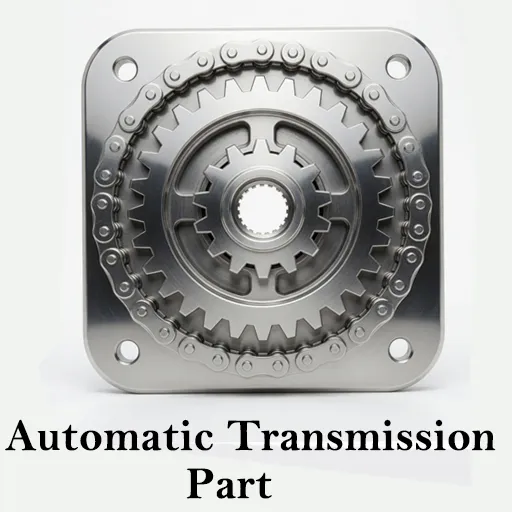
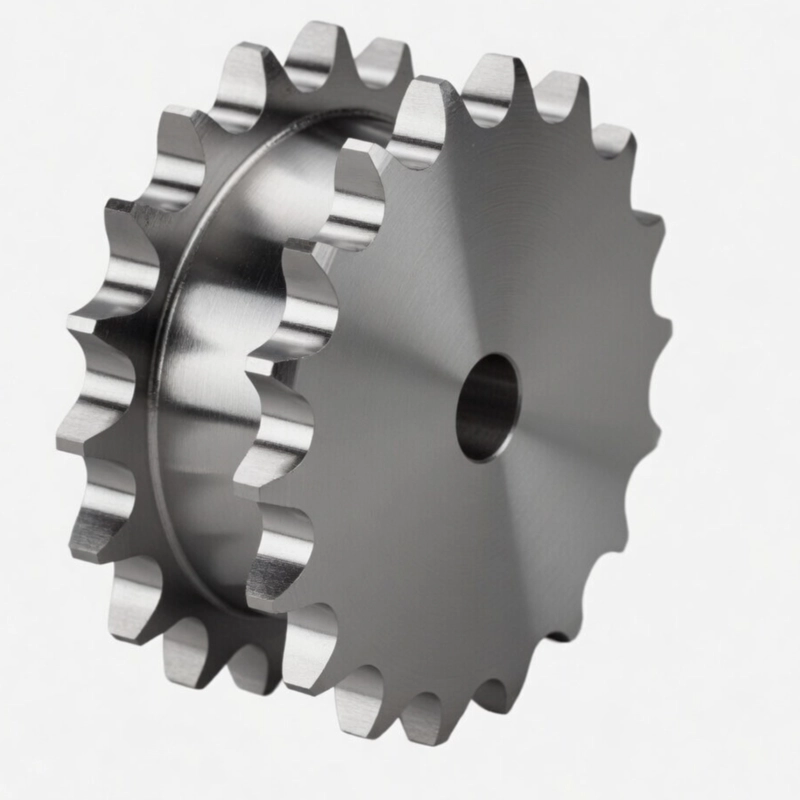
EP-europeisk standard dobbelthjul for to enkle kjeder
EP European Standard Double Sprockets for Two Single Chains are precision-machined for reliable power transmission. Available in 06B-1, 08B-1, 10B-1, 12B-1, and 16B-1 profiles (3/8″ to 1″ pitch), they suit dual chain setups. With 13–21 teeth, they feature standardized bore sizes (10–24mm), consistent hub dimensions, and high-quality steel construction. Ideal for industrial machinery, conveyors, and agricultural equipment, they ensure smooth, synchronized chain operation with long-lasting durability.
EP-europeisk standard dobbelthjul for to enkle kjeder
Precision-engineered Double Sprockets for Two Single Chain drives, fully conforming to DIN 8187 and ISO/R 606 standards. Designed for industrial power transmission systems that demand parallel-strand reliability, dimensional accuracy, and long service life across demanding operating environments — from agricultural machinery in Colombia to heavy-duty conveying lines across Latin America and beyond.
1. Technical Specifications — EP European Standard Double Sprockets for Two Single Chains
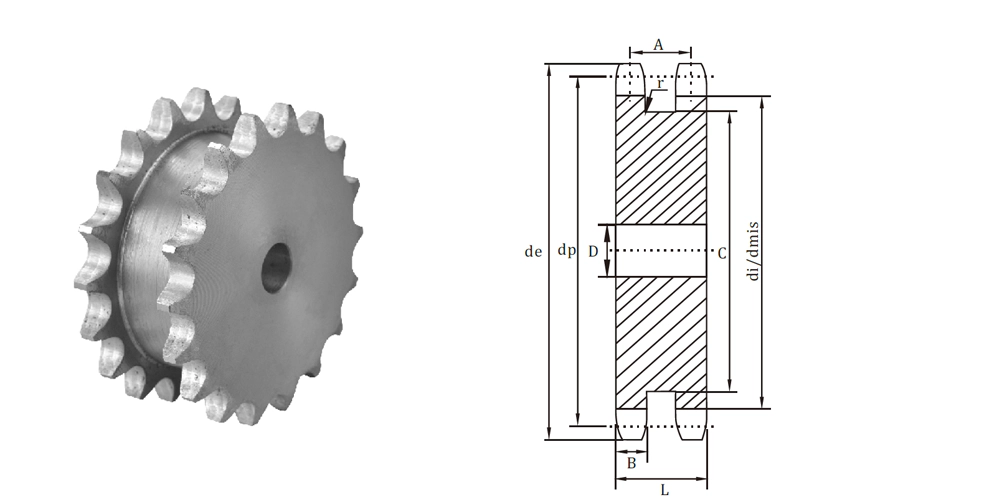
The table below lists dimensional data for the principal chain sizes in the EP Double Sprockets for Two Single Chain Series. All measurements are in millimeters unless otherwise noted. These Double Sprockets for Two Single Chain sizes follow DIN 8187 / ISO/R 606. The standard series runs from 06B-1 through 16B-1 with tooth counts of 13Z to 25Z.
| Type | Z | de (mm) | dp (mm) | di (mm) | dmis (mm) | D (mm) | A (mm) | B h14 (mm) | C max (mm) | L (mm) |
|---|---|---|---|---|---|---|---|---|---|---|
| 06B-1 R6.35 3/8″ × 7/32″ |
13 | 43 | 39.80 | 33.45 | 33.16 | 10 | 20.3 | 5.3 | 28 | 25.5 |
| 15 | 49.3 | 45.81 | 39.46 | 39.21 | 10 | 20.3 | 5.3 | 34 | 25.5 | |
| 17 | 55.3 | 51.84 | 45.49 | 45.27 | 12 | 20.3 | 5.3 | 40 | 25.5 | |
| 19 | 61.3 | 57.87 | 51.52 | 51.32 | 12 | 20.3 | 5.3 | 46 | 25.5 | |
| 21 | 68 | 63.91 | 57.56 | 57.38 | 15 | 20.3 | 5.3 | 52 | 25.5 | |
| 23 | 73.5 | 69.95 | 63.60 | 63.44 | 15 | 20.3 | 5.3 | 59 | 25.5 | |
| 25 | 80 | 76.00 | 69.65 | 69.50 | 15 | 20.3 | 5.3 | 65 | 25.5 | |
| 08B-1 R8.51 1/2″ × 5/16″ |
13 | 57.4 | 53.07 | 44.56 | 44.17 | 10 | 24.8 | 7.2 | 37 | 32 |
| 15 | 65.5 | 61.08 | 52.57 | 52.24 | 10 | 24.8 | 7.2 | 45 | 32 | |
| 17 | 73.6 | 69.12 | 60.61 | 60.31 | 12 | 24.8 | 7.2 | 53 | 32 | |
| 19 | 81.7 | 77.16 | 68.65 | 68.39 | 12 | 24.8 | 7.2 | 62 | 32 | |
| 21 | 89.7 | 85.21 | 76.71 | 76.46 | 15 | 24.8 | 7.2 | 70 | 32 | |
| 23 | 98.2 | 93.27 | 84.76 | 84.54 | 15 | 24.8 | 7.2 | 78 | 32 | |
| 25 | 105.8 | 101.33 | 92.82 | 92.62 | 15 | 24.8 | 7.2 | 86 | 32 | |
| 10B-1 R10.16 5/8″×3/8″ |
13 | 73 | 66.33 | 56.17 | 55.69 | 15 | 27.9 | 9.1 | 48 | 37 |
| 15 | 83 | 76.35 | 66.19 | 65.78 | 15 | 27.9 | 9.1 | 58 | 37 | |
| 17 | 93 | 86.39 | 76.23 | 75.87 | 15 | 27.9 | 9.1 | 68 | 37 | |
| 19 | 103.3 | 96.45 | 86.29 | 85.96 | 19 | 27.9 | 9.1 | 79 | 37 | |
| 21 | 113.4 | 106.51 | 96.35 | 96.06 | 19 | 27.9 | 9.1 | 89 | 37 | |
| 23 | 123.4 | 116.59 | 106.43 | 106.15 | 19 | 27.9 | 9.1 | 99 | 37 | |
| 25 | 134 | 126.66 | 116.50 | 116.25 | 19 | 27.9 | 9.1 | 109 | 37 | |
| 12B-1 R12.07 3/4″ × 7/16″ |
13 | 87.5 | 79.60 | 67.53 | 66.95 | 20 | 33.9 | 11.1 | 59 | 45 |
| 15 | 99.8 | 91.63 | 79.56 | 79.05 | 20 | 33.9 | 11.1 | 71 | 45 | |
| 17 | 111.5 | 103.67 | 91.60 | 91.18 | 20 | 33.9 | 11.1 | 83 | 45 | |
| 19 | 124.2 | 115.74 | 103.67 | 103.27 | 20 | 33.9 | 11.1 | 95 | 45 | |
| 21 | 136 | 127.82 | 115.75 | 115.39 | 24 | 33.9 | 11.1 | 107 | 45 | |
| 23 | 149 | 139.90 | 127.83 | 127.51 | 24 | 33.9 | 11.1 | 119 | 45 | |
| 25 | 160 | 151.99 | 139.92 | 139.62 | 24 | 33.9 | 11.1 | 131 | 45 | |
| 16B-1 R15.88 1″×17,02 |
13 | 117 | 106.14 | 90.26 | 89.48 | 24 | 47.8 | 16.2 | 78 | 64 |
| 15 | 133 | 122.17 | 106.29 | 105.62 | 24 | 47.8 | 16.2 | 95 | 64 | |
| 17 | 149 | 138.23 | 122.35 | 121.76 | 24 | 47.8 | 16.2 | 111 | 64 | |
| 19 | 165.2 | 154.32 | 138.44 | 137.91 | 24 | 47.8 | 16.2 | 127 | 64 | |
| 21 | 181.2 | 170.42 | 154.54 | 154.06 | 24 | 47.8 | 16.2 | 143 | 64 |
Note: Z = number of teeth; de = tip circle diameter; dp = pitch circle diameter; di = bore diameter; dmis = max. hub bore; D = hub diameter; A = hub length; B h14 = keyway width (ISO h14 tolerance); C max = chain clearance radius; L = overall length (both rows).
2. What Are Double Sprockets for Two Single Chains?
EN double sprocket for two single chains — also referred to as a duplex sprocket for two single chains or a double simplex sprocket — is a mechanical drive component engineered to run two independent single-strand roller chains side by side on a single hub. Rather than using a conventional duplex chain, this design couples two separate single-strand chains with one sprocket body, offering greater flexibility in system layout, easier maintenance access, and independent tensioning of each strand. This configuration is widely used in applications where staggered chain replacement cycles or asymmetric load sharing is preferred.
Our EP series of Europeisk standard dobbelthjul for to enkle kjeder are manufactured to full DIN 8187 and ISO/R 606 specifications, ensuring interchangeability with European-standard roller chains. Whether you are building a new conveyor line in Bogotá or retrofitting industrial drive equipment in Medellín, these sprockets bolt directly into existing European-standard chain systems without dimensional surprises. Every tooth profile, hub bore, and face width dimension is held to tight tolerances to guarantee smooth meshing, low noise, and extended wear life even under continuous-duty loading.
The product range covers chain sizes from 06B-1 (3/8″ × 7/32″) through 16B-1 (1″ × 17.02mm), with tooth counts from 13Z up to 25Z per the standard series. Double roller chain sprockets at this level of engineering precision are suitable for food processing lines, textile machinery, packaging equipment, mining conveyors, and agricultural drive systems across Colombia, Ecuador, Peru, and the wider Andean industrial corridor.
3. Five Key Product Advantages of Double Sprockets for Two Single Chain
1. Full DIN 8187 / ISO/R 606 Conformity
Every dimension — tooth pitch, roller seating radius, hub bore, and face width — is machined to European standard tolerances. This guarantees direct interchangeability with any compliant European-standard single-strand roller chain already running in your facility, eliminating costly adapters or custom rework.
2. Independent Strand Tensioning
Because two separate single chains run on the same hub rather than one wide duplex chain, each strand can be tensioned independently. This is a practical advantage for drives where load distribution is not perfectly symmetric, allowing operators to compensate without replacing the entire drive assembly.
3. High-Grade Steel with Precision Heat Treatment
Tooth flanks and bore surfaces undergo controlled carburizing or induction hardening to achieve surface hardness values appropriate for heavy cyclic loading. Core toughness is preserved to resist shock loads, while the hardened surface layer dramatically extends tooth wear life compared to untreated alternatives.
4. Wide Size Range — One Supplier, Complete Coverage
From compact 06B-1 drives on light packaging machinery to heavy 16B-1 sprockets on mining conveyors, the EP series covers the full span of standard industrial roller chain sizes. Sourcing the entire range from one supplier simplifies documentation, quality auditing, and long-term spare parts management.
5. Reduced System Downtime Through Modular Replacement
When one strand of a two-single-chain drive reaches its wear limit before the other, only that chain — not the sprocket — typically needs replacement. This modular approach lowers maintenance costs over the equipment's lifetime and reduces unplanned downtime, a critical factor for 24/7 production lines in the Colombian manufacturing and agro-industrial sectors.
4. How Double Sprockets for Two Single Chains Work
The operating principle of a double chain sprocket for two single-strand drives is straightforward but relies on precise geometry. The sprocket hub carries two identical tooth profiles machined on the same blank, separated axially by a precisely controlled face-width dimension (dimension L in the DIN drawing). Each tooth row is sized and positioned to mesh with one individual single-strand roller chain. As the sprocket rotates, both chains receive equal angular velocity and — if the system is well aligned — substantially equal torque.
Proper pitch-circle alignment between the two chain runs is critical. The pitch diameter (dp) governs where the chain rollers seat, while the tip-circle diameter (de) defines the maximum radial envelope. The bore (di) and hub diameter (D) determine the shaft fit, and dimension A controls the axial distance between the sprocket face and the shaft shoulder. The B h14 value specifies the keyway width tolerance, critical for achieving a secure interference or transition fit between sprocket and shaft. When both chain strands are correctly aligned with their respective sprocket tooth rows, wear is distributed evenly across all contact surfaces, and the system runs quietly with minimal vibration.
Lubrication reaches the tooth-roller interface either through splash lubrication in enclosed gearboxes or drip/spray systems in open drives. For double strand roller chain sprockets operating at moderate to high speeds, consistent lubrication at the chain-sprocket contact zone is the single most impactful factor in extending service life. In dusty or wet environments typical of Colombian agricultural and mining applications, sealed lubrication systems or regular manual re-lubrication schedules are strongly advised.
5. Material & Surface Treatment of Double Sprockets for Two Single Chain
The EP Series Double Sprockets for Two Single Chain are produced from medium-carbon steel or low-alloy structural steel, selected based on the required mechanical properties for the chain size. For standard catalog models, the tooth profiles and bore surfaces are precision-machined on CNC equipment to achieve the dimensional accuracy demanded by DIN 8187. Where the application involves elevated cyclic loading or impact, carburized and case-hardened grades are available with case depths and core hardness values optimized for the specific pitch size.
Surface protection against corrosion — a relevant concern in humid coastal environments in Colombia and other tropical regions — is provided through several finishing options: standard zinc phosphating with rust-preventive oil, black oxide, or upon request, electroplated zinc or nickel coatings. For food-grade and washdown applications, stainless steel variants are available for the smaller pitch sizes. The bore surface finish on finished-bore sprockets is held to tolerances that ensure reliable interference or transition fit with standard shaft tolerances, and keyway dimensions conform to ISO h14.
Heavy-duty double pitch roller chain sprockets in larger chain sizes (12B-1 and 16B-1) utilize through-hardened alloy steel with minimum tensile strength appropriate to the design power ratings. This material combination delivers the surface wear resistance needed for 10,000+ hour service lives in continuous industrial drives, while maintaining enough core ductility to absorb shock loads without tooth fracture.
6. Søknadsscenarier
The versatility of double sprockets for two single chains metric makes them suitable for a broad spectrum of industries. Below are the most common scenarios where this product excels.
Landbruksmaskiner
In Colombia's extensive coffee, sugarcane, and flower cultivation sectors, drive systems on harvesters, conveyors, and irrigation pumps regularly use double chain sprockets to handle the high torque requirements of continuous field operation. The two-single-chain configuration allows independent chain replacement, reducing downtime during peak harvest seasons when machinery cannot be taken off-line for extended periods.
Industrial Conveyor Lines
Packaging lines, bottling plants, and material handling systems across manufacturing hubs in Bogotá, Cali, and Barranquilla rely on double strand roller chain sprockets for synchronized conveyor motion. The dual-strand arrangement offers redundancy — if one chain strand develops slack due to wear, the second strand continues transmitting load while maintenance is scheduled, preventing sudden complete drive failures.
Mining & Quarrying Equipment
Extraction equipment in Colombia's coal mining regions of Cesar and Boyacá, and in the quarrying zones of Cundinamarca, subjects drive components to severe shock loading and abrasive environments. Europeisk standard dobbelthjul for to enkle kjeder in 12B-1 and 16B-1 sizes, manufactured from alloy steel with case-hardened teeth, provide the durability needed for crusher feeders, drag conveyors, and haulage equipment under these demanding conditions.
Textile & Garment Industry
Loom drive systems and fabric transport mechanisms in Colombian textile factories demand precision motion and low vibration. Double sprockets for two single-strand roller chains in the smaller pitch sizes (06B-1, 08B-1) deliver the smooth, low-noise drive characteristics needed to maintain fabric quality and avoid patterning defects caused by cyclic speed variations. Dimensional accuracy in these sprockets directly translates to product quality on the line.
Food Processing & Beverages
Hygienic conveying systems in food and beverage plants require sprockets that can withstand frequent washdown and cleaning cycles. Zinc-coated or stainless-steel variants of the EP duplex sprocket for two single chains are well suited to these environments. The European standard tooth profile also ensures compatibility with food-grade roller chains already in use on European-origin processing equipment imported to Colombia and neighboring markets.
7. Samsvar med regelverk og standarder
Mechanical power transmission components including sprockets and roller chains are subject to overlapping layers of national and international regulation wherever industrial machinery is designed, sold, or operated. Understanding the applicable framework is essential for procurement engineers and plant managers in Colombia and throughout Latin America.
Colombia (ICONTEC / NTC): The Instituto Colombiano de Normas Técnicas y Certificación (ICONTEC) adopts and publishes Colombian Technical Standards (NTC). Mechanical drive components used in machinery sold in Colombia must meet the safety requirements under the broader machinery safety framework. The Ministerio de Trabajo's Resolution 2400 (General Industrial Hygiene and Safety Statute) establishes requirements for mechanical guarding of exposed moving parts, including chain and sprocket drives. Employers operating machinery with exposed drive systems are legally required to install appropriate guards, and the drive components themselves must conform to recognized dimensional standards to ensure guards fit correctly.
European Union (Machinery Directive / EN ISO Standards): Where machinery incorporating these double sprockets for two single chains is designed for the European market, compliance with the EU Machinery Directive 2006/42/EC (and its successor, EU Machinery Regulation 2023/1230 which entered application in 2027) is required. EN ISO 12100 covers risk assessment for machinery, and EN 619 covers safety requirements for continuous handling equipment. The DIN 8187 / ISO/R 606 dimensions of these sprockets are directly aligned with European harmonized standards, simplifying CE marking documentation.
United States (OSHA / ASME / ANSI): For machinery exported to the US market, OSHA 29 CFR 1910.219 governs mechanical power-transmission apparatus guarding, requiring that all sprockets, chains, and related drive elements operating within 7 feet of the floor be properly guarded. ANSI/ASME B29.100 series standards cover roller chain dimensions and performance; while these sprockets follow European DIN/ISO standards rather than ANSI inch-series dimensions, the safety guarding requirements are functionally equivalent.
ISO 9001 Kvalitetsstyring: Our production operations follow ISO 9001-aligned quality management processes, ensuring consistent dimensional accuracy and material traceability across production batches. This supports the documentation requirements of end-users operating under regulated industries such as food processing (HACCP), pharmaceuticals, or defense procurement.
RoHS / REACH (EU): Surface treatments and lubricants used during manufacturing comply with EU RoHS Directive 2011/65/EU restrictions on hazardous substances and REACH Regulation (EC) 1907/2006 requirements, relevant for customers who re-export finished machinery into EU markets or who operate under environmental management systems (ISO 14001).
8. Om oss
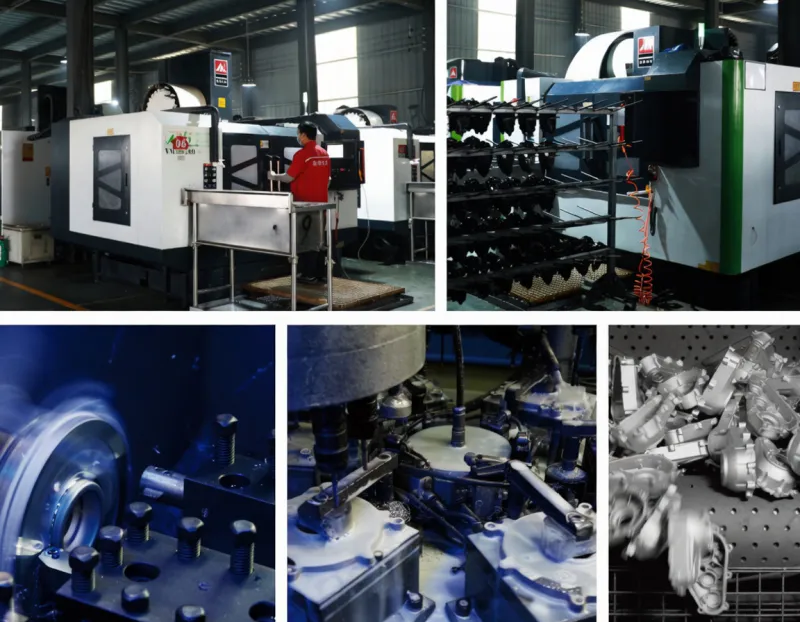
We are a specialized manufacturer and supplier of precision mechanical power transmission components, with a product portfolio spanning the full range of European standard and international standard sprockets, roller chains, and related drive accessories. Our engineering team brings deep hands-on experience in sprocket design, tooling, and quality control, allowing us to support customers from initial specification through to long-term technical after-sales service.
Our production capability covers the complete EP series of Europeisk standard dobbelthjul for to enkle kjeder, along with single-strand, triple-strand, and taper-bore variants. We maintain ready stock of the most common sizes and tooth counts to support rapid delivery schedules, and we offer custom bore, keyway, and setscrew configurations for application-specific requirements.
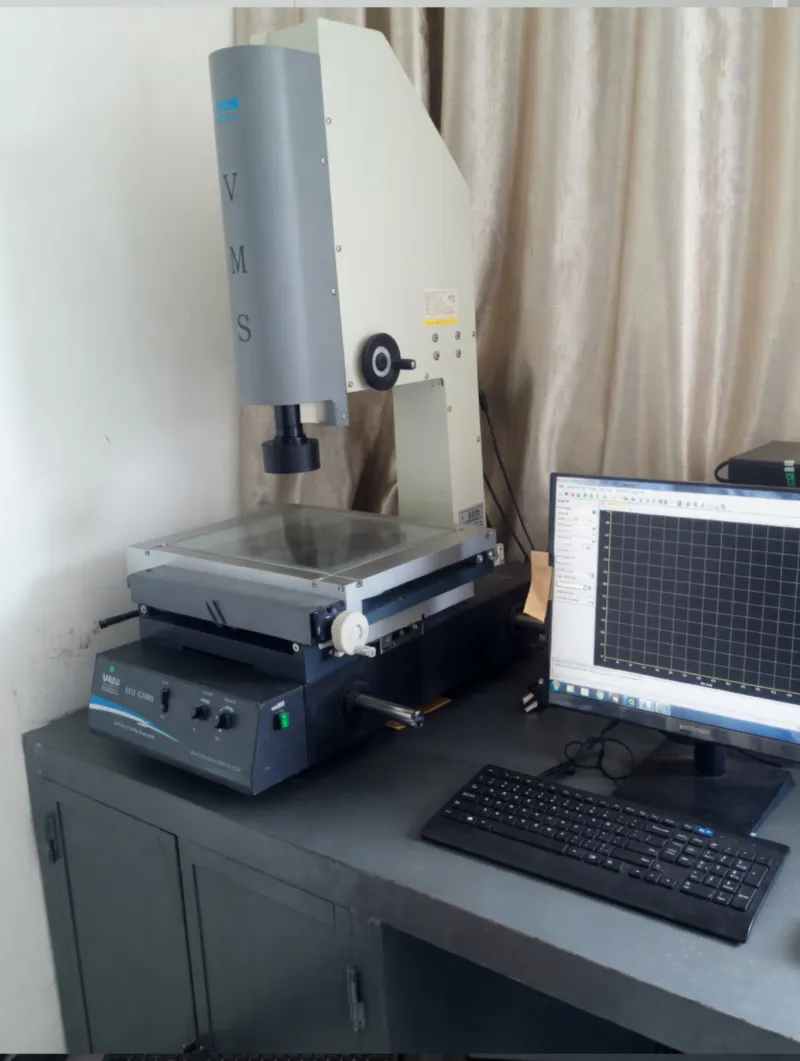
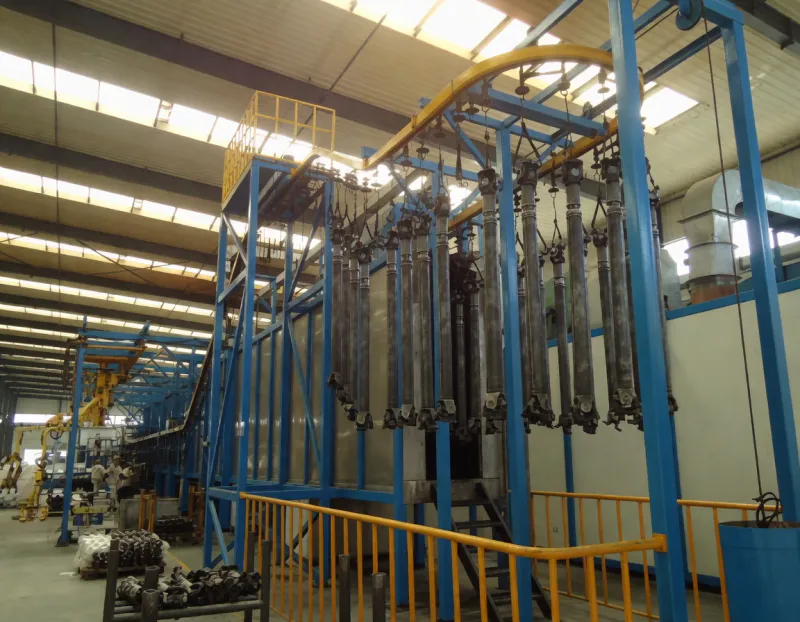
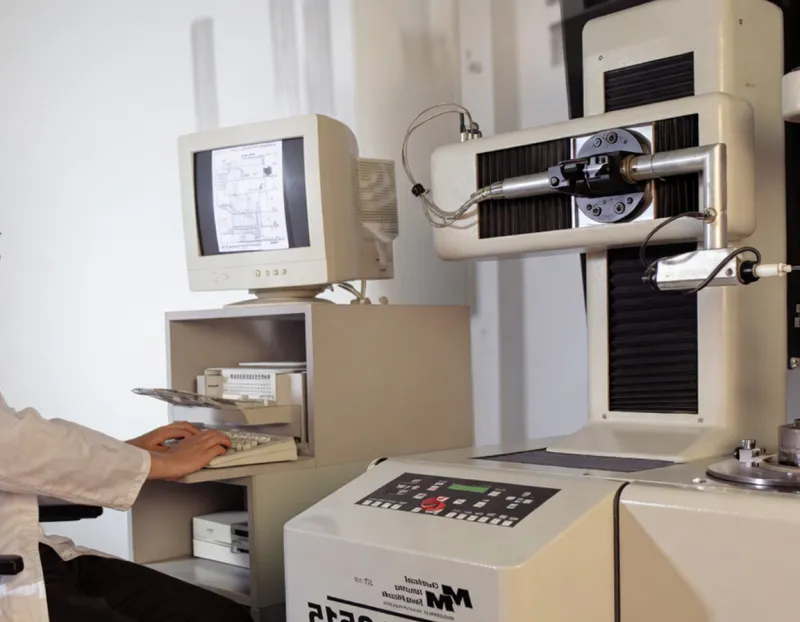
Verksted
9. Relaterte produkter — Komplette drivsystemløsninger
EN double sprocket is only one part of a reliable drive system. To deliver maximum performance and service life, the sprocket must be paired with dimensionally matched roller chain and, where gearbox integration is required, a compatible reducer. We supply all three components, giving our customers a single technical reference point for complete drive system procurement.
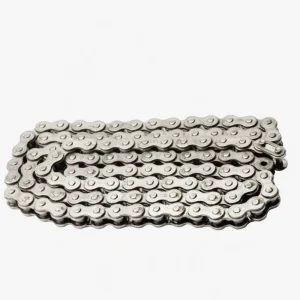
Rullekjede
Our EP series rullekjeder are manufactured to the same DIN 8187 / ISO/R 606 standard as these sprockets, ensuring matched pitch geometry and roller diameter for optimal meshing and even load distribution across all tooth contact points. Running mismatched chain-and-sprocket combinations is the single most common cause of premature wear in industrial drives. Sourcing both from the same standard eliminates that risk entirely.
Girkasse/reduksjonsgir for elektrisk kjøretøy
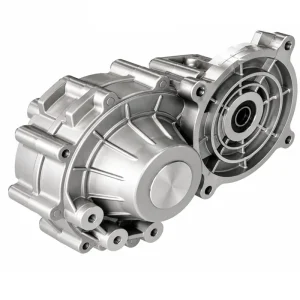
For drive systems that integrate sprocket-and-chain power transmission with a gearbox or speed reducer, system compatibility at the output shaft interface is critical. Our EP series electric vehicle gearboxes and industrial reducers are designed with standard shaft diameters and keyway dimensions that align with the bore specifications of our sprocket range, simplifying assembly and reducing the need for adapter bushings. A fully matched sprocket, chain, and gearbox assembly from one supplier streamlines installation, simplifies spare parts inventory, and ensures warranty coverage across the complete drivetrain.
Ofte stilte spørsmål
Q1. What is the difference between a duplex sprocket and a double sprocket for two single chains?
A duplex sprocket is designed to run a single two-strand duplex chain, where both strands are part of one chain assembly with a fixed strand spacing set by the chain manufacturer. A double sprocket for two single chains, by contrast, accommodates two entirely separate single-strand roller chains running side by side on one hub. This gives you the freedom to use any two single-strand chains with matching pitch, tension them independently, and replace each strand on its own maintenance schedule rather than replacing a full duplex chain as a unit. For applications in Colombia and other markets where single-strand chain stock is more readily available than duplex chain, this can translate directly into faster local sourcing of spare parts.
Q2. Which chain sizes are available for European Standard Double Sprockets for Two Single Chains, and how do I match them to my existing drive?
The EP Double Sprockets for Two Single Chain Series covers 06B-1, 08B-1, 10B-1, 12B-1, and 16B-1 chain sizes, all conforming to DIN 8187 / ISO/R 606. To match a sprocket to your existing drive, you need to know your chain's pitch (the distance between roller centers) and roller diameter. These values, combined with the required tooth count for your gear ratio, determine which sprocket to select. The dimensional data in the table above provides all critical dimensions (de, dp, di, D, A, B, C, L) to verify physical fit on your shaft and inside your drive housing before ordering. If you supply your chain pitch, roller diameter, and shaft bore size, our technical team can confirm the correct selection.
Q3. Where can I find a reliable supplier of double sprockets for two single chains for industrial applications in Colombia?
Vi leverer Europeisk standard dobbelthjul for to enkle kjeder directly to customers across Colombia, including Bogotá, Medellín, Cali, Barranquilla, and Bucaramanga. We offer export-ready documentation, competitive lead times, and technical support from application engineers. Contact us via the product inquiry form on this page to request a quote or to discuss your specific drive application requirements. For repeat orders or large volume procurement, we can discuss consignment stock arrangements or blanket purchase orders aligned to your production maintenance schedules.
Q4. What are the best double sprockets for two single chains for use in high-moisture agricultural environments in Latin America?
For humid and washdown-prone environments common in Colombian coffee processing facilities, sugarcane mills, and Andean flower cultivation operations, we recommend zinc phosphate-coated or electroplated zinc variants of the EP series sprockets, paired with stainless-steel or nickel-plated single-strand roller chains. For the most demanding hygiene-critical environments, fully stainless steel double chain sprockets are available in the smaller pitch sizes. Correct chain lubrication selection — food-grade lubricants where applicable — is equally important to achieving the expected service life in these conditions.
Q5. How do I correctly align two separate single-strand chains on a double sprocket during installation?
Alignment of both chain strands to their respective tooth rows is the most critical step in installation. Begin by setting the primary shaft and driven shaft in their final bearing positions. Mount the double row sprockets on each shaft and use a straight edge or laser alignment tool to confirm that the two tooth rows on the drive sprocket are coplanar with the two tooth rows on the driven sprocket — lateral misalignment beyond 0.5mm per metre of center distance leads to accelerated lateral wear on chain link plates. Thread each chain independently, checking sag on the slack side. Set chain tension to approximately 2% of center distance for horizontal drives, slightly less for inclined drives. Re-check alignment after the first few hours of operation, as initial bedding-in can shift sprocket position on the shaft.
Q6. What is the typical service life of a double sprocket for two single chains in a continuous conveyor application in Colombia's manufacturing sector?
Under proper alignment, correct lubrication, and appropriate chain tension, EP series double sprockets for two single chains metric in 10B-1 or 12B-1 sizes should achieve 15,000 to 25,000 hours of service in moderate-speed conveyor applications before tooth wear reaches the replacement threshold. This figure depends heavily on drive speed, load factor, lubrication method, and environmental contamination. Drives in dusty or abrasive environments will require more frequent sprocket inspection. Monitoring chain elongation (pitch wear) is the most reliable leading indicator: when chain elongation reaches 1.5–2%, replace the chain before it causes accelerated sprocket tooth wear through off-pitch meshing.
Q7. Can I get a custom bore size or special keyway for my double chain sprocket order?
Yes. Standard catalog items ship with a pilot bore (minimum bore), and custom finish-boring to your specified shaft diameter is available. Keyway and setscrew specifications can be supplied to ISO standards or to your own drawing. Custom bore lead times are typically 5 to 10 working days depending on size and quantity. For custom shaft configurations outside the standard bore range shown in the specifications table, please submit a technical drawing or specify shaft diameter, keyway width, depth, and length requirements at the time of inquiry. This service is available for all chain sizes in the EP series.
Q8. How do double strand roller chain sprockets compare to triple-strand sprockets in terms of load capacity and installation complexity?
Double strand roller chain sprockets transmit roughly twice the power of an equivalent single-strand sprocket at the same chain speed, with proportional increase in shaft radial load. Triple-strand designs extend this to approximately three times the single-strand capacity but add significantly more axial width, increasing bearing span requirements and the precision demands on shaft alignment. For most medium-duty applications in Colombian industrial facilities, the double configuration offers the best balance of power density, alignment tolerance, and cost. Triple-strand drives are typically reserved for very high power-to-speed ratios where chain size cannot be increased any further due to housing constraints.
Redaktør: PXY