Mô tả
EP-GUIS51-68 Series — ISUZU GUIS Universal Joint
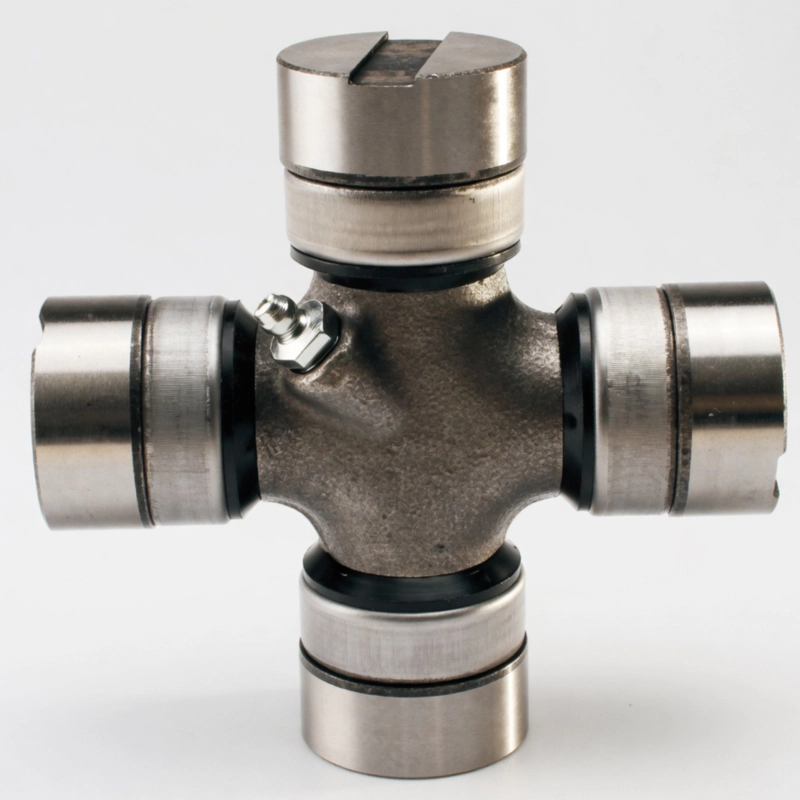
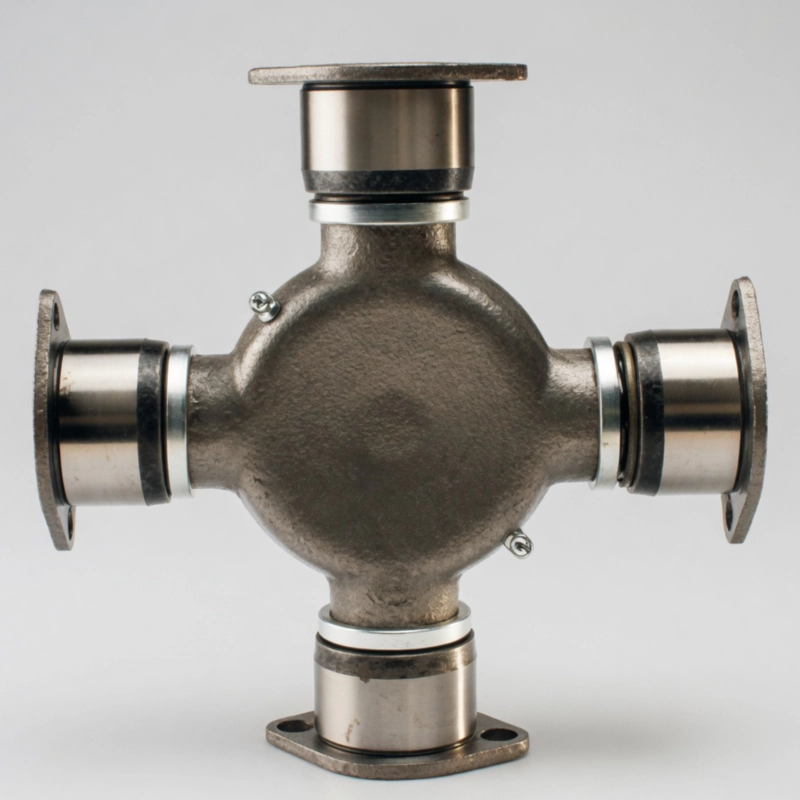
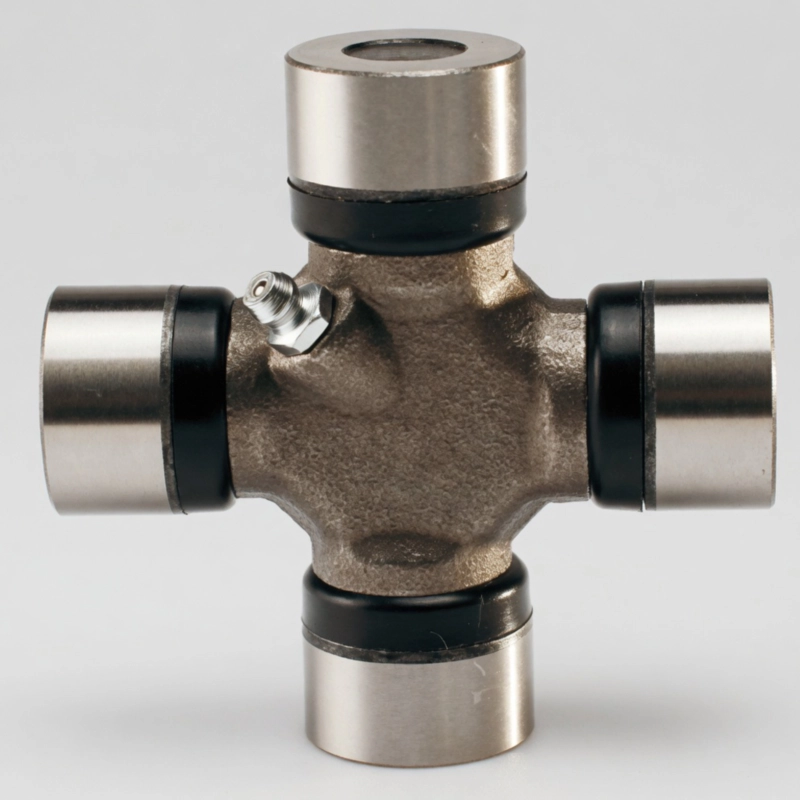
The EP-GUIS51-68 Series is a comprehensive range of ISUZU GUIS Universal Joints engineered to deliver consistent torque transmission across misaligned driveline shafts in commercial trucks, utility vehicles, and heavy transport equipment built on ISUZU platforms. Each unit in this series is dimensionally matched to original ISUZU OEM specifications, supporting seamless ISUZU universal joint replacement without modification. With trunnion diameters spanning 20.5 mm to 56 mm and overall lengths from 56.6 mm to 173.9 mm, the series covers a broad spectrum of powertrain geometries found across light-duty pick-ups, medium-duty trucks, and industrial ISUZU chassis used extensively throughout Latin America, including Colombia.
✔ Full Series Coverage GUIS51–68
✔ Colombia & Latam Ready
✔ Direct Drop-In Fitment
ISUZU GUIS Universal Joint Key Facts
- Series: GUIS51 · GUIS52 · GUIS55 · GUIS56 · GUIS57 · GUIS58 · GUIS59 · GUIS60 · GUIS61 · GUIS62 · GUIS63 · GUIS64 · GUIS65 · GUIS66 · GUIS67 · GUIS68
- Application: ISUZU trucks & commercial vehicles
- Trunnion diameter range: 20.5 – 56 mm
- Overall length range: 56.6 – 173.9 mm
- Cross-reference: KOYO, MATSUBA, OEM original numbers
ISUZU GUIS Universal Joint Quick Application Guide
- ISUZU N-series / NKR / NPR trucks
- ISUZU ELF utility & cargo vehicles
- ISUZU FRR / FSR medium-duty trucks
- ISUZU construction & agricultural machinery
- Steering column universal joint applications
1. Technical Specifications — EP-GUIS51-68 Series ISUZU GUIS Universal Joint
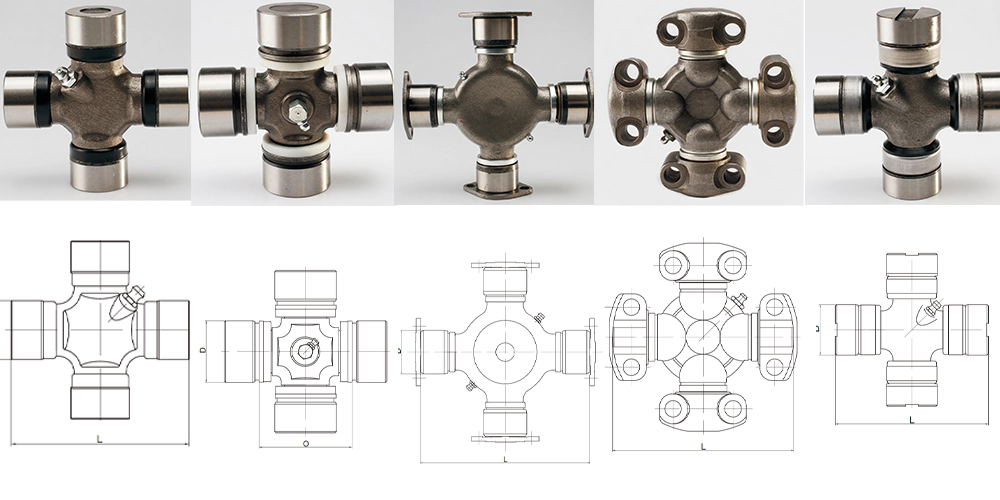
The table below lists the complete dimensional and cross-reference data for every member of the ISUZU GUIS Universal Joint series, sourced directly from the product catalogue. Dimensions are given in millimetres (mm). D = trunnion journal diameter; O = outer diameter (where applicable); L = overall cross length.
| QUẢ SUNG | Mã số linh kiện | Đường kính (mm) | O (mm) | L (mm) | Số gốc | KOYO | MATSUBA |
|---|---|---|---|---|---|---|---|
| MỘT | GUIS51 | 23.82 | — | 61.3 | 9-37300-017 | 12461 | UJ313 |
| B | GUIS52 | 29 | 50 | — | 9-37300-065 | 12976 | UJ314(324) |
| TÔI | GUIS55 | 42 | — | 125 | 9-37300-150 | 142129A | UJ320 |
| MỘT | GUIS56 | 23.82 | — | 61.3 | 9-37300-609 | 12461 | UJ323 |
| TÔI | GUIS57 | 48 | — | 145 | 9-37300-163 | 148149 | UJ321 |
| E | GUIS58 | 36 | — | 97 | 9-37300-112 | 136101A | UJ312 |
| MỘT | GUIS59 | 20.5 | — | 56.6 | 44135-060 | — | UJ315 |
| G | GUIS60 | 49.2 | — | 148.38 | 9-37300-139-0 | 070004AR-1 | UJ339 |
| MỘT | GUIS61 | 23.82 | — | 61.3 | 9-37300-031 | 12491 | UJ313 |
| MỘT | GUIS62 | 35 | — | 103.92 | 1-37300-0130 | 1351041 | — |
| MỘT | GUIS63 | 22.06 | — | 62.5 | 94207232-1 | — | — |
| MỘT | GUIS64 | 40 | — | 114.9 | 1-37300-047-0 | — | — |
| TÔI | GUIS65 | 45.98 | — | 136 | 1-37300-004-0 | 146142WS | UJ340 |
| MỘT | GUIS66 | 33 | — | 93 | 5-37300-032-0 | 133931W | UJ325 |
| G | GUIS67 | 56 | — | 173.9 | 1-37300-049-0 | — | — |
| TÔI | GUIS68 | 50 | — | 155 | 1-37300-082-0 | — | — |
D = Trunnion journal diameter (mm) · O = Outer flange diameter (mm) · L = Overall cross length (mm). FIG letter denotes cross-section type as illustrated in the product catalogue.
2. What Is a Universal Joint — and Why Does It Matter in Your ISUZU?
MỘT khớp vạn năng — often called a U-joint or Cardan joint — is a flexible mechanical coupling used to transmit rotary motion between two shafts that intersect at an angle or whose alignment shifts during operation. In any rear-wheel-drive or four-wheel-drive drivetrain, the propeller shaft must accommodate vertical suspension movement while continuing to deliver engine torque to the differential or axle. Without a properly functioning universal joint in a car or truck, that angular discrepancy would generate intense vibration, accelerate bearing wear, and ultimately snap the driveshaft entirely.
For ISUZU vehicle owners and fleet managers in Colombia and throughout South America, understanding what a universal joint does is the first step toward proactive maintenance. ISUZU trucks — whether operating in the highlands of Bogotá, the coastal lowlands, or the demanding road conditions of the Colombian interior — rely on the driveline U-joint to absorb misalignment between the transmission output and the rear axle pinion. The ISUZU GUIS Universal Joint series is engineered specifically around the tolerances and load cycles that characterize ISUZU commercial drivetrains, making it the most reliable choice for both preventive replacement and emergency repair.
3. ISUZU GUIS Universal Joint Working Principle
Cái Nguyên lý hoạt động của khớp vạn năng is rooted in the spider-and-yoke design developed by Robert Hooke in the 17th century, commonly referred to as the Hooke joint. At the heart of the assembly sits a cross-shaped component called the trunnion or spider. Four precision-ground trunnion arms extend radially, each fitting into a needle-roller or plain-round bearing cup housed within a yoke. The two yokes — one connected to the driving shaft, the other to the driven shaft — are positioned 90° apart.
When the input shaft rotates, torque is transmitted through the spider to the output yoke. Because the yokes are free to pivot on perpendicular axes, the assembly can accommodate angular misalignment typically up to 15°–25° depending on design. In ISUZU truck drivetrains, double-cardan or tandem U-joint arrangements may further extend the working angle while canceling the inherent velocity variation (second-order vibration) that a single Hooke joint produces at larger angles. The EP-GUIS51-68 series uses a U-joint with 4 plain round bearings configuration for the majority of members — a robust, time-proven layout optimized for commercial truck duty cycles involving heavy loads, frequent starts, and mixed-surface road conditions typical of Colombian logistics and construction environments.
4. Five Key Advantages of the EP-GUIS51-68 Series
① OEM-Grade Dimensional Accuracy
Every trunnion diameter and overall length within the GUIS series is manufactured to match the original ISUZU part specifications. This precision eliminates clearance issues in the yoke seats, preventing premature wear and ensuring the bearing cups seat squarely without shimming or reworking the flange. Direct-fit replacement reduces workshop downtime and lowers total labor cost — a critical factor for fleet operators managing ISUZU NKR and ELF vehicles across Colombian transport corridors.
② High-Alloy Steel Construction
The spider cross and bearing cups are forged from high-grade alloy steel — typically equivalent to 20CrMnTi or 42CrMo — followed by case hardening and precision grinding. This heat-treatment process produces a hard, wear-resistant surface layer while retaining a tough, ductile core that absorbs shock loading. The result is a U-joint capable of handling the torsional peaks that occur during loaded vehicle starts on unpaved Colombian roads without cracking or spalling.
③ Extended Lubrication Intervals
Each bearing cup incorporates a precision grease nipple (zerk fitting) port and a labyrinth-style dust seal. This sealing architecture retains lithium-complex or moly-fortified grease for extended service intervals — typically 30,000–50,000 km depending on operating conditions — while blocking road grime, water ingress, and fine silica dust that are particularly aggressive in arid or construction-site environments found across Antioquia and the Caribbean coast region of Colombia.
④ Full Series Coverage — GUIS51 to GUIS68
Rather than stocking a single mid-range joint and hoping for tolerance stack-up, the EP-GUIS51-68 series ISUZU GUIS Universal Joint provides a dedicated part number for each distinct ISUZU application in the catalogue — from the compact GUIS51 (D=23.82 mm, L=61.3 mm) used in lighter steering and transfer applications, up to the heavy-duty GUIS67 (D=56 mm, L=173.9 mm) suited to the larger ISUZU truck drivelines. This comprehensive coverage means distributors in Colombia can satisfy demands for isuzu guis universal joint replacement across multiple model years from a single supplier.
⑤ Verified Cross-Reference Compatibility
Each part in the series carries verified cross-references to KOYO, MATSUBA, and original ISUZU OEM numbers (e.g., 9-37300-017, 9-37300-065, 1-37300-004-0). This cross-reference database — built and validated against factory parts lists — allows procurement teams, mechanics, and online parts traders in Colombia and across Latin America to confirm correct fitment before ordering, reducing costly returns and incorrect installations. Compatibility with steering universal joint and steering column universal joint configurations is confirmed where applicable.
5. Materials & Metallurgical Specifications of ISUZU GUIS Universal Joint
Reliable performance in demanding commercial drivetrain applications begins at the material selection stage. The ISUZU GUIS Universal Joint series is built around a carefully specified metallurgical hierarchy, each layer chosen to address the specific failure modes observed in truck universal joints operating under mixed on-road and off-road conditions.
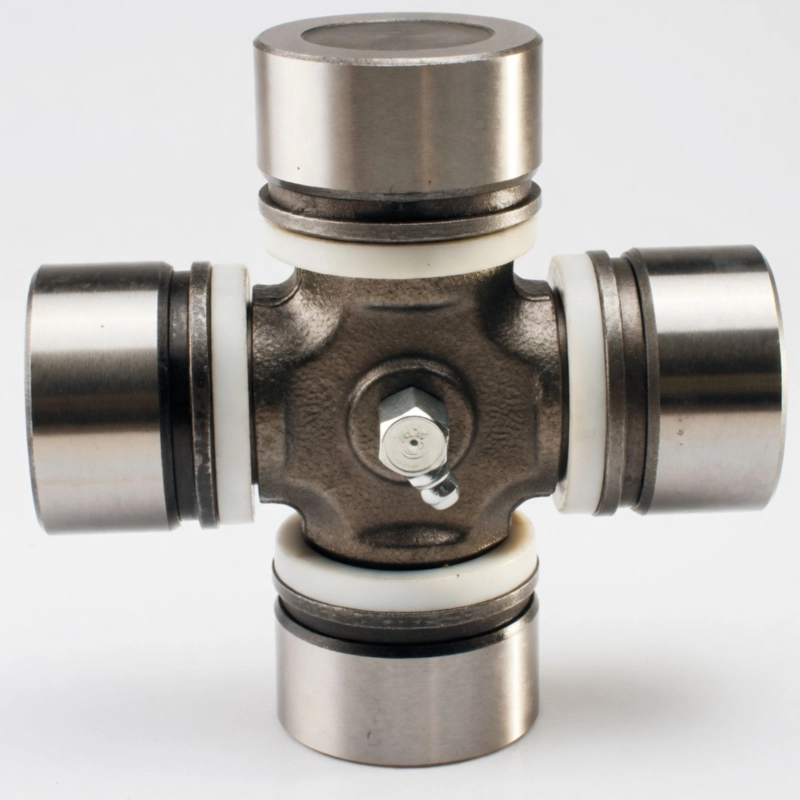
Cái trunnion spider body is forged from medium-carbon alloy steel conforming to specifications equivalent to 20CrMnTi or 20MnCr5. After rough machining, the component undergoes carburizing and case hardening to achieve a surface hardness in the range of 58–62 HRC, with a case depth of approximately 0.8–1.2 mm. The hardened case resists needle-roller contact fatigue and abrasive scoring, while the softer core (typically 30–40 HRC) maintains toughness against impact loading during rough-road operation. Surface roughness of the trunnion journals is ground to Ra ≤ 0.4 µm, ensuring minimal bearing-cup wear and consistent grease film maintenance throughout the service life.
Cái bearing cups are precision-turned from case-hardening steel and ground to meet tight bore diameter tolerances of ±0.005 mm, providing accurate press-fit retention in the yoke bore without risk of spinning or loosening under torque reversal. Integral lip seals or labyrinth seals — depending on the specific GUIS model — use nitrile rubber (NBR) compounds rated for continuous service between −40°C and +120°C, suitable for the full range of climatic conditions encountered across Colombia’s diverse geography, from cold Andean nights above 2,500 m to humid lowland heat near the Pacific and Caribbean coasts.
6. ISUZU GUIS Universal Joint’s Application Scenarios
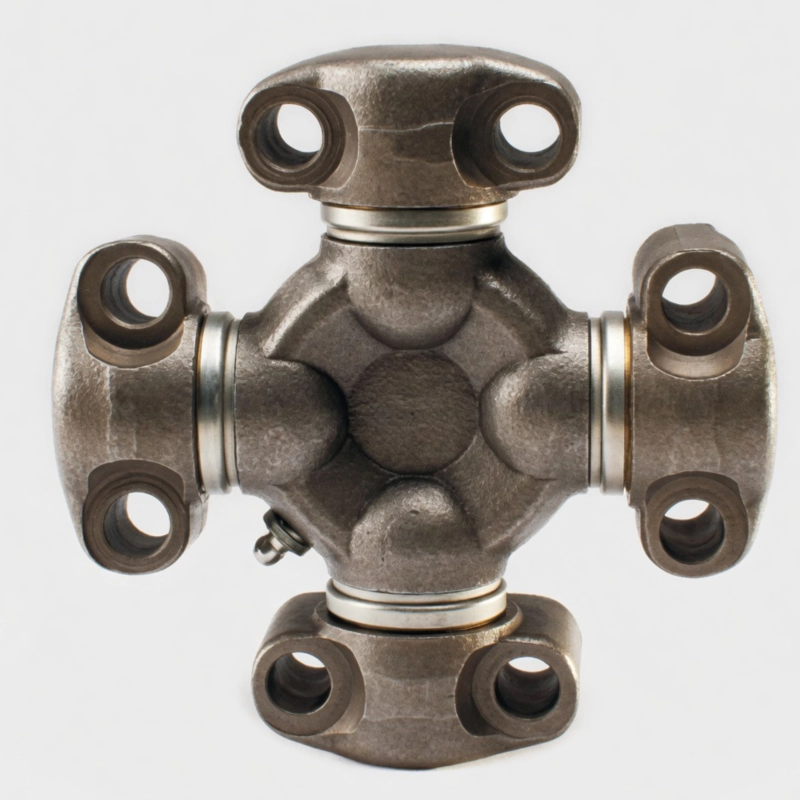
The ISUZU GUIS Universal Joint series covers a wide range of powertrain and steering applications. Below are the primary use cases where these joints deliver the most value.
ISUZU NKR / NPR Light-to-Medium Truck Drivelines
In NKR and NPR truck drivelines — among the most common urban delivery and cargo vehicles in Colombia’s cities — the propeller shaft U-joint must handle repeated load cycles during city stop-and-go driving. Models such as GUIS51 Và GUIS56 (D=23.82 mm, L=61.3 mm) are direct fitments for the front and rear propeller shaft sections of these platforms, providing smooth torque delivery even when the driveshaft angle shifts under loaded suspension deflection on uneven urban roads.
Construction & Infrastructure Equipment
ISUZU-powered construction vehicles — including dump trucks, mixer trucks, and platform vehicles used on Colombian infrastructure projects — operate under severe drivetrain stress. The larger members of the series, particularly GUIS67 (D=56 mm, L=173.9 mm) and GUIS68 (D=50 mm, L=155 mm), are designed to handle the elevated peak torques generated during loaded climbs, abrupt gear engagement, and power take-off operations common at construction sites along the country’s expanding road network.
Agricultural & Rural Transport
In agricultural regions such as the coffee-growing zones of Huila and Nariño, or banana and flower export areas in Antioquia and the Urabá region, ISUZU ELF and FSR trucks serve as the primary freight movers. Rural track roads impose severe lateral and vertical loading on the driveline. GUIS series joints with their robust case-hardened construction and sealed bearing assemblies withstand the mud, water, and grit exposure that would rapidly degrade lower-grade universal joints after only a few thousand kilometres.
Steering Column & Intermediate Shaft Applications
Certain smaller-diameter members within the GUIS range — including GUIS59 (D=20.5 mm, L=56.6 mm) and GUIS63 (D=22.06 mm, L=62.5 mm) — function as steering universal joints hoặc khớp nối vạn năng của trục lái components in the ISUZU steering system. These joints transmit driver steering input from the upper steering column through the intermediate shaft to the steering gear or rack, accommodating the angular offset between the column and the gear housing. Worn steering U-joints are a common cause of play and vibration felt through the wheel on older ISUZU vehicles.
Inter-Axle & Transfer Case Connections
On heavier ISUZU FRR and FVM platforms equipped with tandem rear axles or transfer boxes, intermediate shafts connecting the primary differential to the secondary axle unit require robust U-joints capable of continuous duty at moderate angles. The mid-range GUIS series members — such as GUIS55 (D=42 mm, L=125 mm) and GUIS60 (D=49.2 mm, L=148.38 mm) — fill this role, offering sufficient journal area to distribute bearing loads across the needle-roller or plain bearing interface without exceeding material fatigue limits during sustained highway operation.
7. Tuân thủ quy định và tiêu chuẩn ngành
Universal joints used in commercial vehicles are subject to both general mechanical safety standards and sector-specific vehicle regulations that vary by country. Understanding these requirements is essential for fleet operators, importers, and workshop technicians ensuring legal compliance and vehicle roadworthiness.
Colombia (INVIAS / Ministerio de Transporte): In Colombia, vehicle maintenance requirements — including drivetrain component integrity — fall under the framework established by the Ministerio de Transporte and technical inspection bodies. Resolution 3168 of 2002 and subsequent updates govern the Technical Mechanical Inspection (Revisión Técnico-Mecánica) for motor vehicles. Driveline components, including U-joints, are inspected for excessive play, abnormal noise, and leakage. A worn or failed universal joint will result in a failed inspection. Using OEM-specification parts such as the GUIS series ensures these inspection criteria are met.
ISO 8590 / DIN 808: The design geometry and dimensional tolerances for universal joints are governed internationally by ISO 8590 (universal joints — Part 1) and the DIN 808 standard (Kardangelenke — cardan joints). The GUIS series dimensional parameters are consistent with these standards, enabling interoperability with SAE and ISO-standard yokes used in aftermarket and fleet applications.
SAE J901 & ANSI/ASME Standards: For applications where ISUZU trucks are used in North American-influenced industrial environments or where driveline assemblies are sourced from the US parts market, SAE J901 provides the reference geometry for universal joints. The GUIS series cross-references to SPICER and GKN joint families confirm dimensional alignment with these benchmarks.
European Union (ECE-R79 / Directive 2003/37/EC): For ISUZU vehicles registered or exported to EU member states, steering system regulations under ECE Regulation No. 79 require that the steering column and its associated joints — including the steering universal joint — meet specific play and failure-mode requirements. Components must not exhibit excessive backlash that could compromise steering precision. The GUIS steering U-joints are manufactured to tolerances consistent with these requirements.
Brazil (CONTRAN / DENATRAN ABNT standards): In Brazil — a major ISUZU market neighboring Colombia — ABNT NBR 14400 and related CONTRAN resolutions govern periodic technical inspection (vistoria veicular). Drivetrain integrity, including universal joint condition, is assessed during these inspections. Importers and distributors operating in the broader Andean and Mercosur trade area should ensure spare parts comply with the standards applicable in each destination country.
8. Về chúng tôi
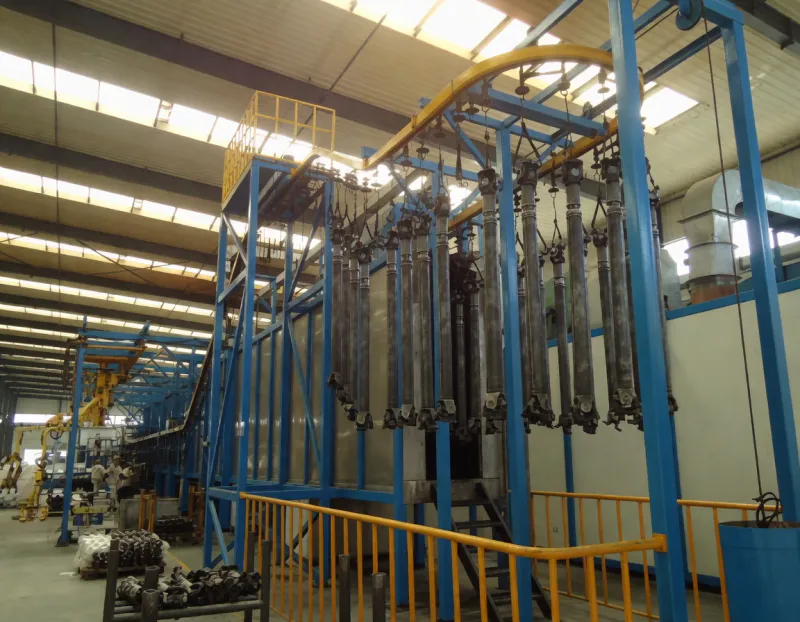
We are a specialist manufacturer and global supplier of automotive transmission components, with a core focus on universal joints, wheel hubs, axles, and related drivetrain parts for Japanese, Korean, and European commercial vehicle platforms. Our production facility operates to ISO 9001-certified quality management processes, combining advanced CNC machining centers, automated heat-treatment lines, and comprehensive dimensional inspection equipment including coordinate measuring machines (CMM), surface roughness testers, and microhardness testing instruments.
With decades of accumulated experience in ISUZU OEM cross-reference development, our engineering team maintains an active parts compatibility database updated against the latest ISUZU parts catalogues.
Xưởng

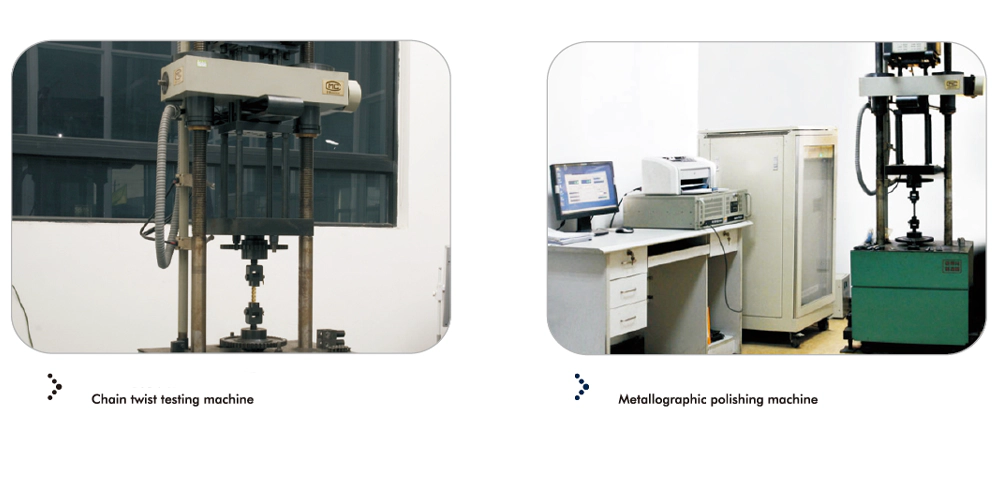
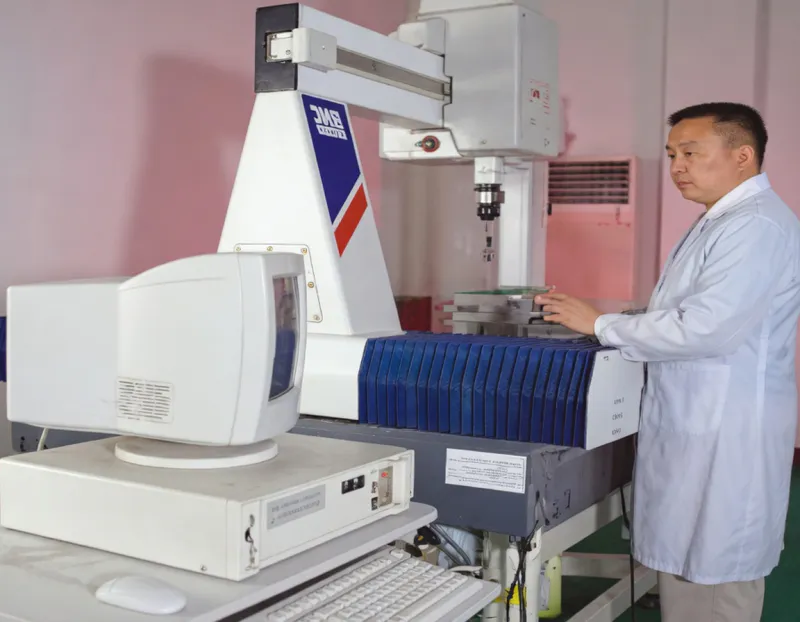
9. Sản phẩm liên quan — Giải pháp hệ thống truyền động hoàn chỉnh
The ISUZU GUIS Universal Joint works as part of a broader drivetrain assembly. To maximize system reliability and simplify procurement, we offer the full range of compatible drivetrain components from a single source.
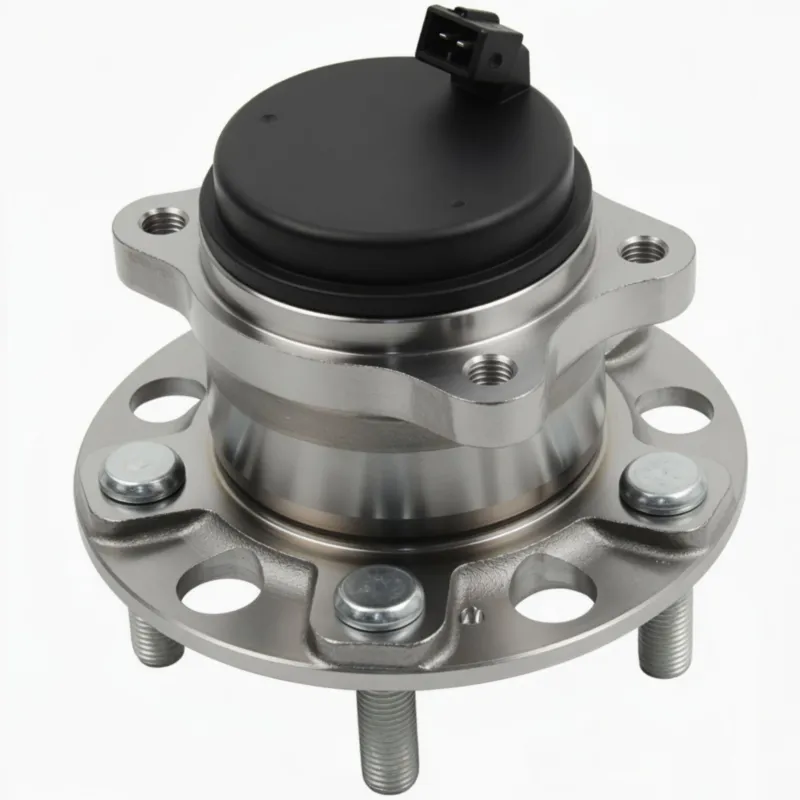
Bộ trục bánh xe
A worn or poorly matched wheel hub bearing creates axial play that places secondary stress on the adjacent universal joint in the driveline. Our Wheel Hub products are matched to ISUZU axle specifications, ensuring the driveline assembly functions as an integrated system. Sourcing the hub unit alongside the U-joint from one supplier eliminates compatibility guesswork and simplifies warranty management for fleet workshops in Colombia and across South America.
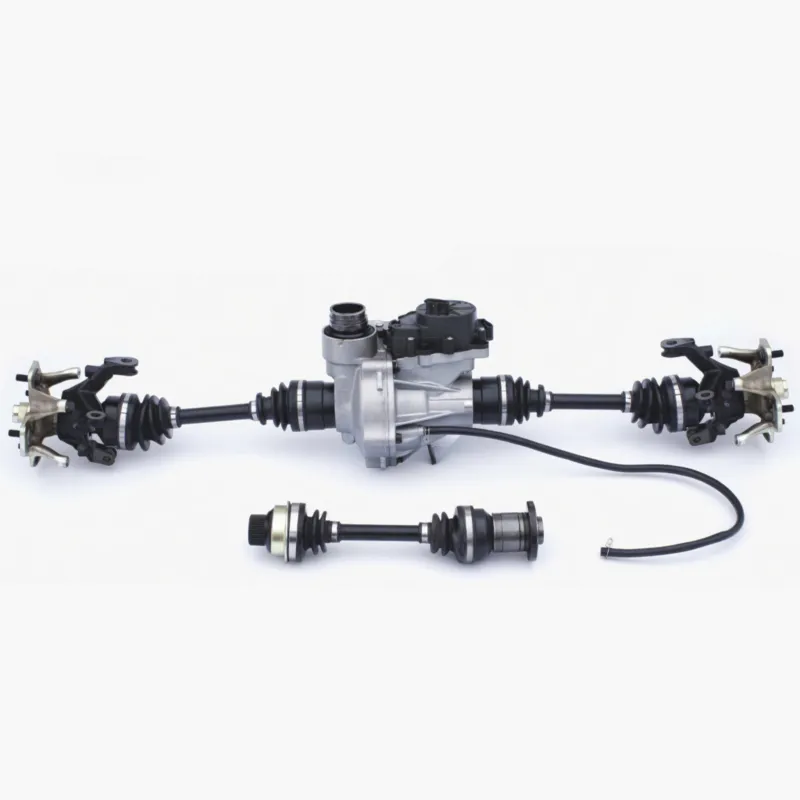
Trục bánh xe
Axle shafts and universal joints are interdependent components. A cracked or twisted axle shaft will transmit torsional shock loads directly to the U-joint, accelerating its wear cycle. Our axle shaft range includes ISUZU NKR, NPR, and FRR rear axle shafts, allowing customers to address root-cause drivetrain failures comprehensively rather than replacing only the visible failed part. One-stop supply of universal joints, axles, and wheel hubs reduces total acquisition cost and improves workshop turnaround time for fleet operators managing large ISUZU truck fleets across Colombian provinces.
Câu hỏi thường gặp
Biên tập viên: PXY