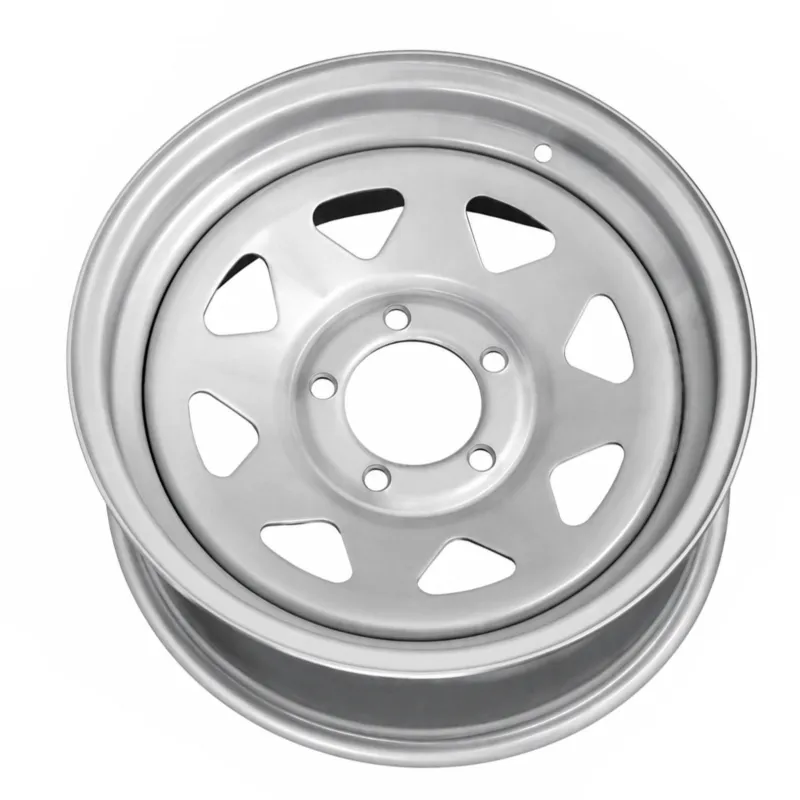
EP-Trailer Wheel — Europe
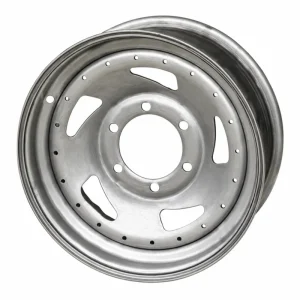
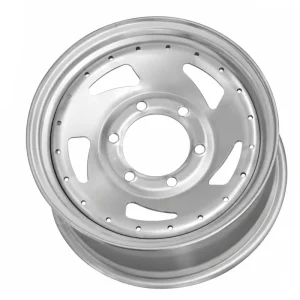
The EP-Trailer Wheel Europe series is a focused range of steel trailer wheels engineered to the dimensional standards prevalent in European light trailer, caravan, boat trailer, and utility trailer applications. Covering 13-inch and 14-inch nominal rim diameters with widths of 4 inches, 4.5 inches, and 5 inches, these trailer wheels are dimensioned to the PCD patterns most common in the European trailer market — 98 mm, 115 mm, 130 mm, and 140 mm bolt circles.
Colombian importers and trailer operators working with European-specification hubs will find this series particularly relevant, as the 13×4, 13×4.5, and 14×5 size configurations cover the most common trailer wheel sizes used on light single-axle and tandem-axle trailers that are increasingly popular for agricultural produce transport, small equipment hauling, and recreational towing on Colombia’s expanding road network. With 4-bolt and 5-bolt configurations available across multiple PCD options — including the widely adopted 130 mm 4-bolt standard and the 140 mm 5-bolt configuration common on heavier-duty 14-inch trailer applications — procurement teams can source the correct replacement trailer wheel without adapting or retrofitting hub interfaces. All wheels are manufactured to ISO 9001 quality management standards with production validation covering runout, dynamic balance, weld penetration, and air leakage to ensure every unit performs reliably in service.
EP-Trailer Wheel — Europe
Precision Steel Trailer Wheels Built to European Hub Standards — 13-Inch and 14-Inch Series
1. Technical Parameter Table — EP-Trailer Wheel Europe Series
| Part No. | Size | Bolt Qty. | PCD (mm) | Center Hole Dia. (mm) | Offset (mm) | Vent Hole | Rim Width (in) | Dia. (in) |
|---|---|---|---|---|---|---|---|---|
| JG41J01 | 13×4 | 4 | 130 | 85 | 20 | 16 | 4 | 13 |
| JG41J04 | 13×4 | 4 | 98 | 58.5 | 30 | 12 | 4 | 13 |
| JG41J02 | 13×4 | 4 | 115 | 85 | 0 | 12 | 4 | 13 |
| JG41J03 | 13×4.5 | 4 | 130 | 85 | 20 | 12 | 4.5 | 13 |
| JG07J02 | 14×5 | 5 | 140 | 94 | 0 | 12 | 5 | 14 |
| JG07J03 | 14×5 | 5 | 140 | 94 | 20 | 12 | 5 | 14 |
| — All SKUs — | 13–14 in. | 4 / 5 | 98–140 | 58.5–94 | 0 / 20 / 30 | 12 / 16 | 4–5 | 13–14 |
| Construction | Disc + Rim roll-formed steel, resistance welded assembly | |||||||
| Material Grade | High-tensile steel — yield strength ≥ 340 MPa | |||||||
| Surface Treatment | Electrophoretic primer + topcoat, salt spray resistance ≥ 480 hrs | |||||||
| Runout (radial) | ≤ 1.0 mm (100% in-line inspection) | |||||||
| Dynamic Balance | ≤ 60 g·cm residual imbalance (100% in-line inspection) | |||||||
| Applicable Tyre Size | 155/80R13, 165/70R13, 165/80R13, 175/80R13; 175/65R14, 185/65R14 | |||||||
| Quality Cert. | ISO 9001:2015 — full production traceability | |||||||
2. Five Key Advantages of the EP-Europe Trailer Wheel Series
1. Multiple PCD Options for Broad Hub Compatibility
Four distinct PCD configurations — 98 mm, 115 mm, 130 mm, and 140 mm — cover the full spectrum of European light trailer hub standards within a single product family. The 130 mm PCD 4-bolt pattern dominates European single-axle light trailer production and is found on a vast installed base of boat trailers, garden equipment trailers, and small box trailers imported into Colombia. The 98 mm 4-bolt pattern is prevalent on older and lighter European trailer designs with smaller hub assemblies, while the 115 mm 4-bolt covers a significant segment of medium-duty utility trailers. The 140 mm 5-bolt pattern scales to heavier-duty 14-inch trailer applications where higher load capacity and greater stud-to-centre distance are required for improved clamping force distribution.
2. Precisely Controlled Offset for Correct Track Width and Bearing Load
Offset values of 0 mm and 20 mm are offered across the part number range, along with a 30 mm offset variant for specific hub geometries encountered in the JG41J04 configuration. Correct offset is not a cosmetic parameter — it directly determines the scrub radius at the trailer spindle, which affects tyre wear, steering stability on towed combinations, and the bending moment applied to the trailer spindle bearing. Zero offset centres the wheel symmetrically on the spindle, minimising bearing side load, while positive offsets of 20 mm and 30 mm position the tyre further inboard to achieve specific track widths or to clear trailer frame and fender structures on particular trailer body designs common in the Colombian agricultural and marine towing market.
3. Optimised Vent Hole Configuration for Brake Temperature Management
Vent hole counts of 12 and 16 are specified across the EP-Europe range, with the 16-vent variant on the JG41J01 providing increased disc ventilation area for applications where drum brake heat dissipation is more demanding — such as mountain descent towing on Colombia's Andean routes where sustained braking generates significant thermal load at the trailer drum. The 12-vent configuration balances disc structural rigidity with adequate airflow for the majority of light trailer duty cycles. Both configurations are sized and positioned to maintain adequate disc cross-section for fatigue resistance while providing the brake cooling benefit that reduces drum and lining degradation during repeated braking events.
4. Steel Construction for Durability and Repairability in Developing Markets
Unlike aluminum trailer wheels, which require specialised repair equipment and cannot be safely straightened after impact damage, the heavy duty steel construction of the EP-Europe series is repairable through conventional workshop equipment available throughout Colombia and Latin America. Steel resists the pitting corrosion that can compromise aluminium alloy integrity in coastal or tropical humid environments — conditions prevalent across Colombia's Pacific coast, Caribbean coastal regions, and humid Amazonian lowland areas. When a replacement trailer wheel is needed, steel construction maintains its structural properties after repainting, making it the practical choice for operators working far from specialist trailer dealers with limited access to aluminium wheel replacement stock.
5. Validated Production Quality with International Certification
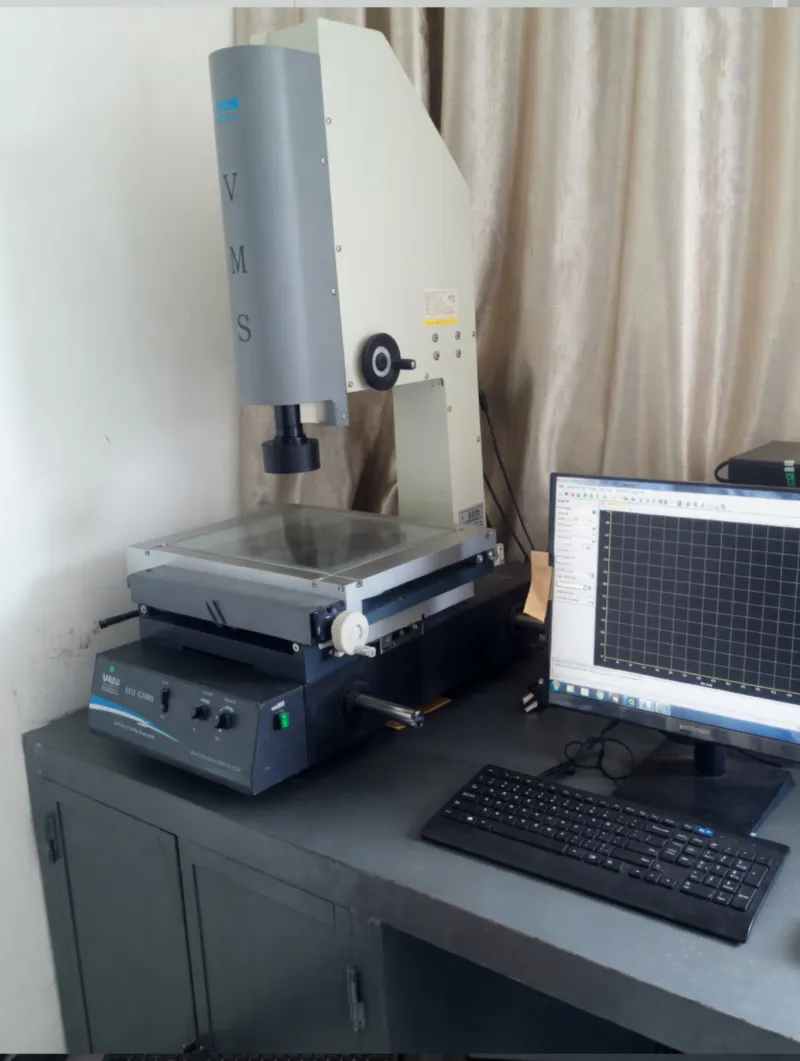
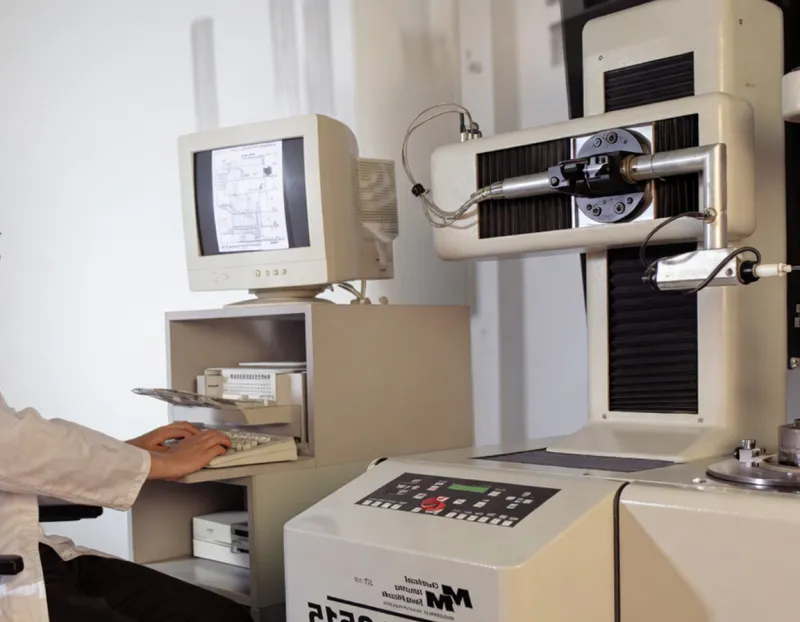
Every trailer wheel in this series is produced under an ISO 9001 certified quality management system with 100 percent in-line inspection covering dimensional runout, dynamic balance, weld penetration testing, and air leakage verification. Production equipment includes automated balance inspection, CMM dimensional measurement capability, and salt spray corrosion testing that verifies the paint and surface treatment system's resistance to the humid and coastal conditions typical of Colombian operating environments. This quality infrastructure means that each spare trailer wheel and each new-build trailer wheel for sale through Colombian distributors carries validated performance data rather than estimated characteristics.
3. How a Steel Trailer Wheel Functions
A trailer wheel performs several simultaneous mechanical roles that are often underappreciated until a component fails. At the most fundamental level, the wheel provides the structural bridge between the trailer spindle hub and the tyre — transmitting the trailer's static weight load downward into the tyre contact patch, and transmitting dynamic braking forces from the tyre into the hub, axle, and ultimately the trailer frame structure. The disc-and-rim construction used across the EP-Europe series consists of two rolled steel components joined by circumferential resistance welding: the rim provides the cylindrical tyre mounting surface including the bead seats, drop well, and safety humps that retain the tyre bead under partial deflation; the disc provides the hub mounting face with the bolt holes, centre bore, and vent apertures.
When the trailer wheel is correctly mounted on the spindle hub using the proper lug nut type and torque, the clamped assembly transfers braking force through friction at the disc-to-hub contact face rather than through shear loading of the wheel studs alone. This is why centre hole diameter accuracy — 58.5 mm, 85 mm, or 94 mm depending on the part number — is critical: the centre bore pilots the wheel precisely onto the hub, ensuring the disc face seats fully and evenly before the lug nuts are torqued down. An imprecise centre bore leaves the wheel inadequately supported, concentrating stress at the bolt holes and accelerating fatigue cracking. For trailer wheels operating in Latin America where rough road surfaces impose repeated impact loads on the rim and disc assembly, this precision of manufacture directly determines service life.
4. Material Construction of the EP-Europe Trailer Wheel
The EP-Europe trailer wheel series employs a disc-and-rim construction using high-tensile steel throughout. The rim is roll-formed on precision forming equipment from steel coil with a minimum yield strength of 340 MPa, processed to achieve the tyre bead seat diameter, drop centre well depth, and safety hump geometry that ensures secure tyre retention under the partial deflation scenarios mandated by ETRTO (European Tyre and Rim Technical Organisation) dimensional standards. The disc is press-formed from a heavier-gauge steel blank, stamped to the bolt hole pattern, centre bore, and vent hole configuration of each specific part number, with the stamped dimensions held to the tolerances required for correct hub piloting and lug nut seating across the variety of European trailer axle designs that appear in the Colombian market.
The weld joining the formed disc to the rolled rim uses resistance welding parameters developed and validated to ensure full penetration without excessive heat input that would compromise the adjacent steel mechanical properties. Following welding, each trailer wheel undergoes a surface preparation process — shot blasting or chemical phosphating — before receiving an electrophoretic primer coat and topcoat paint system. The resulting finish provides corrosion protection rated at a minimum of 480 hours to first corrosion in the salt spray test per ISO 9227, a meaningful durability threshold for trailer wheels operating in Colombia's coastal regions, humid valleys, and areas with road salt exposure during maintenance operations. The complete steel construction also makes these wheels fully compatible with standard tyre mounting equipment found at tyre workshops throughout Colombia, unlike specialised alloy trailer wheels that may require equipment not universally available outside major urban centres.
5. Application Scenarios for European-Spec Trailer Wheels
Boat and Marine Trailers
The 13-inch trailer wheel configurations — particularly the JG41J01 and JG41J02 on 130 mm and 115 mm 4-bolt hubs — are among the most widely used replacement trailer wheel sizes for boat trailers throughout Europe and Latin America. Colombian coastal fishing communities, marina operators in Cartagena and Santa Marta, and recreational boating clubs on the Embalse de Guatapé and larger reservoirs all operate European-origin boat trailers that require these exact specifications for replacement trailer wheel procurement. The corrosion-resistant paint system is especially valuable in saltwater proximity environments.
Light Agricultural Produce Trailers
Colombia's fresh produce supply chain relies on a large fleet of small single-axle trailers used for transporting coffee, flowers, fruit, and vegetables from highland farms to collection points and market roads. Many of these trailers, particularly those imported from European suppliers to smallholder cooperatives in Antioquia, Cundinamarca, and Nariño, are fitted with 13×4 or 13×4.5 trailer wheels on 130 mm 4-bolt hubs. The availability of an exact heavy duty trailer wheel replacement through a single reliable supplier reduces the downtime that results from sourcing mismatched or incorrect size trailer wheels from local aftermarket channels.
Caravan and Recreational Towing
The 14×5 configurations on the 140 mm 5-bolt hub — JG07J02 and JG07J03 — address the replacement trailer wheel requirements of European-manufactured caravans and camper trailers that are becoming more common in Colombia's expanding leisure tourism sector. With Colombia's growing network of campsites and designated tourist routes through the coffee region, Tatacoa Desert, and Caño Cristales, demand for spare trailer wheel mounts and replacement trailer wheels for light recreational trailers is increasing steadily among Colombian tourism operators and private buyers.
Small Equipment and Machinery Trailers
Construction equipment dealers, power tool rental companies, and small machinery distributors throughout Colombia use single-axle and tandem-axle trailers for transporting generators, compressors, welding equipment, and small plant machinery. Many of these trailers originate from European suppliers and carry 13-inch or 14-inch trailer wheels on 115 mm, 130 mm, or 140 mm bolt circles. The availability of vehicle tires trailer wheel sets — matched tyre and wheel assemblies — from a single supplier simplifies the procurement process for these operators and reduces the time their trailers are off the road waiting for compatible replacement trailer wheel components.
Trailer Rental and Fleet Maintenance
Trailer rental operators and logistics companies managing fleets of light trailers face recurring demand for trailer wheels and tires as scheduled maintenance items. Stocking the JG41 series in multiple PCD variants allows a single inventory line to serve multiple trailer brands and models within the fleet, reducing the complexity of managing separate part numbers for each trailer type. The standardised 13×4 and 13×4.5 size range also means that wheels can be rotated between trailers within the fleet to equalise wear, a practical advantage for fleet maintenance managers seeking to maximise asset utilisation across their trailer inventory.
6. Regulatory Standards and Compliance Requirements
Trailer wheels entering service across Colombian, European, and international markets must satisfy a layered set of technical standards and regulatory requirements that govern dimensional compatibility, structural performance, surface treatment durability, and documentation. Procurement teams managing trailer wheel imports into Colombia or sourcing replacement trailer wheel components for European-specification trailers operated locally should be aware of the following regulatory framework.
ETRTO (European Tyre and Rim Technical Organisation): The defining dimensional standard for European trailer wheel and rim design. ETRTO publishes the Engineering Design Information (EDI) standards that specify bead seat diameter, drop centre geometry, flange height, safety hump dimensions, and maximum inflation pressure for each wheel size designation. The 13×4, 13×4.5, and 14×5 size codes in the EP-Europe series directly reference ETRTO size designations, ensuring dimensional interchangeability with ETRTO-compliant tyres. Colombian operators importing trailers with ETRTO-specified wheels should source replacement trailer wheels that explicitly reference ETRTO dimensional compliance to avoid bead seat incompatibility.
EU Directive 2007/46/EC and its successor Regulation (EU) 2018/858: European vehicle and trailer type approval frameworks require that trailers placed on the EU market carry approved components including wheels, with dimensional and load-rating documentation forming part of the vehicle's type approval file. Trailer wheels imported for use on EU-approved trailer designs must conform to the approved specification. Colombian importers of EU-type-approved trailers should verify that replacement trailer wheel parts they source maintain conformance with the original type approval parameters.
Resolución 3500 de 2005 (Colombia — RUNT): Colombia's national vehicle registry requires technical documentation for automotive and trailer components. When trailer wheels are imported for fleet vehicle registration or replacement parts management, importers must maintain specification documentation confirming load ratings and dimensional compliance with the original vehicle registration. Our EP-Europe series is supplied with full technical data sheets supporting Colombian import and registry requirements.
ISO 9001:2015: All production and quality inspection activities governing the EP-Europe trailer wheel series are performed under an ISO 9001 certified quality management system. Certification documentation is available for customer supplier qualification processes, supporting the vendor approval requirements of Colombian fleet operators and trailer manufacturers operating formal quality systems.
7. About Our Steel Wheel Manufacturing Capability
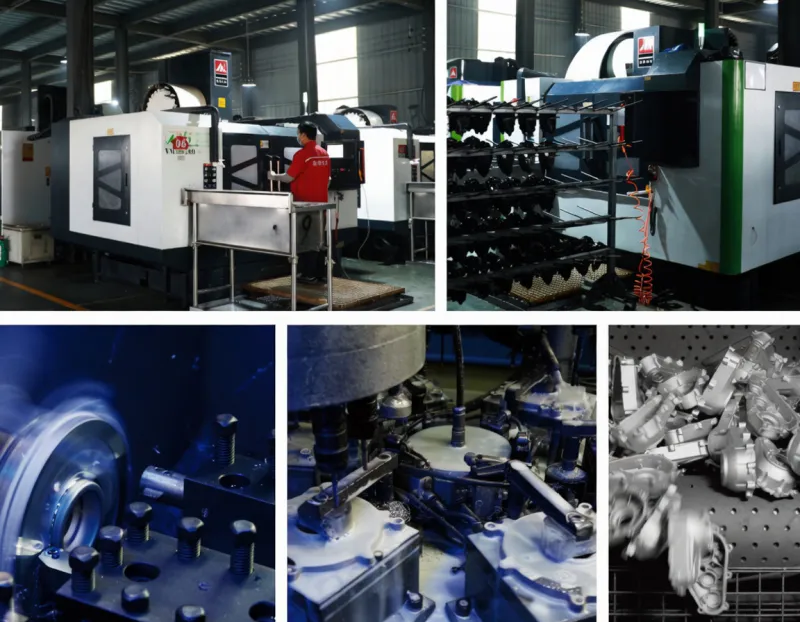
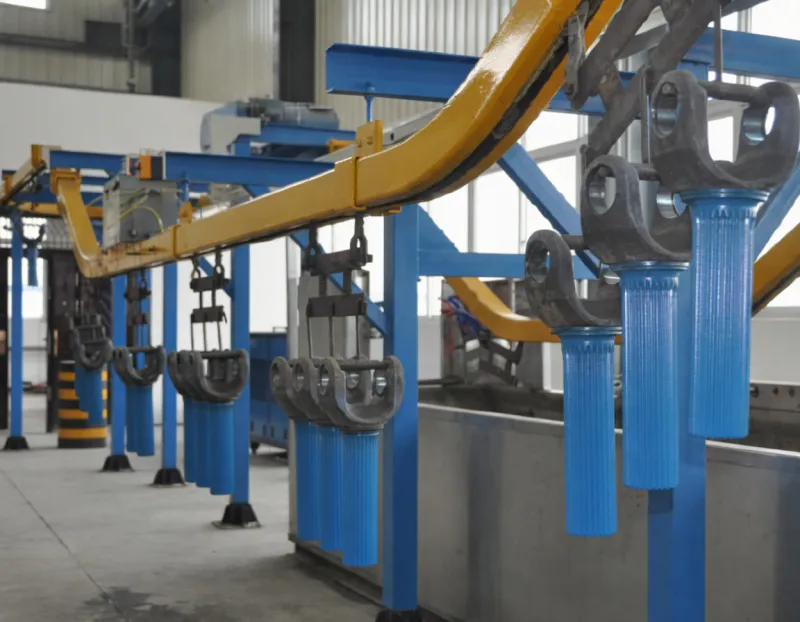
Our wheel manufacturing operation was founded with a specific focus on roll-formed steel wheel technology and has developed into one of the most comprehensive steel wheel production facilities in the world, covering passenger car wheels, light commercial wheels, heavy truck trailer wheels, and the light trailer wheels represented by this European series. The production facility operates dedicated trailer wheel disc lines and rim roll-forming cells equipped with tooling sourced from Germany, Sweden, Spain, and Japan — countries that represent the leading edge of roll-forming technology development. Automated balance inspection equipment, CMM dimensional measurement systems, and a national-level testing centre with cornering fatigue, radial fatigue, and impact test capability together ensure that every trailer wheel produced carries validated performance data.
The engineering team responsible for this European trailer wheel series includes metallurgical engineers, process engineers with backgrounds in European OEM supply, and quality specialists with experience in ETRTO dimensional compliance testing and European vehicle type approval documentation.
Workshop
8. Compatible Axle and Hub Components
A trailer wheel for sale as a standalone component addresses only part of the drivetrain equation. The wheel's performance depends equally on the quality and dimensional accuracy of the axle hub it mounts on and the spindle that supports the bearing and hub assembly. We produce a coordinated range of trailer axle and hub components that are dimensionally aligned with the EP-Europe trailer wheel series, enabling Colombian trailer manufacturers, importers, and maintenance workshops to source matched components from a single supplier — simplifying procurement, ensuring interface compatibility, and reducing the risk of mismatched parts causing premature wear or unsafe operation.
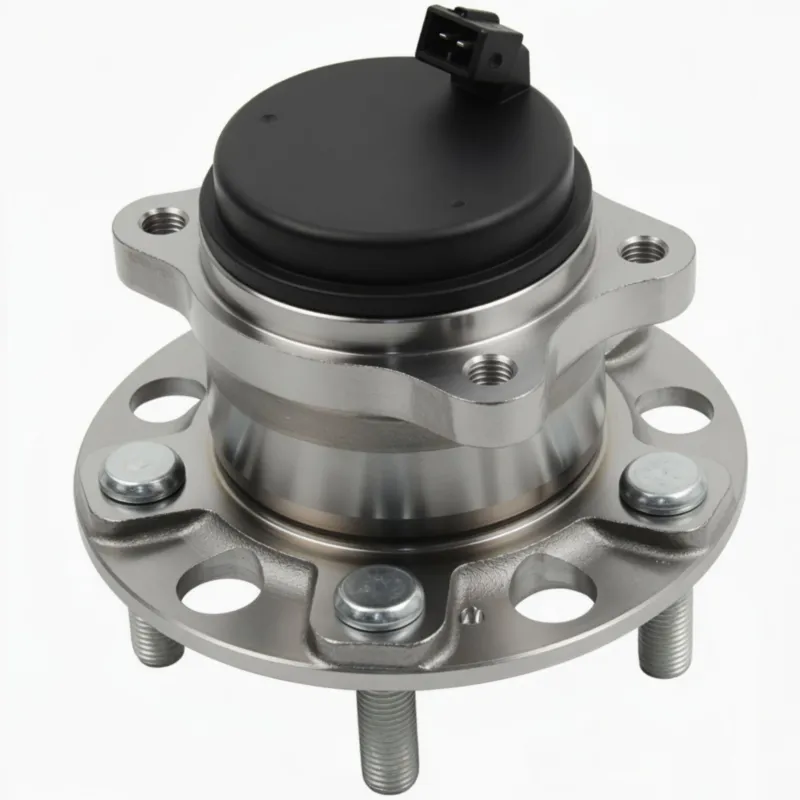
Wheel Hub Units
Our Wheel Hubs for light trailer applications are precision-machined to the centre bore diameters and pilot face dimensions that correspond directly with the EP-Europe trailer wheel centre hole specifications — 58.5 mm, 85 mm, and 94 mm. Correct hub-to-wheel interface geometry ensures the wheel is fully seated and centred before the lug nuts are torqued, distributing clamping force evenly across the disc face and preventing the fretting and micro-movement that causes premature stud hole wear in service. Bearing preloads are set to match the load ratings appropriate for 13-inch and 14-inch light trailer axle applications.
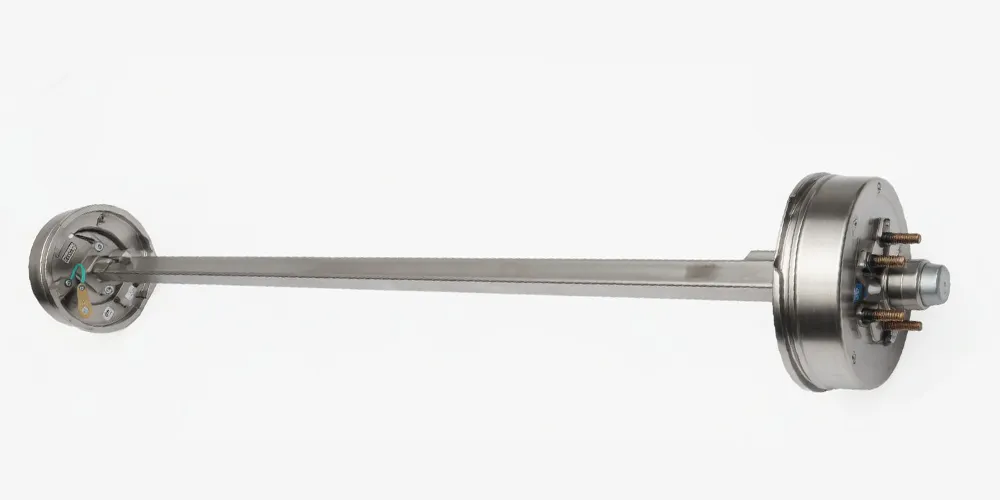
Trailer Axle Beam and Spindle
The Trailer Axle beam and spindle assembly provides the structural foundation that the hub and trailer wheel mount onto. Our trailer spindles are machined to bearing seat dimensions and spindle nose lengths matched to the bearing types and hub configurations appropriate for the 13-inch and 14-inch trailer wheel load ranges in this series. Sourcing the axle beam, spindle, hub, and trailer wheel from a coordinated supply programme eliminates the interface uncertainty that arises when mixing components from different suppliers with nominally similar but subtly different dimensional standards.
Frequently Asked Questions
Editor: PXY