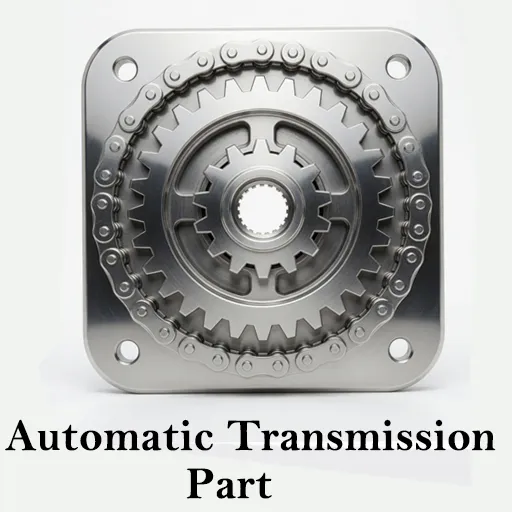
Açıklama
EP-Type B — Bevel Gear European Standard Series | Ratio 1:1 | Pressure Angle 20°
Material: C45 Steel · Type B · Module Range M1–M5 · Tooth Count Z16–Z30
The EP-Type B Bevel Gear European Standard Series is a precision-engineered power transmission solution designed for applications where torque must be redirected at a 90° angle with minimal energy loss and maximum mechanical reliability. Conforming to DIN 868 and ISO 23509 standards, this series covers module sizes from M1 to M5, with tooth counts ranging from Z=16 to Z=30 per mating pair — making it one of the most comprehensive catalogs in its class for industrial, agricultural, and commercial machinery serviced from Colombia and throughout Latin America. The 1:1 ratio configuration delivers perfectly symmetrical load sharing between both mating members, and the 20° pressure angle is the international standard that optimizes tooth strength, smooth engagement, and resistance to undercutting across the full tooth count range.
1. Technical Specifications — EP-Type B Bevel Gear, Ratio 1:1, Pressure Angle 20°
The table below provides the complete dimensional parameters for the EP-Type B Bevel Gear European Standard Series. All dimensions are in millimeters. Columns: M = Module, Z = Number of Teeth, De = Outer (tip) diameter, Dp = Pitch diameter, A = Cone distance, F = Face width, Dn = Bore (hub) diameter, D1 = Bore hole diameter, dm = Mean pitch diameter, Da = Hub diameter, L = Hub length, Dm = Mean cone diameter. On mobile devices, scroll horizontally to view all columns.
| M | Z | De | Dp | A | F | Dn | D1 | dm | Da | L | Dm |
|---|---|---|---|---|---|---|---|---|---|---|---|
| 1 | 16 | 17.4 | 16.0 | 11.2 | 4 | 13.3 | 4 | 16 | 7 | — | 6.7 |
| 19 | 20.4 | 19.0 | 11.8 | 4 | 15.3 | 4 | 18 | 11.5 | — | 6.6 | |
| 22 | 23.4 | 22.0 | 12.8 | 4.7 | 16.3 | 5 | 20 | 11.5 | — | 6.1 | |
| 26 | 27.4 | 26.0 | 13.3 | 5.5 | 20.3 | 5 | 22 | 14.5 | — | 7 | |
| 30 | 31.4 | 30.0 | 16.0 | 6.4 | 20.3 | 5 | 26 | 17.5 | — | 8 | |
| 1.5 | 16 | 26.1 | 24.0 | 18.9 | 6 | 20.3 | 8 | 26 | 12 | — | 12.2 |
| 19 | 30.6 | 28.5 | 21.3 | 7 | 20.3 | 8 | 30 | 14.5 | — | 11.6 | |
| 22 | 35.1 | 33.0 | 22.5 | 7.5 | 25.3 | 8 | 33 | 17 | — | 12.7 | |
| 26 | 41.1 | 39.0 | 23.2 | 8.5 | 28.3 | 8 | 36 | 22 | — | 12 | |
| 30 | 47.1 | 45.5 | 27.2 | 10 | 30.0 | 12 | 42 | 26 | — | 12.1 | |
| 2 | 16 | 34.8 | 32.0 | 23.5 | 8 | 25.3 | 8 | 33 | 15.5 | — | 13.6 |
| 19 | 40.8 | 38.0 | 24.2 | 9 | 25.3 | 8 | 36 | 19.5 | — | 12 | |
| 22 | 46.8 | 44.0 | 27.9 | 10 | 30.3 | 10 | 42 | 23.5 | — | 14 | |
| 26 | 54.8 | 52.0 | 31.4 | 12 | 35.3 | 12 | 48 | 29 | — | 13.7 | |
| 30 | 62.8 | 60.0 | 34.1 | 13 | 40.3 | 12 | 54 | 36 | — | 17 | |
| 2.5 | 16 | 43.5 | 40.0 | 28.1 | 10 | 30.3 | 12 | 40 | 20 | — | 15.2 |
| 19 | 51.0 | 47.5 | 27.1 | 11 | 35.3 | 12 | 42 | 25 | — | 13 | |
| 22 | 58.5 | 55.0 | 30.1 | 12 | 45.3 | 12 | 48 | 31.5 | — | 15.7 | |
| 26 | 68.5 | 65.0 | 33.2 | 15 | 45.3 | 15 | 54 | 36.5 | — | 16 | |
| 30 | 78.5 | 75.0 | 39.0 | 16 | 50.3 | 15 | 64 | 45.5 | — | 20 | |
| 3 | 16 | 52.2 | 48.0 | 31.7 | 12 | 40.3 | 12 | 46 | 23 | — | 18.1 |
| 19 | 61.2 | 57.0 | 36.0 | 13 | 40.3 | 14 | 54 | 30 | — | 17.1 | |
| 22 | 70.2 | 66.0 | 36.9 | 15 | 50.3 | 15 | 58 | 36.5 | — | 17.1 | |
| 26 | 82.2 | 78.0 | 38.4 | 17 | 50.3 | 15 | 64 | 45.5 | — | 18 | |
| 30 | 94.2 | 90.0 | 43.8 | 19 | 60.3 | 20 | 74 | 55 | — | 22 | |
| 3.5 | 16 | 60.9 | 56.0 | 36.4 | 14 | 45.3 | 15 | 53 | 27.5 | — | 19.8 |
| 19 | 71.4 | 66.5 | 36.9 | 15 | 50.3 | 15 | 58 | 35.3 | — | 18 | |
| 22 | 81.9 | 77.0 | 39.1 | 17 | 55.3 | 15 | 64 | 43.5 | — | 18 | |
| 26 | 95.9 | 91.0 | 42.2 | 20 | 60.3 | 20 | 72 | 52.3 | — | 20 | |
| 30 | 110.0 | 105.0 | 47.3 | 23 | 70.3 | 20 | 82 | 67 | 43 | 22 | |
| 4 | 16 | 69.7 | 64.0 | 44.3 | 15 | 50.3 | 15 | 64 | 32 | — | 25.1 |
| 19 | 81.7 | 76.0 | 44.4 | 18 | 55.3 | 18 | 68 | 40 | — | 22 | |
| 22 | 93.7 | 88.0 | 45.9 | 20 | 60.3 | 18 | 74 | 49 | — | 22 | |
| 26 | 109.7 | 104.0 | 48.0 | 23 | 70.3 | 20 | 82 | 65 | 43 | 22 | |
| 30 | 125.7 | 120.0 | 54.2 | 26 | 80.3 | 25 | 94 | 76 | 49 | 25 | |
| 4.5 | 16 | 78.4 | 72.0 | 46.3 | 17.5 | 55.3 | 18 | 68 | 35.5 | — | 25 |
| 19 | 91.8 | 85.5 | 47.3 | 20 | 60.3 | 20 | 74 | 44.6 | — | 25 | |
| 22 | 105.3 | 99.0 | 50.1 | 22 | 70.3 | 20 | 82 | 56 | — | 25 | |
| 26 | 123.3 | 117.0 | 53.2 | 25 | 75.3 | 20 | 92 | 68.1 | 45 | 25 | |
| 30 | 141.4 | 135.0 | 60.0 | 29 | 80.3 | 25 | 105 | 85 | 54 | 28 | |
| 5 | 16 | 87.1 | 80.0 | 48.9 | 18 | 60.3 | 20 | 74 | 42 | — | 25 |
| 19 | 102.1 | 95.0 | 52.2 | 22 | 60.3 | 20 | 82 | 50 | — | 25 | |
| 22 | 117.1 | 110.0 | 58.2 | 24 | 80.3 | 20 | 94 | 68 | 52 | 30 | |
| 26 | 137.1 | 130.0 | 62.7 | 29 | 80.3 | 20 | 105 | 82 | 57 | 30 | |
| 30 | 157.1 | 150.0 | 68.9 | 32 | 80.3 | 30 | 119 | 97 | 63 | 35 |
All dimensions in mm. Material: C45 steel. Ratio 1:1. Pressure angle 20°. Type B configuration.

2. What Is a Bevel Gear?
A bevel gear is a rotary mechanical component with teeth cut on a conical surface, specifically designed to transmit torque and rotation between two shafts whose axes intersect — most commonly at a right angle (90°). Unlike spur or helical gears, which operate between parallel shafts, metal bevel gear assemblies allow machinery designers to change the direction of a drive axis, enabling compact gearbox configurations that would be impossible with parallel-shaft arrangements. This fundamental capability is what makes this type of gear indispensable across so many industries, from automotive differentials and marine propulsion to agricultural machinery and industrial automation.
This EP-Type B Series uses a straight-tooth (straight bevel) design, meaning the tooth trace lines converge toward the apex of the pitch cone. The straight-bevel design is valued for its simplicity of manufacture, ease of alignment during installation, and reliable performance in low-to-moderate speed applications. The 20° pressure angle across this series is the globally accepted standard that provides an excellent balance of tooth load capacity, contact ratio, and resistance to interference across the module and tooth count range it covers.
For engineers and procurement teams in Colombia sourcing custom bevel gears or standard catalog sizes for machinery maintenance, the EP-Type B series offers a complete, off-the-shelf solution with direct DIN-standard compatibility — eliminating bespoke manufacturing lead times for the most common size requirements.
3. Ürünün Beş Temel Avantajı
① DIN/ISO Standard Conformity
Every dimension in the EP-Type B series — outer diameter De, pitch diameter Dp, bore diameter Dn, cone distance A, face width F — is calculated and manufactured in accordance with DIN 868 and ISO 23509. This means direct interchangeability with all DIN-compatible machinery and replacement parts databases, eliminating the costly adaptation work that non-standard gears require. For Colombian industrial operations maintaining European-origin equipment, standard conformity translates directly into reduced downtime and simplified procurement across the full bevel gear set range.
② C45 Steel for Superior Strength
The material selection of C45 medium-carbon steel — combined with appropriate heat treatment — delivers a proven combination of surface hardness and core toughness that is specifically suitable for high power metal bevel gears in moderate-to-heavy load applications. C45 is universally recognized in the DIN framework (equivalent to AISI/SAE 1045) and provides the machinability needed for tight tooth profile tolerances while still achieving the surface hardness required to resist pitting, wear, and tooth root fatigue. This is the same grade used in high-cycle industrial gearboxes worldwide.
③ Complete Module Range M1–M5
A single product family covering five module sizes — from the compact M1 (suited for small metal bevel gear Ve mini metal bevel gear applications in precision instruments and light automation) through to M5 (for heavy-duty machinery and agricultural power transmission) — means that engineers can source matched gear pairs for almost any torque requirement from a single catalog. This breadth also supports stocking programs for distributors, keeping safety stock lean while covering a wide cross-section of customer applications.
④ Precision-Cut Tooth Profile
The 20° pressure angle tooth profile is generated using form-milling or gear-cutting methods that hold tooth form accuracy to DIN 8 or better across all module sizes. Accurate tooth geometry directly controls the noise level, load distribution across the face width, and the transmitted vibration of the gear pair in service. For applications in food processing, medical equipment manufacturing, and instrumentation — sectors present in Colombia’s growing industrial economy — the noise and precision characteristics of the EP-Type B series meet the quality demands these industries require.
⑤ 1:1 Ratio for Symmetrical Load Sharing
The equal ratio configuration — where both mating gears are identical in tooth count for any given module — simplifies inventory management enormously: one part number serves as both driver and driven gear. It also ensures perfectly symmetrical Hertz contact stress distribution, maximizing the assembly’s fatigue life under cyclic loading. For metal bevel gear application scenarios requiring speed-direction change without speed step-up or step-down, the 1:1 ratio is the standard specification in drive designs, construction machinery, textile equipment, and various industrial transmission systems.
4. How Does a Metal Bevel Gear Work?
Understanding how these gears work starts with the geometry of the pitch cone. Each mating gear has a pitch cone — an imaginary cone whose apex sits at the intersection of the two shaft axes. The tooth flanks are formed on the surface of this pitch cone, and when two correctly meshing gears rotate, their pitch cones roll together without slipping, just as two spheres of different sizes would roll against each other if placed tip-to-tip. The tooth profiles are involute curves developed on a back cone — a plane tangent to the pitch cone at the large end of the teeth — which gives the teeth their distinctive tapered appearance from large end to small end.
In this EP-Type B Series at 1:1 ratio, both gears share the same cone angle (45° each, since 45° + 45° = 90° for a right-angle mesh). This geometric symmetry means that the relative sliding velocities at the tooth flanks are equalized throughout the mesh cycle, contributing to more uniform wear and lower operating temperatures compared to non-equal-ratio bevel pairs. The 20° pressure angle generates a tooth normal force with a significant radial component, which must be reacted by the shaft bearings — making correct bearing selection and housing design essential to long gear life.
In practice, the driver gear receives torque from a prime mover — motor, engine, or upstream gearbox — and its rotating teeth push on the mating gear teeth, transmitting torque to the driven shaft at 90° to the input. The face width (F dimension in the table) determines how many tooth flanks are simultaneously in contact at any moment, directly influencing load capacity and the smoothness of the power transmission. This series specifies face widths proportional to module size, following the DIN recommendation that face width should not exceed one-third of the cone distance, which optimizes the balance between capacity and alignment sensitivity.
5. Material: C45 Steel — Why It Matters for Bevel Gear Performance
C45 is a normalized or quench-and-tempered medium-carbon steel specified under DIN EN 10083-2, equivalent to AISI/SAE 1045 and JIS S45C. Its carbon content of approximately 0.42–0.50% gives it the fundamental mechanical properties that make it the preferred choice for general-purpose power transmission gears: tensile strength in the range of 700–850 MPa in the normalized condition, rising to 800–1,000 MPa after heat treatment, combined with yield strength and elongation values that allow the gear blank to absorb shock loads without brittle fracture. For gear components subject to cyclic loading in industrial machinery, these properties translate directly into resistance to tooth root fatigue — the mechanism responsible for the majority of in-service gear failures.
The EP-Type B series gears in C45 are typically delivered in a through-hardened or surface-hardened condition depending on module size. Smaller modules (M1–M2.5) can be case-hardened via carburizing or induction hardening to achieve surface hardness of 55–62 HRC while maintaining a relatively tough core; larger modules (M3–M5) are commonly supplied normalized and finish-machined, suitable for applications where moderate surface hardness (20–25 HRC in the normalized condition) is acceptable. For applications requiring superior wear resistance — such as mining machinery or outdoor agricultural equipment operating in abrasive environments — we can supply stainless steel bevel gears or specify surface treatments including phosphating, black oxide, or hard chrome plating on request.
The machinability of C45 is another practical advantage. The bore (Dn dimension) and keyway can be finish-machined to customer specifications after delivery, enabling accurate shaft fitting in workshop conditions. This adaptability makes C45 custom bevel gears a reliable, cost-effective foundation that workshops and OEM manufacturers throughout Colombia and the wider Andean region can confidently machine to their exact driveshaft dimensions.

6. Metal Bevel Gear Application Scenarios
The EP-Type B Series covers a deliberately broad range of metal bevel gear application environments. The following sectors represent the primary use cases where this series excels:
Industrial Gearboxes & Reducers
Right-angle gearboxes for conveyor drives, mixer drives, and packaging machinery form the largest single application segment for this type of gear at M2–M5. In Colombia’s expanding manufacturing sector — including food processing plants in Valle del Cauca and plastic processing facilities around Bogotá — these gearboxes must operate continuously at moderate speeds with reliable lubrication. The EP-Type B series with Z=22 and Z=26 tooth counts at M3–M4 is particularly well-suited to these duty conditions, providing sufficient face width and tooth depth to handle the transmitted torques without excessive noise or wear.
Tarım Makineleri
Rotary tillers, grass cutters, seed drills, and irrigation pump drives all incorporate gear sets to redirect power from PTO shafts to working tools. In Colombia’s agricultural regions — the coffee-growing Eje Cafetero, the cattle-farming Llanos Orientales, and the intensive rice and sugarcane cultivation zones of Córdoba and Meta — agricultural machinery must tolerate seasonal use with minimal maintenance and exposure to soil dust and moisture. The M3.5 and M4 sizes in the EP-Type B series are ideal for these applications, delivering adequate torque capacity in a compact envelope that keeps gearbox housing dimensions manageable for implement manufacturers.
Precision Instruments & RC Models
At the smaller end of the module range — M1 and M1.5 — the EP-Type B series serves applications that require mini metal bevel gear Ve small metal bevel gear performance: scientific instruments, camera gimbal drives, medical device mechanisms, and scale model vehicles. The metal bevel gear for rc car and drone hobbyist market has grown significantly across Latin America, and the M1/Z16 combination (De = 17.4 mm, Dp = 16.0 mm) represents a particularly compact, low-inertia gear that is well-matched to servo-driven mechanisms where response speed and positional accuracy are primary concerns.
Construction & Mining Equipment
Colombia’s active mining sector — gold, coal, and emerald extraction in departments including Boyacá, Cesar, and Antioquia — demands power transmission components that can withstand high shock loads, contaminated lubricant environments, and infrequent maintenance intervals. The M5 sizes in the EP-Type B series, particularly Z=26 and Z=30 combinations, deliver the tooth cross-section area and contact ratio needed for these severe-duty applications. High power metal bevel gears at M5/Z30 (De = 157.1 mm, face width F = 32 mm) can transmit substantial torque at the moderate pitch-line velocities typical of mining auxiliary drives, making them a cost-effective alternative to custom-machined gears for equipment maintenance applications.
Automotive & Workshop Tools
Differential gear assemblies in light vehicles, angle grinders, drill presses, and milling attachments all rely on metal bevel gear set arrangements to change the axis of rotation. In the automotive aftermarket — which is highly active in Colombia’s main cities due to the country’s large fleet of older vehicles — the availability of standard DIN bevel gears enables fabricators and specialist workshops to build or repair bevel gear differentials and axle assemblies without resorting to costly OEM-specific parts. The M2–M3 range covers most light-vehicle and workshop tool applications, with the 1:1 ratio being standard in differential arrangements where equal torque distribution to both driven wheels is the design intent.
7. Regulatory & Standards Framework for Gears and Gearboxes
Power transmission components including bevel gear assemblies and gearboxes are subject to a layered regulatory and standards framework that varies by region and end-use application. Understanding these requirements is important for Colombian importers, machinery manufacturers, and maintenance engineers sourcing metal bevel gear parts for regulated equipment.
Kolombiya: Machinery incorporating gears for use in workplaces falls under the oversight of the Ministerio de Trabajo and must comply with Resolución 0312 de 2019 (Estándares Mínimos del Sistema de Gestión de Seguridad y Salud en el Trabajo). Mechanical hazards from exposed rotating components — including gears — are regulated under the Reglamento Técnico de Trabajo Seguro en Alturas and general occupational safety standards. The Icontec (Instituto Colombiano de Normas Técnicas y Certificación) publishes NTC standards for mechanical components; importers should verify that the applicable NTC standard (if any exists for gear tooth form) is satisfied by the DIN 868 or ISO 23509 documentation provided.
Avrupa Birliği: The Machinery Directive 2006/42/EC requires that machinery incorporating geared power transmission systems meet essential health and safety requirements. Relevant harmonized standards include ISO 6336 (calculation of load capacity of spur and helical gears) and ISO 23509 (geometry of bevel and hypoid gears). CE marking is required for machinery placed on the EU market. For Metal Bevel Gear Manufacturer operations supplying into EU-regulated end products, compliance documentation per these standards should be maintained.
Amerika Birleşik Devletleri: AGMA (American Gear Manufacturers Association) standards — particularly AGMA 2003 for rating of bevel and spur gears, and AGMA 2000-A88 for gear classification — govern gear quality specifications in American-market machinery. OSHA 29 CFR 1910.219 mandates guarding of mechanical power transmission apparatus including gears in industrial workplaces.
Brazil / Mercosur: ABNT NBR standards for mechanical components apply to machinery sold in Brazil. Brazilian importers of geared machinery must comply with NR-12 (Segurança no Trabalho em Máquinas e Equipamentos), which has specific requirements for mechanical hazard guarding around rotating power transmission components. Given the Mercosur trade framework, Colombian manufacturers exporting machinery to Brazil should also familiarize themselves with ABNT NBR 13759 and related mechanical component quality standards.
8. Hakkımızda
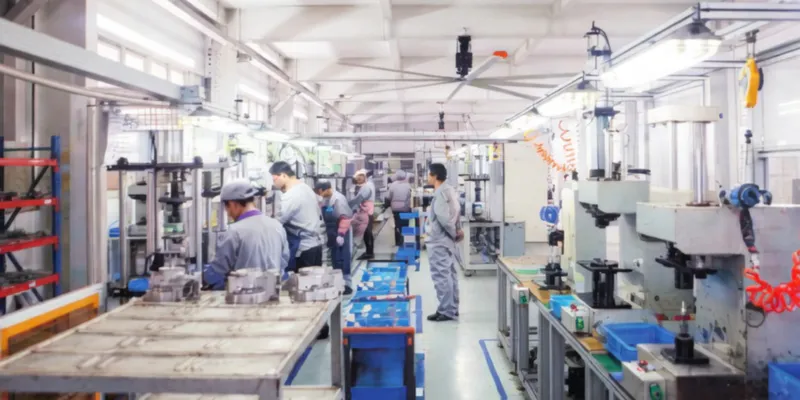
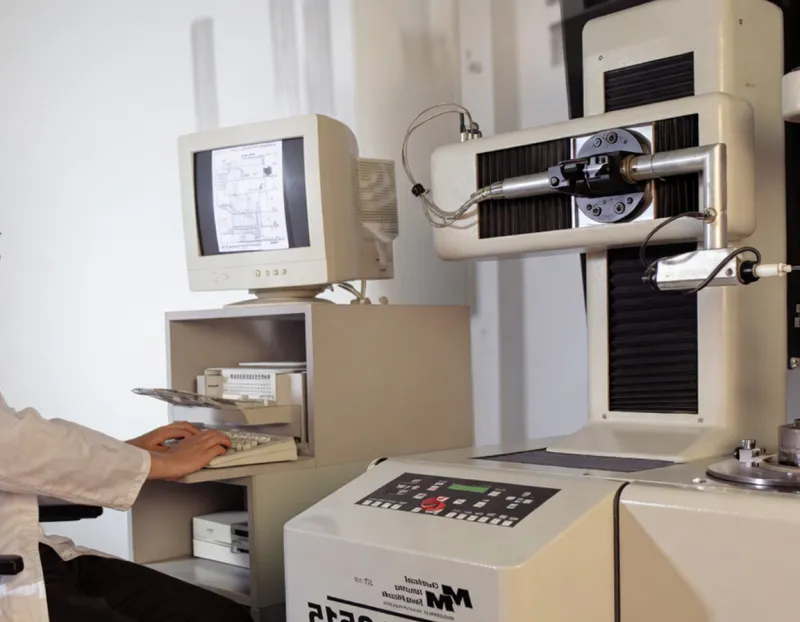
We are an established manufacturer and global distributor of precision mechanical power transmission components, with specialized depth in gear assemblies — bevel, spur, and worm — sprockets, roller chains, spur gears, and worm gear reducers. Our production facilities operate under ISO 9001:2015 quality management certification, and our engineering team brings extensive cross-disciplinary experience in gear geometry, material science, and heat treatment process control — the three pillars that determine whether a gear actually performs as its specification promises.
We have served industrial customers across Latin America — including Colombia, Peru, Ecuador, Chile, and Argentina — for many years, developing a deep understanding of the operating challenges of these markets from European or North American applications. High ambient temperatures, seasonal humidity swings, dust and particulate contamination, and limited access to specialist maintenance services all place specific demands on power transmission components. Our product line is built and selected with these realities in mind, from the choice of C45 steel as the standard material through to the corrosion protection options available on request.
Çalıştay
9. Related Products & Complete Drivetrain Solutions
This gear assembly rarely operates in isolation — it forms one part of a broader power transmission chain. We supply the complete range of companion components needed to build or maintain a full drive system, giving your engineering team a single-source solution with consistent quality standards throughout.
Dişli çarklar
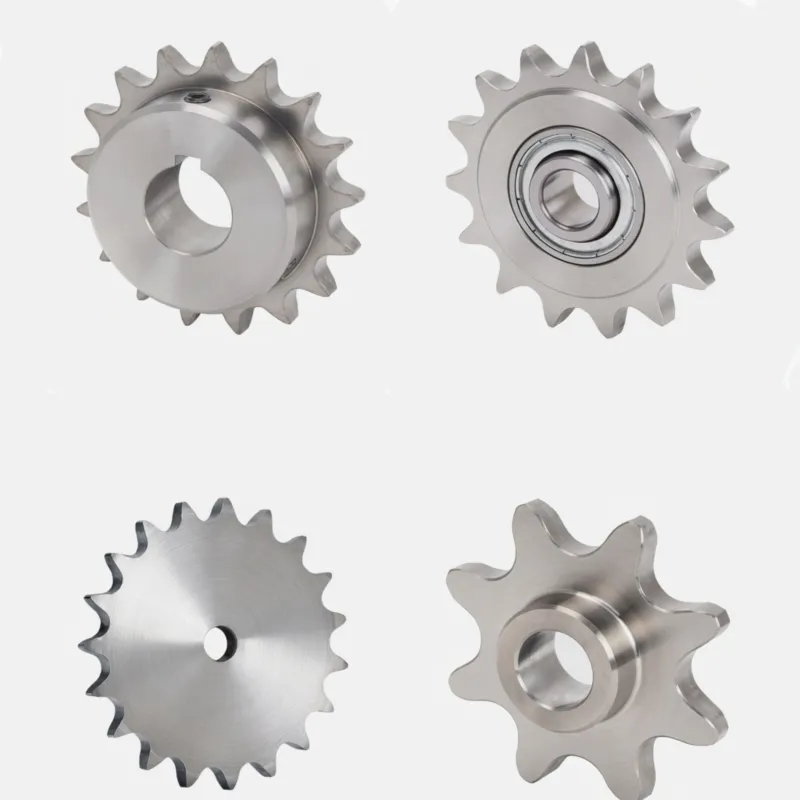
When your drive system combines a gear set for direction change with a chain transmission for power distribution to multiple points, matched Dişli çarklar are essential companions. Our full European Standard and ANSI sprocket range covers 06B through 24B chain pitches, with finished bore and taper bore options. Pairing EP-Type B components with sprockets from the same catalog ensures dimensional compatibility and simplifies the engineering of compact, efficient right-angle chain drive systems for industrial and material handling applications across Colombia.
Makaralı Zincir
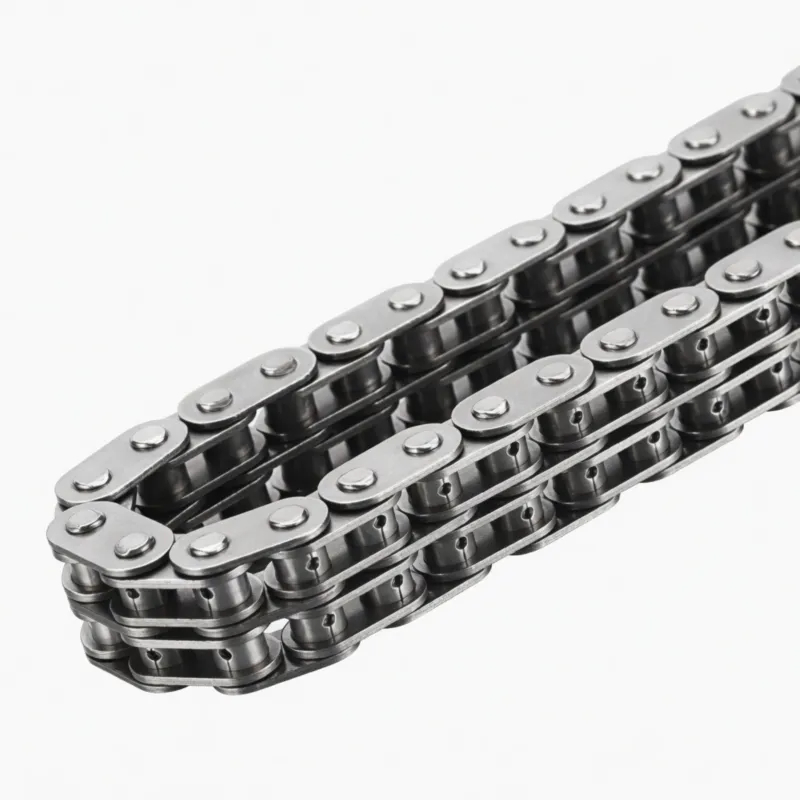
O zincir connecting the output sprocket of a right-angle drive assembly to the final drive point is as critical as the gear itself — a chain with incorrect pitch or inadequate tensile strength will limit the entire system’s reliability regardless of how well the gears are made. We supply ISO-standard roller chain in simplex, duplex, and triplex configurations across the full European and ANSI pitch range, in C45 steel and stainless steel variants. Full-system sourcing guarantees that your gears, sprockets, and chain are all matched to the same load and speed specification — eliminating the mismatched capacity margins that cause premature failures in multi-source procurement scenarios.
Sıkça Sorulan Sorular
Editör: PXY