விளக்கம்
Front Axle Assembly Series
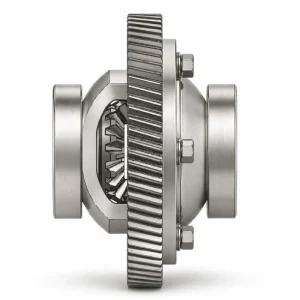
EP-Ea02 Differential Assembly
A compact, precision-built differential assembly engineered for electric vehicle and ATV/UTV powertrain applications — distributing torque smoothly to both axle half-shafts through an efficient planet-gear self-rotation mechanism.
1. தொழில்நுட்ப விவரக்குறிப்புகள்
The table below covers 20 key technical parameters of the EP-Ea02 Differential Assembly. Dimensional values reference the assembled differential gear assembly without lubricant unless otherwise stated.
| # | அளவுரு | Value | Notes |
|---|---|---|---|
| 1 | Model | EP-Ea02 Differential Assembly | Front Axle Assembly series |
| 2 | Primary Application | A00-segment EV / compact ATV | Front or rear axle differential assembly position |
| 3 | Differential Type | Open bevel-gear differential | Passive torque-split, no locking mechanism |
| 4 | Max Input Torque (T max) | 80 N·m | Continuous rated input at differential carrier |
| 5 | Max Input Rotation Rate (n max) | 10,000 r/min | Peak: 11,000 r/min (short-term) |
| 6 | Centre-to-Centre Spacing (A) | 161 mm | Side gear output shaft centres |
| 7 | Max Transmission Efficiency | ≥96% | At rated torque, warm oil condition |
| 8 | Input Spline Type | Internal spline (female) | Mates with EA02 reduction output shaft |
| 9 | Input Spline Module (m) | 1 | Per ISO 4156 spline standard |
| 10 | Input Spline Tooth Count (z) | 22 | Internal spline, input end |
| 11 | Input Spline Pressure Angle (α) | 20° | Standard involute profile |
| 12 | Input Spline Shift Coefficient (x) | +0.2 | Positive addendum modification |
| 13 | Output Spline Type | Internal spline (female) | Both left and right side output |
| 14 | Overall Length | 154 mm | Assembled unit, no lubricant |
| 15 | Overall Width (Axle Track) | 154 mm | Assembled unit |
| 16 | Overall Height | 129 mm | Assembled unit |
| 17 | Assembled Weight | 5 kg | Without lubricant |
| 18 | Planet Gear Count | 2 | Bevel planet gears in differential cage assembly |
| 19 | Quality Certification | IATF 16949:2016 | Automotive-grade QMS |
| 20 | பரிந்துரைக்கப்பட்ட மசகு எண்ணெய் | API GL-4 75W-90 | Differential assembly lube; replace per vehicle OEM interval |
2. What Is the EP-Ea02 Differential Assembly?
The EP-Ea02 Differential Assembly is a compact, lightweight differential gear assembly designed for use in electric passenger vehicles — specifically those classified in the A00 segment — as well as selected ATV and UTV front axle configurations. Its defining characteristic is structural simplicity: a clean differential case assembly built around bevel planet gears that rotate freely on their own shafts to distribute drive torque between two output half-shaft connections. This self-rotating planet gear mechanism is the heart of how the differential assembly works, and it accomplishes reliable torque-splitting without any clutch packs, viscous couplings, or electronic control systems.
In practice, the EP-Ea02 differential assembly sits inside the front or rear axle housing and receives rotational input from the reduction gear stage. The differential carrier assembly rotates as a unit with the ring gear, carrying the planet gear shafts. Each planet bevel gear meshes simultaneously with both side gears — one on each axle half-shaft — and when both wheels rotate at identical speeds, the planet gears simply orbit with the carrier. The instant a speed difference is required between the two sides, the planet gears begin spinning on their own axes, smoothly accommodating the difference without any driver intervention.
3. Five Key Product Advantages
Ultra-Compact Differential Gear Assembly Footprint
At 154 mm × 154 mm × 129 mm and just 5 kg, the EP-Ea02 is one of the smallest differential assembly units in its torque class. This compact differential assembly envelope integrates cleanly into A00-class EV transaxle housings and smaller UTV front axle gearbox designs without requiring housing modifications or spacer plates, reducing both assembly time and the risk of fitment errors in the field.
Clean Mechanical Design — Reliable Differential Working
Unlike torque-sensing or electronically actuated units, the EP-Ea02 differential assembly working principle relies entirely on passive bevel gear mechanics. There are no solenoids, friction plates, or sensors to maintain. This straightforward differential case assembly reduces long-term ownership cost, simplifies workshop servicing in markets where specialist electronic diagnostic equipment is not readily available, and makes differential assembly lube management predictable.
Precision CNC-Finished Spline Interfaces
Both input and output internal spline profiles on the EP-Ea02 differential axle assembly are finished on multi-axis CNC equipment, holding tooth form tolerances consistent with ISO 4156 spline standards. The input spline — module 1, 22 teeth, 20° pressure angle, shift coefficient +0.2 — mates correctly with the standard EA02 electric motor reduction gear output shaft, eliminating the need for secondary machining operations during vehicle assembly.
IATF 16949 Production Quality with Full Traceability
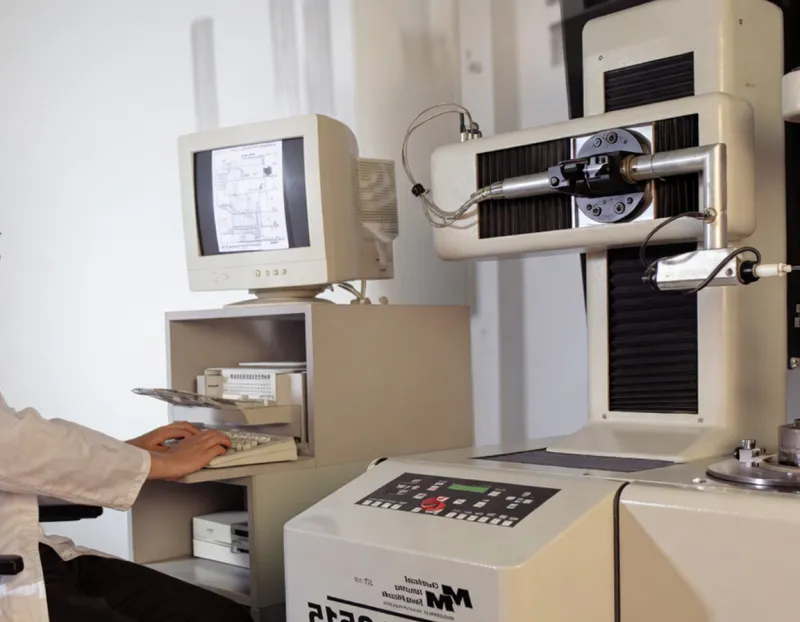
Every EP-Ea02 complete differential assembly is manufactured and inspected under IATF 16949:2016 automotive quality management certification. Gear geometry is verified on dedicated gear inspection centers; dimensional conformance on CMM machines; and each completed differential housing assembly passes an integrated performance test before shipping. Batch-level material and process traceability documentation is available for OEM and fleet customers on request.
Proven OEM Supply Record Across EV and ATV Platforms
The EA02 differential assembly series has accumulated cumulative production volumes of 50,000+ units across A00-segment electric vehicle programs and compact ATV/UTV platforms. This production history means that tooling and process capability are mature — dimensional consistency from batch to batch is tight, and supply continuity for long-term fleet procurement programs in markets such as Colombia, Ecuador, and Peru can be planned with confidence.
4. Differential Assembly Working Principle
Understanding differential working starts with one fundamental question: why do the two driven wheels of an axle need to rotate at different speeds at all? The answer is geometry. When a vehicle turns, the outer wheel traces a larger arc than the inner wheel, meaning it must cover more distance in the same time. If both wheels were rigidly locked together on a shared shaft, one wheel would have to slip against the road surface in every turn. A differential assembly eliminates this forced slip by allowing speed variation between the two output shafts while continuing to transmit torque to both.
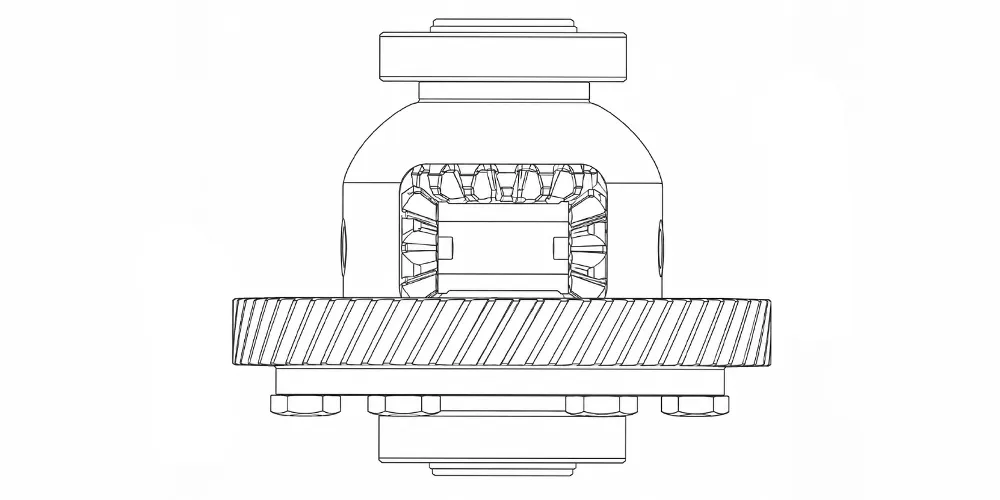
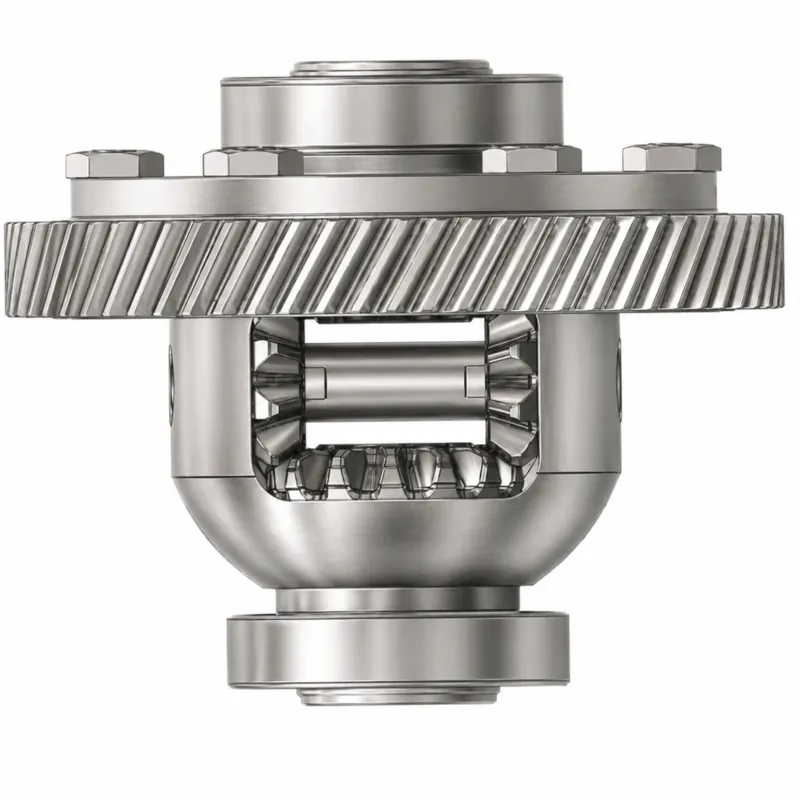
In the EP-Ea02, the differential assembly diagram can be understood in three functional layers. The outermost layer is the differential cage assembly — the carrier housing and ring gear that rotate together as a rigid unit when driven by the final reduction pinion. Mounted inside this cage on cross-pin shafts are the planet bevel gears. These planet gears mesh with both the left and right side bevel gears simultaneously. The side gears are each splined to one output shaft going to a wheel hub.
During straight-line driving, no relative movement exists between the planet gears and the side gears — the planet gears orbit with the cage but do not spin on their own axes, so both output shafts turn at identical speeds. When the vehicle steers and the outer wheel needs to spin faster than the inner wheel, the planet gears begin rotating on their cross-pin shafts. This self-rotation allows one side gear to accelerate exactly as much as the other side gear decelerates, automatically accommodating any required speed differential between the two wheels.
The torque bias in an open differential assembly like the EP-Ea02 is inherently equal: each output shaft receives approximately half the input torque at any moment, regardless of rotational speed. This makes the EP-Ea02 well suited to electric vehicle drivetrains where traction control and regenerative braking software manages wheel slip electronically, and to compact ATV front axles where terrain variations are moderate. For vehicles operating in severe low-traction conditions that demand mechanical torque bias or differential lock, complementary products in the same Front Axle Assembly series can be considered.
5. Material Composition
The material selection behind the EP-Ea02 differential assembly is driven by the requirements of electric vehicle drivetrains: high rotational speeds, instantaneous torque delivery without the gradual build-up of combustion engines, and an expectation of minimal maintenance over a service life measured in hundreds of thousands of kilometres. Every material choice is made to satisfy these constraints while keeping the complete differential assembly within its 5 kg weight target.
The differential housing assembly is pressure die-cast from A380-equivalent aluminum alloy. Aluminum gives the best combination of rigidity, thermal conductivity, and weight savings at the unit’s operating torque levels. Good thermal conductivity matters for an EV application because the reduction gear and differential assembly share a common oil bath in many transaxle configurations, and heat generated at peak power needs to dissipate rapidly to protect bearing and seal life.
Internal bevel gears — both the planet gears and the side gears — are precision-forged from 20CrMnTi case-hardening alloy steel (international equivalents: SAE 8620, DIN 21MnCr5). After gear hobbing and profile grinding to DIN 3961/62 quality class 6 or better, the gear blanks are carburized and case-hardened to achieve a tooth surface hardness of HRC 58–62 with a tough core retained at HRC 33–45. This hardness gradient resists pitting and micro-pitting failure modes that arise in high-speed differentials where elastohydrodynamic lubrication film thickness is thin.
Cross-pin shafts and the differential cage assembly bolts are manufactured from medium-carbon alloy steel with induction hardening at contact surfaces. Bearing inner and outer races conform to ISO 15 dimensional series in 52100 chrome steel. The differential housing assembly oil seals — critical for preventing differential assembly lube loss — are FKM (Viton) compound, resistant to the wide temperature range (−40°C to +200°C) and the ester-based synthetic lubricants increasingly specified in EV powertrain design guides. Together these material choices define the EP-Ea02 as a differential gear assembly built for longevity in the field, not just acceptable performance at initial delivery.
6. பயன்பாட்டுச் சூழ்நிலைகள்
A00 Electric Passenger Vehicle Transaxle
The primary application for the EP-Ea02 complete differential assembly is the A00-class BEV — city EVs with battery capacities typically between 15 and 30 kWh and curb weights under 900 kg. In this vehicle segment, the differential assembly in car is packaged directly inside the motor-reduction-differential transaxle unit. The EP-Ea02’s compact 154×154×129 mm envelope fits this integration with no wasted volume, and its 96%+ mechanical efficiency contributes meaningfully to vehicle range efficiency — critical for buyers in Colombia’s urban centers such as Bogotá, Medellín, and Cali where EV adoption is accelerating.
Compact ATV Front Axle Configuration
In the All-Terrain Vehicle segment, the EP-Ea02 can be deployed as the front differential assembly component inside a 350–500cc ATV’s front axle gearbox. The front axle differential assembly role in a typical ATV places the unit at the intersection of the transfer case output and the two front drive shafts. The EP-Ea02’s passive open design provides adequate torque split for moderate terrain, while its small physical size keeps front axle package weight and unsprung mass acceptably low for recreational and agricultural ATV use across the Colombian coffee and Andean regions.
Electric Three-Wheeler and Cargo Tricycle Rear Axle
Several electric three-wheel cargo vehicle platforms — common as last-mile delivery tools in Colombia’s mid-sized cities and in the broader Andean region — use a rear axle differential assembly to drive both rear wheels from a single centrally mounted motor. The EP-Ea02’s 5 kg weight and simple differential case assembly make it an appropriate choice for vehicle designers who need a rear differential assembly cost-effective enough for a commercial vehicle platform while retaining the quality traceability demanded by fleet operators.
Aftermarket Replacement for EV Differential Carrier Assembly
As the first generation of A00-class EVs reaches higher mileage, demand for differential carrier assembly replacement units is growing. Workshop technicians performing a differential carrier assembly replacement need a unit that matches the original spline specification exactly and arrives fully assembled, minimizing the risk of incorrect pre-load or shim adjustment errors. The EP-Ea02 ships as a complete differential assembly, ready for direct installation after housing cleaning and lubricant fill, making it a practical choice for authorized service centers across Latin America sourcing differential assembly parts for their customers’ vehicles.
Specialty Mobile Equipment and Light Industrial Vehicles
Electric platform vehicles used in warehouses, airports, and industrial parks often carry payloads significantly heavier than the vehicle itself while traveling at low speeds. These applications place sustained torque loads on the differential gear assembly rather than peak shock loads. The EP-Ea02’s consistent transmission efficiency and proven material specifications make it suitable for this duty cycle, and its globally sourced raw material certifications (mill test reports available) satisfy procurement requirements for industrial equipment OEMs exporting to regulated markets in North America and Europe.
7. Regulatory Compliance and Industry Standards
Differential gear box assembly components fall under multiple regulatory and standards frameworks depending on the application and destination market. Procurement engineers and importers who need to classify the differential assembly hs code correctly and document conformance for customs purposes should be aware of the following context.
Colombia — DIAN Tariff and Technical Standards: Under the Colombian customs system administered by DIAN, differential assembly components for vehicle use are typically classified under HS Chapter 87, specifically heading 8708 (parts and accessories for motor vehicles). Importers must supply commercial invoices, packing lists, and — for parts entering in quantities suggesting re-sale — a Certificate of Origin aligned with any applicable trade agreement such as the Pacific Alliance or Andean Community (CAN) preferential tariff schedules. ICONTEC’s NTC framework for mechanical components accepts ISO-aligned certifications, so the IATF 16949 documentation accompanying the EP-Ea02 differential axle assembly is directly applicable to local conformance requirements.
European Union — CE and Machinery Directive: Differential assembly units supplied as components for incorporation into machinery within the EU fall under the scope of Directive 2006/42/EC (Machinery Directive). As sub-components not intended for independent use, they are exempt from mandatory CE marking themselves, but they must conform to the essential health and safety requirements of Annex I as declared by the final machine manufacturer in the Declaration of Conformity. Relevant standards include EN ISO 12100 (risk assessment), DIN 3990 / ISO 6336 (gear tooth load capacity), and DIN 51517 for lubricant classification relevant to differential assembly lube selection.
United States — SAE and OSHA Context: For differential gear assemblies used in ATV or light EV applications sold in the US, SAE J1194 (ATV rollover protection) and ANSI/SVIA 1 (US ATV standards) govern the complete vehicle rather than individual drivetrain parts. Differential sub-assembly suppliers are expected to provide first-article inspection reports conforming to PPAP (Production Part Approval Process) level 3, which is inherently aligned with the IATF 16949 production control plan system used to produce the EP-Ea02.
Environmental Compliance — RoHS and REACH: Although RoHS Directive 2011/65/EU and REACH Regulation EC 1907/2006 are EU instruments, their requirements have become de facto global standards for responsible component sourcing. The EP-Ea02 differential housing assembly and gear set materials comply with RoHS substance restrictions (no lead, mercury, cadmium, hexavalent chromium, PBB, or PBDE), and the phosphate surface treatments applied to ferrous internal parts are water-based formulations free from carcinogenic heavy metals on the REACH SVHC candidate list. Substance of Very High Concern declarations are available on request.
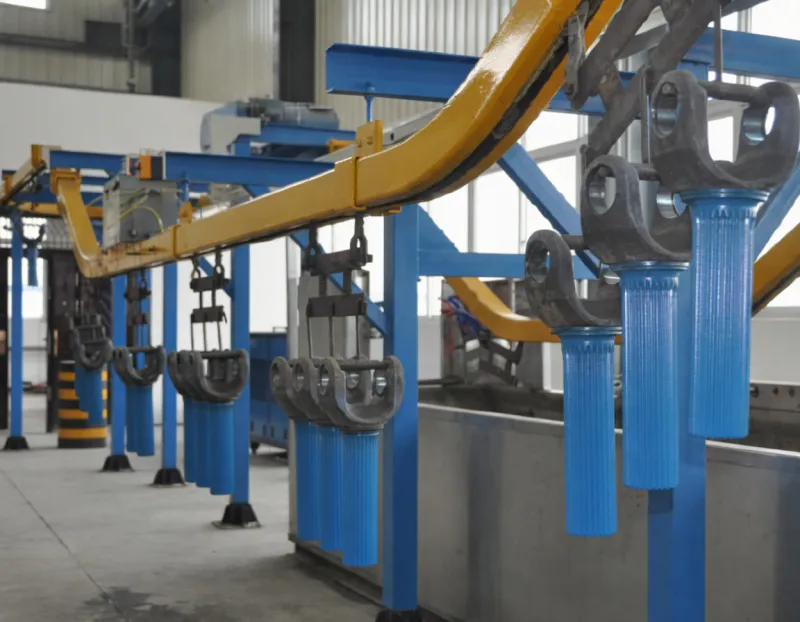
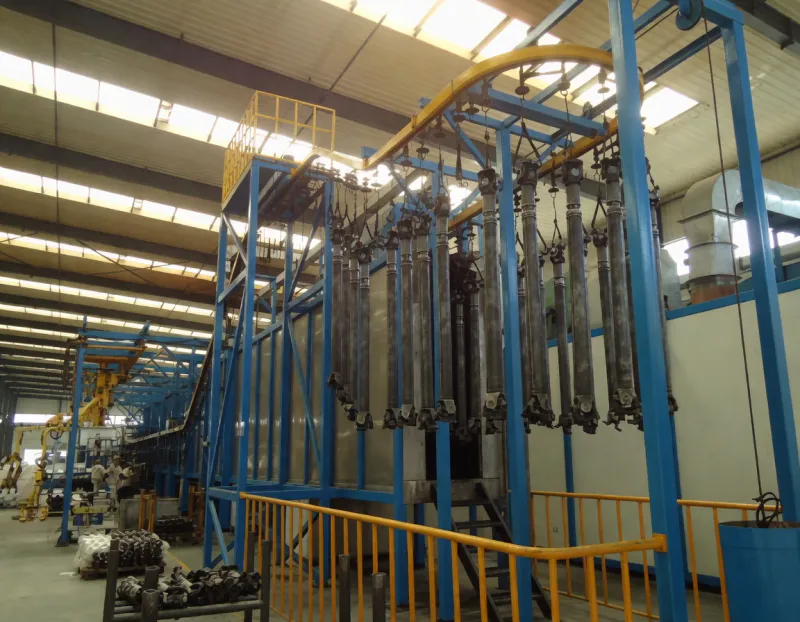
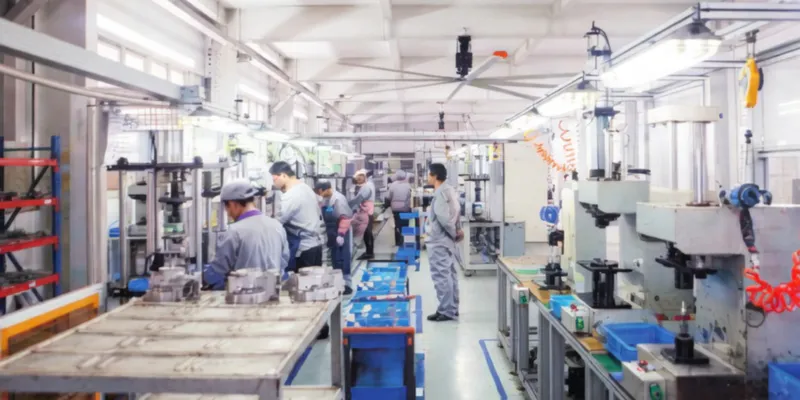
பட்டறை
8. தொடர்புடைய தயாரிப்புகள்
The EP-Ea02 Differential Assembly is part of a fully integrated Front Axle Assembly and Rear Axle Assembly product ecosystem. We manufacture a range of complementary components that ensure total drivetrain system compatibility and allow you to consolidate sourcing from a single IATF 16949 certified supplier.
Wheel Bolts — Rear Axle System
Wheel fasteners designed and sized for the hub bolt pattern configurations used across the EV and ATV rear axle assembly systems that the EP-Ea02 differential assembly integrates with. Matching wheel hardware from the same product family eliminates thread-class mismatches and ensures correct clamping load at wheel installation — a detail that directly affects the service life of hub bearing assemblies downstream of the differential axle assembly output. Available in platform-matched thread specifications for the EA02 series.
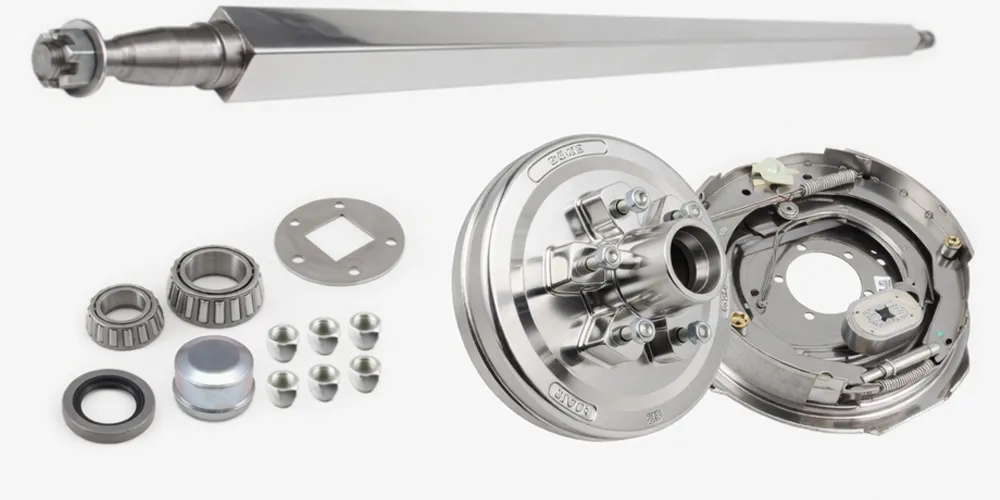
டிரெய்லர் அச்சு பீம் / டிரெய்லர் ஸ்பிண்டில்
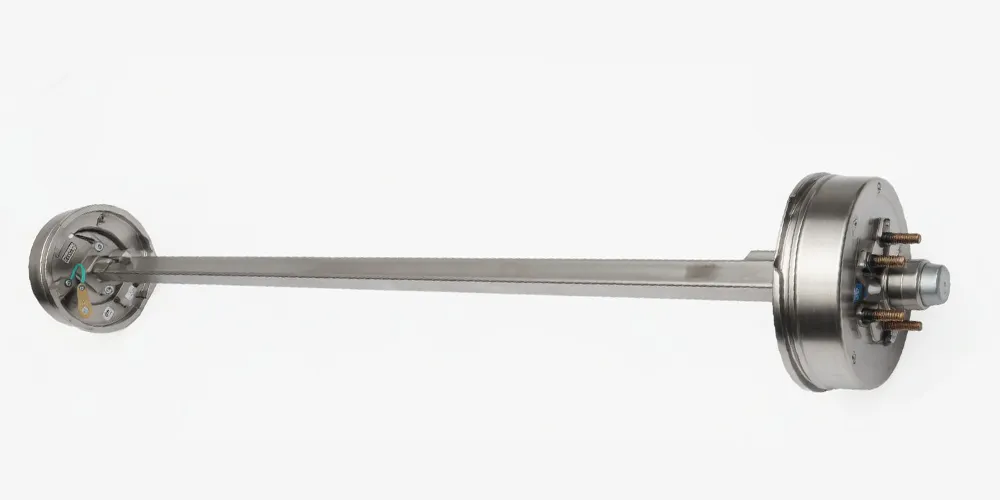
For EV and ATV operators who tow utility trailers, correct trailer spindle selection prevents hub overload and wheel separation failures. Our trailer axle beam range covers common load ratings for agricultural and light commercial trailers used across Colombia, Ecuador, and Peru. The spindle hub-face bolt pattern options are dimensionally matched to the wheel hub interfaces used alongside the EP-Ea02 front differential assembly, providing a genuine one-stop procurement option for complete drivetrain and towing system hardware without cross-supplier compatibility risk.
அடிக்கடி கேட்கப்படும் கேள்விகள்
Q1. What is a differential assembly and how does it work inside an electric vehicle drivetrain?
Q2. What differential assembly parts are normally composed of, and what does the Ea02 contain specifically?
Q3. How do I correctly perform a differential carrier assembly replacement on an EA02-series EV transaxle?
Q4. Which differential assembly lube grade should be used with the EP-Ea02, and when should it be changed?
Q5. How does a front differential assembly differ from a rear differential assembly in an EV or ATV application?
Q6. What are the signs that a differential gear assembly needs replacement rather than repair in an electric vehicle?
Q7. When sourcing a differential coupling assembly for an electric tricycle, which specifications matter most for matching the correct unit?
பதிப்பாசிரியர்: PXY