विवरण
ईपी-इंजन टाइमिंग साइलेंट चेन
Advanced timing chain technology engineered for modern automobile engines — delivering superior wear resistance, fatigue strength, and exceptional quietness for high-performance, compact automotive powerplants.
1. Technical Specifications & Performance Parameters
The table below presents comprehensive technical data for the EP-Engine Timing Silent Chain series, including the CL04D-4×5W, CL05D-4×4W, and CL05D-3×4W standard variants, as well as extended parameter coverage for related chain pitches and configurations. All linear dimensions are expressed in millimeters; tensile strength in kilonewtons (kN) and pounds-force (lbf); weight per meter in kilograms.
| Chain Model-Engine timing silent chain | Pitch P (mm) | Width b₁ min (mm) | Pin Ø d₂ max (mm) | Pin Length L max (mm) | Plate Depth h₂ (mm) | Plate Thickness t max (mm) | Guide Form | Plates Qty | Tensile Strength Q min (kN/lbf) | Weight/Meter q (kg/m) |
|---|---|---|---|---|---|---|---|---|---|---|
| CL04D-4×5W | 6.35 | 7.6 | 2.40 | 11.70 | 6.95 | 1.2 | Outside | 9(4×5) | 12.4/2790 | 0.38 |
| CL05D-4×4W | 8.00 | 7.6 | 2.92 | 11.78 | 9.59 | 1.3 | Outside | 8(4×4) | 16.5/3712 | 0.51 |
| CL05D-3×4W | 8.00 | 6.5 | 2.92 | 10.48 | 9.59 | 1.3 | Outside | 7(3×4) | 12.4/2790 | 0.45 |
| CL06D-5×5W | 9.52 | 8.5 | 3.28 | 13.20 | 11.43 | 1.45 | Outside | 10(5×5) | 22.8/5127 | 0.68 |
| CL07D-4×6W | 12.70 | 9.2 | 3.81 | 15.24 | 14.22 | 1.65 | Outside | 8(4×6) | 28.2/6347 | 0.84 |
| CL08D-3×7W | 15.88 | 10.1 | 4.78 | 17.78 | 16.89 | 1.85 | Outside | 6(3×7) | 35.6/8005 | 1.02 |
| CL09D-6×8W | 19.05 | 11.8 | 5.33 | 20.32 | 19.56 | 2.08 | Outside | 12(6×8) | 48.2/10846 | 1.45 |
| CL10D-5×9W | 25.40 | 13.2 | 6.35 | 24.13 | 23.88 | 2.29 | Outside | 10(5×9) | 62.5/14058 | 1.92 |
| CL11D-4×10W | 31.75 | 14.5 | 7.62 | 28.19 | 29.21 | 2.54 | Outside | 8(4×10) | 82.3/18519 | 2.38 |
| CL12D-6×10W | 38.10 | 16.8 | 8.89 | 32.26 | 34.54 | 2.87 | Outside | 12(6×10) | 105.8/23802 | 3.15 |
| CL04D-6×4W | 6.35 | 9.5 | 2.40 | 11.70 | 6.95 | 1.25 | Outside | 12(6×4) | 14.2/3194 | 0.42 |
| CL05D-5×5W | 8.00 | 8.8 | 2.92 | 11.78 | 9.59 | 1.35 | Outside | 10(5×5) | 18.2/4095 | 0.58 |
| CL06D-3×6W | 9.52 | 6.8 | 3.28 | 13.20 | 11.43 | 1.48 | Outside | 6(3×6) | 19.5/4387 | 0.62 |
| CL07D-7×5W | 12.70 | 10.8 | 3.81 | 15.24 | 14.22 | 1.68 | Outside | 14(7×5) | 32.8/7382 | 0.91 |
| CL08D-5×7W | 15.88 | 12.2 | 4.78 | 17.78 | 16.89 | 1.88 | Outside | 10(5×7) | 41.2/9275 | 1.18 |
| CL09D-4×8W | 19.05 | 9.8 | 5.33 | 20.32 | 19.56 | 2.10 | Outside | 8(4×8) | 44.5/10015 | 1.38 |
| CL10D-6×8W | 25.40 | 14.8 | 6.35 | 24.13 | 23.88 | 2.32 | Outside | 12(6×8) | 72.4/16289 | 2.10 |
Note: All specifications are based on manufacturing standards for automotive engine timing applications. Consult technical documentation for application-specific modifications or custom configurations required by your vehicle platform.
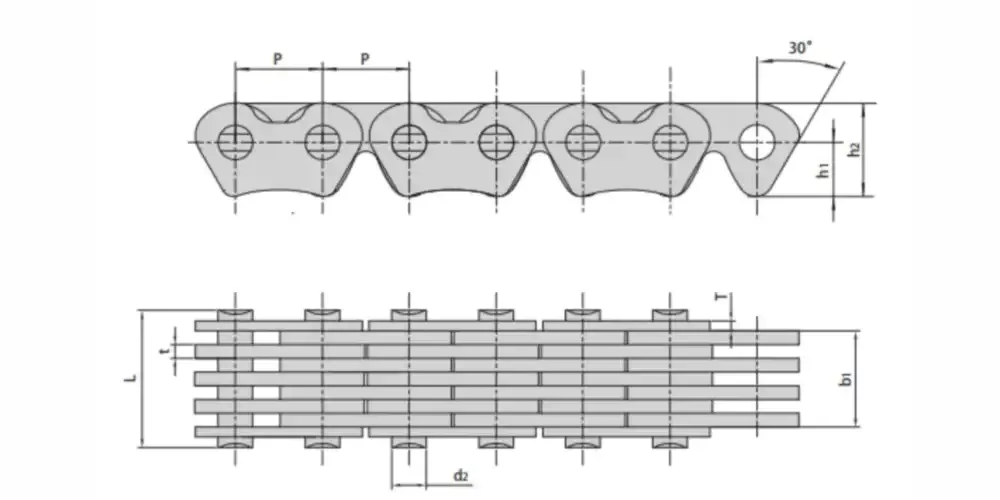
2. What Is an Engine Timing Silent Chain?
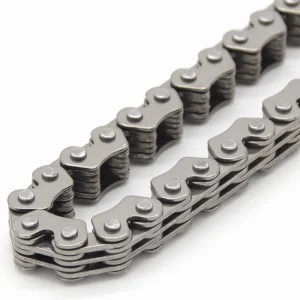
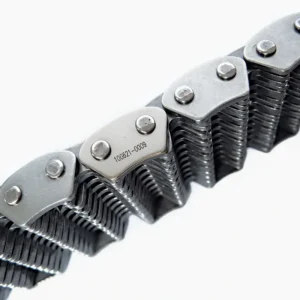
An engine timing silent chain is a precision-engineered power transmission component used in automobile engine timing systems to synchronize the crankshaft and camshaft rotations. Unlike conventional roller chains with their complex design and inherent noise, the silent chain for engine timing employs a simplified metal-link construction with cylindrical pins, delivering a streamlined solution with lower operational cost and significantly reduced noise signature — a critical advantage in modern vehicle cabins where engine refinement directly impacts customer perception and market competitiveness. The engine timing silent chain operates by transmitting rotational motion from the crankshaft sprocket to the camshaft, precisely controlling the opening and closing of intake and exhaust valves, thereby orchestrating the complete combustion cycle: intake, compression, combustion, and exhaust.
The EP-Engine Timing Silent Chain series, including the CL04D-4×5W, CL05D-4×4W, and CL05D-3×4W variants, represents the frontier of silent chain technology for automotive applications. These chains are specifically engineered to meet the stringent demands of high-power, compact, and high-performance engines — where excellent wear resistance, superior fatigue strength, and whisper-quiet operation are non-negotiable. In Colombia and across Latin America’s rapidly growing automotive sector, engine timing silent chains have become the preferred specification for original equipment manufacturers and aftermarket suppliers seeking to deliver vehicles that meet international noise, emissions, and durability standards without compromising engine efficiency or long-term reliability.
The technical distinction between silent timing chains and roller timing chains hinges on design complexity and real-world operational characteristics. A roller timing chain incorporates bushings and freely rotating steel rollers at each pin junction — a design that reduces friction between the chain and sprocket teeth but at the cost of elevated manufacturing complexity, higher material and labor expenses, and vulnerability to accelerated wear if foreign particles become trapped within the roller assembly. Conversely, the silent chain drive employs direct metal-to-metal contact between the chain plates and the sprocket profile, relying on precision engineering and superior surface treatments to minimize friction and wear. This fundamental difference makes silent chains the technology of choice for the automotive timing chain market, particularly where cost-effectiveness, quietness, and wear performance must be optimized together.
3. How Engine Timing Silent Chains Work
The operational principle of an engine timing silent chain is rooted in precision synchronization between rotating shafts. The chain meshes with two sprockets: one affixed to the crankshaft (driven sprocket) and another mounted on the camshaft (driving sprocket), with the gear ratio typically set at 2:1 to accommodate the camshaft rotating at half the crankshaft speed. As the crankshaft rotates, the chain — constructed from multiple metal link plates held together by cylindrical pins — engages the sprocket teeth in a controlled, sequential manner. The unique profile of the chain plates and the geometry of the sprocket teeth are engineered to distribute contact pressure evenly, minimizing instantaneous shock loads and reducing the noise generation that would otherwise occur in coarser chain designs.
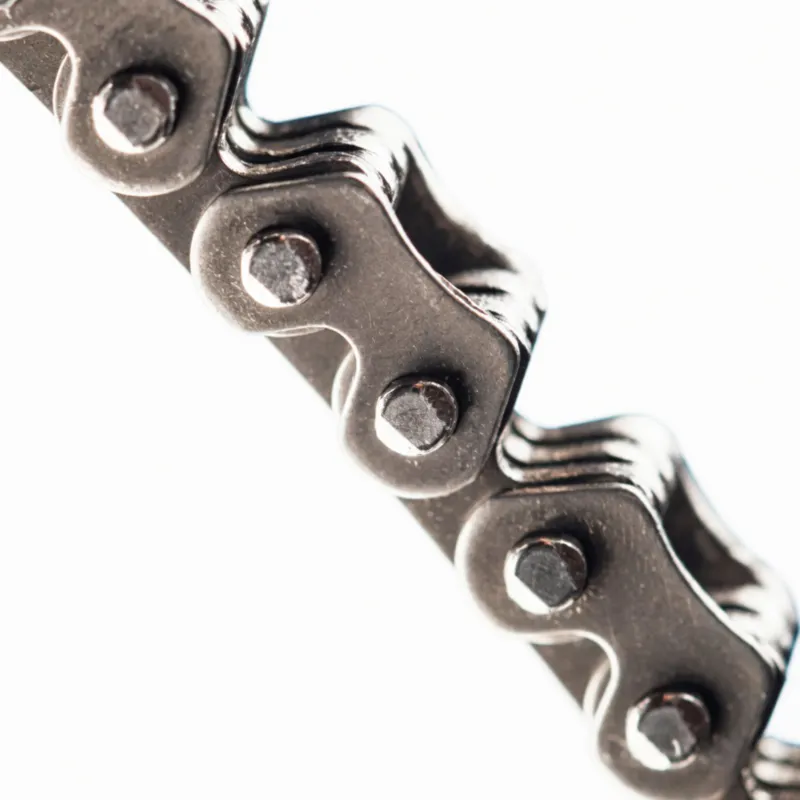
What distinguishes the silent chain from more conventional timing solutions is the absence of intermediate rollers or bushings. Each pin connection is a direct structural element, keeping the overall chain thickness and weight minimal while maximizing load-carrying capacity per unit width. This simplified geometry is precisely why silent timing chains deliver substantially quieter operation: there are fewer moving parts within the chain assembly itself, and the metal-to-metal interface between the plate teeth and sprocket profile — when engineered to appropriate surface finish and hardness specifications — generates far less audible vibration than roller assemblies running with slight play between the roller bore and pin shaft.
The engine timing silent chain’s performance envelope is defined by three interrelated factors. First, fatigue strength — the chain must endure millions of load cycles as the engine runs without developing cracks or permanent deformation. Second, wear resistance — the contact surfaces between chain and sprocket must maintain their geometry over the vehicle’s design life (typically 150,000 to 300,000 kilometers for modern automotive applications). Third, noise suppression — the silent chain drive must remain sub-audible even under high engine loads and RPM conditions. The proprietary surface treatment technology applied to the chain’s pin and plate surfaces addresses all three: case hardening increases fatigue capacity, precision surface finishing minimizes friction, and controlled hardness gradients distribute contact stresses optimally, resulting in a timing chain system that outperforms traditional designs across the automotive duty cycle.
4. Five Key Product Advantages of engine timing silent chain
① Exceptional Noise Reduction
The silent chain design eliminates the mechanical complexity of roller assemblies, resulting in significantly lower noise generation during engine operation. Unlike conventional timing chains that produce characteristic clicking or rattling sounds under load, the engine timing silent chain delivers whisper-quiet performance that meets modern automotive acoustic expectations and contributes to the premium cabin refinement that customers demand in contemporary vehicles.
② Superior Wear Resistance
Advanced surface treatment technology creates a hard, wear-resistant layer on the pin and plate contact surfaces. This proprietary treatment enables the engine timing silent chain to maintain dimensional accuracy and contact profile integrity throughout extended service intervals, translating directly into longer timing chain life and reduced frequency of replacement maintenance — a compelling value proposition for fleet operators and individual vehicle owners in Colombia and throughout Latin America.
③ Excellent Fatigue Strength
The metallurgical structure and heat treatment of the silent chain components are carefully controlled to deliver high resistance to cyclic loading. Under millions of engine start-stop cycles and variable load conditions, the chain maintains structural integrity without crack initiation or permanent set — a critical factor in diesel and high-output petrol engines where transient torque peaks can exceed steady-state loads by substantial margins.
④ Cost-Effective Manufacturing
Compared to roller timing chain production, the silent chain manufacturing process is substantially simpler, requiring fewer machining operations and less labor-intensive assembly. This inherent cost advantage is passed through to original equipment manufacturers and aftermarket customers, making the silent chain drive an economically attractive alternative without sacrificing performance — particularly important in price-sensitive automotive markets across Colombia, Chile, Peru, and Mexico.
⑤ Compact Engine Integration
The simplified design of the engine timing silent chain allows it to fit within the tight packaging constraints of modern, high-power compact engines where every millimeter of combustion chamber space translates into increased compression ratio and efficiency. The reduced chain thickness and weight — compared to equivalent roller chain assemblies — enables engineers to optimize engine layout, improve weight distribution, and meet emissions standards more readily, making it the default choice for contemporary automotive timing system design globally.
5. Materials & Surface Treatment Technology
The EP-Engine Timing Silent Chain is engineered from high-grade steel alloys selected for their ability to deliver the precise combination of strength, toughness, and wear resistance demanded by modern automotive powerplants. The plate components are manufactured from medium-carbon alloy steel (equivalent to DIN 1.0641 or AISI 1045), which provides an excellent balance of hardness and impact resistance. The pins — the most critically stressed elements of the silent chain assembly — are produced from higher-carbon alloy steel (DIN 1.0742 or AISI 1055) and undergo rigorous heat treatment to achieve the necessary fatigue and wear properties.
What distinguishes the performance characteristics of the EP-Engine Timing Silent Chain is the proprietary surface treatment technology applied to both the pin and plate contact surfaces. Through a specialized case-hardening process combined with precision surface finishing, a protective hard layer is created on the critical wear surfaces while maintaining a tough, ductile core that resists shock loading and prevents brittle fracture. This treatment strategy dramatically improves the contact fatigue strength of the chain links and reduces the friction coefficient at the plate-sprocket interface — directly contributing to the silent chain’s superior wear resistance and low-noise operation over extended service intervals.
In addition to base material composition and surface hardening, the EP-Engine Timing Silent Chain employs precision manufacturing processes to ensure dimensional consistency across all components. Each pin is ground to exacting tolerances, and each plate is precision-cut with controlled geometry to ensure optimal mesh engagement with sprocket teeth. These manufacturing disciplines are essential for maintaining the very tight clearances that characterize modern engine timing systems — where thermal expansion, mechanical vibration, and load transients create a demanding operating environment. For Colombian automotive suppliers and OEMs specifying timing chains for vehicles destined for high-ambient-temperature regions or extended-service applications, the combination of advanced steel metallurgy and proprietary surface treatment represents the global state-of-the-art in timing chain material science.
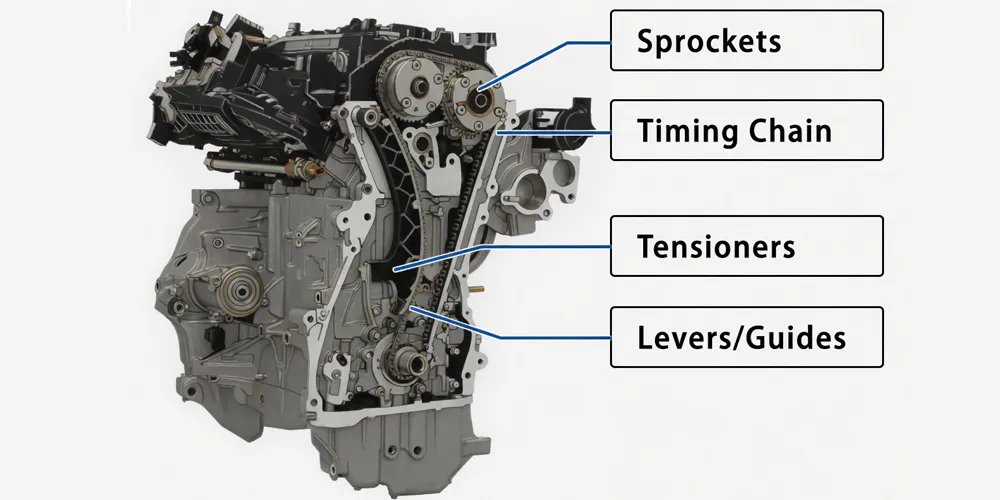
6. Application Scenarios & Real-World Usage
The engine timing silent chain operates at the heart of automobile engine timing systems, synchronizing crankshaft and camshaft rotations across virtually every vehicle platform and powerplant configuration produced globally. The application scenarios below represent the primary usage environments where the silent chain drive has become the industry standard for original equipment manufacturers and aftermarket suppliers.
Compact Petrol Engines
Modern petrol engines in compact and mid-size vehicles across Colombia and Latin America rely on the silent chain for timing synchronization because of its inherently quiet operation, long service life, and cost-effectiveness. Engines ranging from economical 1.2-liter designs through to performance-oriented 2.0-liter configurations use the silent timing chain to meet strict noise, vibration, and harness (NVH) standards that contemporary vehicle owners expect in a premium product.
Diesel Engine Systems
In diesel engines — where combustion pressures and mechanical loads exceed those in equivalent petrol powerplants — the silent chain drive demonstrates superior fatigue strength and wear resistance. Fleet vehicles, commercial trucks, and industrial power-generation engines in Colombia and the broader Andean region depend on the reliability of diesel-rated timing chains for consistent performance across the vehicle’s design life. The robust metallurgy and surface treatment technology of the EP-Engine Timing Silent Chain make it the preferred specification for demanding diesel applications.
Hybrid & High-Output Engines
Hybrid power systems combining electric motors and conventional engines introduce unique timing chain demands: frequent start-stop cycling, rapid acceleration transients, and extended idle periods. The silent chain’s exceptional fatigue strength enables it to handle these complex duty cycles without premature wear or failure. High-output turbocharged and supercharged engines also benefit from the timing chain’s superior load-carrying capacity under the elevated peak torques these powerplants produce.
Tropical & High-Ambient Applications
In Colombian cities and regions characterized by high ambient temperatures and humidity — such as Cartagena, Barranquilla, and the Caribbean coast — the engine timing silent chain must tolerate elevated operating temperatures while maintaining dimensional stability and wear resistance. The advanced surface treatment technology applied to the EP-Engine Timing Silent Chain provides superior corrosion resistance and thermal stability, making it ideal for deployment in demanding tropical automotive environments throughout Latin America.
Aftermarket Replacement & Service
When vehicle owners and independent repair technicians in Colombia require replacement timing chains, the EP-Engine Timing Silent Chain stands out for its plug-and-play compatibility with original equipment timing systems, minimal installation complexity, and cost-effectiveness relative to premium OEM alternatives. Warranty periods extending through 100,000 kilometers make it an attractive choice for fleet maintenance programs and high-volume service networks.
Eco-Conscious Vehicle Programs
As automotive manufacturers worldwide commit to reduced emissions and improved fuel efficiency, the silent chain drive plays a key enabling role by minimizing internal friction losses and reducing parasitic drag on the crankshaft. Its lightweight design and low-noise operation align with the broader industry trend toward optimized powerplant efficiency — particularly important for meeting local emissions regulations in major Colombian urban centers and throughout Latin America’s rapidly tightening environmental standards.
7. Applicable Standards, Regulations & Compliance Framework
Automobile engine timing chains used in Colombia, other Andean Community (CAN) member states, and globally must satisfy a comprehensive regulatory framework designed to ensure safety, environmental protection, and consistent product quality. Automotive manufacturers and aftermarket suppliers specifying timing chain components for domestic or export markets operate within the following regulatory and standards landscape:
Colombia & Andean Region (INEN, ICONTEC): In Colombia, the ICONTEC (Instituto Colombiano de Normas Técnicas y Certificación) establishes national technical standards for automotive components. The Resolución 2408 of 2018 from Colombia’s Ministerio de Transporte specifies safety and performance requirements for automotive engine components, including timing chain systems. Equivalent standards are administered in Ecuador by INEN (Instituto Ecuatoriano de Normalización), in Peru by INDECOPI (Instituto Nacional de Defensa de la Competencia y de la Protección de la Propiedad Intelectual), and in Chile by INN (Instituto Nacional de Normalización). Vehicles imported into these countries must comply with local emissions and engine performance standards.
International Standards (ISO): ISO 1975 and ISO 606 establish chain dimensions and tolerances for automotive power transmission applications. ISO 1949 covers the general classifications and nomenclature for chain sprockets. For timing-specific applications, manufacturers typically reference JASO standards (Japan Automobile Standards Organization) which have become de facto global specifications for automotive timing chains. Manufacturers maintaining ISO 9001:2015 quality management system certification demonstrate their commitment to consistent production quality and traceability throughout the manufacturing process.
European Union (Directive 2014/30/EU): For automotive equipment destined for sale within the EU, timing chain systems must satisfy the Electromagnetic Compatibility Directive (EMC Directive 2014/30/EU) and related vehicle type-approval requirements. European OEMs often impose additional proprietary standards (such as those established by major vehicle manufacturers’ technical specifications) that are more stringent than the regulatory minimums.
North American Standards (SAE, ASTM): The Society of Automotive Engineers (SAE) publishes J1879 for timing chain and sprocket specifications. The American Society for Testing and Materials (ASTM) provides additional guidance through ASTM F23 standards for chain fatigue testing. These standards are particularly relevant for timing chains destined for North American vehicle markets or for vehicles assembled by multinational manufacturers operating in Colombia with supply contracts specifying SAE compliance.
Environmental & Emission Regulations: Timing chains indirectly support compliance with emissions standards (CONAMA in Colombia, EURO standards in Europe, EPA standards in North America) by enabling precise camshaft and valve timing, which directly affects combustion efficiency and emissions output. Manufacturers ensuring proper timing chain torque characteristics and wear performance contribute to their OEM customers’ ability to meet these increasingly stringent requirements. For timing chains destined for use in vehicles sold in Colombia and throughout Latin America, ensuring compatibility with local emissions testing protocols and fuel quality variations is essential for long-term reliability.
8. हमारे बारे में
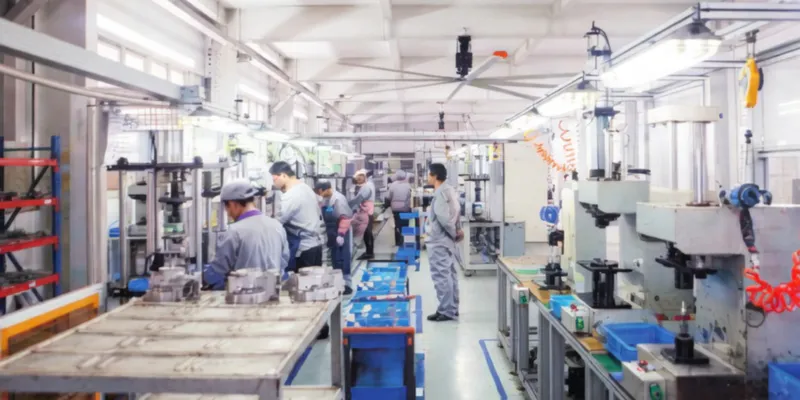
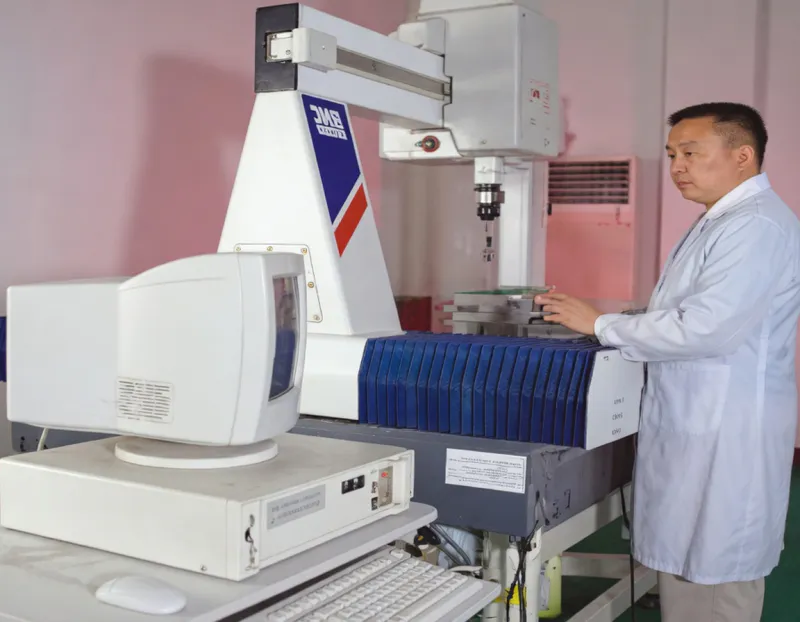
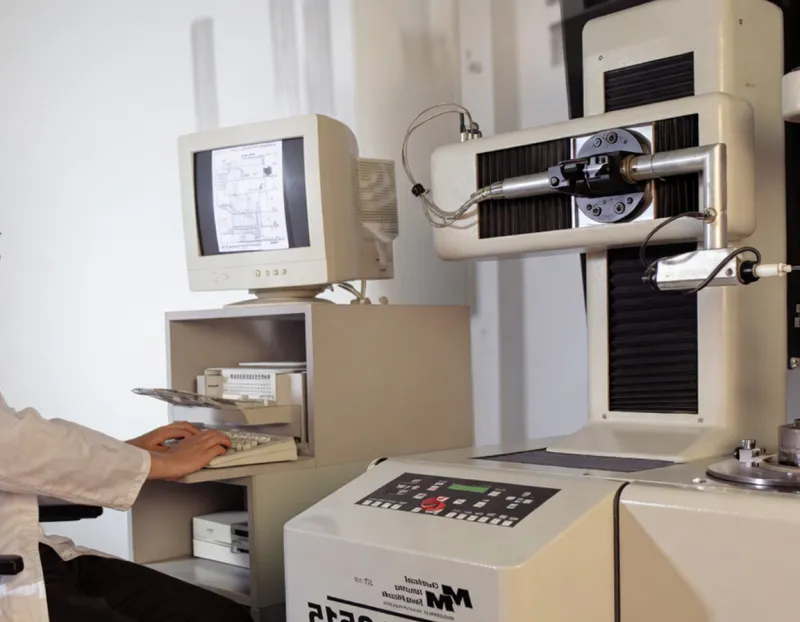
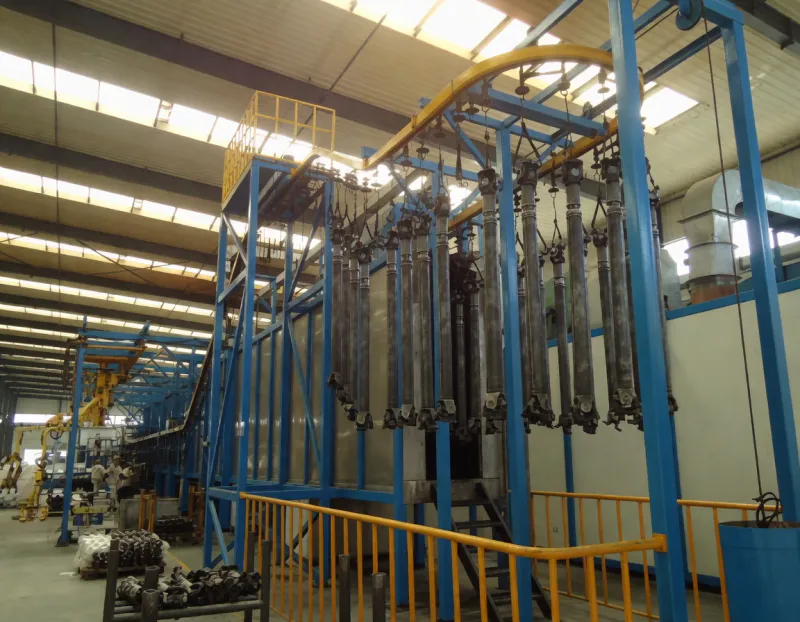
Our manufacturing facilities combine traditional precision metalworking with advanced heat-treatment technologies to produce engine timing silent chains that consistently exceed international performance standards. Our quality systems are certified to ISO 9001:2015 and ISO 14001 environmental management standards, reflecting our commitment to consistent product quality and responsible manufacturing practices.
We are committed to delivering timing chain systems that enable our customers to meet the world’s most stringent automotive standards while maintaining cost competitiveness in diverse market segments. Our technical support team provides application engineering, failure analysis, and custom timing chain solutions for specialized engine platforms.
कार्यशाला
9. Related Products & Integrated Drive System Solutions
The engine timing silent chain operates as the central synchronization element within a complete engine timing system. For optimal performance and maximum reliability, pair the silent chain with compatible sprockets and gears engineered to the same precision and performance standards:
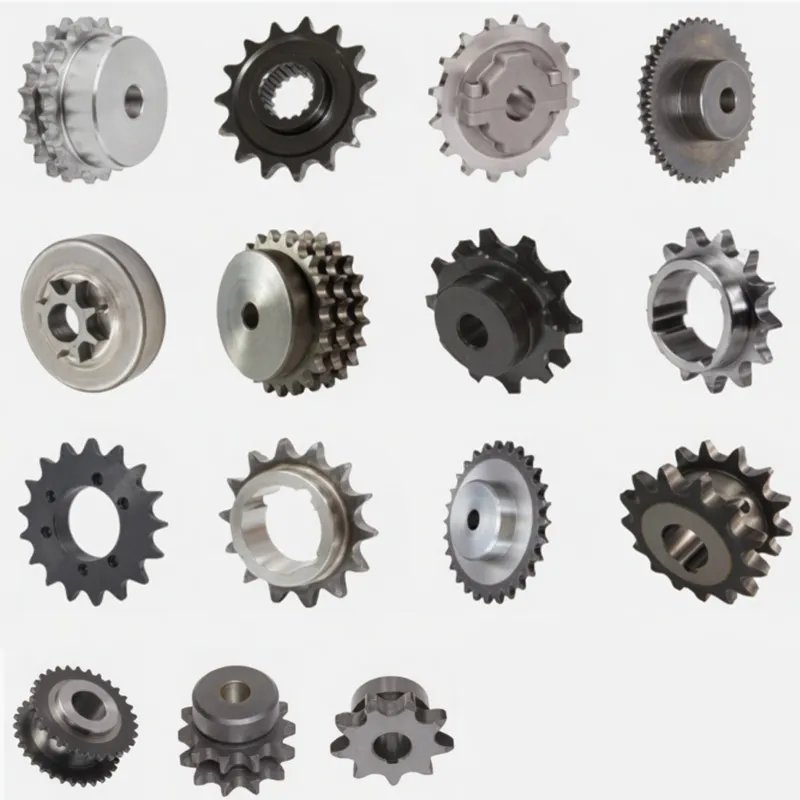
Silent Chain Sprockets & Timing Gears
The crankshaft and camshaft sprockets must be precisely engineered to work in harmony with the timing silent chain. Our proprietary sprocket designs feature optimized tooth geometry that ensures smooth, uniform chain engagement across the full range of engine operating speeds and loads. Every sprocket is manufactured to exacting dimensional tolerances and undergoes rigorous quality verification. Sprockets and timing gears from the same manufacturer as your silent chain guarantee system-level compatibility, eliminate tooth-mismatch issues, and extend overall timing system life dramatically.
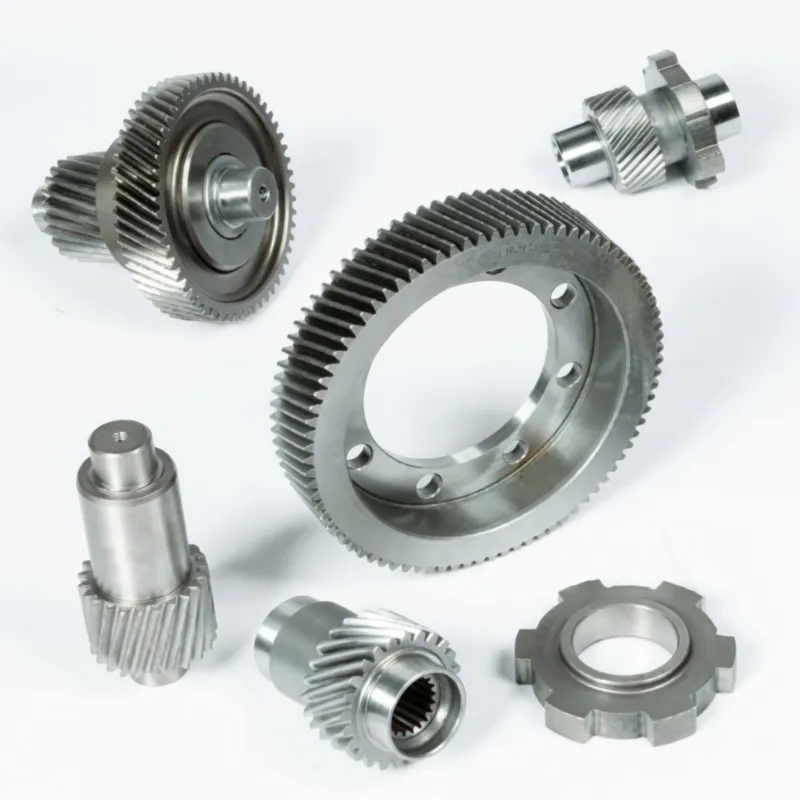
Precision Gears & Timing System Integration
For vehicles with advanced timing systems incorporating variable valve timing (VVT) or cam-phasing mechanisms, our precision-engineered gears deliver the tight backlash control and consistent torque transmission required by modern powerplant management systems. We specialize in developing integrated timing solution packages that combine silent chains, sprockets, and gears into a cohesive system optimized for specific vehicle platforms. This one-stop-supply approach reduces engineering complexity, accelerates time-to-market for new vehicle programs, and provides cost advantages through consolidated sourcing and simplified supply chain logistics — particularly valuable for automotive suppliers and original equipment manufacturers operating in Colombia and throughout Latin America.
अक्सर पूछे जाने वाले प्रश्नों
संपादक: पीएक्सवाई