
विवरण
EP Series — Tube Type Configuration
Tube Type Steel Wheel — Specification For Heavy Truck Wheel
20″ & 24″ Rim Diameter · 6 / 8 / 10 Bolt · SR22 / Rightangle / 45° Stud Styles · Multi-Vehicle Fitment
1. तकनीकी विशिष्टताएँ
Engineering parameters for the EP Tube Type Steel Wheel — Heavy Truck Series. Verify vehicle fitment against axle hub specifications before procurement.
| पैरामीटर | Value / Specification | Technical Notes |
|---|---|---|
| Rim Nominal Diameter | 20″ (508 mm) / 24″ (609.6 mm) | Both diameters covered in this series |
| Rim Width Range | 6.00″ / 6.50″ / 7.00″ / 7.25″ / 7.50″ / 8.00″ / 8.28″ / 8.50″ / 9.00″ | Nine widths for steer, drive, and trailer positions |
| Bolt Quantity | 6 / 8 / 10 bolts | Covers Nu-series, Foton, CNHTC, Beiben, and trailer axles |
| PCD — Pitch Circle Diameter | 222.25 mm / 275 mm / 285.75 mm / 335 mm | Four PCD options covering major Asian heavy truck platforms |
| Bolt Hole Diameter | 26 mm / 27 mm / 32 mm / 32.5 mm | Precision-drilled to match OEM stud specifications |
| Center Hole Diameter Range | 163 / 213.5 / 214 / 220 / 221 / 222 / 272 / 281 mm | Machined to H7 tolerance for accurate hub centering |
| Stud Style | SR22 / Rightangle / 45° Taper | Three seating geometries covering Asian and European platforms |
| ऑफसेट रेंज | 137 – 185 mm | Varies by rim width and vehicle platform |
| Applicable Tire Sizes | 7.50-20 to 12.00-24 | Tube type cross-ply and radial commercial tires |
| Rim Material Grade | SPFH590 / DP600 high-strength steel | Tensile strength ≥ 590 MPa, elongation ≥ 18% |
| Surface Treatment | Shot blast Sa 2.5 + epoxy primer + polyester topcoat | Salt spray resistance ≥ 480 h per ISO 9227 |
| Weld Method | Robotic MIG, full-penetration | 100% post-weld air leakage test, zero-escape policy |
| Dynamic Balance Residual | ≤ 100 g·cm | 100% inline check; CMM dimensional verification |
| Radial Runout (TIR) | ≤ 1.5 mm | Tube type fitment tolerance band |
| Radial Fatigue Life | ≥ 800,000 cycles at rated load | Tested per SAE J267 / GB/T 5909 protocol |
| Cornering Fatigue Resistance | Tested per GB/T 15623 / SAE J328 | RMS cornering fatigue machine; no cracking at rated load |
| Quality Management System | ISO 9001:2015 | Third-party certified; SGS / TÜV audit-compliant |
| Applicable Truck Platforms | Nu130/131/134, Foton, CNHTC, Beiben, Dongfeng, Isuzu, Mercedes-Benz, Sinotruk | Refer to model matrix for exact fitment match |
| Rim Type | Drop-center (DC) and semi-drop-center (SDC) | Tube type inner tube and flap mounting compatibility |
| Recommended Lug Nut Torque | 450 – 620 N·m (varies by stud specification) | Star-pattern torquing; re-torque after first 50–100 km |
Model Reference — Tube Type Steel Wheel For Heavy Truck
| आकार | Bolt Qty | पीसीडी (मिमी) | Bolt Dia. (mm) | Center Hole (mm) | Offset (mm) | Stud Style | Applicable Tyre |
|---|---|---|---|---|---|---|---|
| 6.00G-20 | 6 | 222.25 | 32.5 | 163 | 137 | SR22 | 7.50-20 |
| 6.5-20 | 6 | 222.25 | 32.5 | 163 | 145 | SR22 | 8.25-20 |
| 6.00G-20 | 8 | 222.25 | 32.5 | 163 | 137 | SR22 | 7.50-20 |
| 6.5-20 | 8 | 275 | 26 | 213.5 | 145 | Rightangle | 8.25-20 |
| 7.00T-20 | 8 | 275 | 26 | 221 | 152 | Rightangle | 9.00-20 |
| 7.25V-20 | 8 | 275 | 32 | 214 | 160 | SR22 | 9.00-20 |
| 7.50V-20 | 10 | 285.75 | 26 | 220 | 163 | Rightangle | 10.00-20 |
| 7.50V-20 | 10 | 335 | 26 | 281 | 163 | Rightangle | 10.00-20 |
| 8.00V-20 | 10 | 335 | 26 | 281 | 171 | Rightangle | 11.00-20 |
| 8.5-20 | 10 | 335 | 26 | 281 | 178 | 45° | 12.00-20 |
| 8.5-24 | 10 | 335 | 26 | 281 | 175 | SR18 | 12.00-24 |
| 9.0-20 | 10 | 335 | 26 | 281 | 185 | Rightangle | 12.00-20 |

2. Five Key Product Advantages
01 — Broad Specification Matrix Covering 20″ and 24″ Rim Diameters
Most ट्रक का पहिया suppliers in the tube type segment offer a narrow range centered on one or two rim sizes. This EP series covers both the 20-inch and 24-inch nominal diameters in a single product line, with rim widths from 6.00 to 9.00 inches, bolt counts of 6, 8, and 10, and PCD values of 222.25 mm, 275 mm, 285.75 mm, and 335 mm. For a Colombian fleet operator managing multiple truck platforms — perhaps a mix of older Nu-series heavy trucks alongside more recent Beiben or Sinotruk units — this means the workshop stockroom can carry a rationalized set of Tube Type Steel Wheel variants from a single supplier without the complexity and cost of managing multiple vendor relationships. The inventory simplification benefit is material: fewer SKUs to track, a single quality audit process, and one set of product documentation for the entire heavy truck wheel range.
02 — Three Stud Style Options — SR22, Rightangle, and 45° Taper
The stud style is the detail that determines whether a ट्रक का पहिया can be safely torqued to specification on a particular axle hub. An SR22 (spherical radius 22 mm) seat lug nut on a rightangle-bored hole creates a line contact that work-hardens and loosens under vibration; using the correct hole profile for the lug nut geometry is essential for maintaining proper clamping force over the service interval. This series is offered with all three principal stud styles found on Asian and European heavy truck platforms operating in Colombia and across South America, eliminating the need to source a custom or modified wheel when replacing a worn original fitment. Fleet purchasing teams in Bogotá, Medellín, and Cali who specify real truck wheels for workshop stock can confirm the correct stud style from the vehicle workshop manual and order accordingly — no ambiguity, no field modifications.
03 — High-Tensile Steel for Extended Service Life in Demanding Conditions
The rim and disc components of this ट्रक का पहिया series are fabricated from high-strength low-alloy steel with a minimum tensile strength of 590 MPa, achieved through SPFH590 or equivalent DP-grade material. This delivers a fatigue resistance profile significantly higher than ordinary carbon steel tube type wheels, which is particularly relevant for Colombian secondary road conditions where unpaved surfaces, speed bumps, railroad crossings, and pothole impacts generate dynamic load spikes well above the nominal axle load. The high-tensile construction means the rim flange is less likely to deform from kerb strikes during city distribution operations — a failure mode that creates chronic air-loss problems when the tube valve stem is deflected by flange distortion. Each large truck wheel in this series is built to survive not just the rated load, but the operating conditions your drivers actually encounter.
04 — 100% Air Leakage and Dynamic Balance Inspection
Every ट्रक का पहिया in this series passes a 100% inline air pressure leak test before leaving the production line — not a sample-based statistical inspection, but a 100% inspection on every unit. The weld seam between rim and disc is the primary structural join and the most common source of latent cracks in lower-quality tube type steel wheels; full penetration robotic MIG welding combined with 100% post-weld air test eliminates this failure mode from the outgoing product population. Dynamic balance is also checked at 100%, with residual imbalance controlled to ≤100 g·cm. For long-distance freight operations between Colombian cities, an unbalanced ट्रक का पहिया generates steering wheel vibration, accelerates front axle component wear, and reduces driver alertness on extended runs — all factors with direct cost and safety implications.
05 — Epoxy-Polyester Coating Engineered for Tropical and Coastal Environments
Colombia’s geography exposes commercial vehicle wheels to a full range of corrosion environments: tropical humidity at sea level in Barranquilla and Cartagena, persistent rain and mud on Andean freight routes through Antioquia and Caldas, and coastal salt air on Pacific routes through Buenaventura. The coating system on this Tube Type Steel Wheel series consists of a mechanical shot blast preparation to Sa 2.5 surface cleanliness, followed by an epoxy primer and a polyester or polyurethane topcoat. The combined system is tested to ≥480 hours neutral salt spray resistance per ISO 9227 — meaningful real-world protection for wheels operating in Colombia’s diverse climate zones. The coating also provides a visual surface that allows routine inspection to identify corrosion initiation at the rim flange, the most vulnerable area of any tube type ट्रक का पहिया due to its proximity to the road surface.
3. How It Works — Manufacturing and Assembly of a Tube Type Truck Wheel
The production of a reliable Tube Type Steel Wheel for heavy truck applications begins with material verification at the incoming dock. Each steel coil undergoes X-ray fluorescence (XRF) elemental analysis and tensile coupon testing to confirm that alloy composition and mechanical properties conform to the specification for that order. This step is not a formality — variability in incoming steel chemistry is one of the root causes of inconsistent wheel fatigue performance in the aftermarket, and the deliberate quality gate at material receipt is what separates a traceable product from an untraceable one. Once material is released, the rim strip is cut to length and fed into the rim-forming line.
The rim body is formed through a progressive roll-forming process: a flat steel strip is passed through a series of driven forming rolls that progressively shape the material into the complex cross-section of the 20-inch or 24-inch heavy ट्रक का पहिया rim profile. For tube type rims, the profile must include a precisely shaped well region that accommodates the folded inner tube during mounting, flanges with a radius and angle controlled to the applicable GB or ISO standard, and bead seats with the correct taper for the tire cross-section. The rim ends are then upset-welded to form a continuous ring, and the weld area is trimmed and expanded to the final diameter tolerance in a separate sizing operation. Any out-of-round or out-of-diameter units are automatically rejected at this stage.
The disc — the flat or dished steel component that connects the rim to the axle hub — is deep-drawn from a steel blank in a multi-stage progressive die set. The bolt holes are punched and then finish-drilled to the specified diameter (26, 27, 32, or 32.5 mm depending on the model) with center-to-center pitch tolerance controlled to ±0.2 mm. The stud hole profile — SR22 spherical, rightangle flat, or 45-degree taper — is machined as a secondary operation to ensure that the lug nut seating geometry is accurate enough to produce uniform clamping force at the specified truck wheel lug nut torque across all bolt positions. Disc to rim assembly is performed by robotic MIG welding under programmed amperage and travel speed parameters that guarantee full joint penetration. The weld seam is then subjected to a 100% air pressure leak test, after which the assembled ट्रक का पहिया moves to the dynamic balance and dimensional inspection station. Units passing all checks proceed to the paint line; units failing any check are quarantined and scrapped.
The paint process begins with a mechanical shot blast to Sa 2.5 surface cleanliness, removing all mill scale, weld spatter, and surface contamination before primer application. Epoxy primer is applied electrostatically at 40–60 µm DFT, followed by a polyester or polyurethane topcoat at 60–80 µm. The cured coating withstands ≥480 hours of neutral salt spray testing — important assurance for Colombian fleet operators whose heavy duty truck wheel and tire assemblies must survive the full range of Colombian road environments throughout a multi-year service cycle.
4. सामग्री संरचना
The structural performance of any ट्रक का पहिया over a 300,000–500,000 km service life is determined first by material choice, then by forming process, and finally by weld quality. This series addresses all three through a disciplined approach to each stage. The rim shell and disc are produced from SPFH590 hot-rolled high-strength steel — a grade with a minimum yield strength of 440 MPa and ultimate tensile strength of 590–730 MPa. The elevated yield point is what prevents the rim flange from permanently deforming after a pothole impact or kerb strike, which is the most common mode of tube type ट्रक का पहिया service damage on Colombia’s secondary and tertiary road network. The 18% minimum elongation at fracture is what gives the material enough ductility to survive the deep-drawing operations required to form the disc profile without developing forming cracks at tight-radius features around the bolt hole annulus.
For specific models in the series where mass reduction is a priority — particularly for vehicles operating near their legal Colombian gross vehicle weight limit under Resolución 4100 de 2004 — DP600 dual-phase steel is used in the disc pressing. DP600’s dual-phase microstructure (hard martensite islands in a soft ferrite matrix) gives it a higher specific strength than conventional carbon steel, allowing a slightly thinner disc section to carry the same cyclic load. The net effect on a typical heavy duty truck wheel is a mass reduction of 10–15% per disc compared to a standard carbon steel equivalent — directly beneficial to payload capacity on the axle positions where this ट्रक का पहिया is mounted. Over an entire three-axle truck configuration, the cumulative weight saving can approach 30–40 kg, which translates to additional legal payload capacity under Colombian axle load enforcement.
The corrosion protection system is engineered for the full environmental range this Tube Type Steel Wheel may encounter in Colombian fleet service: tropical humidity at coastal ports, aggressive road surface contamination on Andean freight corridors, and diesel and acidic tire residue accumulation on urban distribution routes. Shot blasting to Sa 2.5 (ISO 8501-1) creates a surface cleanliness and profile that maximizes epoxy primer adhesion. The primer and topcoat system cures to a total DFT of 100–140 µm, providing a durable corrosion barrier that has been validated to ISO 9227 neutral salt spray test protocol for ≥480 hours before corrosion breakthrough — a standard that reflects realistic long-term fleet service conditions rather than just factory-exit condition.
5. अनुप्रयोग परिदृश्य
Long-Distance Freight — National Road Network, Colombia
The 7.50V-20 and 8.00V-20 variants of this ट्रक का पहिया series are the most widely applicable for long-haul freight trucks operating on Colombia’s primary national routes — the Ruta del Sol corridor (Bogotá–Barranquilla), the Bogotá–Buenaventura route through the Western Cordillera, and the Medellín–Bogotá highway. These routes involve sustained highway operation at legal maximum GVW, combined with demanding gradient work through the Andes where brake thermal management and wheel structural integrity under downhill braking loads are critical. The high-tensile steel construction and full-penetration weld standard of this series provide the structural margin needed for sustained heavy-load operations, while the broad tire compatibility range (9.00-20 through 11.00-20) covers the cross-ply and radial tire combinations used on the Foton, CNHTC Howo, and Beiben platforms that dominate this segment of the Colombian freight market.
Agricultural and Mining Haulage
The 8.5-20 (45° stud, 12.00-20 tire) and 9.0-20 (rightangle, 12.00-20 tire) configurations are purpose-appropriate for agricultural haulage trucks and light mining support vehicles in Colombia’s coffee, palm oil, and mineral extraction sectors. These applications regularly operate on unpaved farm tracks and mine access roads where pothole impacts and uneven surface loading create peak axle loads that exceed the nominal load rating by a significant margin. The SPFH590 rim construction of this Tube Type Steel Wheel tolerates these peak load events without permanent flange deformation, which is critical because a deformed flange on a tube type wheel creates a leak point at the tube/flange interface that cannot be resolved by re-torquing — the wheel must be replaced. Investing in a higher-quality ट्रक का पहिया for these demanding applications reduces total cost of ownership through extended replacement intervals and lower emergency roadside repair frequency.
Urban Distribution and City Logistics
Medium-duty city distribution trucks operating in Bogotá, Medellín, Cali, and Barranquilla frequently use the 6.5-20 and 7.00T-20 configurations with 8.25-20 and 9.00-20 tire sizes. Urban distribution service generates a different wear profile than highway operation: more frequent full braking events, more frequent kerb contact during urban maneuvers, higher brake temperature cycles from stop-start traffic, and higher cumulative fatigue cycles per kilometer due to low-speed heavy loading and unloading operations. The 100% dynamic balance inspection of this ट्रक का पहिया series is particularly relevant for urban distribution fleets, where driver comfort and reduced steering component wear directly impact driver retention and vehicle maintenance costs. An imbalanced front ट्रक का पहिया generating steering vibration at 40–60 km/h — the typical urban freight speed — creates driver fatigue on high-frequency local delivery routes.
Spare Parts Stocking — Truck Workshops and Fleet Distributors
The broad specification matrix of this Tube Type Steel Wheel series makes it an ideal product for wholesale spare parts distributors in Colombia who serve multiple truck brands from a single inventory location. A distributor in Bogotá or Manizales carrying the full range of 6.00G-20 through 9.0-20 configurations can service the walk-in workshop demand for Nu-series, Foton, Dongfeng, Beiben, and Isuzu truck wheel replacement without maintaining separate supplier relationships for each platform. This one-stop supply model is particularly valuable for independent truck repair workshops outside the major cities, where lead times for special orders can put a loaded truck off the road for days. With this series, the most commonly needed truck wheel replacement configurations can be stocked locally and supplied same-day from the distributor’s shelf — a compelling operational advantage for the fleet operator and a strong conversion argument for the distributor.
6. Regulatory Compliance & Industry Standards
Colombia — Ministerio de Transporte
In Colombia, commercial vehicle technical standards for heavy trucks and their components are administered by the Ministerio de Transporte through Resolución 4100 de 2004 (Pesos y Dimensiones), which sets per-axle load limits enforced by INVIAS at weighbridge stations across the national road network. Importers of replacement wheels must provide technical datasheets, material certificates, and load rating documentation through their customs declarations at Colombian ports of entry. Colombian NTC (Norma Técnica Colombiana) quality framework expectations for imported commercial vehicle components align broadly with ISO quality management system requirements. This ट्रक का पहिया series is produced under an ISO 9001:2015-certified quality management system and is supported by material test certificates and third-party test reports (SGS, TÜV, BV) on request — documentation that supports Colombian customs clearance and satisfies fleet operator quality audit requirements. Colombian buyers can obtain Spanish-language technical datasheets and Certificate of Origin documentation for customs purposes as standard.
China — GB/T Standards
This Tube Type Steel Wheel series is designed and tested in compliance with GB/T 5909 (bending fatigue testing for commercial vehicle wheels) and GB/T 15623 (dynamic cornering fatigue testing). These national standards define the test protocols, load factors, and acceptance criteria for heavy truck wheels sold in the domestic market, and they align with the intent of the SAE J267 and SAE J328 international standards. The compliance with GB/T standards provides a documented technical baseline for Colombian buyers who need to evaluate supplier quality against a recognized standard rather than on the basis of unverified manufacturer claims.
United States — FMCSA Requirements
For Colombian importers who also operate or supply in the North American freight market, the Federal Motor Carrier Safety Administration (FMCSA) under 49 CFR Part 393 requires that commercial vehicle wheels be free from cracks, elongated bolt holes, and missing fasteners, and that wheel replacement records be maintained for compliance audit. The traceability documentation available for this ट्रक का पहिया series — including batch-level material test certificates and dimensional inspection records — supports FMCSA compliance recordkeeping requirements for vehicles operating under US Motor Carrier authority.
European Union — ECE and ETRTO Standards
While this Tube Type Steel Wheel series is primarily specified for Asian heavy truck platforms, the broader product range from which it originates includes European-format wheels tested to ECE R-124. For Colombian fleet operators managing a mixed fleet including European-origin trucks (Volvo, Mercedes-Benz, MAN), companion products covering European platform specifications are available from the same product family, supporting the one-stop supply model for mixed-fleet operators. The ISO 9001:2015-based quality management system ensures that the manufacturing discipline is consistent across all product lines, regardless of the target market standard.
7. About Us
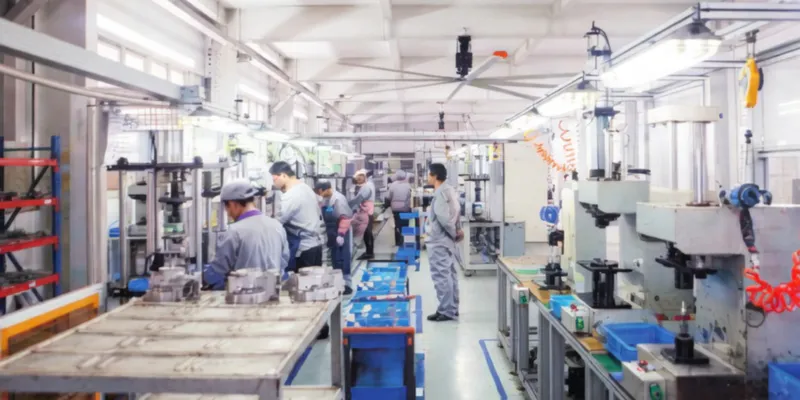
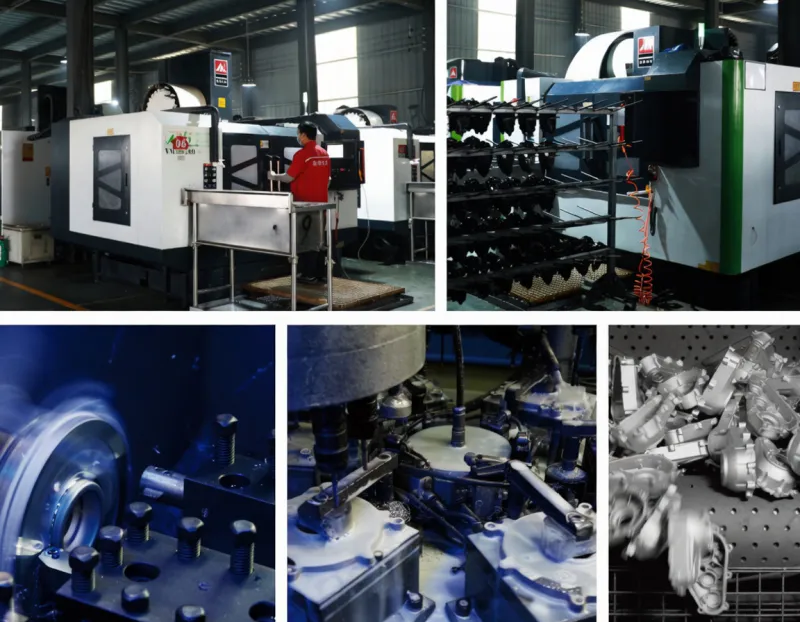
Our manufacturing infrastructure covers seven dedicated production bases and one complete wheel and tire assembly facility distributed across multiple production locations. The high-end factory facility operates four production lines at a combined annual capacity of six million pieces, drawing on equipment sourced from Germany, Sweden, Spain, Japan, and the United States. All pressing, welding, and material handling is performed by industrial robots, and every production station is equipped with 100% inline inspection — not sample-based statistical control, but individual unit verification at every critical stage. This manufacturing philosophy is why we are among the first companies in our industry to receive National Export Base of Auto Parts designation from the National Commerce Department.
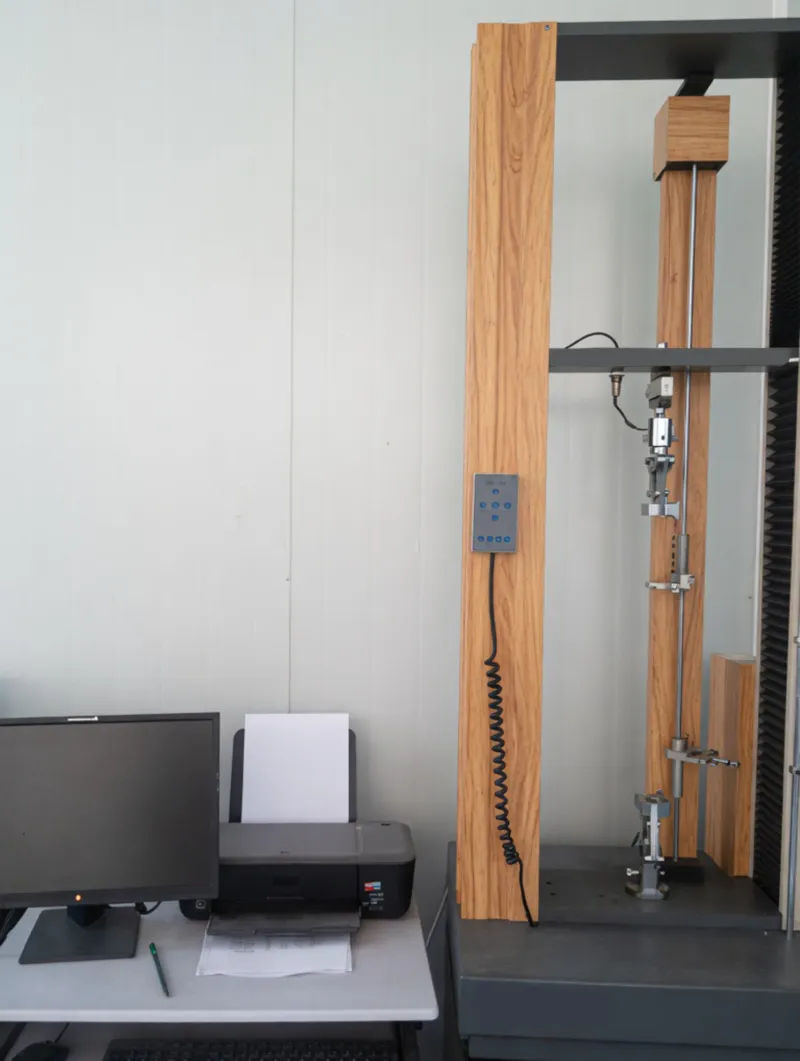
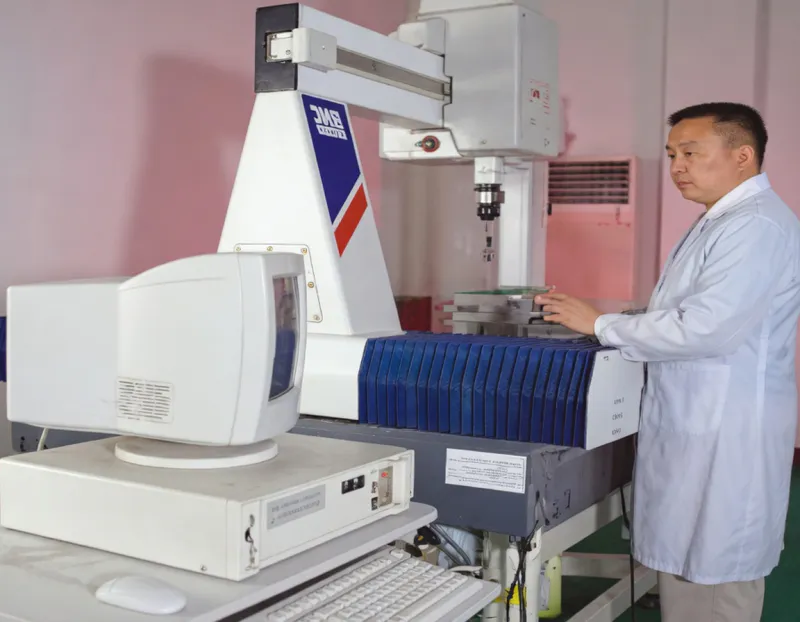
The National-Level Testing Center underpins everything. Equipped with German RMS cornering fatigue test rigs, US ITS radial fatigue machines, CMM coordinate measuring systems, salt spray chambers, UV aging ovens, and XRF material analyzers, the center performs the full spectrum of wheel qualification tests on a routine basis.
कार्यशाला
8. Related Products — Complete Axle-End System Supply
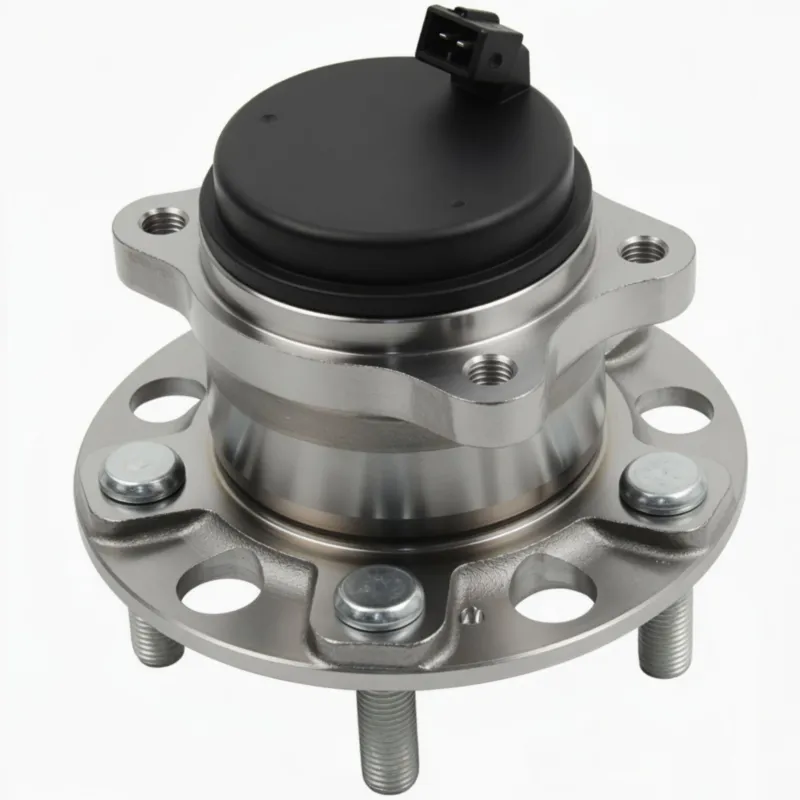
व्हील हब
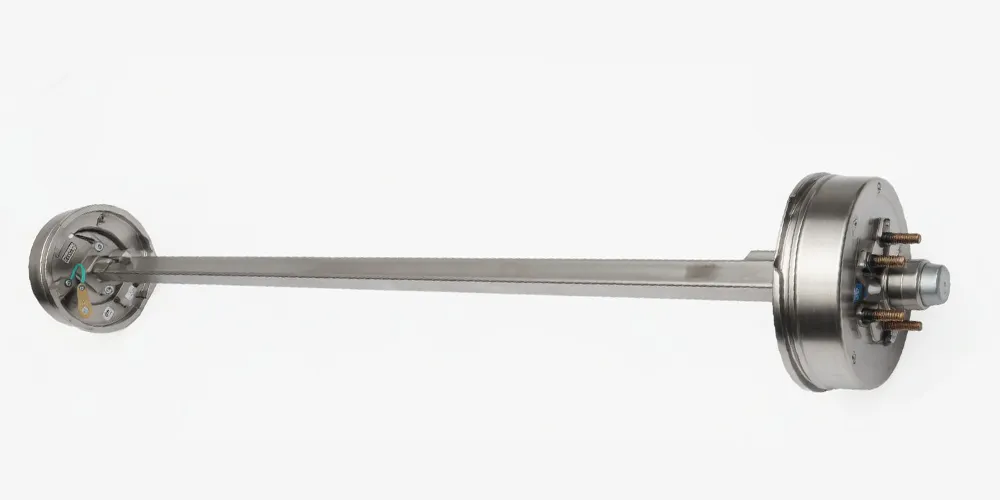
ट्रेलर एक्सल
अक्सर पूछे जाने वाले प्रश्नों
संपादक: पीएक्सवाई