Beschreibung
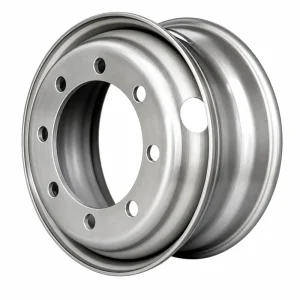
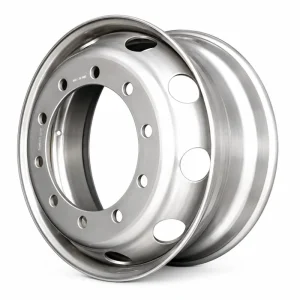
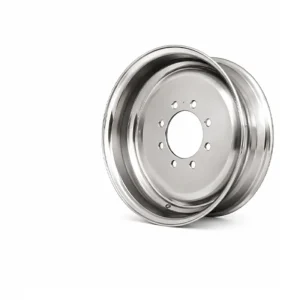
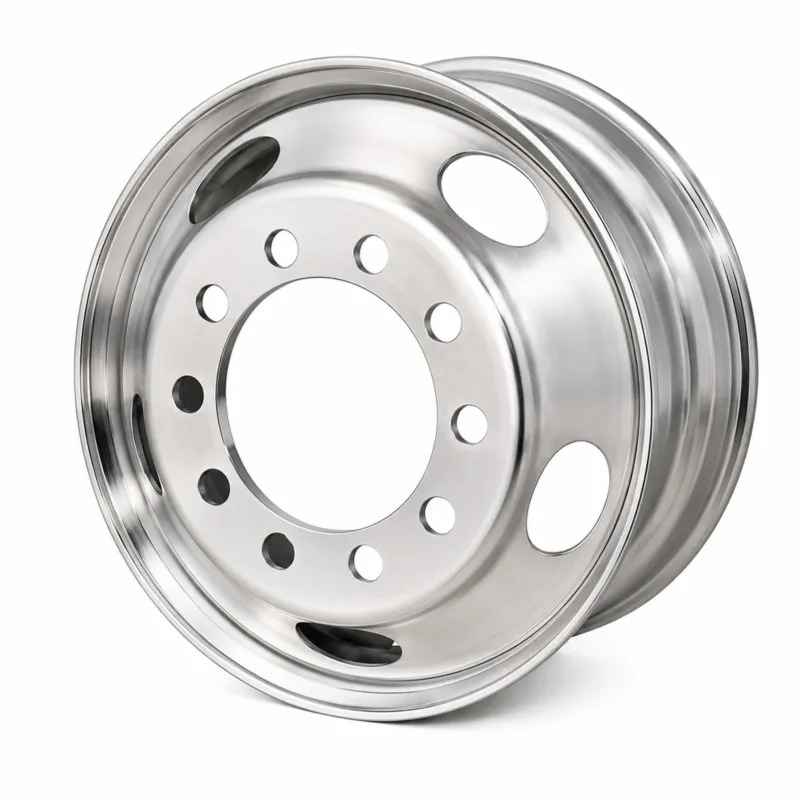
EP-Schwerlast-LKW- und LKW-Anhänger-Rad für Australien
Precision roll-formed tubeless truck trailer wheel engineered to Australian heavy transport specifications — delivering load integrity, dimensional accuracy, and long-service durability for Colombian fleet operators, logistics companies, and heavy haulage contractors who demand Australian-grade truck wheel performance
1. Technical Specification Reference — EP Australia Series
| Parameter | Spezifikation |
|---|---|
| Part Numbers — Australia Series | JG28SW43 / JG28SW08 / JG28SW36 / JG26SW82 |
| Rim Size (inch) | 22.5 × 8.25 |
| Wheel Construction | Tubeless, two-piece disc-rim welded steel |
| Bolt Quantity | 10 bolts (JG28SW43, JG28SW08, JG28SW36) |
| PCD — JG28SW43 | 335 mm |
| PCD — JG28SW08 / JG28SW36 | 285.75 mm |
| Bolt Hole Diameter | 26 mm |
| Centre Hole Diameter — JG28SW43 | 281 mm |
| Centre Hole Diameter — JG28SW08 / JG28SW36 | 220 mm |
| Centre Hole Diameter — JG26SW82 | 120 mm |
| Offset (ET) — JG28SW43 / JG28SW08 / JG28SW36 | 168 mm |
| Vent Holes — JG28SW43 / JG28SW08 | 10 |
| Vent Holes — JG28SW36 | 2 |
| Piloting System | HUB (hub-piloted) |
| Applicable Tyre Sizes | 315/80R22.5, 295/80R22.5, 11R22.5 |
| Rim Material | High-strength steel, SPFH590 / DP600 grade |
| Oberflächenbehandlung | Electrophoretic primer + powder-coat or liquid paint |
| Salt-Spray Corrosion Resistance | ≥ 480 hours, no base-metal corrosion |
| Quality Certification | ISO 9001; cornering fatigue and radial fatigue test reports |
| Recommended Wheel Nut Torque | 475 – 610 N·m (per hub-piloted torque protocol) |
2. Five Reasons Fleet Managers Choose This Truck Trailer Wheel
1. Hub-Piloted Centering Precision
All four variants in this truck trailer wheel series use HUB piloting rather than stud-piloted centring, matching the centering system adopted by Australian Standards and widely used in heavy commercial truck trailer hub assemblies globally. Hub-piloted mounting seats the wheel on the centre bore rather than on the studs, eliminating stud bending loads during torque-up and ensuring true concentric running that reduces vibration, premature stud fatigue, and uneven tyre wear — a direct operating-cost benefit for Colombian long-haul operators covering remote Andean and Pacific corridor routes.
2. Roll-Formed Rim Floor and Precision Welding
The rim is manufactured using rim flow-forming technology that compresses and work-hardens the steel during forming, allowing up to 20 percent weight reduction against equivalent load capacity compared with conventionally pressed wheels. The result is a lighter truck wheel that reduces unsprung axle mass — improving fuel consumption on Colombian toll highways, lowering tyre rolling resistance on mountain grades, and reducing road-surface impact forces that stress trailer chassis structures during loaded operation on unpaved secondary routes.
3. Tubeless Fitment for Safety and Efficiency
The tubeless heavy duty truck trailer wheel design eliminates inner tubes and the associated failure modes — tube pinch puncture, valve stem stress cracking, and tube fold-over heat build-up — that affect older tube-type truck wheel configurations. Tubeless construction allows a slow deflation profile rather than sudden blowout in the event of puncture, critical safety behaviour for Colombian intercity and mountain freight routes where rapid tyre deflation at speed can result in vehicle instability. Tubeless wheels also enable faster roadside inflation and repair, reducing driver downtime.
4. Validated Load and Fatigue Performance
Each truck trailer wheel undergoes cornering fatigue testing on German-specification RMS machines and radial fatigue testing on American ITS machines before series approval, ensuring structural performance margins appropriate for rated load operations in demanding environments. For Colombian freight operators hauling agricultural commodities, building materials, and consumer goods on multi-axle trailers, this independently verified fatigue endurance provides assurance that wheel failure will not occur within the intended service life under correctly loaded and maintained conditions.
5. Multi-Variant PCD Range for Australian Trailer Standards Compatibility
The availability of both 335 mm PCD (JG28SW43) and 285.75 mm PCD (JG28SW08 and JG28SW36) configurations within the same Australian truck trailer wheel family allows Colombian importers to source wheels covering the full range of Australian prime mover and trailer axle hub patterns in a single procurement relationship. Whether specifying truck trailer wheel replacement parts for Australian-branded trailers already operating in Colombia, or sourcing wheels for new trailer builds intended to meet Australian technical specifications for export, this multi-PCD range eliminates the need for multiple suppliers and the compatibility risk that creates.
3. Heavy Duty Truck and Truck Trailer Wheel — Product Introduction
The EP-Heavy Duty Truck and Truck Trailer Wheel for Australia series represents a factory-configured product line built specifically to the dimensional standards that govern heavy vehicle wheel fitments across Australian states and territories, where road train and B-double trailer combinations operating under the PBS (Performance-Based Standards) scheme place exceptional structural demands on wheels and tyres. Colombia’s growing import trade with Australia and the Southeast Asian logistics corridor means Colombian fleet operators are increasingly encountering Australian-specification trailers and prime movers on their networks, creating demand for truck trailer wheel stock that precisely matches Australian hub geometry rather than requiring costly adapters or non-standard fitments. The EP series addresses this through a four-part number range in the 22.5 × 8.25 inch format, covering both the 335 mm and 285.75 mm PCD configurations used by the dominant Australian trailer axle manufacturers, with the 26 mm bolt hole diameter and 168 mm offset that are characteristic of this heavy commercial wheel platform.
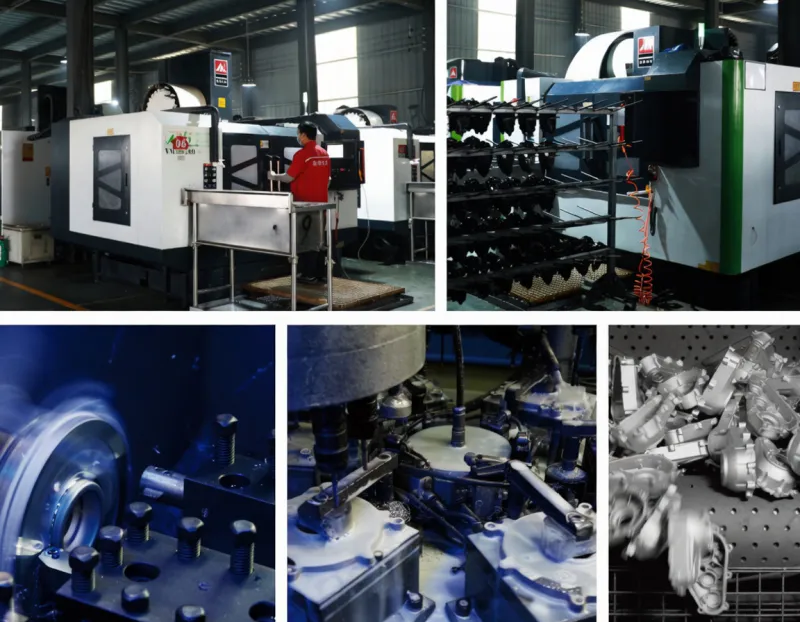
Understanding the production process helps frame the quality assurance behind each truck wheel. Steel billets enter the production line at the disc pressing station where CNC hydraulic presses form the disc face to precise dimensional tolerances, including bolt hole positions within ±0.1 mm of nominal PCD to ensure consistent hub-piloted seating. The rim is roll-formed through multiple passes on dedicated forming equipment imported from Germany and the Netherlands, a process that work-hardens the steel incrementally while achieving the precise rim contour geometry required for tubeless bead seating. MIG welding joins disc to rim at controlled heat input to prevent distortion, followed by in-line 100 percent dimensional checks, automated dynamic balance measurement, and leak testing before paint application. The paint system — either electrophoretic primer with powder topcoat or liquid paint per customer specification — provides corrosion protection tested to 480 hours salt spray without base-metal corrosion, relevant for Colombian truck trailer wheel applications in coastal freight hubs at Buenaventura, Barranquilla, and Cartagena.
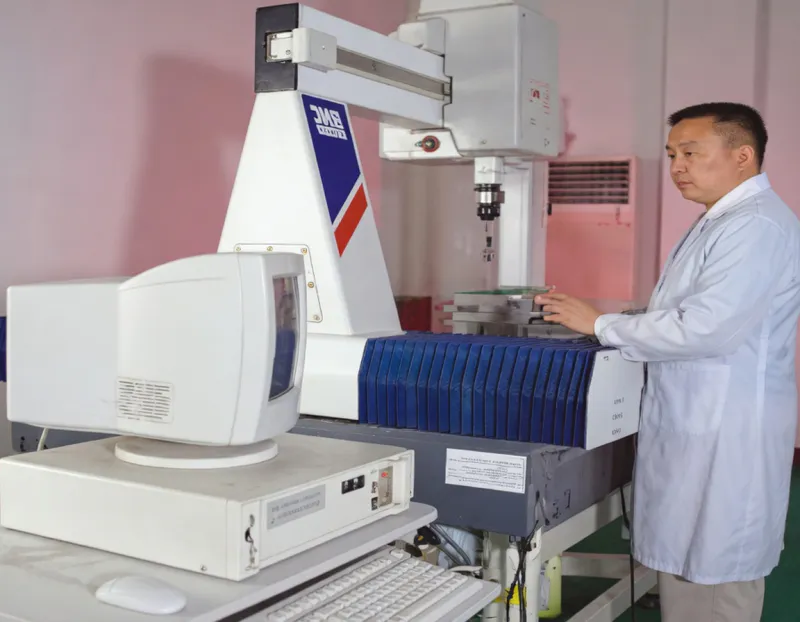
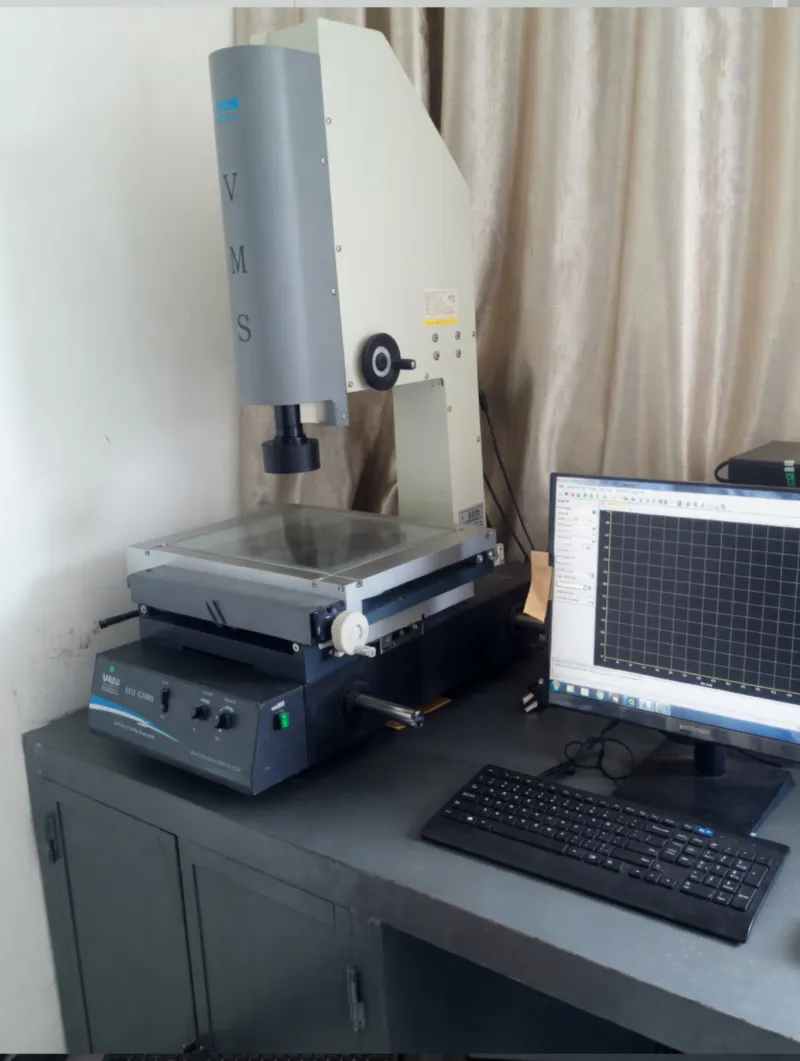
For Colombian procurement engineers evaluating truck trailer wheel sourcing options, the critical factors are dimensional conformance, material traceability, and fatigue certification. Dimensional inspection reports from calibrated CMM equipment verify that each production batch meets PCD, bolt hole diameter, centre-bore diameter, offset, and runout tolerances before shipment. Material test certificates confirm that the high-strength steel grades used — including SPFH590 and DP600 dual-phase steel in selected parts — originate from qualified steel mills with traceable heat numbers. Fatigue test reports from both cornering and radial fatigue test programmes provide independent validation of structural performance at the rated load, giving fleet maintenance managers confidence that the truck trailer wheel will reach its intended service mileage without structural degradation under normal operating conditions on Colombian freight routes.
4. How a Heavy Duty Truck Trailer Wheel Works
A heavy duty truck trailer wheel functions as the structural interface between the tyre — which carries the vehicle load through pressurised air and generates traction through road contact — and the hub-axle assembly that transfers braking and driving torques from the driveline or braking system. The wheel consists of two primary components: the disc, which carries the bolt holes, centre bore, and hub-piloting surface; and the rim, which supports the tyre bead seats at both inboard and outboard flanges. For tubeless wheels, the rim profile is machined or rolled to a precise bead-seat geometry that forms an airtight seal with the tyre bead without requiring an inner tube, relying on the tyre sidewall and rim interface to contain inflation pressure that typically reaches 110 to 125 PSI in loaded Australian-specification trailer tyres operating in the 315/80R22.5 or 11R22.5 size range common on this rim width.
During operation, vertical loads from vehicle weight and road surface irregularities transmit from the tyre contact patch through the pressurised air column to the tyre bead, into the rim flange, and through the disc web into the hub. This load path means the disc is subjected to cyclic bending stresses at the bolt hole array and at the disc-rim junction, which are the two fatigue-critical zones that cornering and radial fatigue testing evaluate. Hub-piloted wheels additionally carry centring loads at the centre bore that relieve studs of lateral forces during the torque-up process, distributing the clamping task purely to the bolt-nut interface. This distinction is why truck trailer wheel nut torque values differ between hub-piloted and stud-piloted designs — hub-piloted systems require precise torque-angle methods to achieve correct clamping force distribution across all ten fasteners simultaneously, typically 475 to 610 Newton-metres for the 22.5-inch heavy commercial platform depending on stud grade and thread condition.
Thermal management is a secondary but important function. During extended downhill braking on mountain grades — a scenario directly relevant on Colombian Andean freight routes between highland cities and Pacific coast ports — brake rotor and drum temperatures can reach 400 to 600 degrees Celsius and radiate into the wheel disc and rim. The vent holes in the disc (10 holes in most variants, or 2 holes in the JG28SW36 configuration) allow airflow through the wheel cavity during forward motion, accelerating heat removal from the brake system and reducing the risk of tyre sidewall heat damage from elevated rim temperatures during sustained braking events. Wheel disc ventilation design is therefore part of the brake thermal management system on heavy vehicles, not merely an aesthetic feature.
5. Material Construction and Steel Grade Selection
Material selection for a heavy duty truck trailer wheel involves balancing competing requirements: yield strength sufficient to resist disc bending and rim hoop loads under worst-case overload conditions, elongation adequate to absorb impact energy without brittle fracture on rough surfaces, fatigue resistance to sustain millions of load cycles over service life, and formability consistent with the roll-forming and pressing operations that create the final geometry. The EP Australia series addresses these requirements through selective use of advanced high-strength steel grades, with the precise grade chosen based on the wheel variant’s geometry, wall thickness, and rated load.
The primary steel grades used are SPFH590 hot-rolled high-strength steel and DP600 dual-phase steel. SPFH590 provides a minimum yield strength of 490 MPa with good fatigue performance, suitable for conventional heavy duty truck trailer wheel geometries operating within standard Australian axle load ratings. DP600 dual-phase steel — a microstructure combining ferrite and martensite phases — offers minimum tensile strength of 600 MPa with superior elongation compared to conventional high-strength steels of equivalent strength, enabling thinner cross-sections that reduce wheel mass without sacrificing structural integrity. This is the material basis for the lightweight wheel capability where wall thickness can be reduced 15 to 30 percent against conventional steel designs meeting the same load rating, a particularly relevant advantage for Colombian operators subject to gross vehicle weight (GVW) restrictions on Colombian national highway infrastructure under INVIAS regulations.
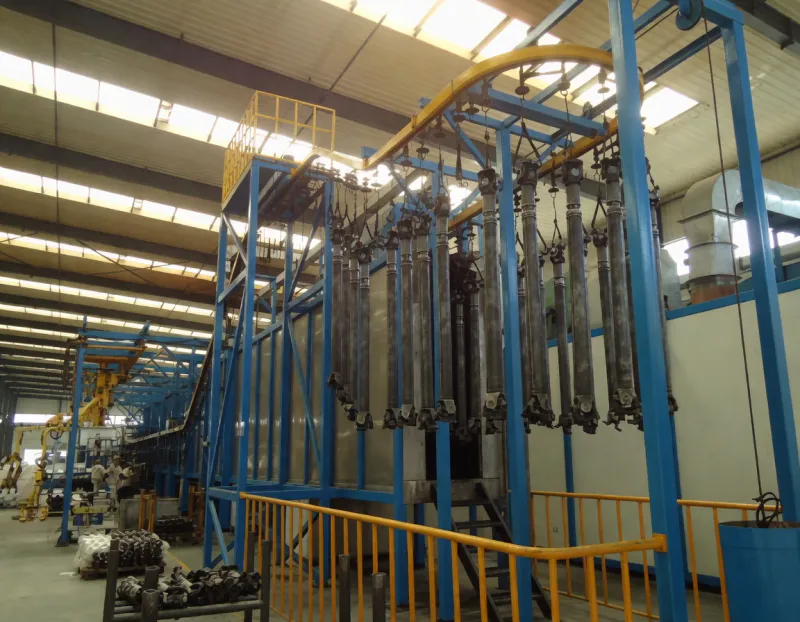
The surface protection system consists of a multi-layer coating sequence: alkaline degreasing and phosphate conversion coating of the bare steel substrate, followed by electrophoretic cathodic primer deposition that provides corrosion protection at cut edges and inside cavities not reached by spray systems, then powder-coat or liquid topcoat in standard silver or black truck wheel finishes or customer-specified colours. This paint system meets the 480-hour neutral salt-spray requirement of ISO 9227, ensuring adequate corrosion protection for Colombian coastal port environments at Buenaventura, Barranquilla, and Cartagena where salt-laden sea air accelerates corrosion on unprotected steel surfaces. Weld zones, where heat input disrupts the phosphate conversion layer locally, receive additional weld-seam inspection and are included within the coating system to prevent differential corrosion at the disc-rim junction, a common failure initiation point on inferior truck wheel products.
6. Application Scenarios in Colombian and Regional Transport
Long-Haul Freight Trailers
Colombian long-haul trucking operations moving cargo between Bogota, Medellin, Cali, Barranquilla, and Buenaventura deploy semi-trailers and full trailers on routes averaging 500 to 1200 km per round trip. This truck trailer wheel series provides the load capacity and fatigue endurance required for continuous loaded operations at 8.25-tonne axle loads on national highway Class 1 pavement, where road surface quality ranges from modern divided highway to deteriorated secondary road in rural segments. The tubeless design reduces roadside tyre change frequency compared to tube-type wheels, critical where breakdown service response times on remote Colombian mountain segments can exceed several hours.
Port and Container Logistics
Container yard tractors, terminal trucks, and port feeder trailers at Buenaventura — Colombia’s main Pacific container terminal — and Cartagena’s container operations require truck trailer wheels that resist marine corrosion while maintaining precise dimensional stability for automated container handling equipment. The salt-spray tested coating system on this heavy duty truck trailer wheel provides meaningful corrosion protection in this environment, while the hub-piloted centering minimises wheel runout that could trigger automatic balance-alarm shutdowns in port automated guided vehicle systems.
Mining and Extractive Industry Haulage
Colombia’s coal mining operations in Cesar and La Guajira departments, along with nickel, gold, and emerald extraction in multiple highland departments, generate substantial truck haulage requirements for bulk material transport from mine gate to rail, river, or road transfer point. Real truck wheels in this Australian-specification size are used on heavy tipper trailers hauling loose ore and aggregate, where robust disc construction, high-offset geometry maintaining adequate brake caliper clearance, and corrosion-resistant surface treatment ensure service life adequate for the dusty, occasionally wet conditions of mine haul roads.
Construction and Infrastructure Projects
Colombia’s ongoing infrastructure development under the 4G and 5G highway concession programs, urban metro expansions in Bogota and Medellin, and Pacific Alliance trade corridor investments generates high demand for concrete mixer trucks, tipper trucks, and heavy equipment transport vehicles. Machined truck wheel components in the 22.5-inch heavy commercial format serve drive and trailer axles on these construction vehicles, where consistent dimensional quality ensures proper tyre seating across the fleet and reduces the time maintenance technicians spend on wheel-related inspections and adjustments during tight construction programme schedules.
Agricultural Commodity Transport
Coffee, palm oil, cut flowers, bananas, and sugar cane are among Colombia’s primary agricultural exports, and all require reliable refrigerated, curtain-side, or tipper trailer transport from production region to processing facility or export port. Truck trailer wheels on these agricultural logistics vehicles must maintain service reliability across seasonal conditions — dry season dust, wet season mud, and altitude-related thermal cycling — without requiring frequent maintenance. The heavy duty truck trailer wheel for sale in this Australia-specification series provides the structural margin and corrosion resistance to operate reliably across Colombia’s diverse agroclimatic zones.
Fuel and Chemical Tanker Operations
Petroleum product distribution from Colombia’s Barrancabermeja refinery and LPG distribution networks serving residential and industrial consumers rely on tanker trailers where wheel integrity is a safety-critical concern. Vehicle tires truck trailer wheel combinations on fuel tankers must comply with transport of dangerous goods regulations under Colombian Decree 1609 of 2002, with documented wheel specification and maintenance records supporting regulatory compliance audits. The availability of test certificates and dimensional inspection reports for this truck trailer wheel series directly supports the documentation requirements that tanker fleet operators face during periodic vehicle inspections by Colombia’s Ministry of Transport technical personnel.
7. Regulatory Framework for Heavy Vehicle Wheels
In Australia, heavy vehicle wheel and tyre regulations fall primarily under the Heavy Vehicle National Law (HVNL) administered by the National Heavy Vehicle Regulator (NHVR), which sets dimensional, load, and maintenance standards applicable to vehicles over 4.5 tonnes GVM operating on public roads. Australian Standard AS 1638 specifies requirements for steel wheels for commercial vehicles, covering material properties, dimensional tolerances, and performance test requirements including impact, cornering fatigue, and bending fatigue testing. Wheels sold for Australian market use must demonstrate compliance with these standards, and the EP Australia series product range is developed with reference to these specifications, making it a direct-specification truck trailer wheel replacement for Australian-registered vehicles or vehicles built to Australian standards operating elsewhere.
In Colombia, heavy commercial vehicle technical requirements are governed primarily by the Ministry of Transport through Resolution 4100 of 2004 (vehicle technical dimensions and weights), Decree 1609 of 2002 (dangerous goods transport), and the Código Nacional de Tránsito (National Traffic Code) Law 769 of 2002. Periodic mandatory technical-mechanical inspections (Revisión Técnico-Mecánica) administered through authorised inspection centres verify that wheel and tyre conditions meet minimum safety standards. Wheels must be structurally sound without cracks, must seat tyres correctly without bead leak, and must carry no visible deformation affecting concentricity. Colombian customs classification of imported truck trailer wheels typically falls under NANDINA tariff heading 8708.70 (wheel rims and spoke wheels for motor vehicles), with applicable import duties and VAT determined by this classification for procurement cost planning.
In the United States — relevant for Colombian operators importing American-specification trailers or cross-border operations under trade agreements — FMCSA (Federal Motor Carrier Safety Administration) regulations under 49 CFR Part 393 govern wheel condition requirements for commercial vehicles operating in interstate commerce. The EU Regulation (EU) 2018/858 on vehicle type-approval covers wheel requirements for European-registered vehicles including those exported to or used in South American markets under mutual recognition frameworks. Colombian engineering consultants evaluating truck trailer wheel specifications for fleet procurement should confirm that the chosen product meets the technical standards of the original vehicle’s country of registration as well as Colombian roadworthiness requirements to avoid compliance issues during cross-border transit or vehicle inspection.
8. Manufacturing Capability and Quality Assurance
Our wheel manufacturing operation encompasses four truck wheel disc production lines and a dedicated tyre and wheel assembly facility with annual output capacity of several million pieces. The high-end production facility covers 400,000 square feet with automated pressing, welding, handling, and painting operations managed through SAP enterprise resource planning software ensuring full production traceability from material receipt to finished goods dispatch. Equipment sourced from Germany, Sweden, Spain, Japan, and the Netherlands underpins a production capability that includes rim flow-forming for weight-reduced truck trailer wheel designs, dual-phase steel pressing for high-strength-to-weight ratio disc components, and automated 100 percent in-line inspection for runout, dynamic balance, harmonics, and air-tightness before any wheel proceeds to painting.
The national-level testing centre operates German RMS cornering fatigue machines, American ITS radial fatigue machines, and a full suite of dimensional, material, and coating performance testing equipment including CMM dimensional inspection, salt-spray test chambers, UV ageing chambers, paint adhesion testers, and X-ray fluorescence spectrometers for steel composition verification. This comprehensive testing infrastructure supports the quality documentation that Colombian fleet procurement teams and customs authorities require when importing truck wheels and tires for heavy commercial vehicle applications.
Werkstatt
9. Complete Axle System — Complementary Components
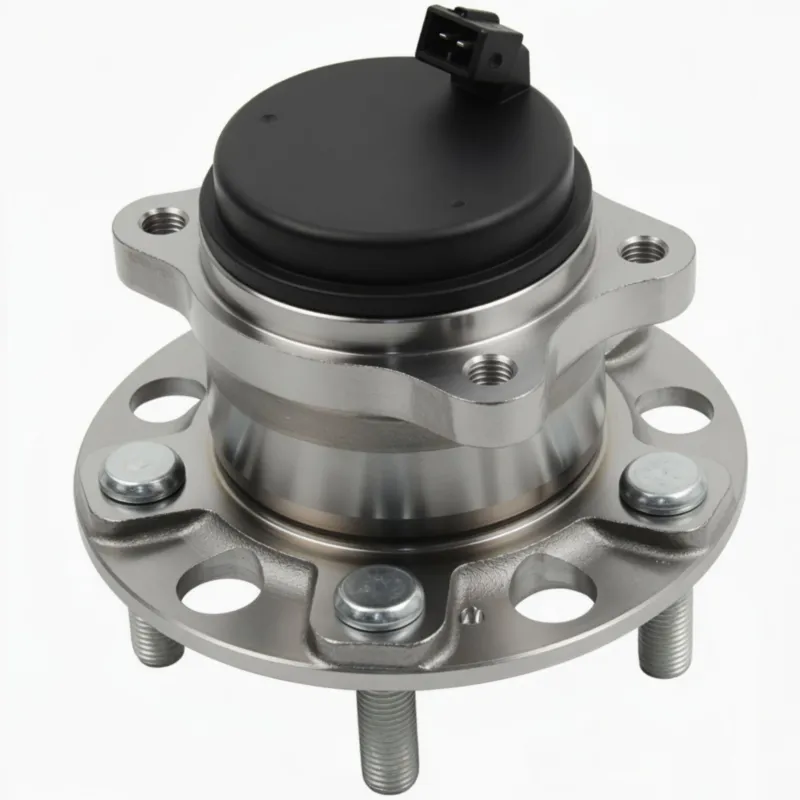
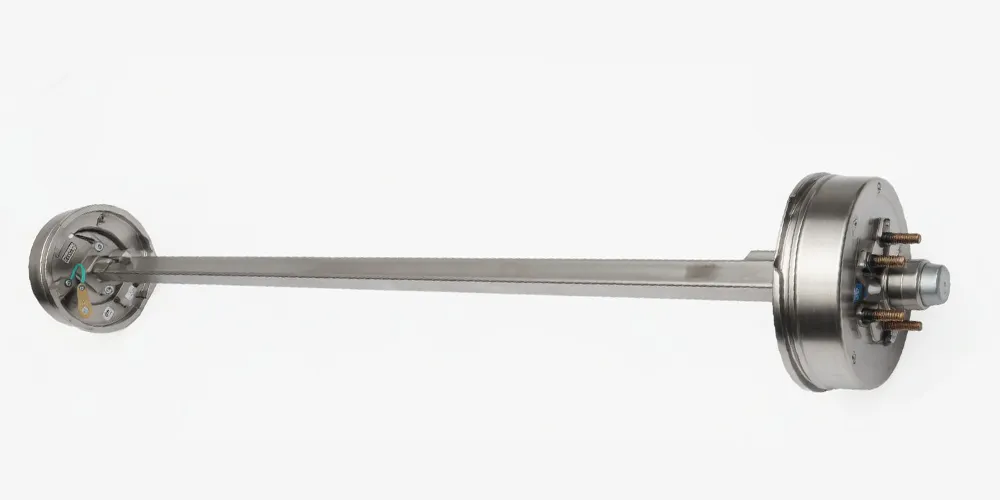
We manufacture the full trailer axle system. Colombian fleet buyers can source the truck trailer wheel alongside matched hub hardware and axle components from a single supplier, ensuring dimensional compatibility and simplifying procurement logistics.
Radnaben
Anhängerachse
Häufig gestellte Fragen
Q1. What is the correct truck trailer wheel nut torque for hub-piloted 22.5-inch wheels on heavy trailers operating in Colombia?
Hub-piloted 10-stud truck trailer wheels in the 22.5-inch heavy commercial format require wheel nut torque in the range of 475 to 610 Newton-metres applied in a star pattern using a calibrated torque wrench or torque multiplier. The precise value depends on stud thread diameter (typically M22 × 1.5), stud grade (Grade 8 or Grade 10), and whether thread lubricant is applied. Under Colombian road transport regulations, proper wheel nut torque is a mandatory roadworthiness criterion checked during Revisión Técnico-Mecánica inspections. Re-torque after the first 50 to 100 kilometres of operation is recommended following any wheel removal and reinstallation, as initial nut seating under load can relax clamping force by 10 to 15 percent.
Q2. Which truck trailer wheel specifications are required for Australian-built trailers imported into Colombia for heavy haulage operations?
Australian-built trailers imported to Colombia under national customs procedures typically retain their original wheel specifications unless the trailer is re-homologated with the Colombian Ministry of Transport. Common Australian trailer axle configurations use either 285.75 mm or 335 mm PCD with 10-bolt hub-piloted mounting in the 22.5 × 8.25 inch rim size, matching the JG28SW08 and JG28SW43 part numbers in this series respectively. Before procuring truck trailer wheel replacement parts, confirm the specific hub specification by measuring the original wheel’s PCD with a bolt circle gauge, centre bore diameter with calipers, and comparing the offset against the trailer axle’s designed wheel track width to ensure the replacement maintains correct track width within the vehicle’s certificate of conformity dimensions.
Q3. How do heavy duty truck trailer wheels differ from standard light commercial truck wheels in structural design?
Heavy duty truck trailer wheels in the 22.5 × 8.25 inch format are structurally engineered for axle loads reaching 8 to 11.5 tonnes per axle, compared to 1.5 to 3.5 tonnes for light commercial platforms. The structural differences include greater disc thickness (typically 6 to 10 mm versus 3 to 5 mm for light commercial), higher-yield-strength steel grades (SPFH590 and DP600 versus conventional 340 MPa grade for light wheels), larger bolt hole arrays (10 bolts versus 5 to 6 for light commercial), and hub-piloted centring systems replacing the stud-piloted approach adequate for lighter loads. The result is a truck wheel with substantially greater fatigue life under high cyclic loads while weighing proportionally less per unit of load capacity than conventionally designed light commercial wheel equivalents.
Q4. How does the truck and trailer wheel pan design affect brake cooling on Colombian mountain freight routes?
The truck and trailer wheel pan (disc face) geometry, specifically the quantity and size of vent holes in the disc, directly influences airflow through the wheel cavity during forward motion and thus the rate of heat removal from brake drums and rotors during sustained downhill braking. Wheels with 10 vent holes provide substantially greater airflow than the 2-vent-hole alternative (JG28SW36) when the vehicle is moving at highway speed, reducing drum temperatures on extended descents such as those on Colombian Andean routes between highland cities and lowland ports. For trailer axles with drum brakes on high-frequency descent routes, specifying the 10-vent variant (JG28SW43 or JG28SW08) provides a meaningful operating margin against brake fade and tyre heat damage during sustained loaded downhill operations.
Q5. When selecting a truck trailer wheel for a dual-tyre rear axle trailer configuration in Colombia, what offset specification should I verify?
For dual-tyre (dually) rear axle configurations, the offset value determines the separation between inner and outer tyre centrelines at the dual mounting, which must provide adequate clearance between tyre sidewalls (minimum 13 mm clearance under ADR and AS guidelines for dual fitment) while keeping the overall track width within the vehicle’s approved dimensions. The 168 mm offset in the EP Australia series is calibrated for the dual mounting geometry common on Australian trailer axles in the 22.5-inch format. Verify this offset against your specific trailer axle manufacturer’s recommended wheel specification before ordering, particularly if the trailer axle is a non-Australian specification that may use a different designed track width or inboard tyre clearance dimension. A mismatched offset in dual configuration risks tyre-to-tyre contact under laden cornering, a serious safety concern.
Herausgeber: PXY