تفصیل
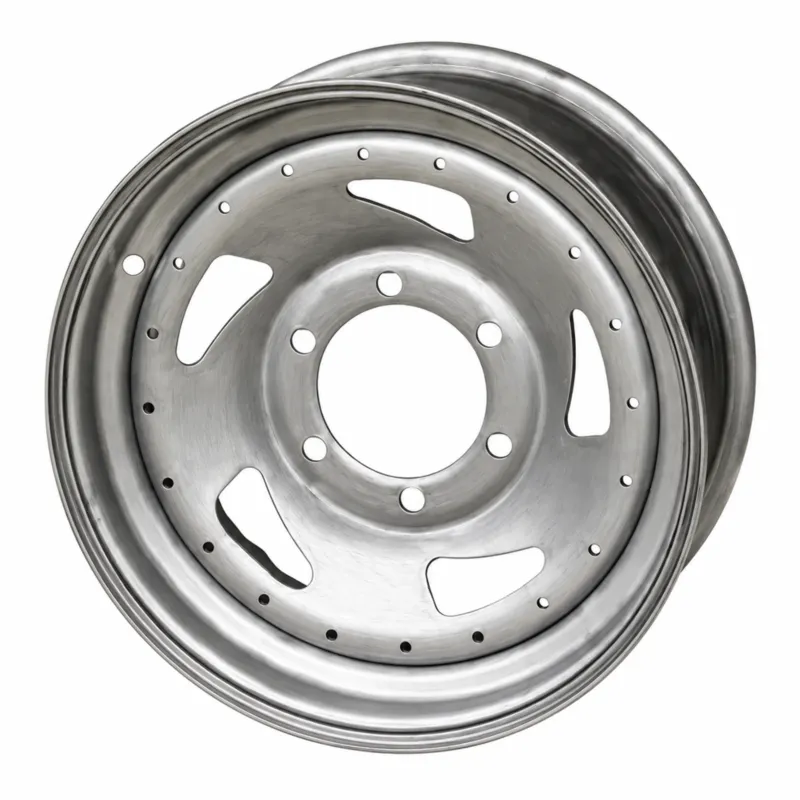
EP Series — North America Specification
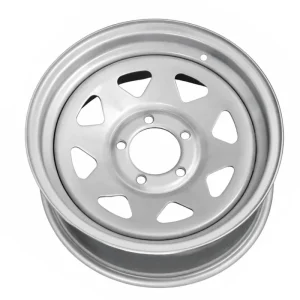
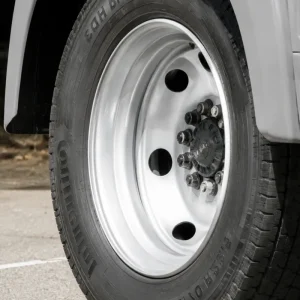
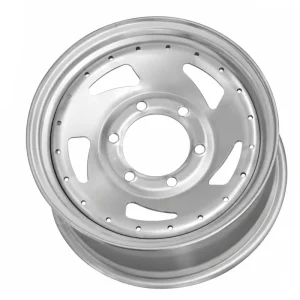
Dual / OEM Trailer Wheel — North America
16″ Rim · 8-Bolt 165.1 mm PCD · DUAL & OEM Configurations · 16×6 and 16×7 Sizes
1. تکنیکی تفصیلات
Engineering parameters for the EP Dual / OEM Trailer Wheel — North America series. Confirm hub and axle fitment against these values before procurement.
| پیرامیٹر | قدر / تفصیلات | تکنیکی نوٹس |
|---|---|---|
| برائے نام رم قطر | 16 inches (406.4 mm) | Standard North American trailer rim diameter |
| رم کی چوڑائی | 6 inches (16×6) / 7 inches (16×7) | Two widths; ST and LT tire compatibility |
| بولٹ کی مقدار | 8 bolts | North American light/medium trailer axle standard |
| PCD - پچ سرکل قطر | 165.1 mm (6.5 inches) | Tolerance ±0.2 mm hole-to-hole; Dexter / Lippert / AL-KO compatible |
| مرکز سوراخ قطر | 121 mm / 124 mm / 124.6 mm | Three options; H7 bore tolerance; varies by part number |
| آفسیٹ رینج | 6.35 mm / 12.7 mm / 139.7 mm | OEM variants: 6.35 & 12.7 mm; DUAL: 139.7 mm |
| Hub Configurations | DUAL / OEM | DUAL for tandem dual-wheel axles; OEM for single-wheel hub mount |
| Applicable Tire Sizes | ST235/80R16, LT235/80R16, LT245/75R16, LT265/75R16 | Special Trailer (ST) and Light Truck (LT) ratings |
| Rated Load Capacity | Up to 3,500 lb (1,588 KG) per wheel | Supports 7,000 lb GVWR tandem trailer configuration |
| رم میٹریل گریڈ | SPFH590 / DP600 high-strength steel | Tensile strength ≥ 590 MPa; elongation ≥ 18% |
| سطح کا علاج | Shot blast Sa 2.5 + epoxy primer + polyurethane topcoat | Salt spray resistance ≥ 480 h per ISO 9227 |
| Weld Method | Robotic MIG, full-penetration | 100% post-weld air leakage test, zero-escape policy |
| متحرک توازن بقایا | ≤ 75 g·cm | 100% inline dynamic balance check on all units |
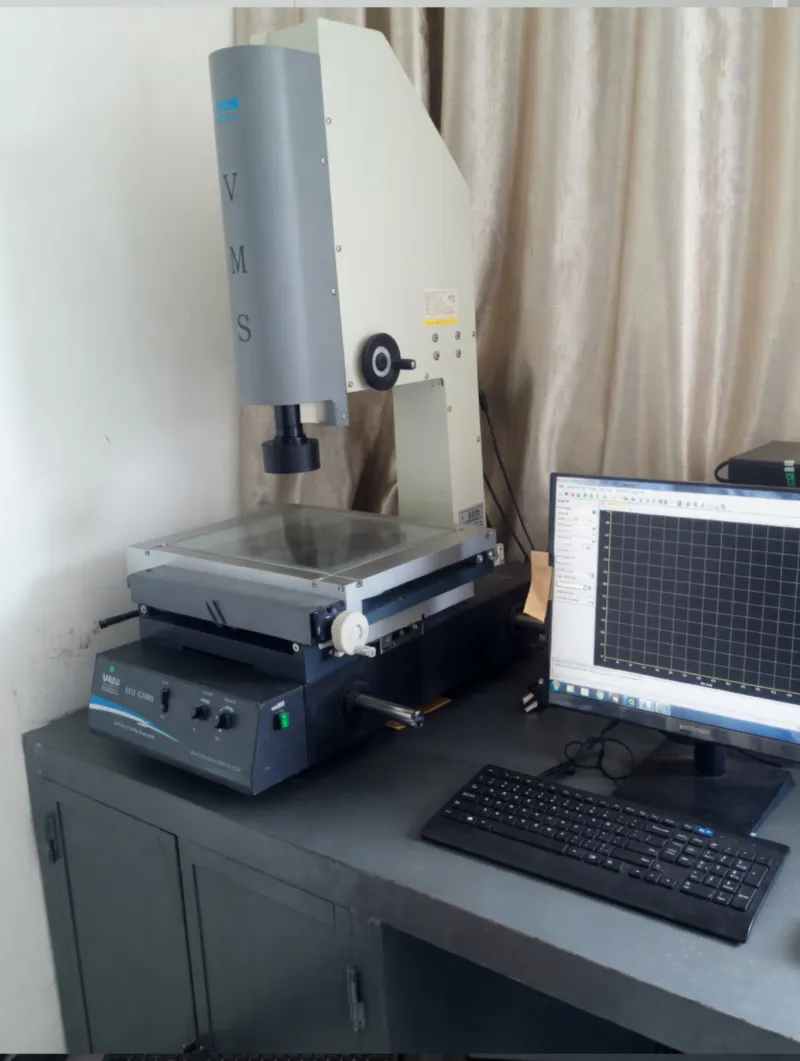
| ریڈیل رن آؤٹ (TIR) | ≤ 1.0 mm | CMM dimensional verification; 100% inline check |
| ریڈیل تھکاوٹ زندگی | ≥ 1,000,000 سائیکل ریٹیڈ لوڈ پر | Tested per SAE J267; applicable to trailer wheel service |
| Quality Management System | ISO 9001:2015 | Third-party certified; SGS / TÜV audit-compliant |
| Lug Nut Specification | 1/2″-20 UNF conical seat (60°) or mag seat | Matches North American light trailer hub hardware |
| تجویز کردہ لگ نٹ ٹارک | 90 – 120 ft·lb (122 – 163 N·m) | Star-pattern; re-torque after first 50 miles of service |
| قابل اطلاق معیارات | SAE J267, SAE J328, TIA guidelines | North American trailer wheel qualification framework |
| ایئر لیکیج ٹیسٹ | 100% inline pressure check | Weld seam and bead seat integrity; zero-escape policy |
Model Reference — Dual / OEM Trailer Wheel For North America
| پارٹ نمبر | سائز | بولٹ کی مقدار | پی سی ڈی (ملی میٹر) | سینٹر ہول دیا (ملی میٹر) | آفسیٹ (ملی میٹر) | Vent Hole |
|---|---|---|---|---|---|---|
| JG21L23 | 16×6 | 8 | 165.1 | 121 | 139.7 | DUAL |
| JG21L25 | 16×6 | 8 | 165.1 | 124 | 139.7 | DUAL |
| JG21L36 | 16×6 | 8 | 165.1 | 124.6 | 12.7 | OEM |
| JG44L09 | 16×7 | 8 | 165.1 | 124 | 6.35 | OEM |
2. پانچ اہم مصنوعات کے فوائد
01 — Exact 165.1 mm PCD for North American Trailer Axle Compatibility
The single most important dimensional parameter on any trailer wheel is the bolt circle — and 165.1 mm PCD is the dominant standard across the North American light and medium trailer market, used by Dexter Axle, Lippert Components, AL-KO, and the majority of trailer OEMs supplying the US and Canadian markets. This EP series maintains the 165.1 mm PCD with a pitch-to-pitch hole tolerance of ±0.2 mm, ensuring that the 8-bolt lug nut pattern achieves uniform clamping force across all positions when tightened to specification. Colombian trailer importers who have previously experienced fitment issues with locally-sourced replacement trailer wheels using nominally correct PCD values will find that the precision of this series eliminates the bore-to-stud misalignment that causes stud fatigue and uneven disc wear in real-world service. Verified batch-level PCD conformance is documented in the dimensional inspection report available with each production batch.
02 — DUAL and OEM Vent Configurations in a Single Product Family
The distinction between DUAL and OEM vent hole configurations matters operationally, not just dimensionally. DUAL venting — used on JG21L23 and JG21L25 — is designed to provide brake ventilation in dual-wheel tandem axle configurations where two wheels share a hub and airflow to the brake drum is channeled through the combined vent geometry of both wheels. OEM venting — used on JG21L36 and JG44L09 — uses a pattern optimized for single-wheel mounting on hub-centered axle ends with minimal offset. Stocking both configurations from a single supplier relationship simplifies the procurement process for Colombian trailer parts distributors who serve mixed fleets of single-axle and tandem-axle trailers. It also eliminates the scenario where a workshop installs a DUAL-pattern trailer wheel on an OEM-specified hub position — a mismatch that can affect brake cooling geometry and reduce brake lining service life on the affected axle position.
03 — 16×6 and 16×7 Rim Widths — Covering the Full ST and LT Tire Range
The two rim widths in this series — 16×6 and 16×7 inches — are not arbitrary choices. The 16×6 rim is the correct fitment for Special Trailer (ST) tires in ST235/80R16 and LT235/80R16 sizing, which are the most common fitments on North American utility and boat trailers up to approximately 7,000 lb GVWR. The wider 16×7 rim, available in the JG44L09 model, accommodates LT265/75R16 and similar wider-profile tires used on heavier trailer applications including livestock trailers, equipment haulers, and agricultural utility trailers operating at or near the 10,000 lb GVWR threshold. Colombian trailer builders and importers who need dual OEM trailer wheel fitments across a range of trailer capacities can source both widths from this series — keeping supplier management straightforward and ensuring consistent quality across the entire inventory rather than managing two separate supplier relationships for different rim widths.
04 — High-Strength Steel Construction for Load Ratings Up to 3,500 lb Per Wheel
These trailer wheels are fabricated from SPFH590 high-strength low-alloy steel, yielding a rim shell tensile strength of ≥590 MPa with controlled elongation characteristics that absorb road shock without brittle deformation. This material specification supports load ratings up to 3,500 lb per wheel — the limit required for the popular 7,000 lb GVWR tandem-axle trailer configuration — and exceeds the structural requirements of most North American SAE J267 and ASTM A653 Grade 80 equivalent wheel specifications. For Colombian trailer importers and assemblers who face liability questions about component load ratings, the material traceability and test documentation available for this series provides the technical basis to confirm load-rated compliance without relying on manufacturer assertion alone. The high-strength construction also resists the rim flange deformation caused by kerb contact during parking and maneuvering, which extends the useful life of trailer wheels and tires assemblies operating in urban Colombian port and logistics environments.
05 — 480-Hour Salt Spray Rated Coating for Marine and Coastal Fleet Operation
Boat trailers and marine use represent a significant portion of the market for 16-inch 8-bolt trailer wheels — and no application environment is harder on wheel coatings than repeated salt water immersion during boat launching at coastal Colombian marinas. The epoxy primer plus polyurethane topcoat system on this series withstands ≥480 hours of neutral salt spray testing per ISO 9227, providing the most durable corrosion protection available in a production steel trailer wheel without moving to galvanizing or powder coat systems. Colombian boat trailer operators in Cartagena, Santa Marta, and Buenaventura — where salt water exposure at the boat ramp combines with tropical humidity and UV exposure in transit — will find this coating system provides meaningfully longer protection than the standard-grade coatings found on commodity trailer wheels for sale in the local aftermarket. The protective finish is applied after mechanical shot blasting to Sa 2.5 surface cleanliness, ensuring maximum adhesion at the coating-to-metal interface rather than over inadequately prepared surfaces.
3. How It Works — Engineering Behind These Trailer Wheels
The production of a precision trailer wheel that will genuinely deliver its stated dimensional specification at the customer’s workshop begins with controlled material input. Each steel coil is verified against the order specification using X-ray fluorescence (XRF) elemental analysis and mechanical coupon testing before being released to the forming line. This material-level quality gate is what enables batch-level traceability — the ability to trace a specific wheel back to a specific steel coil, a specific heat number, and a specific set of mechanical test results. For Colombian importers who need to present customs documentation including material declarations, this traceability chain is a practical asset rather than a technical abstraction.
The 16-inch rim shell is produced through a progressive roll-forming process: a measured length of high-strength steel strip passes through a series of contoured forming rolls that progressively shape the flat stock into the 16-inch rim profile — flanges, bead seats, drop center, and valve hole location. The critical bead seat dimensions — taper angle, bead seat width, and flange height — are controlled to the applicable Tire and Rim Association (TRA) and Tire Industry Association (TIA) standards for 16-inch light trailer rims. The bead seat taper of 5 degrees (the standard for tubeless light trailer applications) creates the interference seal between the tire bead and rim that retains air without an inner tube. Any deviation from this taper angle — even 0.5 degrees — creates a chronic air-loss path that presents as a slow leak rather than an immediate flat, making it one of the most practically damaging quality defects in a replacement trailer wheel.
The disc pressing produces the bolt hole circle, center bore, and vent hole pattern in a single multi-stage progressive die operation that ensures the spatial relationship between these features is consistent across every unit. The 165.1 mm PCD is established by the tooling geometry rather than by individual drilling — which is why the hole-to-hole pitch tolerance is so tight. The center bore is then finish-machined (or finish-punched with a sizing die) to the specified diameter — 121 mm, 124 mm, or 124.6 mm depending on the model — in an operation that controls bore-to-PCD concentricity, which is the geometric condition that determines whether the trailer wheel is truly centered on the hub flange or seated off-center by a fraction of a millimeter. Off-center seating introduces a once-per-revolution vibration frequency that appears as a low-frequency shimmy in the trailer at highway speeds — a workshop diagnostic that, if traced back to the wheel rather than the tire, often indicates a center bore that is out of tolerance.
After assembly of rim to disc by robotic MIG welding under controlled parameters, the completed trailer wheel undergoes a 100% air pressure leak test at the weld seam and bead seat areas, followed by a 100% dynamic balance check with residual imbalance controlled to ≤75 g·cm. The tighter balance limit compared to heavy truck wheels reflects the fact that light trailer wheel vibration is transmitted directly to the tow vehicle and is perceived by the driver as ride quality — a subjective experience that affects customer satisfaction at a level that heavy truck operators may not prioritize equally. Only after passing both the leak test and the balance check does a wheel proceed to the coating line. Units that fail either check are quarantined and scrapped — not reworked for reissue.
4. مواد کی ساخت
The structural performance of a trailer wheel over its service life is determined by three interlocking factors: the mechanical properties of the steel used, the geometry of the cross-section formed from that steel, and the quality of the weld joining disc to rim. This series is designed with discipline at each of these three levels. The rim shell and disc are produced from SPFH590 hot-rolled high-strength low-alloy steel — a grade that delivers a minimum yield strength of 440 MPa and an ultimate tensile strength in the range of 590–730 MPa, with a minimum elongation at fracture of 18%. For a 16-inch light trailer wheel, these mechanical properties represent a significant safety margin over the structural demands of a 3,500 lb-rated wheel assembly. The high yield strength means the rim flange resists permanent deformation from pothole impacts and kerb strikes during parking, while the 18% elongation ensures the material deforms plastically rather than fracturing catastrophically if the yield point is exceeded in an extreme loading event.
For the disc components where the bolt hole area generates the highest local stress concentrations during loading and cornering, DP600 dual-phase steel is used in specific configurations. The dual-phase microstructure — consisting of hard martensite particles distributed within a softer ferrite matrix — provides an elevated work-hardening rate during the forming operations that create the bolt hole and vent hole geometry, resulting in a disc that is progressively stronger in the vicinity of the highest-stress features. This work-hardening effect is particularly beneficial around the bolt holes, where the cyclic bending stress from trailer road loads creates a fatigue-critical environment over the service life of the trailer wheel. The DP600 disc material also contributes to a slight mass reduction compared to a conventional carbon steel disc of equivalent thickness, which is relevant for boat trailer applications where reducing unsprung mass improves tow vehicle handling and reduces fuel consumption on long highway journeys.
The corrosion protection system is specifically calibrated for the challenging environments these trailer wheels operate in. Boat trailers in Colombian coastal departments experience repeated partial immersion in salt water during boat launching and retrieval, combined with sustained UV exposure during transit. Construction site utility trailers encounter caustic concrete residue and soil contamination. Agricultural trailers in the Llanos and Sabana regions face sustained humidity, chemical fertilizer splash, and road surface debris. The coating system addresses all of these environments: mechanical shot blasting to Sa 2.5 provides the surface profile that maximizes primer adhesion, epoxy primer at 40–60 µm DFT provides the chemical barrier layer, and a polyurethane topcoat at 60–80 µm provides the UV-resistant, abrasion-resistant surface layer. The complete system is validated to ≥480 hours ISO 9227 neutral salt spray without corrosion breakthrough — a performance level verified by the National-Level Testing Center’s salt spray chamber facilities on production-representative sample wheels.
5. درخواست کے منظرنامے۔
Boat Trailers and Marine Transport — Colombia’s Caribbean and Pacific Coasts
The JG21L25 and JG21L23 DUAL configuration trailer wheels are widely specified for boat trailer applications on North American-format running gear, and this application is directly relevant to Colombia’s expanding recreational boating sector on the Caribbean coast (Cartagena, Santa Marta, Barranquilla) and the Pacific coast (Buenaventura). North American-sourced boat trailers imported into Colombia through Cartagena or Barranquilla use Dexter or Lippert axles with 165.1 mm PCD hubs, and when the original trailer wheels for sale through the importer are unavailable locally, workshop operators need a dimensionally verified replacement. The 139.7 mm offset on the DUAL variants provides the correct track width for boat trailer geometry, preventing tire-to-fender contact during full steering lock — a fitment error that is both visually obvious and operationally dangerous. The 480-hour salt spray coating performance is a direct benefit for marine use, where the wheel is partially immersed in salt water at every boat launch.
Utility and Equipment Trailers — Construction and Landscaping Logistics
The JG44L09 (16×7, OEM, 6.35 mm offset) is the appropriate fitment for heavier utility and equipment trailers — skid-steer carriers, mini-excavator transport trailers, and landscape supply flatbeds — where the wider rim accommodates the LT265/75R16 tire size needed for higher load capacity at lower inflation pressure. This segment of the Colombian trailer market has grown alongside the country’s construction infrastructure expansion in urban periphery zones around Bogotá, Medellín, Cali, and Barranquilla, where light construction equipment is regularly transported between sites on owner-operated or rental trailers. The 3,500 lb per wheel load rating supports tandem-axle trailer configurations at up to 14,000 lb GVWR — covering the majority of mini-excavator and skid-steer transport trailer applications in the Colombian construction sector. The OEM vent configuration and low offset minimize brake heat buildup during frequent braking cycles on urban construction access roads.
Agricultural and Livestock Trailers — Coffee and Livestock Regions
North American-format single-axle and tandem-axle livestock and utility trailers have become increasingly common in Colombia’s highland farming regions — Antioquia, Boyacá, Nariño — as imported US-market trailers enter the country through commercial channels. The 16-bolt 165.1 mm PCD specification is the standard on these trailers, and local availability of spare trailer wheels and replacement trailer wheels with this bolt circle has historically been inconsistent. Agricultural operators in these regions who run trailers for livestock transport, feed delivery, or farm equipment relocation cannot afford extended downtime waiting for special-order wheels to arrive at their nearest parts distributor. Stocking the JG21L36 OEM configuration (124.6 mm center bore, 12.7 mm offset) as a local workshop spare covers the majority of single-axle livestock trailer fitments encountered in the Colombian highland farming sector, providing a fast turnaround solution for a segment where operational continuity is directly tied to seasonal farming schedules.
OEM Trailer Assembly — Colombian Trailer Manufacturing Operations
Several Colombian trailer manufacturing operations produce North American-format trailers for the domestic market and for re-export to neighboring countries under OEM or private-label arrangements. For these operations, the consistency and dimensional conformance of the dual OEM trailer wheel series is not merely a procurement convenience — it is a production quality parameter. A wheel that varies batch-to-batch in center bore by 0.5 mm creates random fitment variability in the trailer assembly line that appears as inconsistent track widths, asymmetric tire clearance, and variable lug nut torque behavior across the production run. This series eliminates that variability through controlled production processes and 100% dimensional inspection, providing trailer OEM assemblers with a wheel that fits identically on unit 1 and unit 500 of a production run — essential for maintaining assembly quality standards and for honoring the dimensional specifications on which trailer export certifications are based.
6. Regulatory Compliance & Industry Standards
Colombia — Ministerio de Transporte
In Colombia, vehicle and trailer component standards are governed by the Ministerio de Transporte through Resolución 4100 de 2004 and its amendments, which define axle load limits and dimensional requirements for trailers operating on Colombia’s national road network. Commercial importers of trailer components into Colombia are required to present technical documentation — including material test certificates, dimensional specifications, and load ratings — at customs. The product series described on this page is produced under ISO 9001:2015 quality management and is supported by batch-level dimensional inspection records and material test certificates. Colombian customs declarations for these trailer wheels can be supported by Certificate of Origin, commercial invoice, and technical datasheets available in English (Spanish translation on request). For Colombian trailer OEM assemblers who need to document the wheel component specification in their trailer technical files for RUNT (Registro Único Nacional de Tránsito) registration purposes, the product datasheet and load rating documentation from this series provides the required technical basis.
United States — FMCSA and DOT Requirements
In the United States, trailer wheels for use on trailers above 10,000 lb GVWR operating in interstate commerce are subject to Federal Motor Carrier Safety Administration (FMCSA) requirements under 49 CFR Part 393, which mandates that wheels be free from cracks, elongated bolt holes, and missing fasteners, and that maintenance records be kept. For lighter trailers under 10,000 lb GVWR — the primary application range for this 16-inch series — trailer wheel standards are governed primarily by SAE J267 (wheel performance requirements and testing), SAE J328 (performance requirements for passenger car wheels, also referenced for light trailer applications), and the Tire and Rim Association (TRA) dimensional standards. This product series is tested to SAE J267 radial fatigue protocol, and the applicable test reports are available on request to support DOT compliance documentation for trailers imported into the United States from Colombia or operating under US Motor Carrier authority.
Canada — Transport Canada
Transport Canada’s Motor Vehicle Safety Act (MVSA) and applicable Motor Vehicle Safety Regulations (MVSR) govern trailer component standards in Canada. Trailer wheels for light trailers operating on Canadian roads must comply with dimensional and performance standards equivalent to SAE J267, and trailers imported into Canada require documentation confirming component compliance. The 165.1 mm PCD 8-bolt trailer wheels in this series are compatible with Dexter and Lippert axles specified on trailers sold into both US and Canadian markets, making this series relevant for Colombian trailer manufacturers who export to North American buyers operating across both countries.
European Union — Reference Standards
While this product series is specifically dimensioned for North American trailer axle specifications, the broader manufacturing quality framework — ISO 9001:2015 certification, ECE R-124 fatigue test equivalence, and ETRTO dimensional standard familiarity — means that Colombian importers who also source European-specification trailer components can work with the same manufacturing source under a unified quality assurance framework. This is relevant for Colombian importers serving the growing segment of European-format trailers entering Colombia through trade with European logistics operators and trailer manufacturers expanding into South American markets.
7. ہمارے بارے میں
Our wheel product portfolio spans passenger vehicle wheels, commercial truck wheels, trailer wheels, and agricultural vehicle wheels — exported to markets across Europe, North America, and Southeast Asia. The OEM supply relationships we maintain with automotive manufacturers including Volkswagen, General Motors, Ford, Volvo, and CIMC impose rigorous quality audit standards that are applied consistently across our entire production range, including the North American Dual / OEM Trailer Wheels series described on this page.
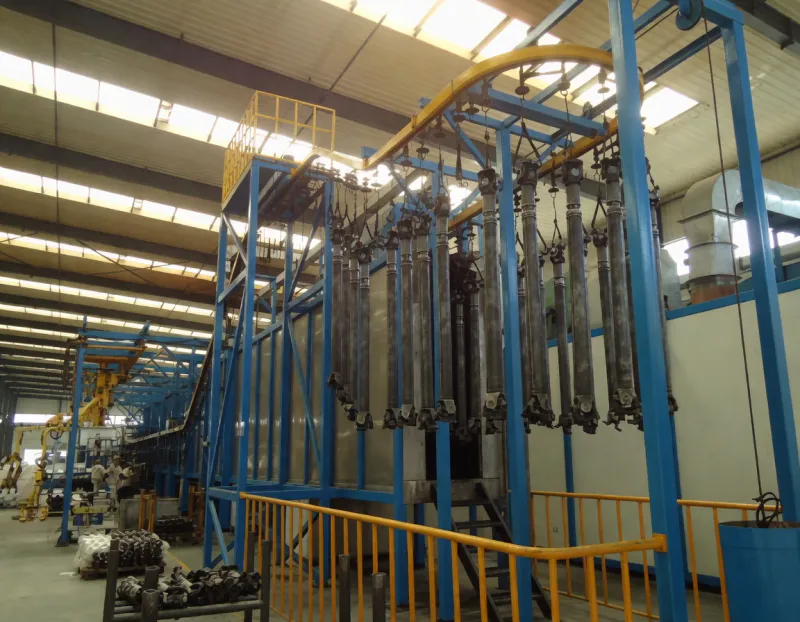
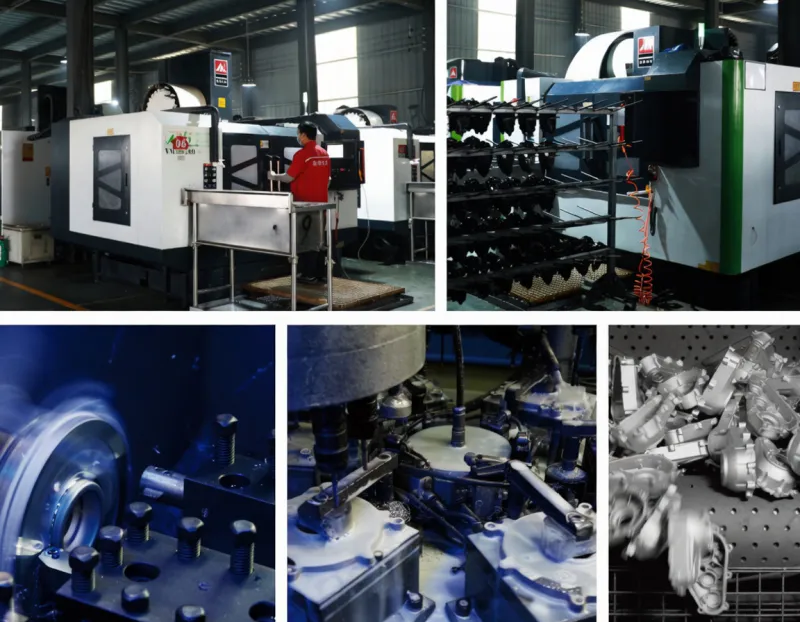
Seven dedicated production bases, one tire and wheel assembly facility, and a high-end manufacturing complex covering approximately 400,000 square feet make up our manufacturing infrastructure. Production equipment was sourced from Germany, Sweden, Spain, Japan, and the United States — the global centers of wheel-making technology — and all pressing, welding, and handling operations are performed by industrial robots operating under programmed parameters that eliminate human variability from the production process. In-line inspection machines perform 100% checking at every critical station: dimensional inspection, dynamic balance, and air leakage testing are applied to every unit, not to statistical samples. This 100% inspection policy is what allows us to state with confidence that the load ratings and dimensional specifications of these trailer wheels for sale to international buyers reflect the actual production population, not the best-case results from a curated sample set.
Our National-Level Testing Center — equipped with German RMS cornering fatigue rigs, US ITS radial fatigue machines, CMM coordinate measuring systems, salt spray chambers, UV aging ovens, and X-ray fluorescence spectrometers — performs the full qualification test matrix on production-representative samples from each wheel series. The design load ratings, fatigue life estimates, and corrosion performance figures stated in this product documentation are derived from this testing, not from theoretical calculations.
ورک شاپ

8. Related Products — Complete Trailer Axle-End Supply
A trailer wheel performs within a system of hub, axle, and fastener components. Sourcing compatible running gear from a coordinated supply base eliminates dimensional mismatches and streamlines the quality audit process for Colombian trailer OEM assemblers and wholesale parts distributors.
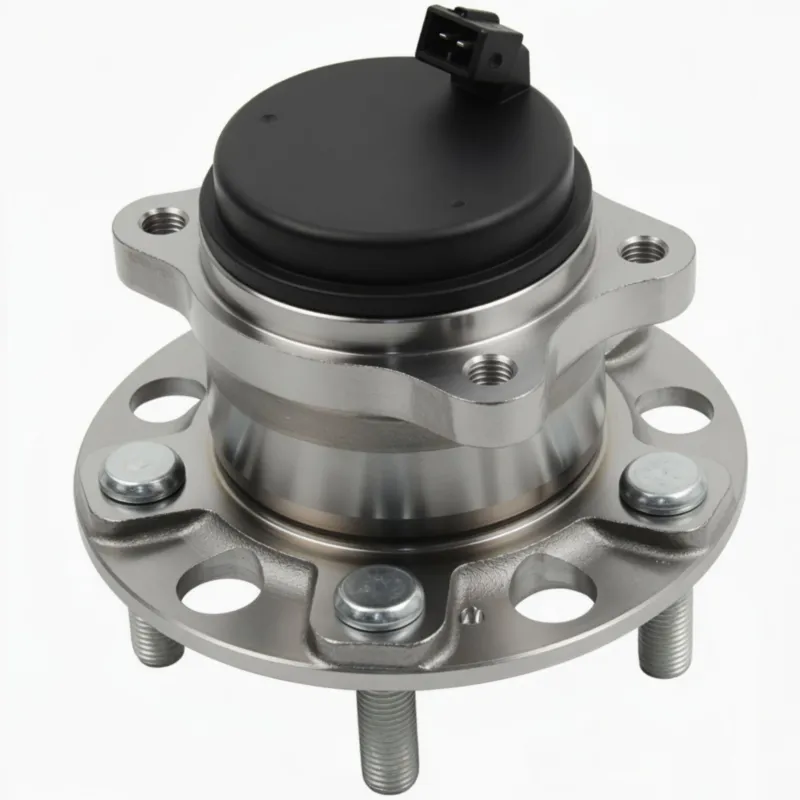
Wheel Hub Units
The hub unit is the physical interface between the trailer wheel and the axle. The center bore diameter of the wheel — 121 mm, 124 mm, or 124.6 mm depending on the part number — must match the hub pilot diameter precisely. A hub that is 0.5 mm undersize will not accept the wheel at all; a hub that is 0.5 mm oversize allows the wheel to seat off-center, creating runout and vibration from the first kilometer of operation. We supply wheel hub units engineered to coordinate with the center bore specifications of this Dual / OEM Trailer Wheel series, providing a single-source solution for the hub-to-wheel interface that eliminates the fitment uncertainty inherent in mixing components from uncoordinated suppliers. For Colombian trailer assemblers who specify North American 165.1 mm PCD axle configurations, sourcing wheel and hub unit from the same manufacturer provides a documented dimensional compatibility chain that supports trailer homologation and RUNT registration documentation requirements.
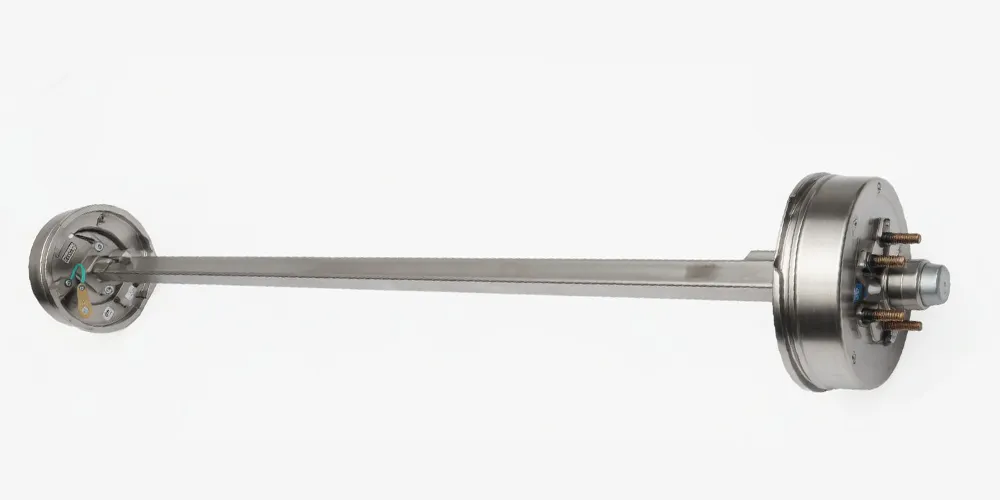
ٹریلر ایکسل بیم / ٹریلر تکلا
The trailer axle beam and spindle assembly is the structural foundation that carries the hub and wheel. For Colombian trailer manufacturers who are building North American-format trailers using the 165.1 mm PCD 8-bolt wheel standard, sourcing the axle beam from the same manufacturer as the trailer wheels ensures that the critical interface dimensions — hub pilot diameter, stud thread pitch, and spindle bearing journal — are coordinated by design rather than by chance. Our trailer axle and spindle products cover the dimensional range compatible with this Dual / OEM Trailer Wheels series, supporting complete running gear supply from a single source. For Colombian trailer OEM operations that currently source axle and wheel from separate vendors, consolidating to a coordinated single-source supply eliminates the fitment verification overhead that consumes significant workshop time and occasionally results in assembly line delays when dimensional discrepancies are discovered at the fitment stage rather than at the incoming inspection stage.
اکثر پوچھے گئے سوالات
ایڈیٹر: PXY