Beschrijving
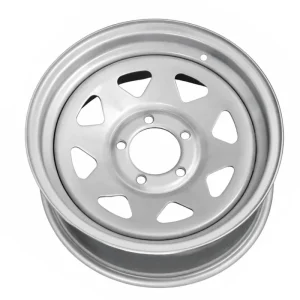
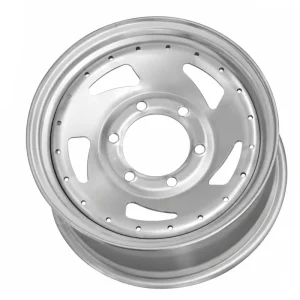
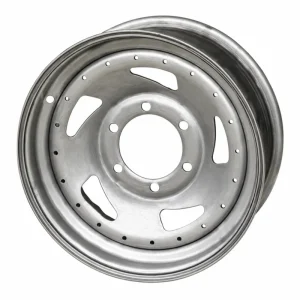
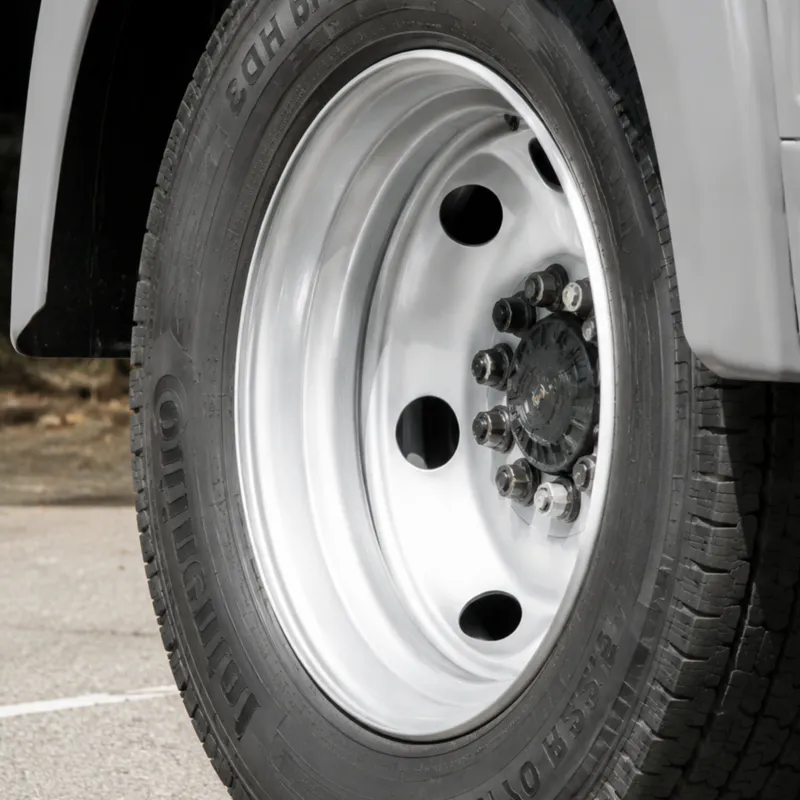
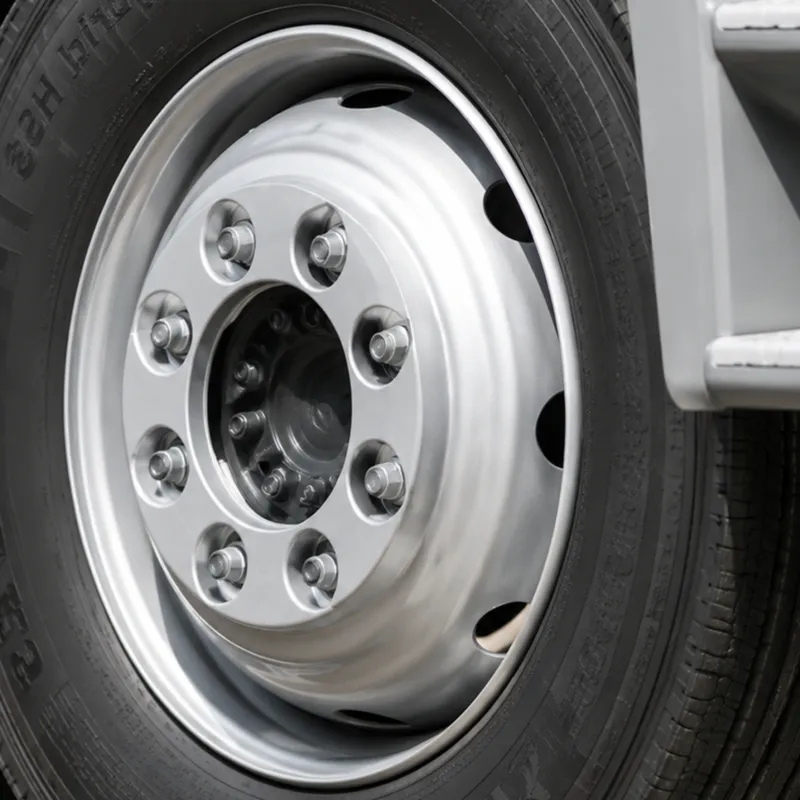
EP-Trailer Wheel — North America Series
Precision-engineered steel trailer wheels manufactured to North American dimensional standards — available in 8 to 16-inch rim sizes across a broad selection of bolt patterns and PCD configurations, designed for utility trailers, boat trailers, cargo trailers, and light commercial applications serving Colombian logistics and transport sectors
1. Complete Part Number and Specification Table — North America Trailer Wheel Series
| Onderdeelnummer | Size (in) | Bolt Qty. | PCD (mm) |
|---|---|---|---|
| JG31DK06 | 8 × 3.75 | 4 | 101.6 |
| JG31DK02 | 8 × 3.75 | 5 | 114.3 |
| JG32DK03 | 8 × 5.375 | 3 | 88.9 |
| JG32DK01 | 8 × 5.375 | 4 | 101.6 |
| JG33DK04 | 8 × 7 | 4 | 101.6 |
| JG33DK02 | 8 × 7 | 5 | 114.3 |
| JG35DK05 | 10 × 6 | 4 | 101.6 |
| JG35DK01 | 10 × 6 | 5 | 114.3 |
| JG36DK01 | 10 × 7 | 4 | 101.6 |
| JG36DK02 | 10 × 7 | 5 | 114.3 |
| JG01JA01 | 12 × 4 | 4 | 101.6 |
| JG01JA04 | 12 × 4 | 5 | 114.3 |
| JG04B09 | 13 × 4.5 | 4 | 101.6 |
| JG04B01 | 13 × 4.5 | 5 | 114.3 |
| JG08J10 | 14 × 5.5 | 5 | 114.3 |
| JG09JJ01 | 14 × 6 | 5 | 114.3 |
| JG13J01 | 15 × 5 | 5 | 114.3 |
| JG15JJ01 | 15 × 6 | 5 | 114.3 |
| JG15JJ07 | 15 × 6 | 6 | 139.7 |
| JG16J11 | 15 × 7 | 5 | 114.3 |
| JG17J04 | 15 × 8 | 6 | 139.7 |
| JG21K03 | 16 × 6 | 6 | 139.7 |
| JG21K15 | 16 × 6 | 8 | 165.1 |
2. Five Key Advantages of the EP North America Trailer Wheel Series
1. Comprehensive Size and Bolt-Pattern Range
Twenty-three configurations covering rim sizes 8 through 16 inches and bolt patterns from 3-lug through 8-lug eliminate the sourcing fragmentation that forces Colombian trailer importers and repair shops to maintain relationships with multiple suppliers. Whether the requirement is a black trailer wheel for a compact utility trailer running a 4 × 101.6 mm pattern or a heavy duty trailer wheel for a platform trailer on the 6 × 139.7 mm configuration, this single product series delivers the correct specification from one certified supply chain, simplifying procurement administration and reducing minimum order quantity constraints.
2. Roll-Formed High-Strength Steel Construction
The rim section of each trailer wheel is produced through multi-pass roll forming on dedicated forming equipment, work-hardening the steel progressively while achieving the precise bead seat contour that ensures airtight tubeless sealing. This process allows wall thickness to be optimised for load capacity without adding unnecessary mass — resulting in a trailer wheel that meets or exceeds its rated load at lower weight than conventionally pressed alternatives. For Colombian operators managing trailer payload within INVIAS gross vehicle weight limits, the weight saving from each trailer wheel position accumulates meaningfully across multi-axle trailer configurations.
3. 100 Percent In-Line Quality Inspection
Every trailer wheel leaving the production line passes through automated runout measurement, dynamic balance verification, and airtightness testing before receiving its paint finish. This 100 percent inspection regime — rather than statistical sampling — means that Colombian importers receive only conforming wheels, reducing field rejection rates that create costly return freight and replacement delays. The inspection data is retained in the production system, providing traceability that supports warranty investigations and fleet incident analysis in the event that a Colombian transportation authority requests documentation on a specific batch of trailer wheels and tires.
4. Corrosion-Resistant Multi-Layer Paint System
Each rim trailer wheel undergoes phosphate conversion treatment followed by either electrophoretic primer or liquid paint application in a controlled spray environment. The resulting coating system meets 480-hour neutral salt-spray resistance without base-metal corrosion — a specification directly relevant to Colombian trailer applications in coastal port areas at Buenaventura, Barranquilla, and Cartagena where salt-laden marine air accelerates corrosion on inadequately protected steel surfaces. Boat trailer applications particularly benefit from this coating durability, as trailer wheels near marine environments experience accelerated corrosion from saltwater splash and spray during launching and recovery operations.
5. North American Specification Compliance for Imported Trailers
Colombia’s growing import trade in recreational vehicles, utility trailers, and agricultural equipment from the United States and Canada means an increasing population of North American-specification trailers on Colombian roads requiring replacement trailer wheel parts as they age or sustain damage. The EP North America series is dimensionally identical to original equipment specifications, making them direct-fit replacement trailer wheel units for Wabash, Vanguard, Carlisle, and other North American trailer brands without requiring hub adapters, offset spacers, or non-standard fasteners. This direct compatibility reduces the labour cost of a wheel replacement event and eliminates the safety risk of using imprecisely adapted components on load-bearing trailer axles operating on Colombian national highways.
3. Trailer Wheel North America — Detailed Product Introduction
The North American trailer market developed around a distinct set of rim size conventions, bolt-pattern standards, and hub geometries that differ meaningfully from European and Asian market specifications. Understanding these conventions is essential for Colombian procurement engineers, trailer importers, and fleet maintenance managers working with North American-origin trailers or sourcing trailer wheels and tires packages for locally assembled trailers intended to interface with North American equipment. The EP-Trailer Wheel North America series directly addresses this specification landscape with a 23-variant product range covering the primary North American trailer rim sizes from the compact 8 × 3.75-inch format used on small utility and garden trailers through to the 16 × 6-inch and 16 × 7-inch sizes used on heavier equipment trailers, flatbed platforms, and large boat trailers. Within this range, the two dominant PCD values — 101.6 mm (4 inches) and 114.3 mm (4.5 inches) — are both covered at most rim sizes, with the wider 139.7 mm (5.5-inch) and 165.1 mm patterns available on the larger 15-inch and 16-inch rim sizes that carry heavier loads. The three-bolt 88.9 mm PCD configuration of the JG32DK03 caters to the smallest utility trailer platform still common in the North American market, where minimising unsprung weight is prioritised over load capacity.
Production begins with steel coil selected to match the specific grade requirements of each rim size and load rating. Lighter small-trailer rims use conventional high-strength steel while the larger-diameter wheels — 15-inch and 16-inch sizes — may incorporate dual-phase steel grades to maximise the strength-to-weight ratio at the higher load ratings associated with those applications. The disc is pressed in a CNC hydraulic press tooled to the specific bolt hole PCD, bolt hole diameter, and centre bore geometry for each part number. Bolt hole positions are located within ±0.1 mm of nominal PCD using precision tooling, ensuring that wheel studs or bolts engage cleanly without requiring forced assembly that would introduce pre-load stress into the stud shanks. The rim is roll-formed, butt-welded, and then joined to the disc through a fully-penetrating MIG weld that maintains consistent fusion depth through automated weld current and travel speed control. All these trailers wheels for sale from the North America series are validated through the same inspection protocols as heavy commercial wheels, simply scaled to the trailer application load levels, providing Colombian buyers with technical assurance exceeding what is typically offered by commodity trailer wheel products in the local market.
The North American trailer industry has historically concentrated around a small number of trailer axle manufacturers — including Dexter Axle, AL-KO, Lippert Components, and Rockwell — whose hub specifications define the wheel requirements across the majority of the market. The EP series bolt patterns, PCDs, and centre bore dimensions are matched to these axle manufacturers’ published hub specifications, giving Colombian trailer repair workshops confidence that a vehicle tires trailer wheel combination sourced from this range will fit correctly to the axle without requiring dimensional verification of each individual unit. For Colombian fleet operators managing mixed trailer populations combining domestically assembled trailers with imported North American models, being able to source spare trailer wheel stock from a single catalogue that covers both configuration types reduces inventory carrying costs and simplifies the logistics of roadside breakdown support on remote Colombian freight routes.
4. How a Steel Trailer Wheel Functions in Service
A trailer wheel serves as the structural load path between the tyre — which carries vehicle weight through pressurised air and generates traction or braking forces through road contact — and the trailer axle hub to which the wheel is bolted. Understanding this load path clarifies why dimensional accuracy matters for trailer wheel selection and fitment. The disc of the wheel carries the bolt hole array, which transmits the clamping force from wheel nuts or bolts into the hub flange. In a correctly assembled trailer wheel installation, the stud-piloted centring common on North American light trailer applications means the wheel is centred by the stud shanks engaging the bolt holes, making the accuracy of bolt hole PCD and diameter directly responsible for the concentricity of the mounted wheel. Any deviation from the specified PCD creates an offset between the wheel centreline and the hub centreline, manifesting as once-per-revolution runout that the driver perceives as wheel wobble or tyre shimmy and that accelerates bearing wear in the hub assembly.
The rim section carries the tyre bead at both inboard and outboard bead seats, which are machined to a specific taper and diameter that forms an airtight seal with the tyre bead wire when the tyre is inflated. For tubeless construction — the predominant design in this series — the rim surface finish at the bead seat is critical: surface roughness that is too coarse prevents complete bead seating and causes slow leak rates, while surface contamination from rust or paint build-up can prevent initial bead seating altogether. Production controls on bead seat diameter (typically toleranced at ±0.2 mm from nominal), surface roughness, and paint exclusion zones around the bead seat area are the technical controls that determine whether a trailer wheel passes or fails the airtightness test at the end of the production line.
During operation, the rim disc junction at the weld carries cyclic bending loads driven by the vertical load variation as each spoke position rotates through the loaded contact patch region. This cyclic bending is the primary fatigue loading mechanism that limits the service life of any trailer wheel, and it is why cornering fatigue testing at rated load — repeated through hundreds of thousands of cycles on a test rig simulating the cornering forces a trailer experiences through curves — provides the most credible independent evidence of structural adequacy. Trailer wheels that pass the applicable cornering fatigue test standard without cracking at the disc-rim junction, bolt holes, or disc centre have demonstrated fatigue margins adequate for normal service; those that fail prematurely indicate a design or manufacturing deficiency that would manifest as in-service wheel fracture, a safety-critical failure mode for Colombian trailers operating on mountain grades or at highway speed on intercity routes.
5. Material Construction and Surface Protection
Material selection for a trailer wheel balances load capacity against weight, formability against strength, and corrosion resistance against cost. The EP North America series uses steel grades selected to the specific requirements of each rim size category, ensuring adequate structural performance without over-engineering that would add unnecessary mass or cost. Compact rim sizes from 8 through 12 inches serving light-duty applications are manufactured from conventional high-strength hot-rolled steel with minimum yield strength of 340 MPa, providing adequate load capacity for the lower-rated axles that appear on small utility, garden, and light cargo trailers. Larger rim sizes from 13 through 16 inches, which must carry heavier axle ratings on boat trailers, equipment haulers, and multi-axle trailer configurations, are manufactured from SPFH590 high-strength steel with minimum yield strength of 490 MPa, enabling thinner wall sections that reduce weight without sacrificing the structural margin required for safe operation under rated load conditions on Colombian roads.
The disc pressing operation uses precision CNC hydraulic presses equipped with hardened tool steel dies maintained to dimensional tolerances ensuring consistent bolt hole positions, centre bore diameters, and offset values across every production shift. After pressing, disc surfaces at bolt hole locations are countersunk or chamfered to the specification matching the seat geometry of the intended wheel nut or bolt, ensuring full bearing contact of the fastener seat against the disc face during torque-up. The rim roll-forming process generates a bead seat that has both the correct diameter — toleranced at ±0.2 mm — and surface finish, with roughness values controlled to avoid the low-frequency acoustic resonances (boom noise) that can occur when bead seat geometry is inconsistent between inboard and outboard seats. The disc-to-rim MIG weld is executed at controlled current, voltage, and travel speed using automated welding equipment calibrated and qualified according to welding procedure specifications that define the minimum penetration depth and maximum heat-affected zone width required for fatigue-adequate weld quality.
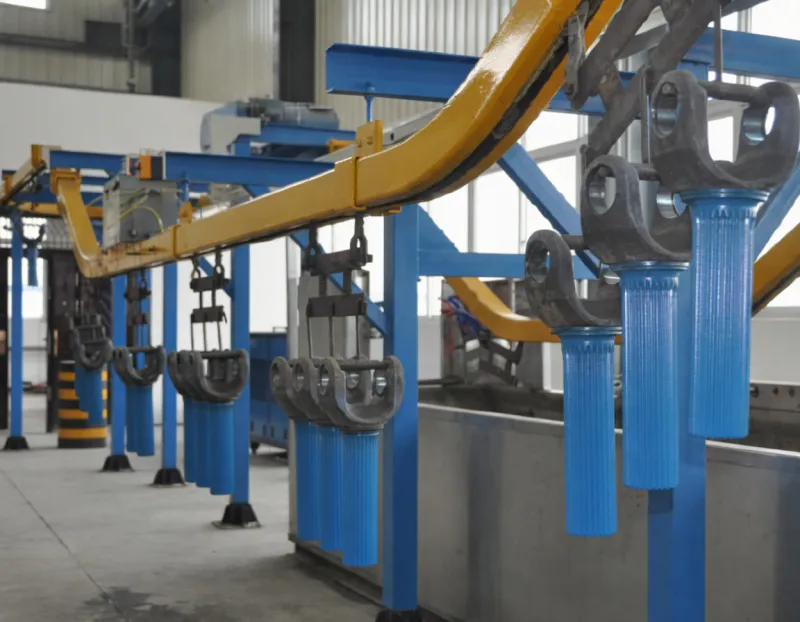
The surface protection system begins with alkaline degreasing and iron phosphate conversion coating of the cleaned steel substrate, establishing a micro-crystalline phosphate layer that improves paint adhesion and provides passive corrosion protection at cut edges and re-entrant geometry not fully reached by spray paint. This is followed by primer application — either electrophoretic cathodic deposition or liquid spray primer depending on the production line configuration — then topcoat in the specified finish, either silver, black trailer wheel standard finish, or customer-specified colour. The complete system is validated by adhesion cross-cut test, impact resistance test, and neutral salt-spray test to 480 hours minimum, confirming protection adequate for Colombian coastal environments and the repeated water exposure that trailer wheels experience during normal service in Colombia’s wet seasons across Caribbean and Pacific coast agricultural regions.
6. Application Scenarios Across Colombian and Regional Transport
Utility and Cargo Trailers
Open utility trailers, enclosed cargo trailers, and flatbed trailers used by Colombian small businesses, construction contractors, and agricultural operators for local material movement rely on 8 to 12-inch trailer wheel sizes in the 4-bolt 101.6 mm and 5-bolt 114.3 mm configurations. The spare trailer wheel mount positions on these vehicles carry the same size wheel as the running positions, making accurate dimensional matching between the spare and the primary running wheels critical for roadside safety — a requirement this catalogue’s consistent specification helps fulfil reliably.
Boat and Marine Trailers
Boat trailer applications on Colombia’s Caribbean coast near Santa Marta, Cartagena, and Barranquilla — and along Pacific coast recreational areas near Bahia Solano and Nuquí — require trailer wheels combining adequate load capacity for boat hull weight with superior corrosion resistance to repeated saltwater immersion during launch and recovery. The rim trailer wheel configurations in the 12 to 15-inch range are well suited to single-axle and tandem-axle boat trailers, with the 5-bolt 114.3 mm PCD being the dominant configuration among North American boat trailer axle manufacturers whose products appear throughout Colombia’s marine recreational sector.
Recreational Vehicle and Camper Trailers
Travel trailers, fifth-wheel campers, and teardrop trailers imported from North America or assembled locally to North American specifications use 14 to 16-inch trailer wheels in 5-bolt and 6-bolt configurations. The growing Colombian tourism industry and increasing domestic recreational travel create demand for these trailer tire and wheel packages, as Colombian families towing camper trailers to national parks, coffee region haciendas, and Caribbean coastal camping areas require reliable replacement trailer wheel stock in the configurations matching their imported trailer axle hubs.
Agricultural Equipment Trailers
Coffee, flower, and fruit operations in Colombia’s highland agricultural regions use trailers ranging from small hand-pulled two-wheelers through to tractor-towed multi-axle equipment trailers. The 8 and 10-inch rim sizes in this series cover the smaller agricultural trailer applications, while 14 and 15-inch sizes serve heavier equipment trailers for harvesting machinery transport and field chemical storage. The swivel trailer wheel configurations on turn-table agricultural trailers also draw from the 5-bolt 114.3 mm range for their steerable axle assemblies in several common Colombian tractor implements.
Construction Site Equipment Transport
Colombian construction sites in Bogota, Medellin, and coastal development zones require trailers for transporting generators, compressors, concrete mixers, and small excavators between project locations. These equipment transport trailers operate on heavier axle ratings that correspond to the 15 × 7-inch and 16 × 6-inch rim sizes with 6-bolt 139.7 mm PCD patterns in the EP series. The heavy duty trailer wheel capability at these sizes — validated through fatigue testing at the rated load — provides the structural margin needed for the irregular loading patterns common in construction transport, where equipment is not always precisely positioned at the trailer centreline during loading and transit.
Trailer Rental and Fleet Maintenance
Colombian trailer rental companies and logistics fleet maintenance operations require a reliable source of replacement trailer wheel stock across multiple configurations, since their fleets typically include trailers from various manufacturers running different axle specifications. The broad size and PCD range of this North America series allows these operations to source from a single supplier catalogue, reducing purchase order management complexity, consolidating freight costs on multi-item orders, and maintaining adequate safety stock of the most common sizes without excessive inventory investment in slow-moving variants.
7. Regulatory Context for Trailer Wheels in Colombia and Key Export Markets
In Colombia, trailers and their components are governed primarily by Ministry of Transport resolutions that establish roadworthiness criteria, maximum dimensions, gross weight limits, and technical-mechanical inspection requirements. Resolution 4100 of 2004 establishes maximum trailer dimensions and axle weight limits that directly determine the load ratings that trailer wheels must support. The Código Nacional de Tránsito (Law 769 of 2002) establishes the legal framework for vehicle fitness including trailer fitness requirements that periodic technical-mechanical inspections must verify. Trailer wheels must be structurally sound, properly seated, correctly torqued, and free from cracks, deformation, or excessive corrosion to pass these inspections. Colombian customs classification of imported trailer wheels falls primarily under NANDINA tariff heading 8708.70 (wheel rims and spoke wheels for motor vehicles and their trailers), with the specific duty rate and VAT determination made at the heading level by the DIAN customs authority.
In the United States — the primary origin market for the North American trailer specifications that this wheel series is designed to match — FMCSA (Federal Motor Carrier Safety Administration) regulations under 49 CFR Part 393 establish wheel condition requirements for vehicles in interstate commerce, and the Recreational Vehicle Industry Association (RVIA) sets standards for recreational trailer construction including wheel specifications. The Society of Automotive Engineers (SAE) publishes standards covering trailer wheel dimensional requirements, including SAE J267 for disc wheels which specifies tolerances for PCD, bolt hole diameter, and runout that the EP series is manufactured to comply with, providing Colombian importers of American-specification trailers with documented dimensional conformance to the original equipment standard.
In the European Union — relevant for Colombian exporters shipping goods on trailers to EU-bound vessels or operators using EU-specification trailers alongside North American ones — Regulation (EU) 2018/858 governs vehicle and component type-approval. The UN ECE Regulation 124 establishes cornering fatigue test requirements for wheels placed on vehicles registered in ECE contracting states, a test standard commonly referenced in export documentation even for non-European market wheels as evidence of structural adequacy. For Colombia’s growing trade with the Pacific Alliance partners (Mexico, Peru, Chile), wheels crossing borders on trailers must comply with the transit country’s vehicle roadworthiness requirements, making international standards compliance documentation from the EP series an asset for Colombian cross-border freight operators using trailer wheels from this catalogue.
8. Precision Manufacturing and Quality Assurance
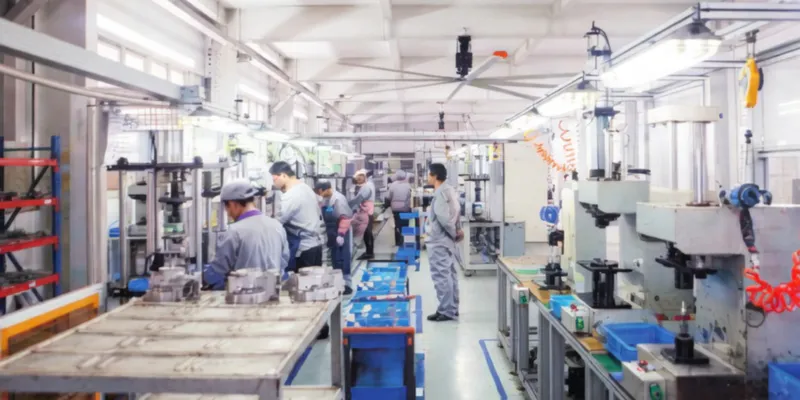
Our wheel production operation encompasses dedicated trailer wheel disc and rim lines alongside heavy commercial wheel production, benefiting from the same world-class tooling, testing equipment, and quality management infrastructure. The production facility runs four wheel production lines with annual capacity in the millions of pieces, all managed through enterprise resource planning software ensuring full batch traceability from incoming steel coil to outbound shipment. A national-level testing centre performs cornering fatigue, radial fatigue, 13/30/90-degree impact, dynamic balance, salt spray, CMM dimensional, and air-leakage tests, providing the independent performance data that Colombian fleet procurement teams and customs authorities require for product acceptance without relying solely on supplier self-declaration.
Engineering support for Colombian customers includes application assistance matching the correct part number from the North America series to specific axle hub specifications, compatibility confirmation for mixed-fleet procurement combining multiple trailer makes, and documentation preparation supporting customs clearance and vehicle inspection compliance. Customers sourcing trailer wheels for sale in quantity for fleet maintenance programmes or trailer manufacturing operations receive complete quality documentation packages including material certificates, CMM dimensional reports, and relevant test certificates with each shipment, streamlining incoming goods inspection and providing the paperwork trail needed for INVIAS vehicle registration or technical-mechanical inspection compliance.
Workshop

9. Complete Trailer Axle System — Matched Components
Pairing the correct trailer wheel with a matched hub and axle assembly eliminates the dimensional compatibility risk that causes premature bearing failure, wheel wobble, and stud fracture. We manufacture the complementary components that complete the trailer axle system.
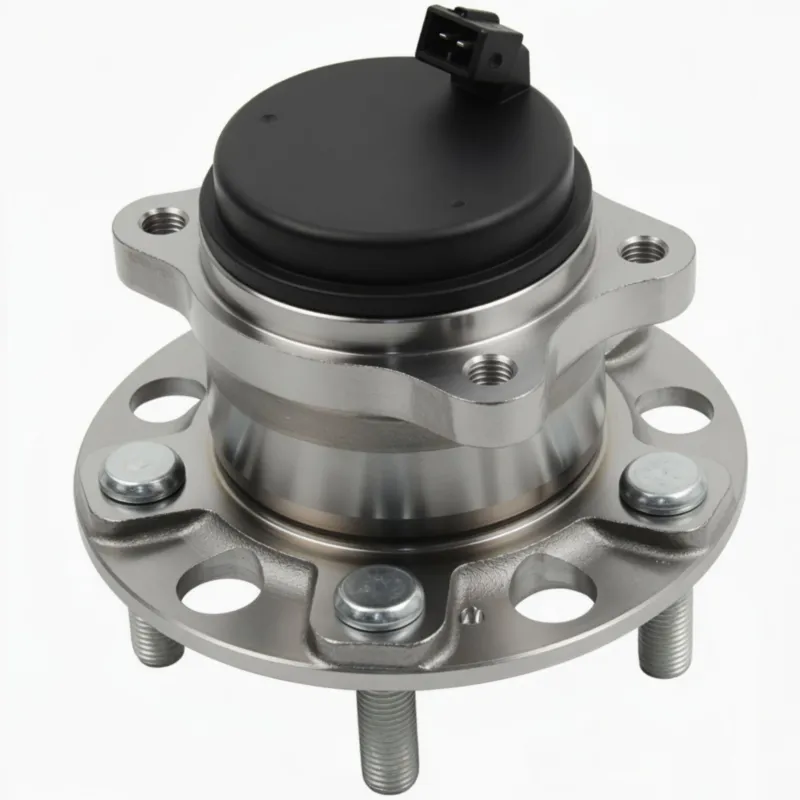
Wheel Hubs for Trailer Axles
Precision-machined trailer wheel hubs provide the bearing housing, flange face, and stud mounting surface that interface directly with the trailer wheel disc. Our hub range is dimensioned to match the PCD and stud specifications of the North America trailer wheel series — 4-stud 101.6 mm, 5-stud 114.3 mm, 6-stud 139.7 mm, and 8-stud 165.1 mm configurations — ensuring correct stud-to-bolt-hole engagement without dimensional adaptation. Hub flange face runout is controlled at manufacturing to limit wheel runout at the rim to values below 0.8 mm, preventing the vibration and uneven tyre wear that stacked tolerances between hub and wheel can cause when components are sourced independently from uncoordinated suppliers.
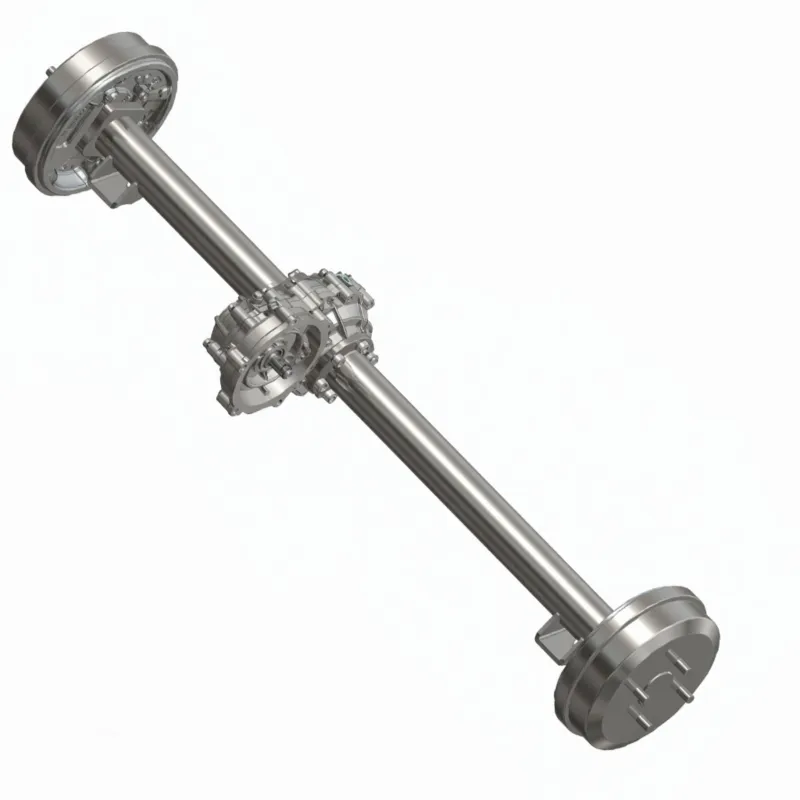
Trailer Axle Beam and Spindle
Trailer axle beams and spindle assemblies completing the load-bearing structure between trailer chassis and wheel hub are available in rated capacities matching the load requirements of the North American trailer wheel sizes in this catalogue. Axle beam cross-sections in square, round, and oval profiles cover the common North American trailer axle configurations from Dexter, AL-KO, and Lippert compatibility, with spindle thread and flange specifications pre-matched to the hub and wheel dimensions. Hot-dip galvanised surface protection resists corrosion in marine trailer applications, while unpainted primed versions suit customers applying proprietary coating systems. Sourcing axle beam, hub, and trailer wheel together from a single supplier with pre-verified dimensional compatibility eliminates field-fitting problems and reduces the engineering time spent on compatibility verification before fleet maintenance events.
Veelgestelde vragen
Q1. What is the correct replacement trailer wheel size for a North American-specification utility trailer imported into Colombia through Bogota?
The correct replacement size is determined by reading the original wheel’s rim size markings stamped on the disc or rim — typically in a format such as 15 × 6 — and verifying the bolt pattern by measuring the PCD (distance between opposite bolt hole centres on a 4-bolt pattern, or centre-to-skip-one-centre on a 5-bolt pattern) and counting the bolt holes. Cross-reference these values against the EP North America catalogue table to identify the matching part number. The most common configurations for North American utility trailers are 12 × 4 or 13 × 4.5 with 5-bolt 114.3 mm PCD, which correspond to JG01JA04 and JG04B01 respectively. If the original wheel markings are worn or absent, the trailer axle manufacturer’s specifications published in the owner’s manual or on the axle identification plate provide the authoritative source.
Q2. Which trailer wheel size is appropriate for a tandem-axle boat trailer carrying a 5-tonne vessel on Colombian Pacific coast roads?
A 5-tonne (5000 kg) boat hull on a tandem-axle trailer distributes the load across four wheel positions, resulting in approximately 1250 kg per wheel at level static load, with dynamic load peaks potentially reaching 1.5 to 1.8 times static under road surface irregularity. This corresponds to trailer axle ratings of approximately 1800 to 2500 kg per axle, which in North American specifications requires 14-inch or 15-inch trailer wheels rated for C or D load range tyres. The JG09JJ01 (14 × 6, 5-bolt 114.3 mm) or JG15JJ01 (15 × 6, 5-bolt 114.3 mm) configurations are suitable starting points; confirm the exact axle manufacturer’s specified wheel against the boat trailer’s certification plate before ordering to ensure the replacement trailer wheel matches the original specification and maintains the trailer’s rated capacity documentation.
Q3. What tire and wheel packages are compatible with the 15 × 6 inch trailer wheel in the EP North America series for Colombian road conditions?
The 15 × 6 inch rim width accommodates tyre section widths from 185 mm to 225 mm depending on tyre aspect ratio and manufacturer fitment recommendation. Common trailer tire and wheel packages on the 15 × 6 rim include ST205/75R15 (a dedicated trailer tyre in load range C, D, or E) and ST225/75R15 for higher load capacity applications. Colombian road conditions, including cobblestone surfaces in historic city centres, unpaved secondary routes in agricultural regions, and speed-control devices (policías acostados) throughout residential areas, impose dynamic loads that favour load range D or E tyres with adequate sidewall stiffness to resist sidewall scuffing. Trailer tyre selection should ensure the tyre load rating at the inflation pressure used exceeds the maximum single-wheel load by at least 10 percent to account for load transfer during cornering and braking manoeuvres on Colombian terrain.
Q4. How do I verify that a trailer wheel nearby in Colombian aftermarket supply actually meets North American dimensional standards before purchasing?
Request from the supplier the dimensional inspection report for the specific part number, which should include measured values for PCD (to ±0.15 mm tolerance), bolt hole diameter (to ±0.2 mm), rim diameter, rim width, and lateral runout measured on a rotating fixture. Verify that the report is from a coordinate measuring machine (CMM) rather than a manual gauge, which provides greater measurement confidence. Additionally request the salt-spray corrosion test certificate confirming the paint system meets the declared hour rating, and the airtightness test record confirming bead seat integrity. Suppliers unable to provide these documents are likely supplying wheels manufactured without the process controls needed to guarantee dimensional conformance to North American specification, creating the risk of a fitment that appears correct visually but introduces unsafe runout or inadequate bead seal integrity in service.
Q5. What is the correct installation torque for a 5-bolt trailer wheel on a North American axle hub, and why does over-torquing cause problems in Colombian fleet operations?
Wheel nuts on North American 5-bolt trailer axles with 1/2-20 UNF studs are typically torqued to 90 to 120 foot-pounds (122 to 163 Newton-metres) in a star pattern using a calibrated torque wrench. Over-torquing beyond the manufacturer’s specified maximum stretches the stud shank into the plastic deformation zone, permanently reducing the stud’s clamping force capacity and creating a fatigue initiation point that can lead to stud fracture under operating vibration. In Colombian fleet operations where roadside wheel changes are performed under time pressure and without properly calibrated tools, over-torquing with impact wrenches is common and leads to premature stud failure that is often misattributed to wheel or hub quality. Re-torque after the first 80 to 100 kilometres following any wheel removal and reinstallation is recommended to compensate for initial nut seating relaxation that reduces clamping force by up to 15 percent from the initially applied torque value.
Redacteur: PXY