Açıklama
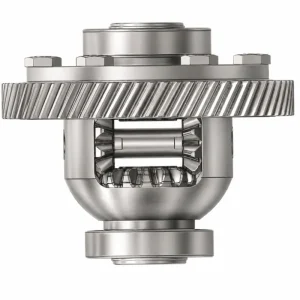
EP-EB02 Differential Assembly
Compact-type planetary gear differential assembly delivering precise power distribution between both output axle shafts. Simple structure, low noise operation, and verified dimensional compliance — built for front axle applications across light vehicles, utility platforms, and agricultural equipment operating in Colombia and global markets.
Weight: 2.8 kg
Dimensions: 140 × 140 × 93 mm
ISO 9001 Sertifikalı
1. Technical Specifications — EP-EB02 Differential Assembly
| No. | Parametre | Symbol / Unit | Değer / Özellik |
|---|---|---|---|
| 01 | Model | — | EP-EB02 |
| 02 | Differential Type | — | Compact Planetary Gear Differential |
| 03 | Application Category | — | Front Axle Drive System — Light Vehicle / Utility Platform |
| 04 | Max Input Torque | T max (N·m) | |
| 05 | Max Input Rotation Rate | n max (rpm) | |
| 06 | Centre-to-Centre Spacing | A (mm) | 48 mm |
| 07 | Dişli Oranı | U | 1.45 : 1 |
| 08 | Spline Type (Input & Output) | — | Internal Involute Spline |
| 09 | Spline Module | m | 1 |
| 10 | Spline Tooth Count | z | 22 |
| 11 | Pressure Angle | a | 20° |
| 12 | Shift Coefficient | x | −0.195 / −0.05 |
| 13 | Overall Dimensions (L × W × H) | mm | 140 × 140 × 93 |
| 14 | Assembly Weight | kilogram | 2.8 |
| 15 | Gear Surface Hardness | HRC | 58 – 62 |
| 16 | Core Hardness (Gear) | HRC | 32 – 38 |
| 17 | Case Carburising Depth | mm | 0.4 – 0.8 |
| 18 | Housing Bore Concentricity | mm | ≤ 0.01 |
| 19 | Mating Face Flatness | mm | ≤ 0.02 |
| 20 | Çalışma Sıcaklığı Aralığı | °C | −30 to +120 |
2. What is EP-EB02 Differential Assembly?
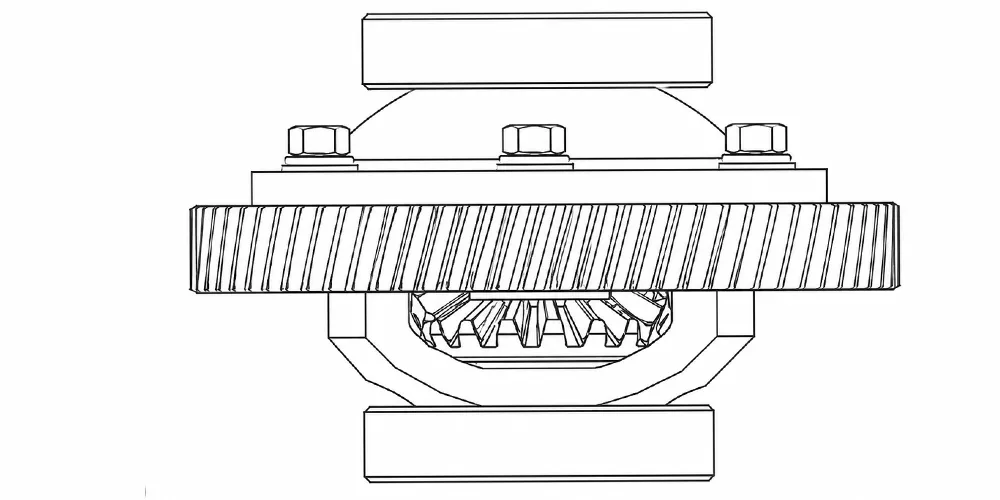
The EP-EB02 is a compact differential assembly designed to meet the space and weight constraints of modern light vehicle and utility platform front axle systems. Rather than relying on a traditional bevel-gear spider layout — which tends to be bulkier and less forgiving of tight axle housing geometries — the EP-EB02 uses a planetary gear differential architecture. In this arrangement, the input torque drives the planetary carrier, whose planet gears simultaneously mesh with both the fixed ring gear inside the housing and the sun-gear-linked output shaft elements. This topology allows the complete differential gear assembly to sit within a 140 × 140 × 93 mm footprint while still handling the torque and speed inputs associated with 600–700cc class vehicle drivetrains. The result is a unit that goes directly into the axle housing without the additional clearance machining that oversized differentials often demand.
At 2.8 kg assembled, the EP-EB02 contributes meaningfully to overall front axle unsprung weight targets — an increasingly important parameter in vehicle development programmes aimed at ride quality and tyre contact consistency on rough unpaved tracks. Colombian infrastructure conditions, particularly in the Andean coffee belt, the Pacífico region, and the extensive rural road network of the Llanos Orientales, make unsprung mass a practical performance concern rather than merely a design-document metric. A lighter differential assembly that maintains rated strength allows suspension tuning to focus on terrain compliance rather than compensating for excess drivetrain mass.
The EP-EB02’s internal spline interface is machined to an involute internal spline standard: module 1, 22 teeth, 20° pressure angle, with a shift coefficient of −0.195/−0.05. These parameters conform to widely adopted light vehicle axle shaft spline standards, making the EP-EB02 a documented differential carrier assembly replacement option across multiple vehicle platforms without bespoke shaft machining. This standardised interface also simplifies inventory management for workshops that service mixed-brand vehicle fleets — a common operational reality for agricultural equipment maintenance contractors and fleet management companies operating across Colombia’s diverse vehicle mix.
Understanding what a differential assembly is normally composed of — carrier housing, planet gear set, ring gear, output shaft interfaces, and bearing assemblies — helps explain why the EP-EB02’s compact planetary design is an engineering advance over legacy configurations. By co-locating the torque-splitting mechanism within the planetary gear set itself rather than distributing it across a spider-and-bevel arrangement, the EP-EB02 minimises the number of distinct wear interfaces in the differential assembly parts train, which directly reduces the probability of multiple simultaneous failure modes and simplifies the service scope when maintenance is eventually required.
3. Five Key Advantages of the EP-EB02 Differential Assembly
At 140 × 140 × 93 mm, the EP-EB02 occupies a packaging volume that accommodates front axle housings where bevel-gear differentials of equivalent rated torque capacity would require mechanical clearance relief machining. The compact planetary design eliminates the projecting spider pin arrangement typical of bevel-gear units, giving the housing engineer a clean, symmetrical form to work around. For vehicle platforms developed or manufactured in Colombia where local axle housing geometry has been set to a compact dimension, this packaging advantage is directly production-relevant, reducing the number of housings that require rework before the front axle assembly line can accept the differential unit.
Planetary differential gear sets distribute load contact across multiple planet gear mesh points simultaneously. This shared load profile reduces peak tooth contact stress per mesh compared to single-contact bevel-gear arrangements, which is the primary physical cause of the lower noise floor that planetary differential gear assembly designs produce at equivalent input torque levels. For vehicle operators in Colombia making extended journeys across the vía primaria network — routes like the Ruta del Sol, the Transversal del Carare, or the Troncal del Occidente — reduced drivetrain noise over hours of operation is a tangible comfort and fatigue-management benefit rather than an abstract specification point.
The involute internal spline (z = 22, m = 1, 20°, x = −0.195/−0.05) is machined to dimensional tolerances that align with the dominant light vehicle axle shaft spline standard across the 600–800cc platform segment. Workshops in Bogotá, Medellín, Cali, and Barranquilla that service a wide range of front axle differential axle assembly fitments can verify EP-EB02 compatibility from a datasheet review before vehicle disassembly — avoiding the downtime cost of partial dismantling and reassembly when an incorrect-specification unit is discovered mid-service. This is a meaningful productivity benefit for high-volume service operations with tight workshop bay turnaround targets.
Every EP-EB02 production batch is processed through controlled atmosphere carburising furnaces with logged heat treatment parameters — atmosphere carbon potential, soak temperature, quench medium temperature, and tempering cycle. Gear tooth surface hardness is verified by Rockwell testing on batch samples before release, and material input is tracked by mill certificate heat number through the production record. This chain of traceability is the practical answer to the question procurement managers at Colombian fleet operators and vehicle assemblers most often ask about a complete differential assembly: “Can you prove what’s inside it?” With the EP-EB02, the answer is yes — on paper and on demand.
The EP-EB02’s straightforward differential assembly design — compact planetary gear set, ductile iron housing, standard involute spline interfaces — means that any trained mechanic with access to basic workshop equipment and a set of spline gauges can carry out a complete differential assembly inspection and replacement. There are no proprietary preload adjustment procedures, no specialist bearing collapse tools, and no multi-step electronic calibration steps after fitment. This matters significantly in the rural and regional service contexts of Colombia’s Huila, Cauca, Nariño, and Meta departments, where vehicle downtime carries a direct cost to agricultural output and the nearest fully equipped dealer workshop may be several hours away.
4. Working Principle — Differential Assembly in Detail
Torque Input and Planetary Carrier Rotation
Understanding how differential assembly working functions at a mechanical level begins with the input shaft. Drive torque enters the EP-EB02 through the input internal spline (22 teeth, module 1, 20° pressure angle) and rotates the planetary carrier. The carrier is the structural frame that holds the planet gears on their individual trunnion shafts. The ring gear — an internal ring gear — is fixed within the differential housing assembly. As the carrier rotates, each planet gear meshes simultaneously with the stationary ring gear on its outer radius and with the sun gear element at the centre of the assembly. Under identical resistance at both outputs — the straight-ahead driving condition — the planet gears do not rotate on their own axes; the entire planetary set turns as a rigid body, delivering equal speed and equal torque to both output shafts.
Speed Differentiation During Cornering
When the vehicle enters a curve, the outer wheel must travel a longer arc than the inner wheel in the same elapsed time, requiring the outer output shaft to rotate faster. The differential assembly diagram for a planetary design shows this clearly: the planet gears begin to rotate on their own axes — self-spinning within the carrier as it revolves — to absorb the speed differential between the two outputs. The outer-wheel output shaft accelerates by exactly the amount the inner-wheel shaft decelerates, with the net speed sum remaining constant and equal to twice the carrier input speed. This is the core kinematic function that explains what differential assembly in a car achieves: allowing speed differences between driven wheels without drivetrain binding or tyre scrub on hard surfaces.
Internal Friction and Passive Torque Bias
The EP-EB02’s compact planetary architecture introduces a defined level of internal friction through the contact geometry between planet gear shafts, carrier bearing surfaces, and gear mesh interfaces. This friction is a designed-in feature rather than a manufacturing imperfection: it creates a passive torque-biasing tendency that resists single-wheel spin at the onset of traction loss. Before differential action becomes pronounced, the higher-friction output path retains a share of available torque — providing a modest traction advantage over a fully open differential that would transfer all torque immediately to the spinning wheel. This characteristic is relevant in the moderate off-road conditions that Colombian light vehicles routinely encounter — wet unpaved tracks, soft agricultural field edges, and loose-surface river crossings.
Output Spline Interface and Load Path
Torque exits the differential case assembly through the two output internal splines — the same involute standard (z = 22, m = 1, 20° pressure angle, x = −0.195/−0.05) as the input side. The symmetric spline specification on input and output sides simplifies the shaft inventory required at the assembly level. Output torque travels along the axle shafts to the front wheel hubs, completing the differential axle assembly load path. The involute tooth form on all spline interfaces distributes contact stress across the full tooth face width, reducing fretting wear at the shaft-to-hub interface under the combined torsional and bending loads that are characteristic of front axle duty in mixed on-road and off-road operating cycles.
5. Materials & Construction
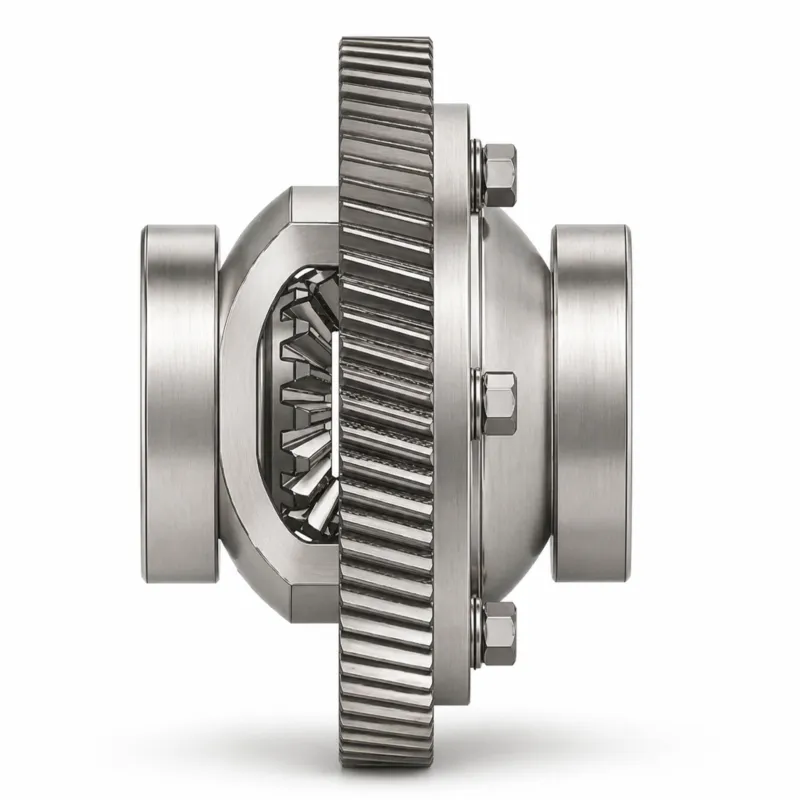
Planetary Gear Set (Sun, Planet, Ring Gears): All gear elements in the EP-EB02’s differential gear assembly are manufactured from 20CrMnTi low-alloy carburising steel, conforming to GB/T 3480 / ISO 6336 gear material requirements. After gear hobbing and profile grinding, the components undergo controlled gas carburising in continuous mesh-belt furnaces to achieve a case depth of 0.4–0.8 mm, followed by oil quench hardening to a surface hardness of HRC 58–62 with a tough core maintained at HRC 32–38. This dual-hardness metallurgical profile — hard surface for wear resistance, tough core for impact absorption — is the standard approach for automotive-grade differential gears operating under cyclic shock loading. The 20CrMnTi alloy is specifically chosen over simpler carburising grades because of its chromium-manganese-titanium combination, which produces fine-grain austenite during carburising, resulting in a more uniform and defect-free case layer that is less prone to the surface micro-cracking that can initiate spalling failure on gear tooth flanks under sustained high-torque cycling.
Differential Housing and Carrier Body: O differential housing assembly is cast from nodular ductile iron (QT500-7 / GGG50 equivalent), a grade chosen for its combination of vibration damping, machinability, and impact toughness that grey cast iron cannot match. The graphite nodule microstructure of ductile iron provides elongation-at-failure values typically four to six times higher than grey iron, meaning the housing can absorb the intermittent impact loads that occur during aggressive drive engagement and gear re-meshing without the risk of sudden brittle fracture that would compromise the integrity of the differential carrier assembly in service. After casting, housing bores are CNC-machined to bearing seat concentricity within 0.01 mm and mating face flatness within 0.02 mm — both tolerances critical for maintaining oil-seal integrity and correct planetary gear alignment throughout the service life of the complete differential assembly.
Input and Output Spline Shafts: Spline shaft elements are machined from 40Cr or 42CrMo medium-carbon alloy steel, induction surface-hardened at the spline engagement zones to HRC 52–58. Induction hardening is selected over carburising for spline shafts because it produces a predictable, tightly bounded hardened zone directly over the tooth flanks while keeping the shaft core at high toughness — the optimal profile for resisting the fretting wear that develops at the spline-to-hub contact when the shaft is subjected to the torsional fluctuations typical of a front axle in mixed driving conditions. The 42CrMo variant is specified for higher-torque applications where the additional molybdenum content provides a step-up in high-cycle fatigue resistance without requiring changes to the housing interface geometry.
Output Shaft Seals: Fluoroelastomer (FKM/Viton) dual-lip seals are fitted at both output shaft bores. FKM is selected over standard NBR (nitrile) because of its documented resistance to GL-5 extreme-pressure gear lubricant additives — specifically the sulphur-phosphorus EP compounds that degrade NBR lip seals and produce the shaft seal leaks that are among the most frequent differential assembly service complaints in the field. The outer lip on each seal provides a secondary dust exclusion barrier, designed to reject the fine abrasive particulate common in unpaved-road operating environments — a condition routinely encountered by vehicles in Colombia’s rural and agricultural zones.
6. Application Scenarios
The EP-EB02 differential assembly is well-suited for light commercial vehicles operating on mixed urban and regional routes across Colombian cities. Bogotá, Medellín, Cali, Barranquilla, and Bucaramanga all have significant peri-urban and peripheral road segments where unpaved or poorly maintained surfaces are directly adjacent to primary vías. A front axle complete differential assembly that distributes torque smoothly during repeated stop-start cycles — the dominant load pattern of urban delivery operations — reduces component fatigue at the front axle and minimises the transmission noise that becomes noticeable in slow urban traffic. The EP-EB02’s low-noise planetary design is directly compatible with this operational context.
Vehicles used for crop inspection, fertiliser and input supply runs, and livestock management across Colombia’s agricultural zones — from the Cauca Valley rice and sugarcane operations to the Meta and Casanare cattle ranches — operate in conditions that test a differential carrier assembly differently from highway use. Low-speed high-torque cycles, repeated water crossings, clay soil adhesion on axle components, and occasional severe articulation combine to produce a demanding duty cycle. The EP-EB02’s compact housing and sealed FKM lip seals maintain differential integrity under mud and water exposure, while the defined internal friction of the planetary gear set provides passive traction assistance on slippery field surfaces without requiring a separate locking mechanism.
Automotive workshops across Colombia serving mixed-make vehicle fleets need a differential carrier assembly replacement item that installs without bespoke tooling or lengthy compatibility confirmation procedures. The EP-EB02’s documented spline specification (z = 22, m = 1, 20°) allows a technician to confirm fitment from a spec sheet against the vehicle axle shaft drawing before disassembling the front axle — eliminating the wasted labour time of removing the old unit to discover it does not match. In high-volume service centres managing ten or more front axle differential jobs per week, this pre-confirmation capability translates into a directly measurable improvement in workshop throughput and customer satisfaction scores.
Vehicle assemblers producing small off-road platforms, side-by-side UTVs, and light recreational vehicles for the Colombian and broader Latin American market require a front differential assembly supplier that can deliver consistent unit quality with verified dimensional documentation for each production lot. The EP-EB02 is supplied with material certificates and dimensional inspection records per batch, satisfying the incoming quality control requirements of regulated assembly lines. The 2.8 kg unit weight and compact 140 × 140 × 93 mm form factor make it a drop-in fit for front axle designs where packaging space has been traded against suspension travel or ground clearance in the vehicle concept stage.
Police, environmental enforcement, and rural emergency response agencies in Colombia increasingly operate light 4WD vehicles across terrain conditions that demand a reliable differential assembly in car systems. The EP-EB02’s mechanical simplicity — no electronic actuators, no solenoid valves, no sensor interfaces — makes it inherently robust to the water ingress, dust, and voltage irregularities that degrade complex electromechanical differential systems in the field. Maintenance technicians at agency workshops can service or replace the EP-EB02 using standard workshop equipment. This field-serviceable characteristic is a decisive procurement advantage for agencies operating in Colombia’s frontier departments where specialised dealer support is unavailable within a reasonable response radius.
7. Regulatory Compliance & Legal Framework
Colombia — Ministerio de Transporte, ICONTEC, and SIC
In Colombia, the regulatory environment governing vehicle drivetrain components — including front axle differential assembly products — is framed by Decreto Único Reglamentario del Sector Transporte (Decreto 1079 de 2015), which consolidates transport sector regulations administered by the Ministerio de Transporte. Vehicle homologation requirements — encompassing drivetrain component technical equivalence certification — are coordinated through INVIAS (Instituto Nacional de Vías) and ICONTEC (Instituto Colombiano de Normas Técnicas y Certificación), which administers the NTC (Normas Técnicas Colombianas) series for mechanical vehicle components. Importers and distributors supplying differential carrier assembly replacement parts should retain material certificates, dimensional inspection reports, and shift coefficient documentation as evidence of technical equivalence with the homologated vehicle specification. The Superintendencia de Industria y Comercio (SIC) enforces product safety obligations under Ley 1480 de 2011 (Estatuto del Consumidor) for mechanical components in the Colombian retail and B2B supply market.
European Union — Regulation (EU) 168/2013 and Delegated Acts
Vehicles in the EU L-category — including small off-road platforms and quadricycles that commonly use the EP-EB02 format differential gear assembly — fall under Regulation (EU) No 168/2013 on the approval and market surveillance of two- and three-wheel vehicles and quadricycles. Commission Delegated Regulation (EU) 44/2014 sets vehicle construction and general requirements applicable to front axle drivetrain systems. Replacement differential assembly parts for EU-registered L-category vehicles should be accompanied by CE Declaration of Conformity documentation where applicable under the Machinery Directive 2006/42/EC or successor instruments. Third-party testing reports from accredited bodies (SGS, TÜV, Bureau Veritas) are best practice for EU market entry.
United States — CPSC, ANSI/SVIA 1, and SAE Standards
The US Consumer Product Safety Commission (CPSC) regulates ATV and utility vehicle performance under 16 CFR Part 1420. Technical performance requirements for vehicle drivetrain components — relevant to a rear axle differential assembly or front differential assembly replacement supply — are set by ANSI/SVIA 1 (American National Standard for Four Wheel All-Terrain Vehicles) and supporting SAE standards including SAE J2826. Material grade compliance for gear components in US-market vehicles should be verifiable against SAE 4320H or equivalent AISI/ASTM carburising steel designations, with documented hardness and case depth data.
Brazil — CONTRAN, SENATRAN, and ABNT NBR
Brazil’s National Traffic Council (CONTRAN) and Secretariat for Road Traffic (SENATRAN) administer vehicle component standards under Resoluções that establish minimum technical requirements. ABNT NBR standards govern mechanical vehicle component specifications, and imported drivetrain components may fall under INMETRO (Instituto Nacional de Metrologia) compulsory certification requirements depending on HS classification. Distributors from Colombia or Peru supplying the Brazilian market with complete differential assembly units should verify INMETRO compulsory product certification status before importation to avoid border clearance delays.
Mexico — NOM / Normas Oficiales Mexicanas
Mexico’s Secretaría de Economía and Secretaría de Comunicaciones y Transportes (SCT) administer Normas Oficiales Mexicanas (NOM) for vehicle components. NOM-086-SCT2 and related transport-sector NOMs establish minimum safety and dimensional requirements. PROFECO (Procuraduría Federal del Consumidor) enforces product safety standards for imported mechanical components in the distribution channel. All documentation — dimensional certificates, material traceability records, and inspection reports — provided with EP-EB02 deliveries supports NOM compliance documentation workflows for Mexican-market import.
8. About Us
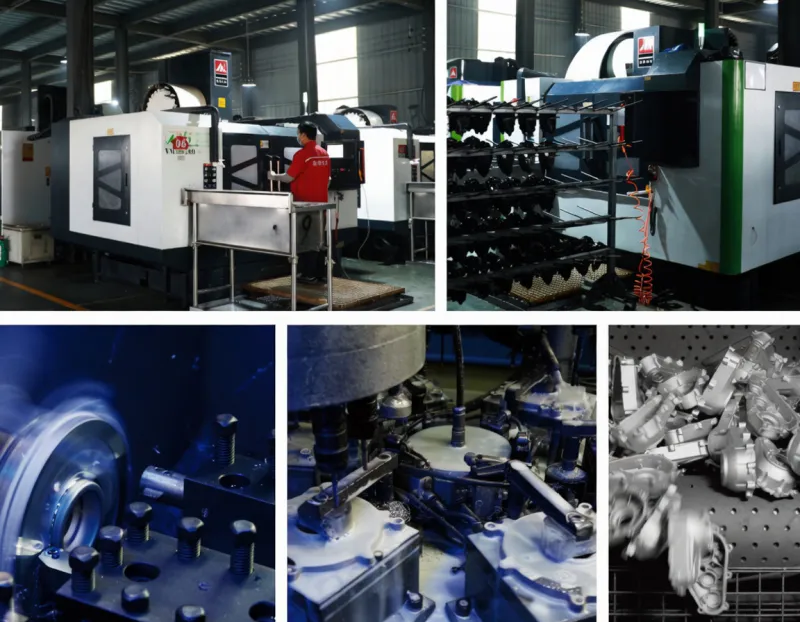
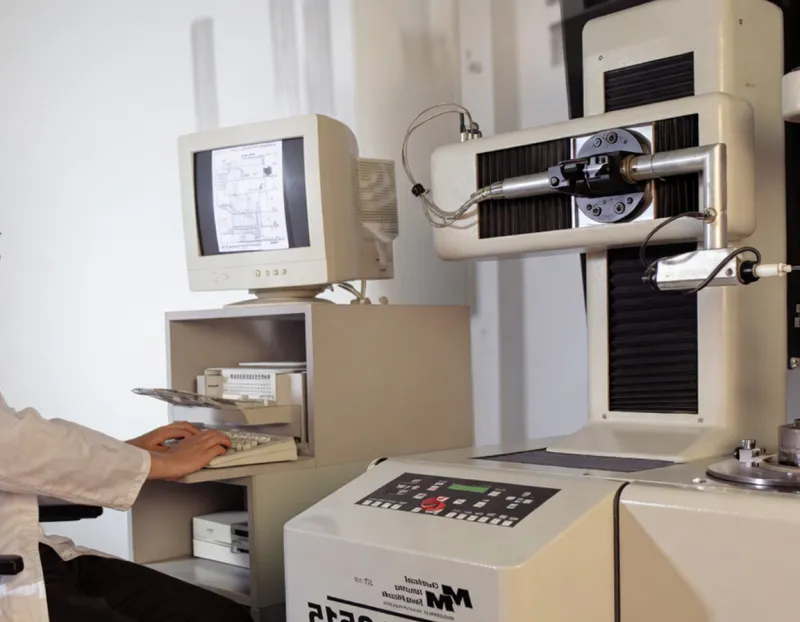
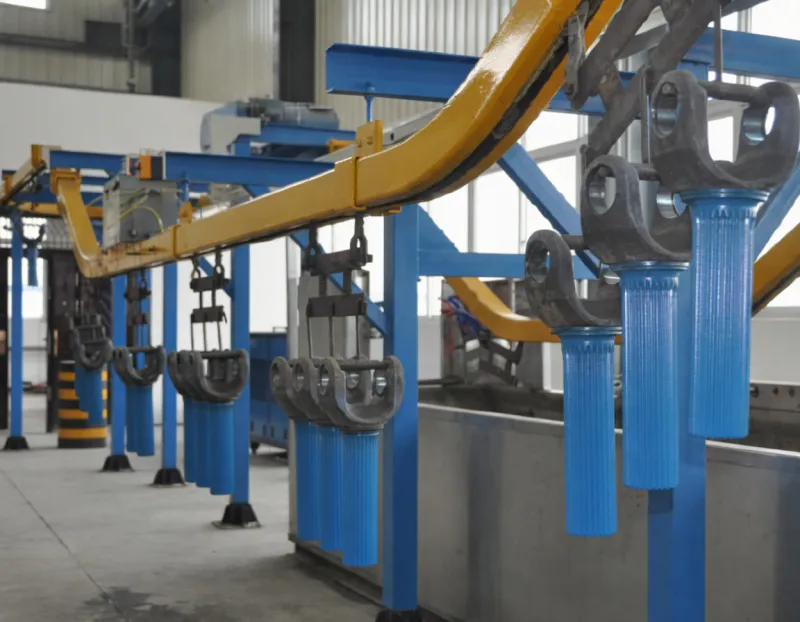
We are a specialist manufacturer and global supplier of front axle assemblies, differential carrier assembly systems, and precision drivetrain components for light vehicles, utility platforms, and agricultural equipment. Our engineering scope covers the full range of differential assembly types — open, passive-bias planetary, and lockable configurations — for both original equipment manufacturer supply programmes and the international aftermarket replacement channel. Our production facilities include CNC gear hobbing centres, precision spline broaching machines, coordinate measuring machine (CMM) inspection cells, and dedicated gear-mesh noise test rigs that evaluate every production lot before release from quality hold.
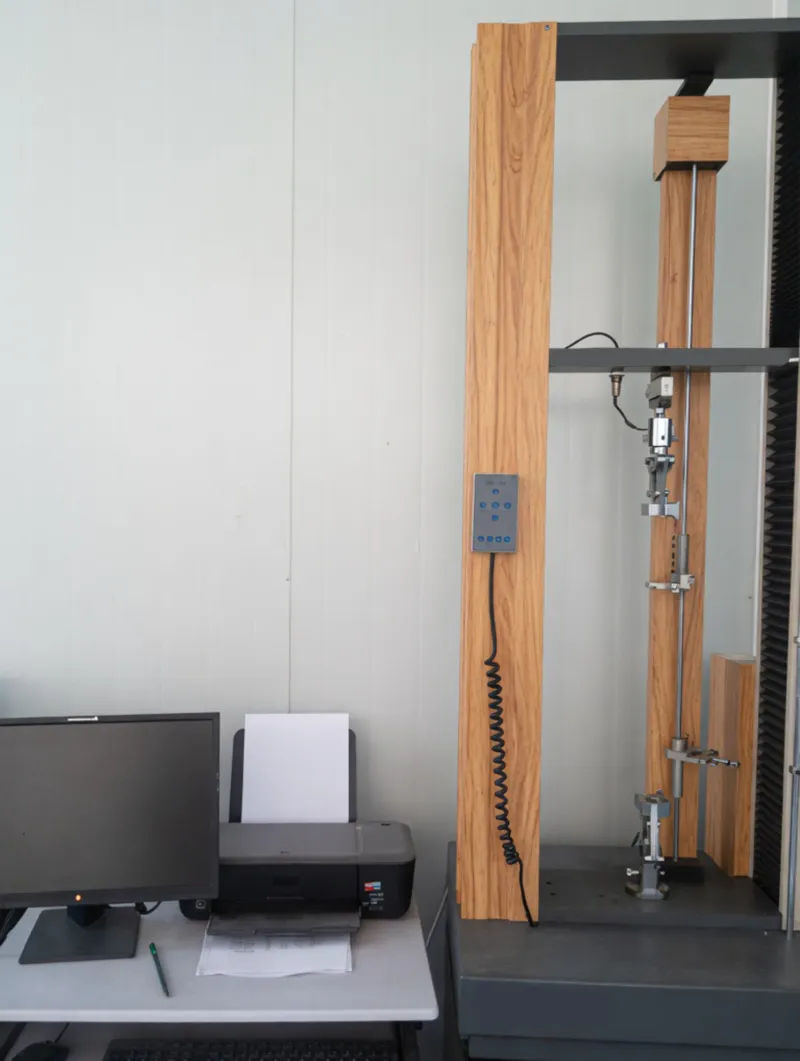
Our quality management system operates under ISO 9001 certification, with process controls covering incoming material inspection, in-process dimensional verification at each CNC stage, heat treatment batch recording (temperature profiles, atmosphere data, and quench parameters), proof-load tensile testing on structural components, and pressure-decay seal integrity checks on assembled housings.
Çalıştay
9. Related Products — Complete Axle System Supply
The EP-EB02 differential assembly is one component in a comprehensive front-to-rear drivetrain supply programme. We also manufacture the following directly compatible axle system components for Rear Axle Assembly applications, providing procurement teams and workshops with a single-source supply advantage for complete system builds, fleet maintenance, and emergency repair scenarios — eliminating multi-supplier coordination and simplifying technical compatibility verification.
Wheel bolts are a safety-critical interface between the axle hub and the wheel rim. When renewing a front axle differential assembly or rear axle differential, replacing wheel bolts as part of the same service event ensures the entire axle load path is brought back to specification simultaneously. Worn or incorrectly specified wheel bolts — mismatched thread pitch, insufficient shank length, or inadequate flange diameter — are a contributing factor in in-service wheel separation events. We supply wheel bolt sets across the thread specifications and shank configurations used by the dominant 600–800cc light vehicle and utility platform segment in Colombia, Peru, and Ecuador, with a one-stop supply advantage for workshops managing complete front and rear axle differential assembly renewal jobs.
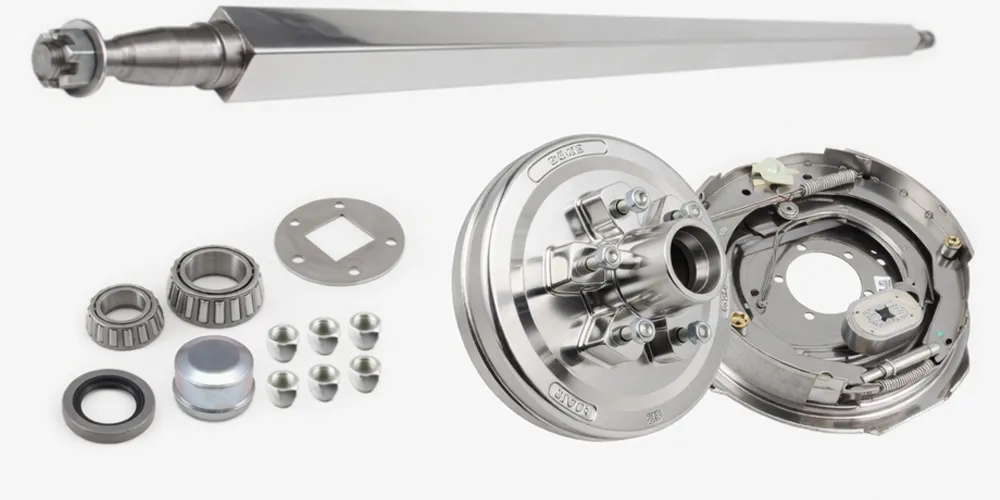
Agricultural and utility vehicle operators across Colombia — particularly in the Llanos, Cauca Valley, and Magdalena Middle basin — routinely tow trailers for crop, livestock, and equipment transport. A correctly rated Trailer Axle Beam and Spindle is the load-bearing interface between the trailer payload and the wheel hub, and its specification must match the actual load, track width, and speed profile of the trailer. An under-rated spindle or incorrectly sized beam induces axle bending loads that transfer into the tow vehicle’s rear axle differential through the trailer coupling — an indirect but real contributor to premature rear axle differential assembly wear. We supply trailer axle beams and spindles in load ratings from light single-axle ATV trailers to medium-duty agricultural tandem-axle configurations.
Frequently Asked Questions — EP-EB02 Differential Assembly
Editör: PXY