描述
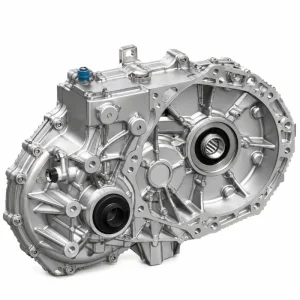
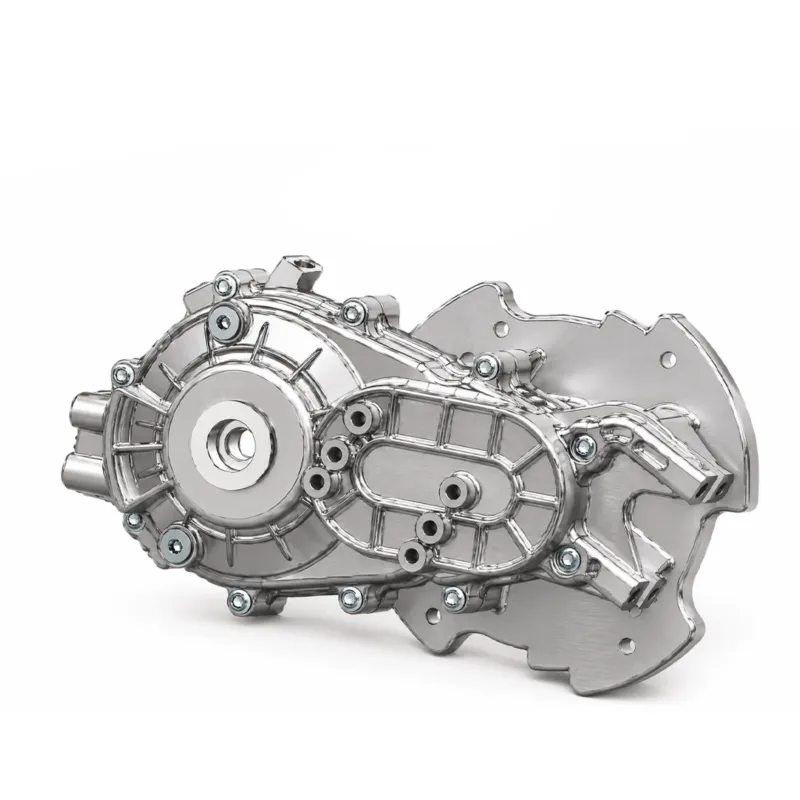
EP-E122C01 Reducer Assembly — Front Axle Speed Reducer for A0-Class Passenger Vehicles
1. Technical Specifications — EP-E122C01 Reducer Assembly
The following 20 parameters define the standard production specification of the EP-E122C01 front-axle 减速器组件. Custom variants and alternative ratio configurations are available, subject to minimum order quantity and engineering review.
| # | 范围 | EP-E122C01 Value |
|---|---|---|
| 1 | Product Model | EP-E122C01 减速器组件 |
| 2 | Application | A0-class passenger car front-drive speed reduction |
| 3 | Max Input Torque (T max) | 180 N·m |
| 4 | Max Input Rotation Rate (n max) | 12,000 r/min |
| 5 | Centre-to-centre Spacing (A) | 185 mm |
| 6 | Standard Gear Ratio (U) | 8.55:1 |
| 7 | Optional Gear Ratios | 6.5 / 7.5 / 8.5 |
| 8 | Input Spline Type | Internal spline |
| 9 | Input Spline Module (m) | 1.25 |
| 10 | Input Spline Tooth Count (z) | 21 |
| 11 | Input Pressure Angle (a) | 30° |
| 12 | Output Spline Type | Internal spline |
| 13 | Output Spline Module (m) | 1 |
| 14 | Output Spline Tooth Count (z) | 25 |
| 15 | Output Pressure Angle (a) | 45° |
| 16 | Output Profile Shift Coefficient (x) | 0.1 |
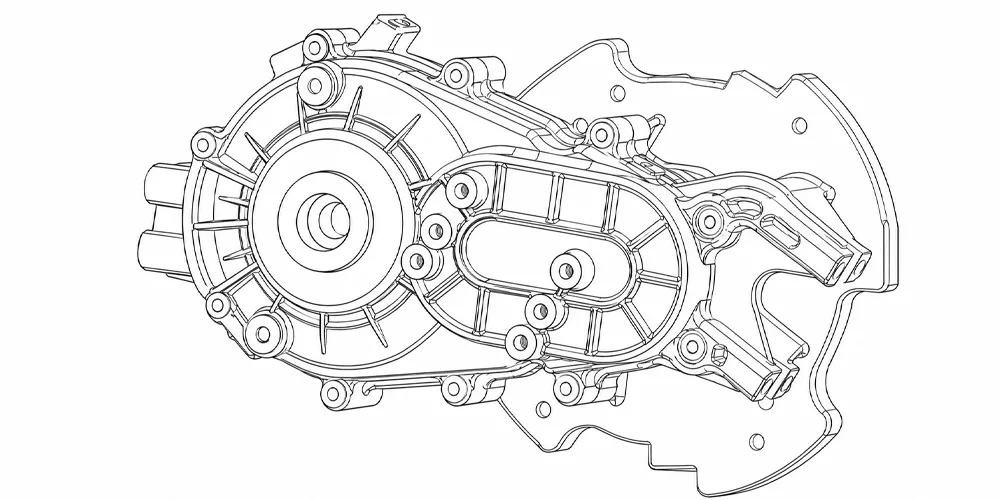
| 17 | Overall Dimension (L × AxleTrack × H) | 425 mm × 256 mm × 158 mm |
| 18 | Net Weight | 18 kg |
| 19 | Lubrication Method | Splash lubrication with transmission fluid (ATF/MTF) |
| 20 | Quality Standard | ISO 9001:2015 / IATF 16949 |
2. Five Key Facts at a Glance
✓ Max Input Torque
180 N·m rated input torque — engineered for the demanding duty cycles of front-wheel-drive compact passenger cars under Colombian urban and mountain road conditions.
✓ High-Speed Capability
Maximum input rotation rate of 12,000 r/min, compatible with modern high-revving internal combustion and hybrid electric powertrains specified for A0-segment vehicles.
✓ Selectable Gear Ratios
Three gear ratio options — 6.5, 7.5, and 8.5 — offer OEM flexibility to tune final drive performance for fuel economy or torque delivery without changing the housing architecture.
✓ Compact Footprint
Overall dimensions of 425 mm × 256 mm × 158 mm and a net weight of just 18 kg make the EP-E122C01 reducer assembly straightforward to package within the tight front-axle bay of A0-class platforms.
✓ Dual Internal Spline Interface
Both input and output shafts use internal spline connections — minimising assembly eccentricity, simplifying field replacement, and ensuring torque transmission integrity over the vehicle service life.
3. What is a reducer assembly?
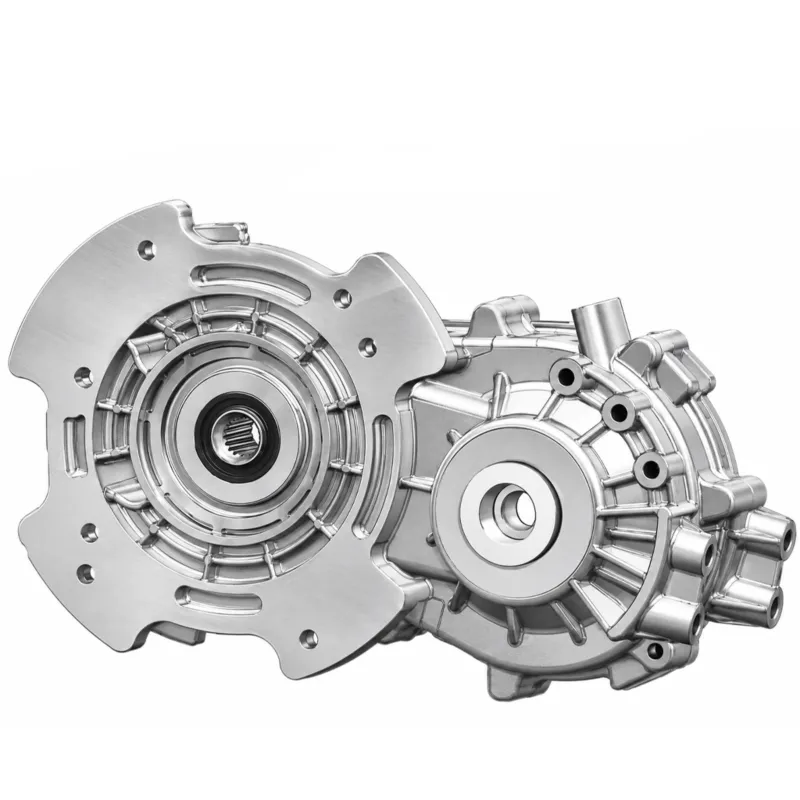
The EP-E122C01 is a front-axle 减速器组件 engineered specifically for the A0-class passenger vehicle segment — a category that encompasses the compact, fuel-efficient cars that represent the highest-volume sector of the Colombian automotive market and the wider Latin American region. At its core, this unit functions as the final-drive gear reducer assembly between the transmission output and the front-wheel half-shafts. The centre-to-centre spacing of 185 mm and the standard gear ratio of 8.55:1 (with field-selectable alternatives at 6.5 and 7.5) are sized to optimise the traction and acceleration characteristics of sub-1400 cc front-wheel-drive platforms prevalent in Bogotá, Medellín, and other Colombian urban centres where vehicle density, altitude effects on engine output, and stop-start traffic all place unique demands on the powertrain.
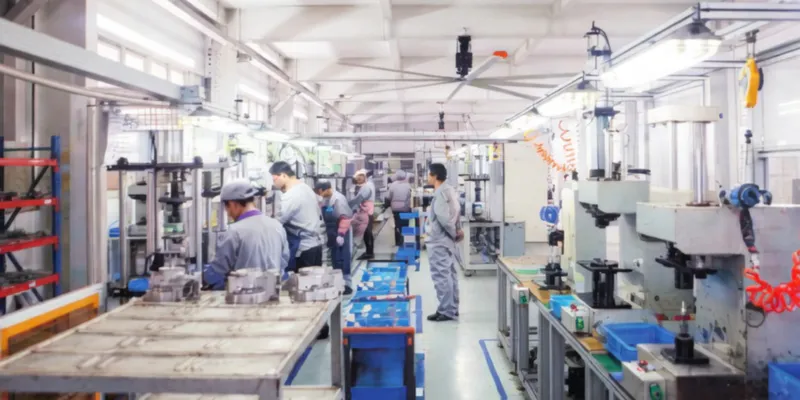
What distinguishes this main reducer assembly from generic aftermarket alternatives is its OEM-grade dimensional control and material traceability. Every unit is produced to a documented manufacturing process that includes material certification for all load-bearing components, gear geometry inspection on calibrated gear-testing machines, and assembly leak-test verification before dispatch. The use of internal spline connections — 21-tooth at module 1.25 on the input, and 25-tooth at module 1 on the output — reflects established automotive transmission interface conventions that allow the EP-E122C01 to be fitted or exchanged within original equipment dimensional envelopes, reducing workshop labour time and simplifying spare-parts procurement for fleet operators across Colombia and neighbouring markets.
The product is also positioned for use in hybrid electric vehicle programmes where the front-drive speed reducer assembly must accommodate both conventional combustion engine torque characteristics and the higher instantaneous torque delivered by an integrated electric motor. The 12,000 r/min input speed ceiling and 180 N·m torque capacity provide engineering headroom for these emerging powertrain architectures. For Colombian vehicle assemblers, fleet procurement managers, and automotive parts distributors seeking a technically credible, well-documented reducer drive assembly, the EP-E122C01 reducer assembly represents a straightforward specification choice.
4. How the Reducer Assembly Works
一个 gear reducer assembly of the EP-E122C01 type operates on the principle of involute gear meshing between a high-speed input pinion and a larger output ring gear. Rotational energy enters through the input spline shaft — connected to the transmission final drive — and is transferred into the primary reduction gear pair. The input gear, with 21 teeth at module 1.25 and a 30-degree pressure angle, meshes with its mating gear to generate the first stage of speed reduction. The output shaft, carrying a 25-tooth internal spline at module 1 with a 45-degree pressure angle and a profile shift coefficient of 0.1, delivers the reduced speed and proportionally increased torque to the left and right front-wheel half-shafts via the differential assembly integrated within the housing.
The function of the reducer in this context is to bridge the gap between the high-speed, low-torque output of the engine and gearbox combination and the low-speed, high-torque demand at the driven wheels. To answer a common engineering query — what is the purpose of the reduction gear assembly? — it is precisely this torque multiplication that allows a compact, lightweight engine to propel a fully loaded passenger car up the steep gradients of Colombia’s Andean road network without sacrificing fuel efficiency at highway cruise speeds. The 8.55:1 final drive ratio, for example, means that for every 8.55 revolutions of the engine output, the wheel hub completes one full rotation — multiplying torque by the same factor while dividing rotational speed accordingly.
The centre-to-centre spacing of 185 mm between the input and output shaft axes defines the gear geometry and housing architecture. This dimension directly governs gear tooth load distribution, bearing span, and lubrication oil circulation path. The entire assembly is splash-lubricated — gear rotation carries transmission fluid from the sump to all meshing tooth surfaces and bearing raceways — eliminating the need for an external oil pump and simplifying the lubrication system for field maintenance. Understanding how a gear reducer works at this level of detail is what allows assemblers and maintenance technicians to diagnose wear patterns, select appropriate replacement intervals, and justify the EP-E122C01 reducer assembly specification in competitive tender evaluations.
5. Five Key Advantages of the EP-E122C01 Reducer Assembly
01 — OEM-Grade Dimensional Precision
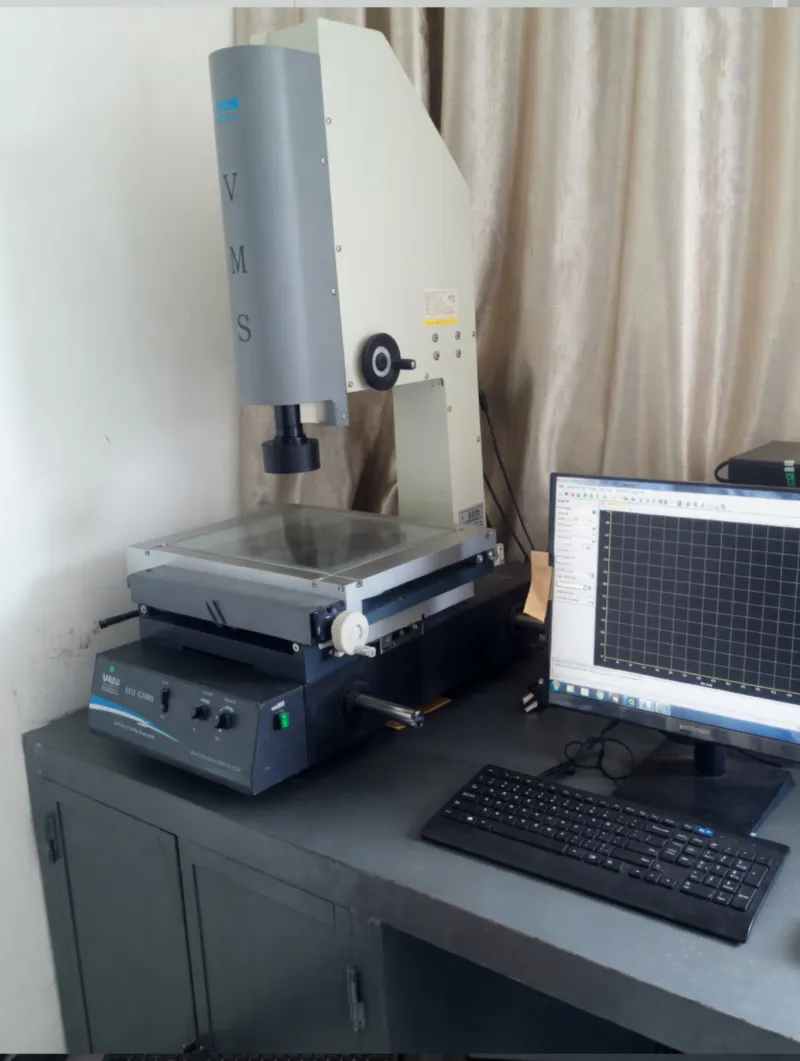
All critical dimensions — shaft diameters, spline profiles, bearing seat diameters, and housing bolt patterns — are manufactured to automotive OEM tolerances verified on coordinate measuring machines. This ensures drop-in compatibility with A0-class vehicle platforms without shimming or rework, reducing assembly station cycle time and warranty exposure for vehicle manufacturers and their first-tier suppliers in Colombia and across the Latin American market.
02 — Flexible Ratio Selection
The availability of three gear ratios — 6.5, 7.5, and 8.5 — within a single housing architecture means vehicle programme engineers can fine-tune final drive performance at the procurement stage without tooling investment. The ratio-8.5 variant maximises low-speed torque for city driving in Bogotá’s congested traffic, while the 6.5 option suits highway-biased applications where extended cruising efficiency is the primary design target.
03 — Durable Gear Tooth Design
The 30-degree input pressure angle and the 45-degree output pressure angle are deliberately selected to balance tooth bending strength and contact fatigue resistance across the input/output interfaces. The output profile shift coefficient of 0.1 further optimises tooth geometry to reduce undercut risk and distribute Hertzian contact stress more uniformly — extending gear surface fatigue life under the cyclic loading patterns of urban driving on Colombia’s pothole-laden road infrastructure.
04 — Low Total Weight
At 18 kg, the EP-E122C01 reducer assembly keeps unsprung mass low relative to equivalent capacity cast-iron units. Reduced unsprung mass improves wheel-to-road contact under dynamic loading, directly enhancing ride comfort and tyre wear consistency — factors that are particularly noticeable on the mixed-surface roads connecting urban and peri-urban zones across Colombia’s diverse geography, from Pacific coastal lowlands to high-altitude Andean passes.
05 — Documented Quality Assurance
Production under ISO 9001:2015 and IATF 16949 management systems ensures full material traceability, in-process dimensional inspection records, and outgoing quality hold protocols. For Colombian importers and vehicle assemblers whose supply chains are subject to INVIMA, ICONTEC, or MADS regulatory audits, this documentation framework simplifies supplier qualification and product conformity demonstration to national authorities.
6. Materials & Construction
The material specification of a front-axle 减速器组件 is determined by a combination of mechanical performance requirements, corrosion resistance needs, weight targets, and manufacturing process capability. For the EP-E122C01 reducer assembly, every structural component is allocated to a material grade that reflects current automotive industry best practice for A0-class drivetrain applications.
Housing — Aluminium Alloy (ADC12)
The main housing and cover are die-cast from ADC12 aluminium alloy, delivering a high strength-to-weight ratio with excellent casting flowability for complex internal geometries. The aluminium housing reduces total assembly weight compared to grey cast iron equivalents, contributing directly to the 18 kg target mass and improving fuel efficiency by reducing drivetrain rotating inertia.
Gears — Alloy Steel 20CrMnTi / 20CrMo
Primary and secondary gear pairs are machined from 20CrMnTi or 20CrMo carburising-grade alloy steel. After gear hobbing and profile grinding, the teeth are gas-carburised and case-hardened to a surface hardness of HRC 58–62 with a core hardness of HRC 30–40. This dual-hardness profile provides the wear-resistant tooth surface needed to survive 150,000+ km service life alongside a tough, impact-absorbing core that prevents brittle fracture under shock loading.
Spline Shafts — 42CrMo4 Alloy Steel
Input and output spline shafts are manufactured from 42CrMo4 (AISI 4140 equivalent), a chromium-molybdenum alloy steel with excellent fatigue resistance under torsional and bending loads. After rough machining, the shafts are quenched and tempered to achieve a tensile strength of 900–1,100 MPa, then spline-milled to the specified module and tooth count. Final induction hardening of the spline flanks ensures contact durability over the rated torque range.
Bearings — Tapered Roller & Deep Groove Ball
The differential and gear shaft positions use tapered roller bearings where combined radial and axial load capacity is required, and deep groove ball bearings for purely radial support positions. All bearings are selected to ISO 281 L10 life criteria for a 200,000 km equivalent vehicle service target. Bearings are pre-lubricated and sealed where practical to reduce maintenance intervention requirements.
Seals & Gaskets — FKM / NBR Elastomers
Shaft seals use fluoroelastomer (FKM) lip seal material for thermal stability in the range -40 °C to +150 °C, compatible with ATF and MTF transmission fluid chemistries. Housing gasket surfaces are sealed with RTV silicone sealant to automotive assembly specifications, ensuring oil-tightness under the thermal cycling and vibration loads experienced in vehicle operation.
7. Application Scenarios
A0-Class Passenger Car OEM Production
The primary application for the EP-E122C01 reducer assembly is serial production integration into A0-class front-wheel-drive passenger cars. Colombian vehicle assemblers operating in the Zona Franca Industrial de Bogotá and affiliated production clusters supply the domestic market with compact cars where the front-axle car reducer assembly is a key drivetrain module. The EP-E122C01 reducer assembly’s three available gear ratios enable a single procurement specification to cover multiple model variants within a common platform programme, reducing tooling cost and supply chain complexity.
Hybrid Electric Vehicle Drivetrain Integration
With Colombia’s expanding adoption of hybrid electric vehicles driven by the Ley 1964 de 2019 electromobility incentive programme, the EP-E122C01 reducer assembly is positioned for integration in mild-hybrid and full-hybrid A0-class platforms. The 12,000 r/min input speed ceiling accommodates the higher operating speed of electric motor generator units, while the 180 N·m torque capacity handles the higher instantaneous torque delivered at launch. The wheel reducer assembly architecture simplifies the mechanical integration of electric motor torque into the existing front-axle assembly.
Automotive Aftermarket Replacement
The Colombian automotive aftermarket — served by distributors in Bogotá, Cali, Medellín, and Barranquilla — requires a steady supply of technically equivalent reducer gear assembly units for vehicles beyond original warranty. The EP-E122C01 reducer assembly’s OEM-equivalent dimensional and material specification means it fits existing vehicle platforms without modification, giving aftermarket installers confidence in warranty coverage and reducing the risk of customer returns due to incompatibility. The documented production quality further supports the traceability requirements of larger fleet operators.
Government Fleet & Public Transport Procurement
Colombia’s national and municipal vehicle fleet procurement programmes — including the Transmilenio integrated transit system feeder fleet and government pool vehicles — require supplier documentation that satisfies the Colombia Compra Eficiente public procurement framework. The EP-E122C01 reducer assembly, produced under IATF 16949 and backed by third-party test reports, provides the level of technical documentation required for participation in licitaciones públicas covering drivetrain components for government vehicle fleets.
Latin American Export Distribution
Beyond Colombia’s domestic market, the EP-E122C01 is suitable for distribution into Ecuador, Peru, Venezuela, and Central American markets through Colombia’s established automotive parts export channels. The unit’s compliance with ISO and international DIN dimensional standards enables it to meet the import conformity requirements of Colombia’s regional trading partners under the Pacific Alliance trade framework, supporting one-to-many distribution logistics from a Colombian inventory hub.
8. Regulatory Framework — Colombia and Global Markets
Automotive drivetrain components including the front-axle 减速器组件 are subject to a layered regulatory structure that spans product safety, environmental compliance, and import conformity. Procurement engineers in Colombia and Latin America should be familiar with the following applicable regulations.
Colombia — ICONTEC and MVTC Regulations
In Colombia, automotive components must comply with ICONTEC (Instituto Colombiano de Normas Técnicas y Certificación) technical standards, which adopt and adapt ISO and SAE norms for the Colombian market. Vehicles and their drivetrain components sold in Colombia are subject to the Ministerio de Transporte’s homologation framework under Decreto 019 de 2012 and its subsequent updates, which governs the technical requirements for vehicle type approval. Drivetrain assemblies for vehicles to be registered in Colombia must meet the dimensional and performance parameters consistent with the homologated vehicle type documentation. The Colombia Compra Eficiente Law 80 and Decree 1082 govern public sector procurement, requiring suppliers of government fleet components to provide ISO-certified quality management documentation and product origin certificates.
Colombia — Electromobility Incentives (Ley 1964 de 2019)
Colombia’s Ley 1964 de 2019 establishes incentives for the adoption of zero-emission and low-emission vehicles, including tax exemptions on the import of electric vehicle components. Front-axle reducer assemblies used in electric or hybrid vehicle platforms may qualify for reduced import tariffs under DIAN (Dirección de Impuestos y Aduanas Nacionales) classifications applicable to EV drivetrain components. Importers should verify current DIAN tariff headings under Chapter 87 of the Colombian Harmonized Tariff Schedule when classifying reducer assemblies for customs entry.
European Union — Machinery and Automotive Directives
For export to EU markets, the reducer assembly must comply with the EU Machinery Directive 2006/42/EC and, for automotive-specific applications, align with UN Regulation No. 100 (R100) covering electric powertrains. IATF 16949:2016 is the recognised quality management standard for automotive component suppliers wishing to supply European OEMs. The EU End-of-Life Vehicles Directive 2000/53/EC also restricts the use of heavy metals in vehicle components, including lead, mercury, cadmium, and hexavalent chromium — requirements that are met by the EP-E122C01’s aluminium and alloy steel construction with standard RoHS-compliant surface treatments.
United States — FMVSS and EPA Requirements
In the US market, drivetrain components must conform to Federal Motor Vehicle Safety Standards (FMVSS) as administered by NHTSA. FMVSS 105, 121, and 135 cover hydraulic and electric braking system performance requirements that indirectly govern axle assembly specifications. The EPA Tier 3 emissions programme and CARB standards influence drivetrain gear ratio selection — making the multi-ratio flexibility of the EP-E122C01 a commercial advantage for OEM customers tuning vehicles for US fuel economy compliance. SAE International standards J617 and J498 govern the dimensional and performance requirements for drive-axle components supplied to US-market vehicles.
Other Key Latin American Markets
Brazil’s INMETRO (Instituto Nacional de Metrologia, Qualidade e Tecnologia) requires product conformity evaluation for automotive components. Mexico’s NOM-016-ENER standard and IMPI intellectual property regulations apply to imported drivetrain parts. Argentina’s SENASA and OAA accreditation bodies govern automotive component conformity. Across all these markets, ISO 9001:2015 and IATF 16949 certification of the supplier quality management system is the baseline expectation for tier-1 and tier-2 automotive supply chain entry.
车间

9. Related Products — Complete Axle System Supply
A front-axle 减速器组件 performs best when the surrounding drivetrain components are selected from a single, quality-controlled supply programme. We manufacture a complete range of axle and transmission system components, ensuring dimensional and material compatibility across your entire axle assembly.
Wheel Bolts
The integrity of the wheel-to-hub interface depends on correctly specified wheel bolts that match the thread form, length, and shank geometry of the hub flange. Our Wheel Bolts are manufactured to OEM dimensional standards with full material traceability and torque-to-yield testing. When paired with our reducer assembly, they provide a fully validated front-axle structural interface, eliminating the risk of cross-supplier dimensional mismatch. Ordering both the reducer assembly and Wheel Bolts through a single supply agreement simplifies logistics, consolidates documentation, and allows for co-ordinated lead time management — a real advantage for Colombian assemblers managing tight production schedules.
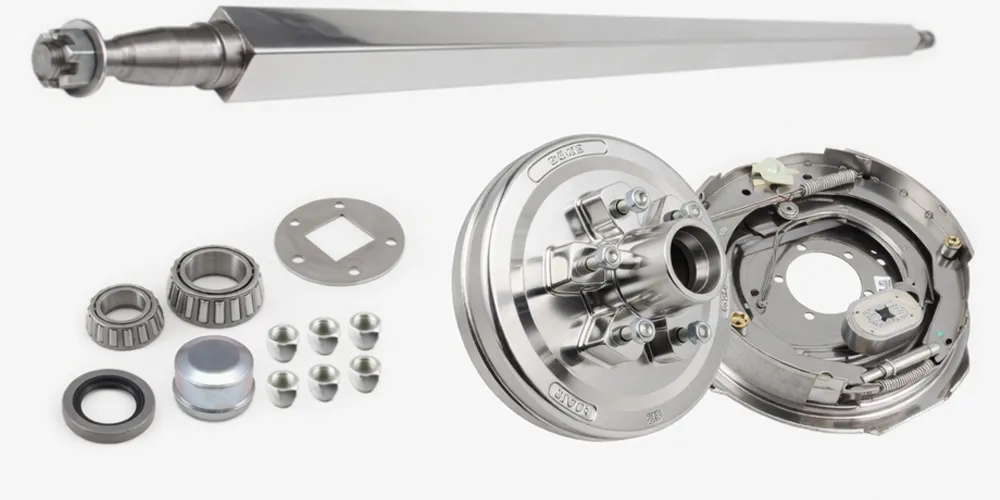
Trailer Axle Beam / Trailer Spindle
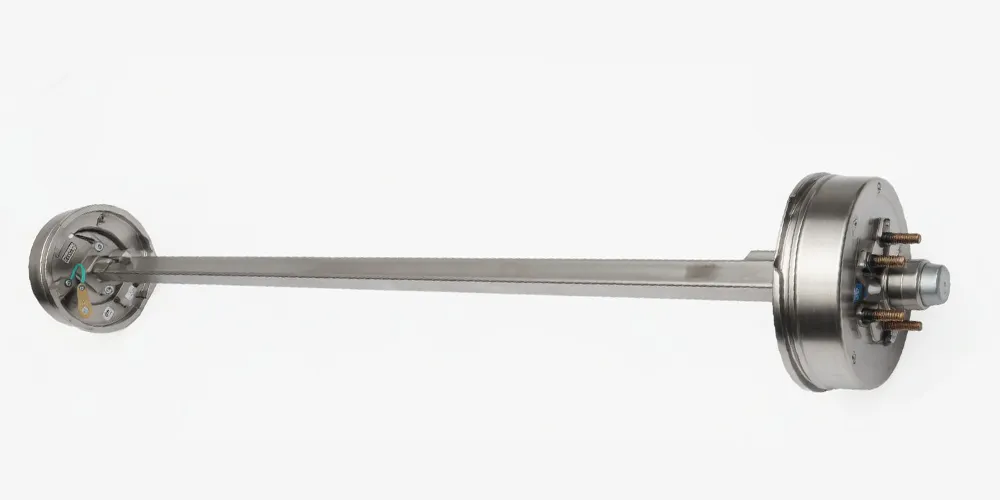
For customers whose procurement scope extends to trailer and commercial vehicle axle systems alongside passenger car drivetrain components, our Trailer Axle Beam and Trailer Spindle products complete the rear-axle supply requirement. These components are engineered for heavy-duty and semi-trailer applications, complementing the passenger-car-focused EP-E122C01 reducer assembly with a rear-axle structural solution suitable for logistics, agricultural, and construction trailer applications common across Colombia’s road freight network. The one-stop sourcing advantage — reducer assembly and trailer axle components from a single supplier — reduces vendor management overhead and simplifies annual supplier audits required under IATF 16949 programme management.
常见问题解答
Q1. What is the function of a reducer assembly in a front-wheel-drive passenger car drivetrain?
Q2. Is a reducer the same as a gearbox, and how does the EP-E122C01 differ from a standard transmission?
Q3. How does a gear reducer work inside the EP-E122C01 front axle reducer assembly?
Q4. What are the two types of reducers and which type is the EP-E122C01 classified as?
Q5. Which gear ratio option should I select for a compact car operating primarily in Bogotá’s high-altitude urban traffic?
Q6. How long does the EP-E122C01 reducer gear assembly last under normal passenger car operating conditions in Latin America?
Q7. Why is it called a reducer, and what does the reduction process actually do to vehicle performance?
Q8. What is the purpose of the internal spline connection in the EP-E122C01 reducer drive assembly, and why is it preferred over keyed shafts?
Q9. How does a planetary reducer assembly compare to the parallel-axis design used in the EP-E122C01 for front axle applications?
编辑:PXY