Penerangan
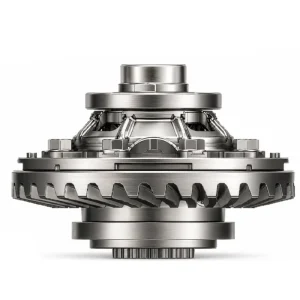
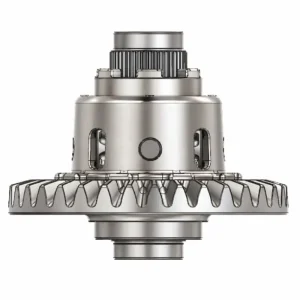
EP-700ATV Front Axle Differential Assembly and Differential Lock
Compact planetary gear ATV front axle differential assembly with integrated mechanical differential lock — engineered for 700cc all-terrain vehicles operating in demanding off-road, agricultural, and patrol environments across Colombia and global markets.
Weight: 1.58 kg
Dimensions: 140 × 140 × 108 mm
ISO 9001 Certified Production
1. Technical Specifications — EP-700ATV Front Axle Differential Assembly
| No. | Parameter | Symbol / Unit | Value / Specification |
|---|---|---|---|
| 01 | Model Number | — | EP-700ATV Front Axle Differential Assembly |
| 02 | Application | — | 700cc ATV — Front Axle Drive |
| 03 | Differential Type | — | Compact Planetary Gear Differential |
| 04 | Max Input Torque | T max | 320 N·m |
| 05 | Max Input Rotation Rate | n max | 4,500 rpm |
| 06 | Centre-to-Centre Spacing | A (mm) | 52 mm |
| 07 | Nisbah Gear | U | 1.57 : 1 |
| 08 | Input Spline Type | — | Internal Spline (involute) |
| 09 | Input Spline Module | m | 1 |
| 10 | Input Spline Tooth Count | z | 21 |
| 11 | Input Pressure Angle | a | 45° |
| 12 | Input Shift Coefficient | x | −0.475 / +0.24 |
| 13 | Output Spline Type | — | Internal Spline (involute) |
| 14 | Output Spline Module | m | 1 |
| 15 | Output Spline Tooth Count | z | 33 |
| 16 | Output Pressure Angle | a | 20° |
| 17 | Output Shift Coefficient | x | −0.475 / +0.24 |
| 18 | Overall Dimensions (L × W × H) | mm | 140 × 140 × 108 |
| 19 | Assembly Weight | kg | 1.58 |
| 20 | Differential Lock Type | — | Mechanical Collar Lock — Driver Selectable |
2. What is EP-700ATV Front Axle Differential Assembly and Differential Lock
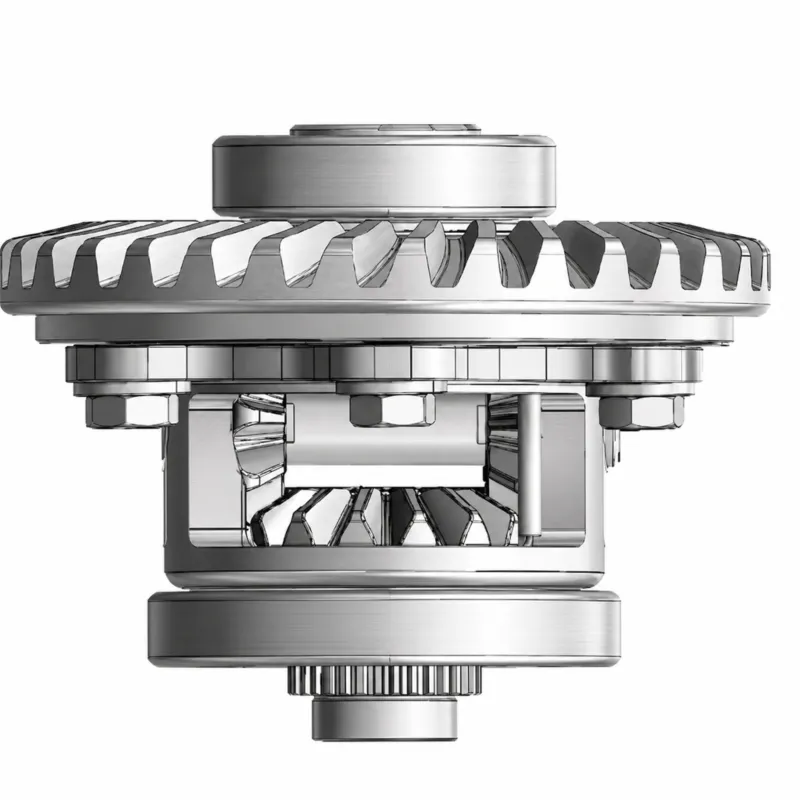
The EP-700ATV is a purpose-designed front axle differential assembly for 700cc all-terrain vehicles. It uses a compact planetary gear differential architecture rather than a conventional bevel-gear spider arrangement, which allows the entire differential assembly to fit within a 140 × 140 × 108 mm envelope at just 1.58 kg. This reduced packaging footprint is critical for modern 700cc ATV front axle housings where space is at a premium, while the planetary layout still delivers reliable torque management across the full range of surface conditions encountered in recreational trail riding, agricultural fieldwork, and patrol applications. The compact differential category — sometimes called a tight-type differential in Chinese engineering nomenclature — distributes power to both front half-shafts through the self-rotation of the planet gears. When one wheel encounters less resistance than the other (the wheel starts to spin), the planet gears rotate on their own axes to accommodate the speed differential between the two output shafts. The intentional internal friction in this design ensures a modest passive torque-biasing effect is always present, meaning that some torque continues to transfer to the higher-traction wheel even during mild differential action — a practical advantage over a fully open differential with zero bias.
Understanding what a front axle differential does is the foundation for appreciating where the EP-700ATV Front Axle Differential Assembly’s differential lock adds value. In unlocked mode, the assembly allows both front wheels to rotate at different speeds during cornering — essential for avoiding tyre scrub and handling instability on hard surfaces. On loose terrain, however, this same freedom becomes a liability: the wheel with least resistance claims all available torque, leaving the vehicle effectively stationary with one front wheel spinning. This is the scenario — familiar to any ATV operator who has worked in the irrigated fields of Colombia’s Cauca Valley or the steep coffee-farming slopes of the Eje Cafetero — where engaging the front axle differential lock makes the critical difference between forward progress and being stuck.
The mechanical differential lock built into the EP-700ATV Front Axle Differential Assembly is driver-selectable and works by physically coupling the differential’s output elements so both front shafts are forced to turn at identical speeds. Unlike limited-slip differentials that rely on clutch-pack preload or viscous coupling to partially resist wheel spin, the EP-700ATV Front Axle Differential Assembly’s mechanical lock provides a definitive, binary engagement: fully locked or fully open, with no degradation of locking performance over service life. This is a deliberate design choice for working and patrol ATV applications where electronic solenoids or clutch-based systems introduce failure modes under water ingress or temperature extremes. The unit’s spline specifications — input: 21 teeth, module 1, 45° pressure angle; output: 33 teeth, module 1, 20° pressure angle — align with widely adopted 700cc ATV platform dimensional standards, confirming compatibility for direct front differential replacement across multiple OEM configurations. The shift coefficient of −0.475/+0.24 on both input and output interfaces is consistent with OEM shaft profiles, eliminating the need for custom machining during installation.
3. Five Key Product Advantages
1 — Compact Planetary Gear Architecture
The planetary gear differential design reduces the assembled envelope by approximately 30% compared to equivalent-rated bevel-gear differentials. The 140 × 140 × 108 mm footprint and 1.58 kg mass enable direct fitment into tight front axle housings without structural modifications to the axle beam or suspension geometry. A lower overall assembly mass also contributes to reduced unsprung weight at the front axle, improving wheel tracking response on broken terrain and reducing shock loads transmitted to the suspension during high-speed obstacle impacts — a tangible handling benefit for both recreational and working ATV operators.
2 — Integrated Mechanical Differential Lock
The on-demand mechanical diff lock mechanism is a binary, driver-controlled coupling that has no wear-dependent performance curve. Unlike viscous couplings or torque-sensing clutch packs, the EP-700ATV Front Axle Differential Assembly’s lock engages positively and maintains full locking force regardless of operating temperature or service age. This makes it particularly suited to working ATV applications in Colombia’s humid tropical agricultural zones — environments where electronic actuator reliability is a known concern and field repairs must be executable by non-specialist technicians without diagnostic equipment.
3 — Precision Spline Interface — Direct OEM Replacement
Input spline (z=21, m=1, 45° pressure angle) and output spline (z=33, m=1, 20° pressure angle) are machined to tolerance ranges that ensure consistent engagement with OEM-matching half-shaft splines. Shift coefficients of −0.475/+0.24 match the dominant 700cc ATV shaft profile standard. This dimensional consistency makes the EP-700ATV a verified front axle differential assembly replacement that installs directly without additional shaft modification — reducing labour time per unit and enabling workshops to handle differential swaps on a scheduled maintenance basis rather than as emergency repairs.
4 — Low Operating Noise Profile
Controlled internal friction in the planetary differential architecture produces lower operational noise than comparable bevel-gear differentials at equivalent input torque levels. Planetary gear tooth contact is distributed across multiple planet gears simultaneously, spreading load and reducing the peak contact stress per tooth that generates drivetrain whine. This matters for extended-use applications — an ATV operator spending six to eight hours per day on a farm inspection route in Córdoba or Meta department benefits meaningfully from a quieter front differential running at low-to-medium speeds over a full workday.
5 — Multi-Platform Coverage & Reliable Supply
The standard module-1 spline specification and the 140 × 140 × 108 mm dimensional envelope cover a wide range of 700cc ATV front axle platforms. Workshops and fleet operators in Colombia, Peru, Ecuador, and Mexico who maintain mixed-brand ATV inventories can stock a single EP-700ATV SKU as the default front differential assembly replacement item across multiple vehicle types. Each unit ships with full dimensional documentation and material traceability records, satisfying the incoming inspection requirements of quality-managed workshop operations and larger agricultural enterprise fleets.
4. Working Principle — ATV Front Axle Differential Assembly
Differential Operation (Unlocked Mode)
Drive torque enters the EP-700ATV Front Axle Differential Assembly through the input internal spline (21 teeth, module 1, 45° pressure angle). The input shaft connects to the planetary carrier, which holds the planet gears on their respective trunnion shafts. The ring gear is fixed within the housing. As the carrier rotates, the planet gears mesh with both the central sun gear and the fixed ring gear. When both front wheels encounter equal resistance — straight-ahead driving on consistent terrain — the planet gears do not rotate on their own axes; the entire planetary set rotates as a locked unit, delivering equal torque to both output shafts via the 33-tooth internal splines on each side. When one wheel loses traction and begins to spin faster than the other, the planet gears begin to self-rotate, accommodating the speed differential. The output that spins faster (the slipping wheel) receives less torque; the stationary or slower output retains more. This is the fundamental function of the front axle differential — to permit speed differences between wheels while maintaining torque distribution through the drivetrain.
The planetary design introduces a defined level of internal friction through the planet gear shaft-to-carrier bearing contacts and the gear mesh geometry itself. This friction acts as a passive torque-biasing mechanism: before wheel slip becomes pronounced, the higher-friction path still receives some drive torque. In practical off-road use, this provides a modest traction advantage over a conventional open differential with negligible internal resistance — the EP-700ATV Front Axle Differential Assembly does not spin up one wheel completely before the other stalls.
Differential Lock Engagement
When the operator engages the differential lock (typically via a dash-mounted switch or mechanical lever linked to the actuating collar), a locking collar inside the differential housing translates axially and positively couples both output shaft elements together. With the lock engaged, both output shafts are compelled to rotate at identical angular velocity regardless of individual wheel traction — this is the mechanistic answer to what a diff lock on a 4×4 does. The locked front axle differential delivers 50/50 torque split to both wheels unconditionally, ensuring that even if one wheel is completely airborne or in frictionless mud, the full engine torque can still be directed to the wheel that has ground contact.
The difference between differential lock and inter-axle differential lock is worth clarifying for users of 4WD ATVs: the EP-700ATV Front Axle Differential Assembly’s diff lock operates within the front axle differential carrier only — it locks the two front wheels relative to each other. An inter-axle differential lock (fitted in the transfer case or centre differential of some multi-axle 4WD vehicles) locks the front and rear propshafts relative to each other. Both systems address traction loss, but at different drivetrain levels. The EP-700ATV Front Axle Differential Assembly provides front axle diff locking; if the vehicle also has a locking rear differential, operating both locks simultaneously provides maximum all-wheel traction — the configuration most ATV operators in Colombia’s highland terrain rely on in the most severe conditions.
Understanding the difference between axle lock and diff lock is also relevant: an axle lock (or manual locking hub) fixes the outer wheel hub to the axle shaft, engaging drive to that wheel. A diff lock operates inside the differential housing on the output shaft elements. The EP-700ATV Front Axle Differential Assembly’s integrated lock is an internal diff lock — it does not require separate hub-locking actions and provides traction management from within the drivetrain in a single operation.
5. Materials & Construction
Planetary Gear Set (Sun, Planet, Ring Gears): Manufactured from low-alloy carburising steel — typically 20CrMnTi or equivalent grade per GB/T 3480 / ISO 6336 — processed through controlled gas carburising followed by oil quench hardening. The resulting case depth of 0.4–0.8 mm at HRC 58–62 surface hardness delivers a gear tooth contact surface capable of withstanding the Hertzian contact stresses generated during high-torque differential action under full-lock disengagement. The core hardness is maintained at HRC 32–38, providing the toughness needed to absorb shock loads from sudden surface transitions without brittle fracture.
Differential Housing and Carrier Body: Cast from nodular ductile iron (GGG50 / QT500-7 equivalent), selected for its combination of vibration-damping characteristics, impact resistance, and post-casting machinability. The ductile iron microstructure — graphite nodules in a ferritic-pearlitic matrix — offers significantly greater toughness and elongation at failure than grey cast iron, an important property given the shock and impact loads a front axle differential carrier absorbs during aggressive articulation over rocks and root crossings. Housing walls are CNC-machined post-casting to ensure bearing seat bore concentricity within 0.01 mm, and mating face flatness within 0.02 mm — both critical to oil-tight assembly and bearing alignment.
Input and Output Spline Shafts: Medium-carbon alloy steel (40Cr or 42CrMo equivalents per GB/T 3077), induction surface-hardened at the spline contact zones to HRC 52–58. This surface hardening resists the fretting wear that occurs at the shaft-to-hub spline interface under torsional loading with slight axial misalignment — a failure mode particularly common in ATVs that see sustained high-torque low-speed pulling cycles. The tooth-form geometry is machined to maintain the −0.475/+0.24 shift coefficient for both input and output sides, confirming dimensional compliance with OEM shaft profiles.
Axle Shaft Seals: Fluoroelastomer (FKM/Viton) lip seal elements on both output shaft bores, rated for continuous operation from −40 °C to +200 °C. FKM compound is specified over the more common NBR (nitrile) because of its superior resistance to GL-5 gear oil additives — specifically the sulphur-phosphorus extreme-pressure compounds that degrade NBR elastomers and accelerate lip wear, contributing to the front axle differential leaking failures that are among the most common service complaints on working ATVs. The seal lip geometry incorporates a secondary dust exclusion lip to prevent ingress of the abrasive fine particles ubiquitous in Colombian dry-season field conditions.
6. Application Scenarios
Off-Road Recreational ATV — Colombia Mountain Terrain
Riders navigating the Cordillera Central and Eastern Cordillera mountain trail networks rely on their ATV’s front differential 4×4 system to manage traction on wet clay, loose shale, and mossy rock crossings. The EP-700ATV Front Axle Differential Assembly’s mechanical diff lock provides the kind of instant, reliable traction response that electronic traction control systems cannot match on steep descents where wheel-speed sensor data lags actual slip events. With the lock engaged, both front wheels pull simultaneously, and the rider regains directional control that would otherwise be lost to a spinning inner wheel on a steep camber traverse.
Agricultural & Rural Utility — Crop Inspection and Livestock Management
700cc ATVs are widely deployed across Colombia’s Llanos Orientales, Cauca Valley, and Caribbean coastal agricultural zones for crop inspection, fertiliser distribution, and livestock monitoring work. These applications demand a front axle assy that can handle heavy payload loading over saturated ground without differential failure from sustained high-torque low-speed cycles. The EP-700ATV Front Axle Differential Assembly’s defined internal friction provides passive torque biasing that resists single-wheel spin during these field traversals, while the lockable diff delivers the pulling force needed to extract the vehicle from deep-irrigation channel edges where a standard open differential would strand the operator.
Security, Patrol & Emergency Response in Remote Regions
Public security agencies, rural fire brigades, and private security operations across Colombia’s Orinoquía and Amazon frontier regions operate ATV fleets in areas where vehicle recovery is costly and delayed. The mechanical-lock front differential assembly on the EP-700ATV Front Axle Differential Assembly is a deliberate design advantage in these contexts: no electronic actuators, no solenoid valves, no CAN-bus integration — just a mechanical collar that engages when the rider selects it and holds engagement regardless of water ingress, voltage drop, or sensor faults. Field-maintainable design ensures that any trained technician can service the unit without specialised diagnostic tools.
Workshop Service & Fleet Maintenance — Multi-Brand ATV Fleets
ATV workshops servicing mixed-brand 700cc fleets across Colombia, Ecuador, and Peru stock the EP-700ATV as a universal front axle differential carrier assembly replacement item. When front axle differential lock symptoms appear — engagement noise, lock slippage, or binding on release — or when the housing shows seal leak failure patterns (a common front axle differential leaking scenario after two to three seasons of hard field use), the EP-700ATV Front Axle Differential Assembly provides a same-day turnaround repair path. The well-documented spline parameters allow technicians to confirm fitment from a vehicle spec sheet check before disassembly — avoiding the wasted time of partial dismantling and reassembly for an incompatible unit.
Forestry, Environmental Monitoring & Infrastructure Inspection
Colombia’s forestry and water-authority teams use ATVs to patrol reforestation zones in the high-altitude páramo and cloud forest ecosystems of the Andes. The difference between front axle and rear axle load distribution changes significantly when ascending steep gradients — front traction becomes the limiting factor. Having a lockable front drive axle differential on the EP-700ATV Front Axle Differential Assembly ensures both front wheels contribute pulling force during the ascent, preventing the left-right torque imbalance that would otherwise cause the vehicle to yaw off the single-track forest path. The assembly’s low noise profile also reduces disturbance in wildlife-sensitive monitoring zones.
7. Regulatory Compliance & Legal Context
Colombia — Ministerio de Transporte & ICONTEC Standards
In Colombia, the regulatory framework governing vehicle mechanical components — including front axle differential assemblies for ATVs — falls under Decreto Único Reglamentario del Sector Transporte (Decreto 1079 de 2015), which consolidates transportation sector regulations administered by the Ministerio de Transporte. ATV drivetrain components affecting vehicle safety and drivability must comply with the technical equivalence requirements established through vehicle homologation, overseen in technical matters by INVIAS (Instituto Nacional de Vías) and ICONTEC (Instituto Colombiano de Normas Técnicas y Certificación). ICONTEC administers the NTC (Normas Técnicas Colombianas) series for mechanical vehicle components. Importers and maintenance workshops replacing drivetrain components such as the front axle differential assembly should retain dimensional compliance documentation — specifically spline specification sheets and material certificates — to demonstrate technical equivalence with the vehicle’s original homologation dossier. The Superintendencia de Industria y Comercio (SIC) also maintains oversight of product safety standards under Ley 1480 de 2011 (Estatuto del Consumidor) for imported mechanical components.
European Union — Regulation (EU) 168/2013 & ECE Standards
ATVs sold into EU markets fall under Regulation (EU) No 168/2013 on the approval and market surveillance of two- and three-wheel vehicles and quadricycles (L-category vehicles). Front axle drivetrain components must comply with the functional requirements of the associated delegated and implementing regulations, including Commission Delegated Regulation (EU) 44/2014 on vehicle construction and general requirements. UN/ECE Regulation No. 13 (Uniform Provisions concerning Braking) has indirect relevance to axle load-bearing capacity. Replacement parts for EU-registered ATVs should be supplied with CE marking declarations where required under the relevant machinery or component directives, and traceability documentation to the appropriate product standard.
United States — CPSC Regulations & SAE/ANSI Standards
In the United States, ATV safety is regulated by the Consumer Product Safety Commission (CPSC) under 16 CFR Part 1420, which establishes performance and labelling requirements for ATVs sold in the US market. ANSI/SVIA 1 (American National Standard for Four Wheel All-Terrain Vehicles) provides technical performance standards for ATV drivetrain systems including differential assemblies. SAE technical standards — particularly SAE J2826 and related ATV performance standards — specify test methods relevant to axle and drivetrain component validation for the North American market. Replacement front differential components for US-market ATVs should be verifiable against OEM parts specifications and SAE material-grade requirements.
Brazil — CONTRAN, DENATRAN & ABNT NBR Standards
Brazil’s National Traffic Council (CONTRAN) and the Secretariat for Road Traffic (SENATRAN) regulate vehicle components under Resoluções that establish minimum technical standards for wheeled vehicles and their systems. ABNT NBR (Associação Brasileira de Normas Técnicas) standards govern mechanical vehicle component specifications in Brazil. Imported mechanical components — including ATV drivetrain assemblies — may require INMETRO (Instituto Nacional de Metrologia) certification depending on product classification. Colombian distributors supplying ATV parts into the Brazilian market should verify current INMETRO compulsory product certification requirements for the relevant HS classification of the front axle differential assembly.
Mexico — NOM (Normas Oficiales Mexicanas)
Mexico’s Secretaría de Economía and Secretaría de Comunicaciones y Transportes (SCT) administer Normas Oficiales Mexicanas (NOM) relevant to vehicle mechanical components. NOM-086-SCT2 and related transport sector NOMs establish minimum safety and performance requirements for vehicle components. ATV drivetrain replacement parts for the Mexican market should be verified against applicable NOM designations and labelling requirements. PROFECO (Procuraduría Federal del Consumidor) additionally enforces product safety standards for imported mechanical components at the retail and distribution level.
8. About Us
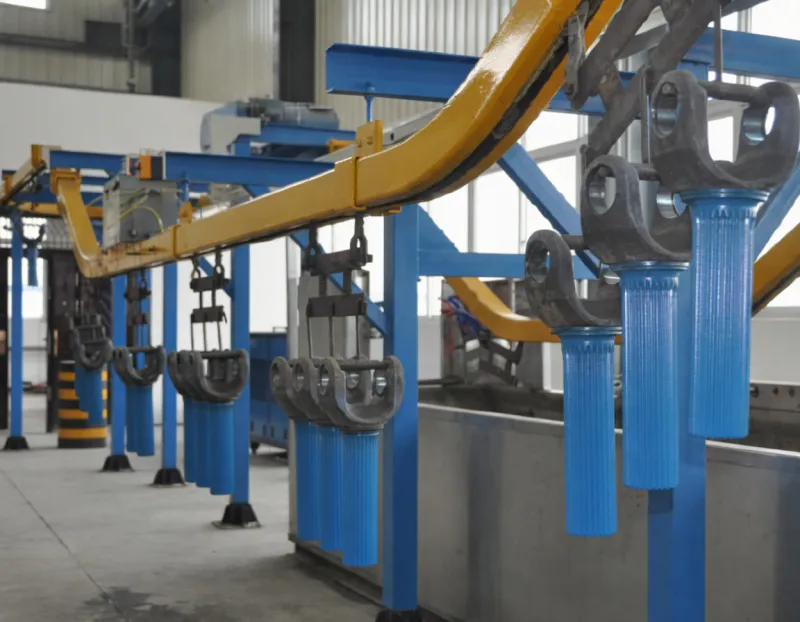
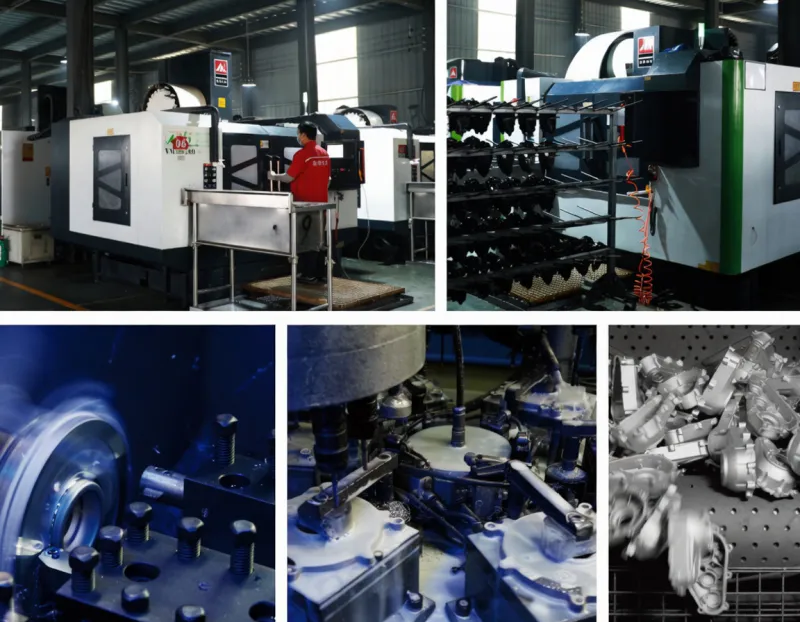
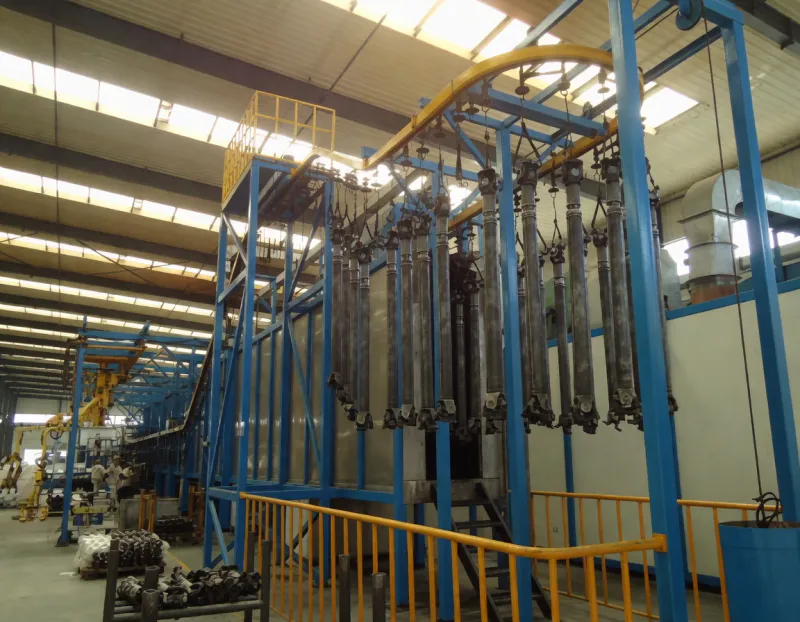
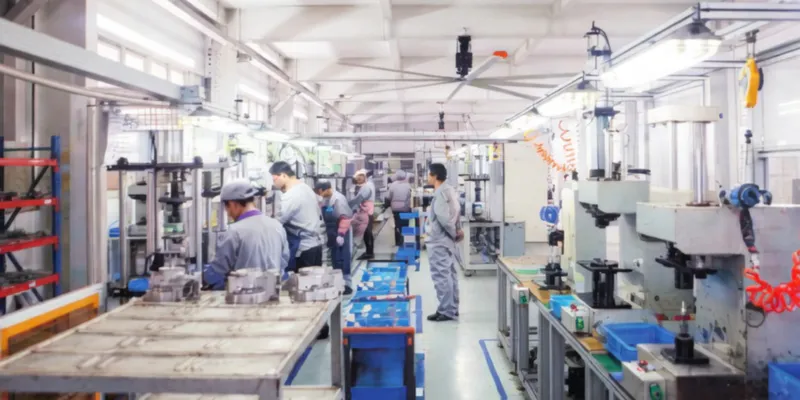
We are a specialist manufacturer and global supplier of precision front axle assemblies, differential carrier assemblies, and drivetrain components for all-terrain vehicles, utility vehicles, and light commercial platforms. Our engineering capability covers the full spectrum of ATV front axle differential assembly types — standard open differentials, mechanical locking differentials, and limited-slip configurations — for both OEM supply programmes and the global replacement parts market. Production is supported by CNC gear hobbing centres, precision spline broaching machines, coordinate measuring machines (CMM) for dimensional verification, and dedicated gear-mesh noise testing rigs that evaluate each production lot before release.
Our quality management system operates under ISO 9001 certification, with documented process controls covering raw material incoming inspection, in-process dimensional verification, heat treatment batch recording, proof-load tensile testing, and seal-integrity pressure checks.
Workshop
9. Related Products — Complete Axle System Supply
The EP-700ATV front axle differential assembly is engineered as part of a complete front-to-rear drivetrain supply programme. We also supply the following directly compatible axle system components, giving procurement teams and workshops a single-source advantage for full system builds, routine maintenance, and emergency fleet repair scenarios.
Rear Axle Assembly — Wheel Bolts
Wheel bolts are a safety-critical interface component connecting the axle hub to the wheel rim. When replacing a front and rear axle differential assembly, the wheel fastener specification — thread pitch, shank length, flange diameter, and torque rating — must match the axle hub and wheel rim mating geometry. Incorrect or worn wheel bolts are among the leading causes of in-service wheel separation. Sourcing matched wheel bolts alongside the EP-700ATV differential assembly ensures the complete front axle interface is renewed to specification in a single service event. We supply wheel bolt sets across the thread specifications and shank configurations used by major 700cc ATV platforms serviced in Colombia, Peru, Ecuador, and the wider Latin American market.
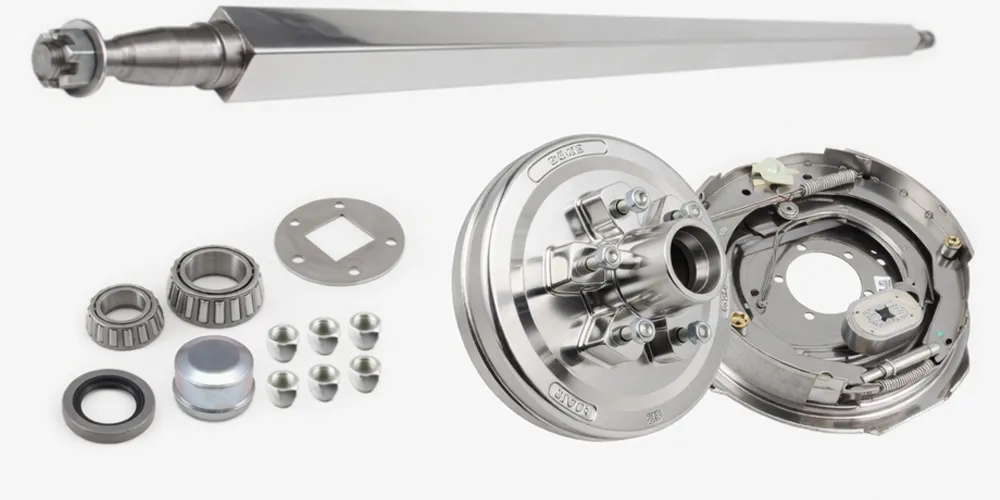
Trailer Axle Beam / Trailer Spindle
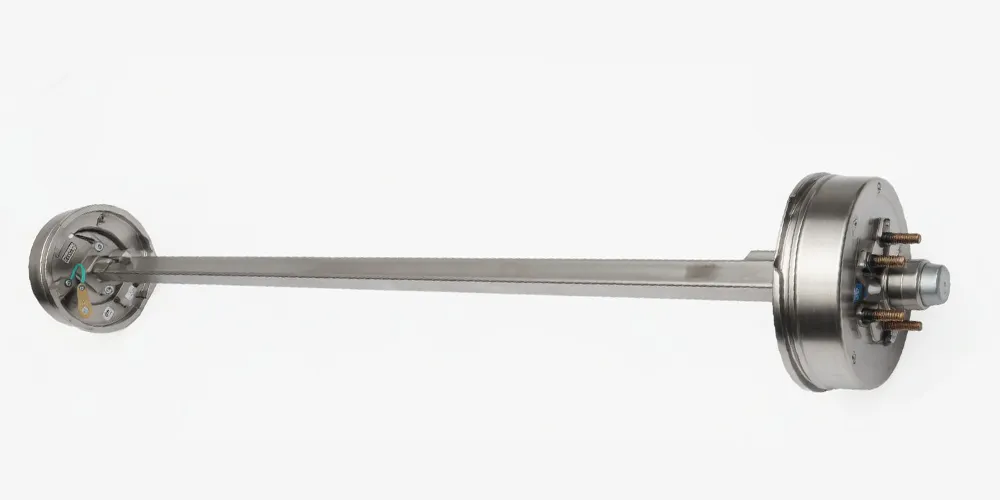
Agricultural and utility ATV operators across Colombia frequently use their vehicles to tow trailers for crop transport, equipment supply, and livestock management. A correctly matched trailer axle beam and spindle — rated for the actual load and track width combination of the trailer — prevents overloading of the ATV’s own front axle differential carrier through tongue weight transfer during uphill loaded sections. Our trailer axle beam and spindle supply covers load ratings from light ATV single-axle trailers up to medium-duty tandem-axle agricultural trailers, with standard bearing specifications compatible with widely available service bearings in Colombian and Peruvian agricultural supply chains. System compatibility between the ATV drivetrain and trailer axle is a core value of our one-stop supply approach.
Soalan Lazim
Editor: PXY